
If you’re planning your first trip to Las Vegas, the main booking question is simple: do you buy a bundled package that mixes flight, hotel, and extras or do you book each piece separately? The practical answer: packages often save time and reduce upfront headaches, while separate bookings usually give more control and easier customization. Which is right depends on how sure you are about travel dates, how many non-negotiable needs you have (room type, airline, seat, loyalty points), and how comfortable you are managing cancellations or changes across multiple suppliers. Below you’ll find a clear comparison of the tradeoffs, decision criteria to apply to your specific priorities, a short checklist of what to verify on booking pages, and answers to common questions first-time visitors ask when hunting Las Vegas travel deals.
See current options before you compare the details
Availability and final conditions change. Open Trip.com now or keep reading for the practical comparison.
What package deals cover and when they help
Package deals commonly bundle an outbound and inbound flight and a hotel stay; some include extras such as transfers, show vouchers, or car hire. For first-time visitors who want a simple, one-checkout experience and little coordination, packages reduce the number of confirmations and separate itineraries you must manage. If you value time-saving and want a straightforward trip plan without juggling multiple accounts and tickets, a package can be a practical choice.
Packages can be especially useful when you book for a group or family since a single transaction often keeps everyone’s reservations tied together. However, not all packages are created equal—the quality of included hotels, flight schedules, seat selection rules, and transfer details vary. Before you commit, read what’s explicitly included, how changes are handled, and whether specific room types or seat classes are guaranteed or are subject to later confirmation.
Why separate bookings give more control
Booking flights, hotels, and experiences separately lets you pick each supplier to match your priorities—choose the airline with the right schedule and baggage policy, pick a hotel brand and room category you trust, and add shows or tours that fit your interests. This approach is ideal if you collect loyalty points, need a particular flight time, want a specific room view or bedding setup, or plan to visit other destinations before or after Las Vegas.
Separate bookings also allow incremental searching: lock in a great fare first, then watch hotel deals or book a refundable room while you wait for the ideal rate. The tradeoff is that you become the coordinator—if a flight is delayed and you miss a reservation made by another supplier, protections vary and you may need to handle rebooking and additional costs yourself. That makes reading each provider’s terms and considering refundable options important.
| Approach | Best for | Tradeoff to check |
|---|---|---|
| Package bookings | Travelers wanting a single transaction, simple coordination, or group bookings. | Less fine-grained control over flight times, seat choice, and room specifics; confirm exact inclusions and change rules. |
| Separate flight and hotel bookings | Travelers prioritizing schedule control, loyalty benefits, or specific room/seat choices. | Requires more time to coordinate; risk of mismatched schedules or limited supplier protections if issues arise. |
| Mixed approach (one-off package elements + separate bookings) | Those wanting convenience for some parts (like transfers) while keeping control over flights or hotel brand. | You must track multiple confirmations and understand which supplier is responsible for each component. |
| Booking refundable or flexible fares/rooms | Uncertain plans or travelers who may need last-minute changes. | Flexible rates are usually higher; weigh the added cost against the value of reduced risk. |
Ready to check the option that fits your plan?
Use your exact dates and traveler details so the provider page can show the current total and conditions.
How to compare cost, risk, and flexibility
When comparing total cost, look at the full out-the-door price: taxes, resort fees, baggage, and transfer fees can be added later on separate bookings but are sometimes included in packages. Don’t rely on base fares alone—scan booking pages for surcharges and optional extras. Also compare the cancellation and change policies: a package provider may offer unified changes but could charge a single change fee, while separate suppliers may have varied, sometimes more flexible policies that affect your total risk exposure.
Evaluate flexibility needs relative to the nonrefundable portion of your plans. If you expect changes, refundable or fully changeable flights and hotel rates (or modest change fees) reduce risk on separate bookings. If you’re locking in a special fare or a popular show, a package may protect availability by bundling the components, but you’ll need to check exactly how and when each element can be modified or refunded on the supplier’s booking page.
Before you book
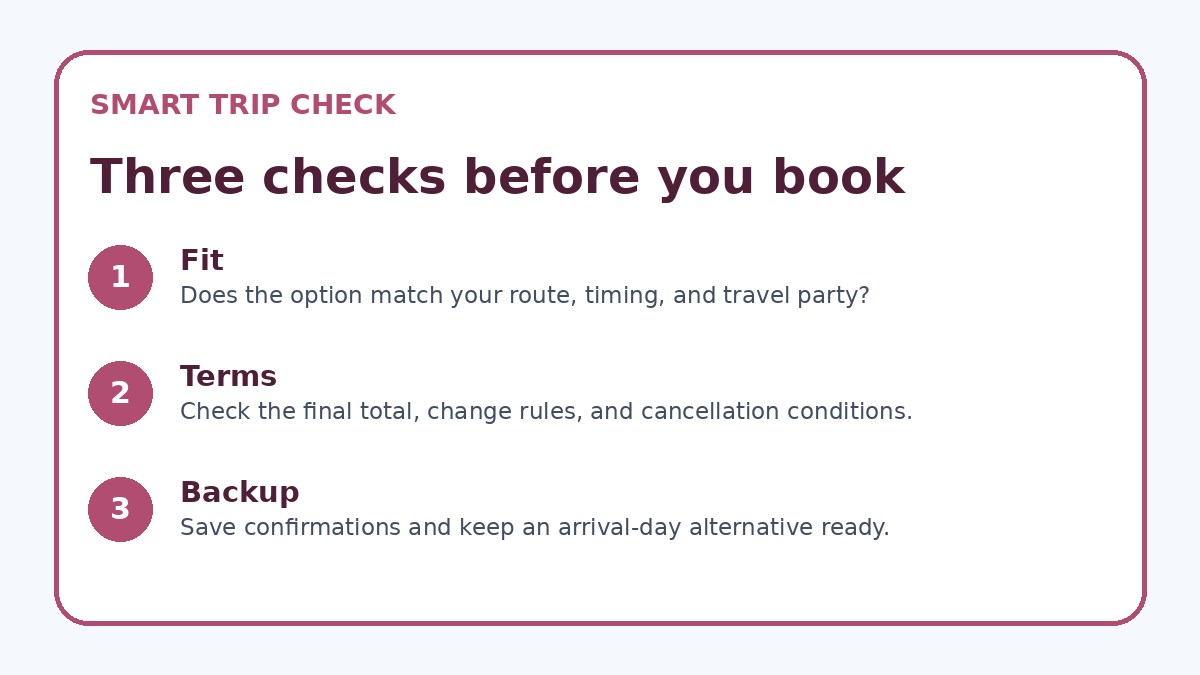
- Confirm whether the quoted package price includes airport transfers, baggage, and resort fees and note any items sold as optional extras.
- Verify the exact flight times, seat selection rules, and whether seats are confirmed at booking for any package or standalone flight.
- Check the hotel room category and whether resort amenities, early check-in, or room view preferences are guaranteed or subject to change.
- Read and save each provider’s cancellation, change, and refund policies; note deadlines and any per-person or per-booking fees.
- Compare loyalty program earning and elite benefits eligibility for separate bookings and ask the package provider whether points or status apply.
- Decide whether to buy travel insurance for trip interruption, medical emergency, or nonrefundable components and check policy exclusions carefully.
Practical tips for first-time visitors booking Las Vegas
Prioritize what matters: travel time windows, hotel location on or off the Strip, room type, and must-see shows or attractions. For flights, compare direct vs connecting itineraries and ask whether seat selection and checked bags are included. For hotels, review whether the rate quoted includes resort fees and what amenities are actually available. When you evaluate a package, find the supplier’s detailed itinerary and confirm whether flight times and room categories are confirmed or provisionally held.
Before completing any booking, verify change and cancellation terms on the final booking page, confirm whether loyalty points or elite benefits apply, and note how to contact customer service for each element of your trip. Trip.com can be a useful place to compare current availability and conditions, but always verify final terms on the supplier’s booking confirmation. Finally, consider travel insurance to cover interruptions or cancellations that neither a package nor separate bookings would otherwise protect.
Frequently asked questions
Will a package always save me money on Las Vegas travel deals?
Not necessarily. Packages can offer savings through bundled rates or negotiated inventory, but whether they cost less depends on flight and hotel availability, fees, and the exact inclusions. Always compare the total out-the-door price—taxes, resort fees, baggage, transfers, and any add-ons—between a package and assembling the same itinerary separately. Also consider non-price factors like convenience, refundability, and loyalty benefits, since a slightly higher price for greater flexibility or points earning may be worth it to you.
What should I check about change and cancellation policies before booking?
Look for precise timelines and fees: find the last date you can change or cancel without penalty and any per-person or per-booking charges for changes. For separate bookings, check each supplier’s policy—airlines, hotels, and tour operators often differ. For packages, read how the tour operator or package seller handles changes to flights or hotels and whether they rebook or simply issue a credit. Make sure refund processing times and contact channels are clear and consider refundable options or travel insurance if you need flexibility.
If my flight is delayed, who helps rebook a package vs separate bookings?
With a package, the package provider may assist in rebooking connected services included in the package, but the level of assistance varies by company and the terms on the booking page. With separate bookings, each supplier handles its own element: the airline will manage flight rebookings, the hotel will handle room reservations, and tours may have separate policies. If relying on connections, choose providers that explicitly offer missed-connection protection or buy travel insurance that covers consequential losses from delays.
Final planning note
For first-time Las Vegas visitors, the right booking path hinges on your priorities. Choose a package if you want streamlined planning, single-point support, and less time comparing suppliers. Opt for separate bookings when you need specific flight times, room categories, loyalty accrual, or the ability to pick suppliers individually. A hybrid approach often balances convenience and control—book the element you care about most separately and bundle the rest. Whatever you choose, verify inclusions, cancellation terms, and contact details on the final booking page, and consider refundable options or insurance for peace of mind.
Continue planning
Check current options and final conditions
Use the provider page to confirm live availability, the final total, cancellation terms, and every condition that matters to your trip.
This evergreen planning guide was created with AI-assisted drafting and a structured quality review. It does not display live prices, schedules, availability, visa guidance, or provider rankings. Verify current details before booking. Some links are affiliate links; we may earn a commission at no additional cost to you.