
Practical answer first: if you’re traveling from San Francisco to Vancouver with extra checked bags, San Francisco International Airport (SFO) is usually the more convenient departure because it offers more nonstop international flights, larger airline check-in and baggage facilities, and clearer procedures for heavier or oversized luggage. Oakland (OAK) and San Jose (SJC) can still work if you find a direct flight or a well-timed connection that keeps costs down, but they tend to have fewer international options and smaller baggage facilities that can mean extra handling time and tighter weight enforcement. Before booking, compare the total door-to-door time, checked‑bag fees, number of connections, and how much time you'll need at the airport to handle oversized or extra pieces. Always verify bag allowances, oversize charges, and connection transfer rules on the carrier’s final booking page — and check current schedules on Trip.com or the airline site.
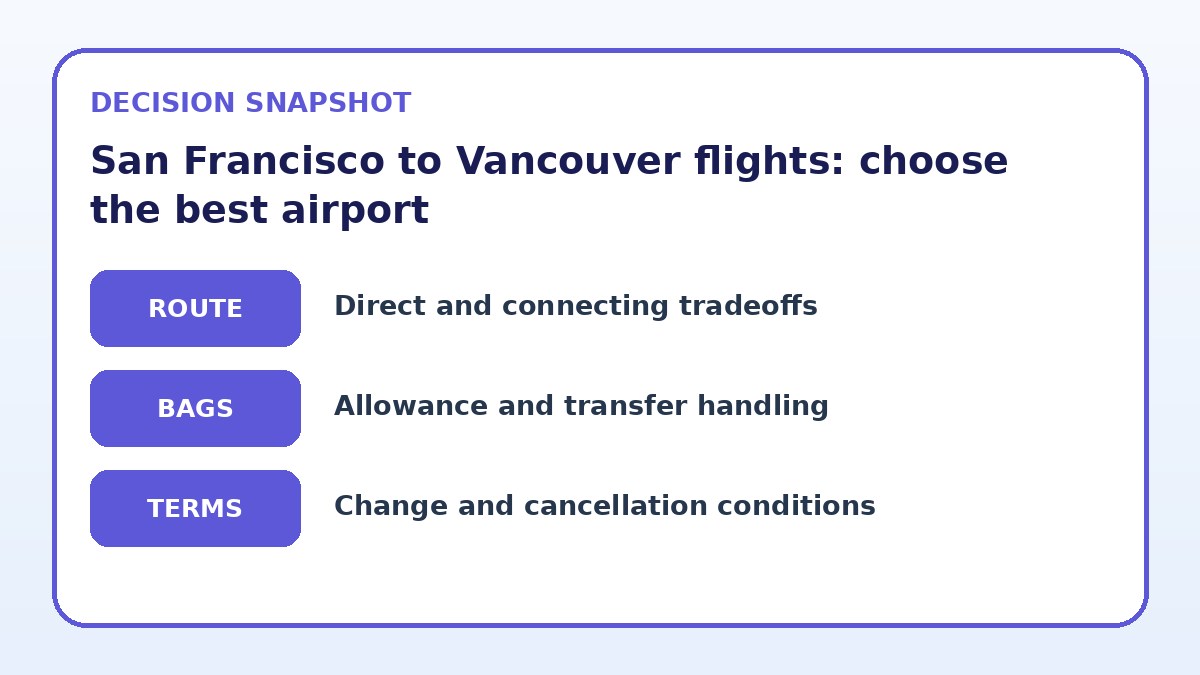
See current options before you compare the details
Availability and final conditions change. Open Trip.com now or keep reading for the practical comparison.
Why airport choice matters more with extra luggage
When you’re packing more than the average traveler — extra suitcases, sporting gear, or oversized items — the airport you choose affects more than the ticket price. A departure airport with more international flights and better ground handling typically has clearer baggage counters, more staff trained in oversized baggage handling, and facilities that make checking and reclaiming multiple pieces quicker. That reduces the chance of misrouted bags and gives you more options for rebooking if connections are missed. If your trip involves specialty items like ski gear or a bicycle, an airport familiar with frequent international traffic can be faster at documenting and processing unusual items.
Beyond handling, practical factors like the distance from your home, public transport or parking options, and the security queue times matter more when you’re managing heavy bags. A longer commute with heavy luggage can erase any ticket cost savings, while paid long-term parking or rideshare surcharges add real expense. Also consider the stress and physical effort: an extra-transfer itinerary — for example, a cheap flight out of a smaller airport that requires a tight connection — can leave you managing bags in uncomfortable situations. Balancing convenience, time, and carrier policy minimizes surprises at check-in and on arrival.
Comparing SFO, OAK, and SJC for baggage handling
San Francisco International (SFO) is the largest hub in the Bay Area and generally has the most frequent international-capable services, more airline counters with experienced staff, and clearer routing for interline transfers. That typically simplifies checking multiple pieces or oversized items and gives more options if a carrier enforces size or weight limits. Bigger airports also tend to have more equipment — wider check‑in conveyors, dedicated oversized baggage desks, and more frequent ramp staff — which can speed up the process from check-in to aircraft. If you anticipate needing special handling or prefer to avoid tight connections with heavy bags, SFO is the practical default.
Oakland (OAK) and San Jose (SJC) are attractive when proximity or ground travel time matters. OAK can be faster to reach from parts of the East Bay and sometimes offers straightforward domestic flights that connect through larger hubs. But OAK’s fewer international services can mean extra transfers, and smaller ground operations might mean slower processing for oversized pieces. San Jose is convenient for South Bay travelers and has decent domestic connectivity; it can work well when you can secure a single-connection itinerary with generous transfer time. For both smaller airports, confirm carrier policies and whether interline baggage transfers are guaranteed when connecting.
| Approach | Best for | Tradeoff to check |
|---|---|---|
| Prioritize nonstop from SFO | Travelers who want the fewest baggage transfers and fastest overall journey with extra items | May require longer ground travel from some Bay Area neighborhoods |
| Choose OAK to save door-to-gate time | East Bay residents who can secure a direct or single-connection flight | Fewer international services and smaller baggage facilities can increase handling time |
| Use SJC for South Bay convenience | South Bay travelers balancing shorter commutes with moderate baggage needs | Limited nonstops to Vancouver may force a connection and potential rehandling |
| Pick lowest fare but check total costs | Budget-minded travelers who can accept extra handling and longer transfer times | Savings can vanish once overweight/oversize fees and increased transfer risk are included |
Ready to check the option that fits your plan?
Use your exact dates and traveler details so the provider page can show the current total and conditions.
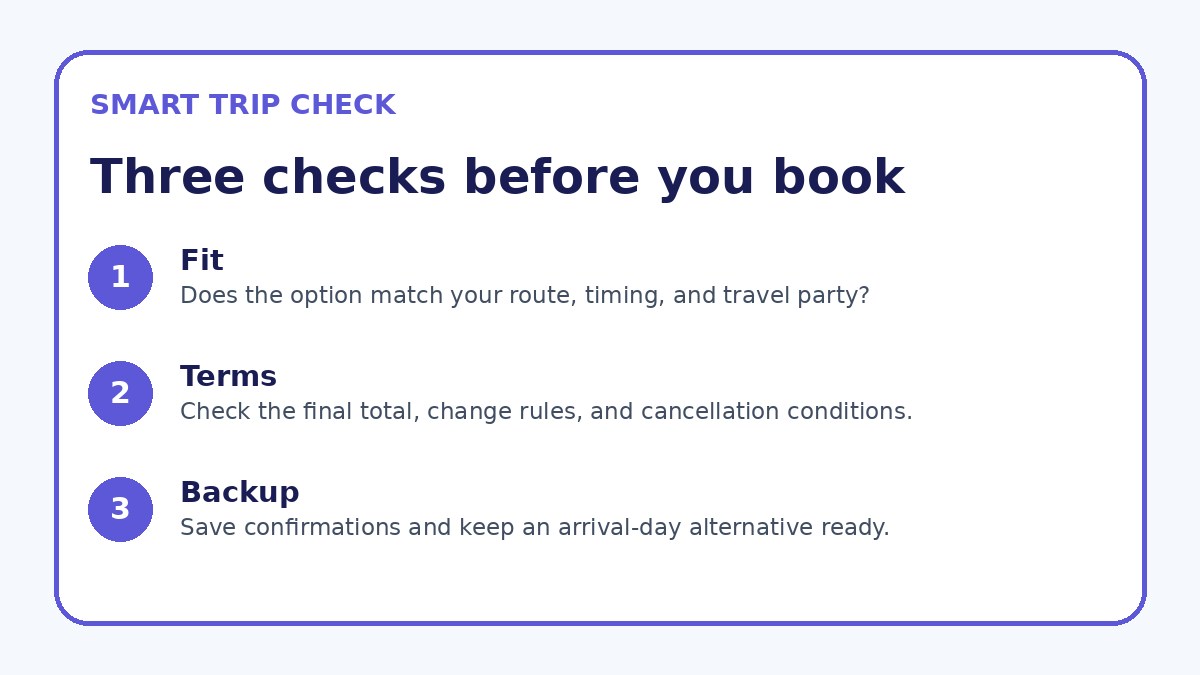
Practical booking criteria for travelers with extra baggage
When comparing flights, treat baggage as a line item in your decision matrix. Start by checking each airline’s checked-bag allowances, weight and size limits, and fees on the carrier’s final booking page — not third-party summaries — because policies vary widely by ticket type and can change. Look for itineraries that minimize the number of times bags must be rechecked or transferred; nonstop flights eliminate transfer risk entirely, while single-connection itineraries are the next best option. If a connection is required, choose a longer layover to allow for bag transfer and clearing customs if needed on an international connection.
Next, account for how you’ll get to the departure airport with your gear. Calculate door-to-gate time including parking or rideshare drop-off, security lines, and check-in or counter queues for oversized items. If you need special handling (bikes, skis, or musical instruments), confirm whether the airline requires advance notice or a separate service desk and where that desk is located at your chosen airport. Add any expected fees for overweight or oversized pieces to the fare comparison so you’re comparing true totals rather than headline ticket prices.
Before you book
- Confirm checked-bag allowances, weight limits, and oversize/overweight fees on the airline’s final booking page.
- Compare nonstop versus single-connection itineraries and prioritize fewer transfers for heavy bags.
- Calculate door-to-gate time including parking, shuttle, or rideshare with your luggage in mind.
- If you have specialty items, verify advance-notice requirements and the carrier’s handling procedures.
- Choose connection windows long enough to transfer bags and clear any required security or customs steps.
- Photograph and label each bag, keep receipts for valuable items, and note the airline’s baggage claim process.
Day-of travel tips and what to verify before you leave
On travel day, arrive earlier than usual when you're carrying extra bags: airlines and airports typically recommend extra time for oversized items. For international departures to Canada, keep documents and receipts for specialty equipment handy in case staff request them. If you’re connecting, confirm whether you need to re‑collect and re‑check bags through customs at your first Canadian or U.S. stop; procedures differ by carrier and routing. Photograph your packed items and label hard-to-describe pieces clearly with contact info — these small steps reduce stress if an item requires further inspection or handling.
Before you leave home, verify three things on the carrier’s booking page: the exact checked-bag allowance and fees for each piece, any required declarations or advance notices for specialty items, and whether baggage transfers are guaranteed for multi-leg itineraries. Also check airport facility notes: some smaller terminals have limited counter hours for oversized baggage or specific drop-off locations that could affect your schedule. As a final step, compare live availability and conditions on Trip.com (optional) or the airline site to ensure the itinerary you chose still meets your baggage and timing needs.
Frequently asked questions
Should I always choose SFO if I have extra luggage?
Not always. SFO typically offers more international services and larger baggage facilities, which reduces transfer risk, but it can mean longer ground travel for some Bay Area locations. If SFO requires a much longer commute, or if you find a direct flight from OAK or SJC that avoids connections, the smaller airport may be more practical. Always compare total door-to-door time, the number of baggage transfers, and the carrier’s checked-bag policies on the final booking page before deciding.
How much extra time should I allow at the airport for oversized or multiple bags?
Allow more time than for a typical carry-on-only trip: plan to arrive earlier than the standard recommendation because oversized items often require special handling, documentation, or a dedicated counter. If you’re checking sports equipment or multiple heavy pieces, add at least 30–60 minutes to your usual arrival time to accommodate inspection and possible repacking. For connections, build in additional layover time to ensure bags are transferred and any customs clearance is completed without risk of missing the next flight.
What should I check about connecting flights when I have extra luggage?
Verify whether your bags are checked through to the final destination or must be re‑claimed and re‑checked at the connection — procedures vary by carrier and routing. Check minimum connection times and whether the airline guarantees baggage transfer on separate legs. If a connection involves switching carriers, confirm interline baggage agreements. Finally, confirm the layover duration gives ample time for bag transfer plus potential customs or security steps; when in doubt, opt for a longer connection to reduce transfer risk.
Final planning note
Choosing the most practical departure airport from San Francisco to Vancouver when you have extra luggage comes down to balancing fewer baggage transfers against total travel time and convenience. SFO is the most luggage-friendly option for many travelers because of its international infrastructure and handling capacity, but OAK and SJC can be better choices if they reduce your ground travel or provide a direct routing with adequate baggage support. Before you book, compare true door-to-door times, add expected oversize or overweight fees to the fare, and confirm baggage transfer rules and any special handling requirements on the airline’s booking page. Small planning steps — longer layovers, advance notices for specialty items, and clear bag labeling — pay off in less stress when you arrive in Vancouver.
Continue planning
Check current options and final conditions
Use the provider page to confirm live availability, the final total, cancellation terms, and every condition that matters to your trip.
This evergreen planning guide was created with AI-assisted drafting and a structured quality review. It does not display live prices, schedules, availability, visa guidance, or provider rankings. Verify current details before booking. Some links are affiliate links; we may earn a commission at no additional cost to you.