If you're planning Seoul to Gangneung transport as a first-time visitor, start by choosing whether you want the fastest point-to-point transfer, a scenic multi-stop journey, or a flexible self-drive route. The practical answer: list your must-see stops (for example a coastal town, a national park, or a ski area), then shortlist ground options—express train or highway bus for simple transfers, regional train or car for flexible multi-stop travel—and build an itinerary that links stations or interchanges logically. Decide group size, luggage needs, and how comfortable you are changing vehicles; those factors steer you toward rail, bus, or rental car. Before booking, check final schedules, platform/terminal details and refund rules on the provider’s official booking page (or compare availability on Trip.com). Below you’ll find clear decision criteria, route-planning steps, and a checklist to finalize reservations without surprises.
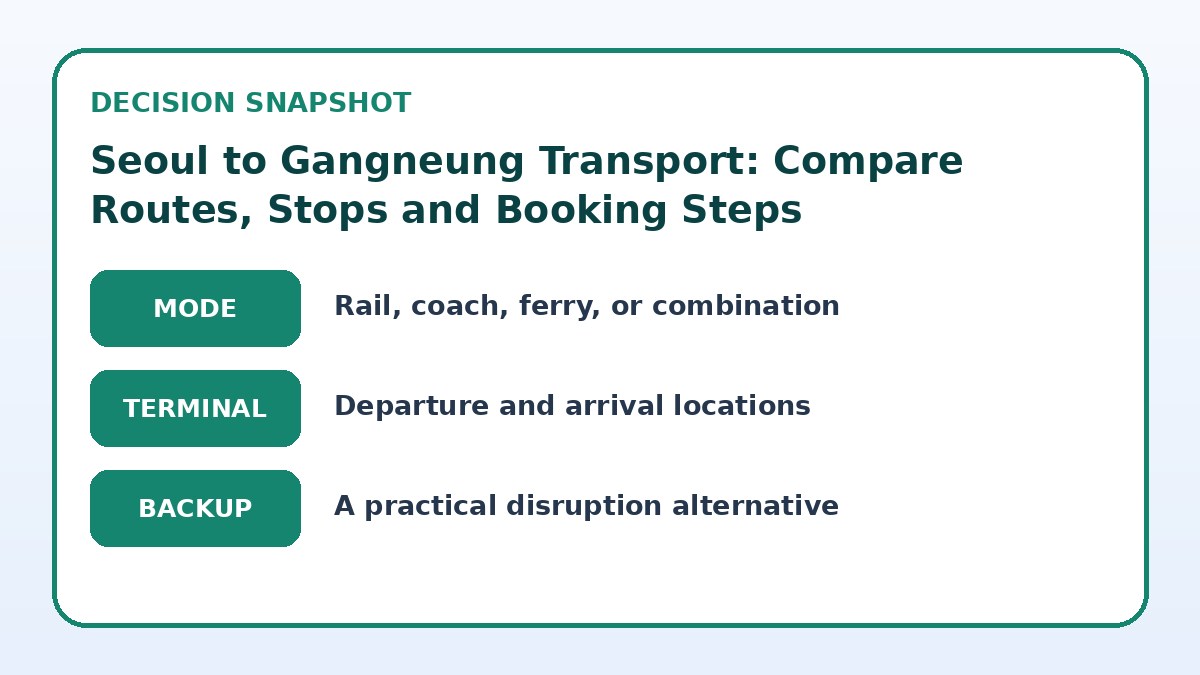
See current options before you compare the details
Availability and final conditions change. Open Trip.com now or keep reading for the practical comparison.
Choosing the right mode: train, bus, or car
Start by matching modes to the experience you want. Trains are generally straightforward for travelers who prefer station-to-station transfers and want fewer traffic variables. Buses can offer more departure frequency and stops closer to small towns. Renting a car gives the most control for a multi-city route with off-line detours, but it adds navigation, parking, and local driving considerations. For first-time visitors, weighing comfort with navigation effort will quickly narrow the sensible choices.
Consider group composition and luggage when choosing. Solo travelers or couples often find trains efficient; families with lots of luggage or travelers aiming to explore rural sites may prefer a car. If you choose public transport, plan transfers so you have comfortable buffer time between connections. For all modes, identify where you will confirm final schedules and ticketing — use official operator sites and a secondary aggregator like Trip.com to compare availability, then verify details on the operator’s page before purchase.
Building a multi-stop itinerary between Seoul and Gangneung
Map your must-see stops in a clear sequence from Seoul to Gangneung. Place larger hubs or interchange towns where you’ll change lines or modes. Look for station names and main road junctions that commonly serve as transfer points. When you assemble stops, keep daily travel hours realistic; multi-stop days are satisfying when each segment is manageable and you avoid backtracking. Sketch a backup single-day transfer in case weather or schedules force you to skip an intermediate stop.
Turn your sketch into a practical plan by assigning likely modes for each segment: which legs are best by train, which by local bus, which by car. For train/bus segments, note the departure/arrival stations and whether seat reservations are recommended. For car legs, identify likely parking options and safe places to refuel. For every segment, add one verification task: check exact platform/terminal names, transfer walking times, and whether luggage limits apply — and confirm those on the provider’s booking page before paying.
| Approach | Best for | Tradeoff to check |
|---|---|---|
| Express train point-to-point | Travelers prioritizing speed and simple transfers | Less opportunity to stop at intermediate small towns or scenic detours |
| Regional train with planned stops | Those who want scenic rail travel and flexible multi-stop days | Usually slower and may require more careful ticketing and transfer planning |
| Highway bus with frequent departures | Budget-conscious travelers who prefer direct routes without driving | Limited control over departure times and less flexibility for side trips |
| Rental car self-drive | Groups or travelers seeking maximum routing freedom and remote stops | You take on navigation, parking, tolls, and local driving rules |
Ready to check the option that fits your plan?
Use your exact dates and traveler details so the provider page can show the current total and conditions.
Decision criteria: comfort, time, cost, and flexibility
Use four simple criteria when comparing options. Comfort covers seat type, ease of boarding, and luggage handling. Time covers door-to-door travel and realistic transfer buffers. Cost is not just ticket price but also local transit to stations, parking, and potential tolls. Flexibility measures how easy it is to change plans: open-date tickets, car rentals with flexible returns, or trains with multiple daily departures will affect your tolerance for late changes.
Prioritize these criteria for your trip and eliminate options that fail a non-negotiable need. For instance, if you absolutely need guaranteed luggage storage, eliminate services that do not allow large bags or that require standing tickets. If you value scenery and slow travel, deprioritize the fastest express services and look for regional lines or scenic coastal roads. Always list the single most important criterion first, then use the others to choose between near-equal options.
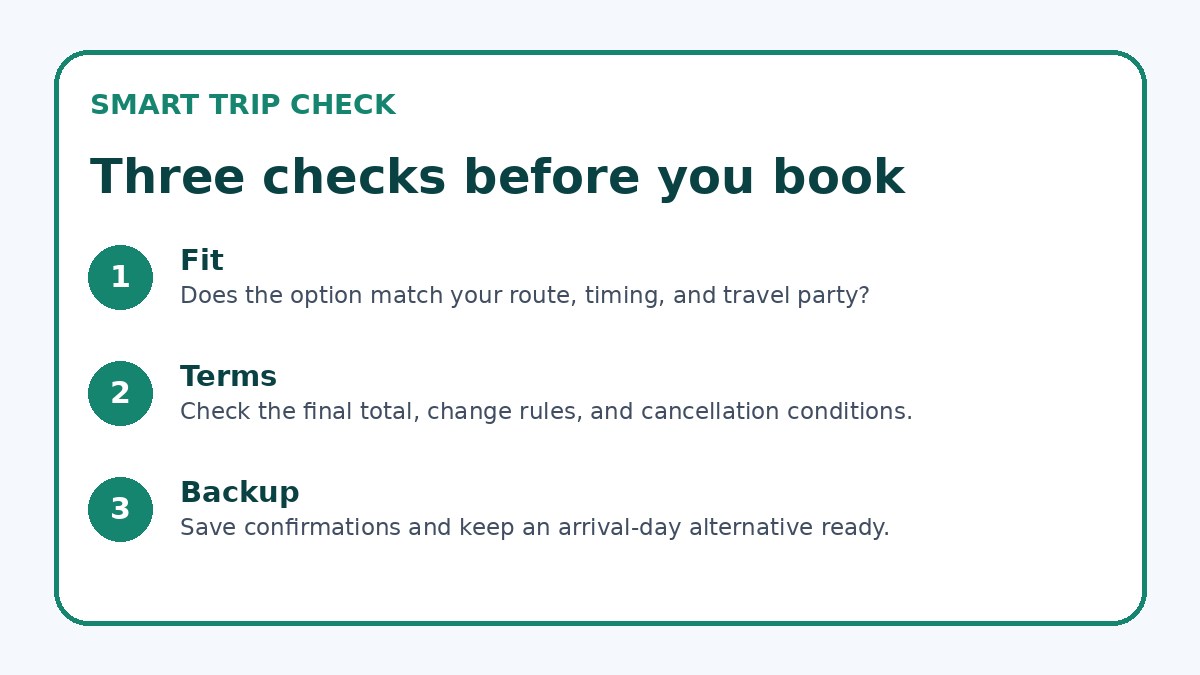
Before you book
- List your must-see stops in order and sketch a daily route with realistic travel hours per day.
- For each segment, note the departure and arrival station or terminal names and the likely interchange points.
- Check on the operator’s official booking page whether seat reservations are required and what baggage rules apply.
- Compare availability on an aggregator such as Trip.com, then confirm schedule and refund policy directly with the operator before paying.
- Prepare digital and printed confirmations with reservation numbers and operator contact details for every booked segment.
- On travel day, reconfirm platforms or terminal gates and allow buffer time for ticket collection, transfers, and unexpected delays.
Practical checks before you book and depart
Before final payment, confirm the exact departure/arrival locations and whether transfers require changing stations within the same city. If a segment uses different operators, identify where to collect tickets and whether separate reservations are needed. Review refund and change policies and make screenshots or save confirmation emails that include reservation numbers and the provider’s customer service contact information.
On travel day, reconfirm your chosen connections and platform assignments as early as you can. If driving, check local traffic advisories and parking availability near planned stopovers. For public transport, arrive early at terminals to allow time for ticket collection and security checks. If you used an aggregator like Trip.com to compare options, always verify the final booking details and seat assignments directly with the operator before departure.
Frequently asked questions
Should I book trains or buses in advance for a first-time trip from Seoul to Gangneung?
Advance booking depends on your flexibility and travel season. If you have fixed dates and want a specific departure time or seat, reserving ahead reduces last-minute stress. If you plan a multi-stop itinerary with uncertain timing, keep one flexible leg or book refundable tickets where possible. Always verify seat-reservation rules, refund conditions, and exact boarding locations on the operator’s official site before completing a purchase.
Is renting a car the best way to visit smaller towns between Seoul and Gangneung?
A rental car gives the most freedom to visit rural spots or staggered attractions, but it also requires comfort with local driving norms, parking logistics, and navigating toll roads. If you choose to drive, plan realistic daily distances, locate overnight parking at each stop, and confirm cross-region drop-off rules if you don’t return the car to the pick-up city. Compare the driving plan against public-transport legs to ensure the added effort matches your trip priorities.
How do I handle transfers between different train or bus operators on a multi-city route?
When your plan uses multiple operators, identify transfer stations and whether tickets must be collected in person. Allow extra walking time between platforms or terminals and confirm whether separate tickets are needed for each leg. Keep contact numbers for each operator and save screenshots of your itineraries. If a connection is tight, arrange an alternative later departure or a single-operator route to reduce the risk of missed segments.
Final planning note
Planning Seoul to Gangneung transport as a multi-city ground itinerary is about matching priorities to modes and confirming the operational details that matter in practice. Start with a clear list of stops and a top priority—speed, scenery, or flexibility—then draft a linear route assigning train, bus, or car to each leg. Use the comparison criteria to eliminate unsuitable options, verify schedules and policies on operator pages, and keep a backup plan for each travel day. With a compact checklist and confirmation steps, you’ll turn an appealing route into a dependable travel plan that fits your comfort level and trip goals.
Continue planning
Check current options and final conditions
Use the provider page to confirm live availability, the final total, cancellation terms, and every condition that matters to your trip.
This evergreen planning guide was created with AI-assisted drafting and a structured quality review. It does not display live prices, schedules, availability, visa guidance, or provider rankings. Verify current details before booking. Some links are affiliate links; we may earn a commission at no additional cost to you.