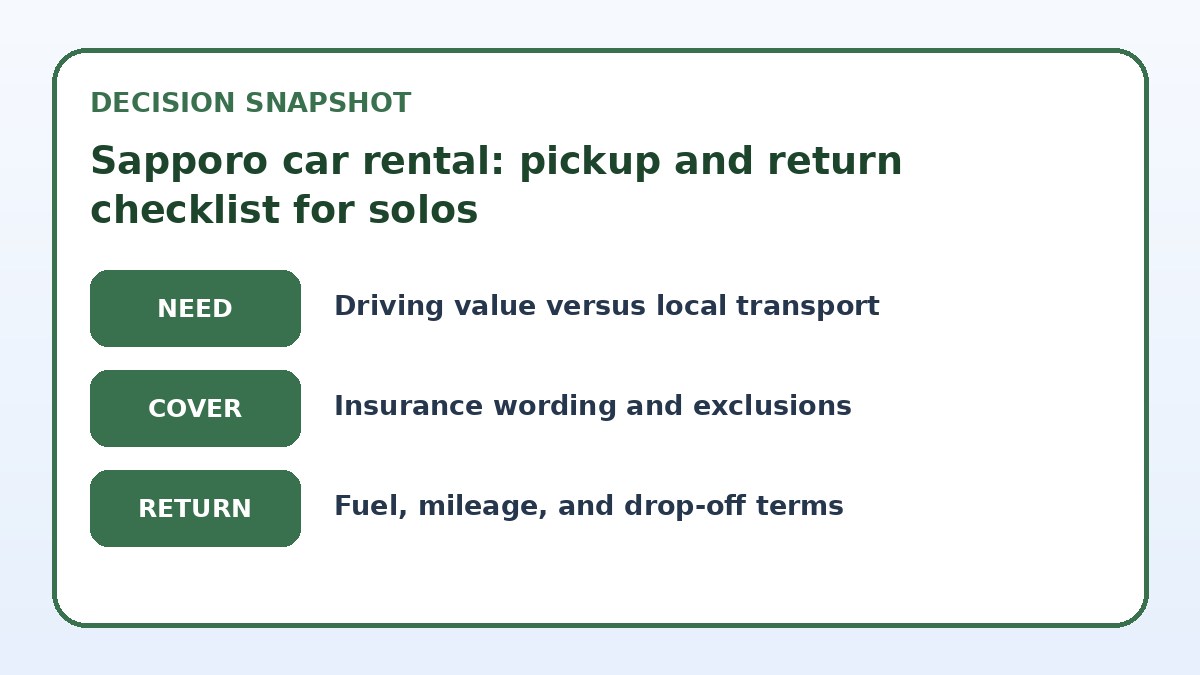
If you’re traveling alone in Sapporo and planning to rent a car, prioritize clear pickup and return terms before booking. The essentials: confirm the pickup location and opening hours, understand where you must return the car (airport, downtown office, or designated lot), check fuel, mileage and toll rules, and verify what ID, license and payment methods are accepted. These items determine whether a same-day plan stays simple or becomes a logistical headache. After the bottom-line checklist, this article explains tradeoffs—flexibility versus cost, convenience versus late-return penalties—and gives the decision criteria solo travelers need to choose pickup and return options that match their itinerary.
See current options before you compare the details
Availability and final conditions change. Open Trip.com now or keep reading for the practical comparison.
Choosing the right pickup location
Where you collect the car determines much of the day’s logistics. Airport pick-ups can be most convenient if you arrive by air and want to start driving immediately without carrying luggage across public transit. City-center offices may be closer to your accommodation but often require a short taxi or train ride, which adds time and coordination when you’re traveling alone. Consider arrival time and how tired you’ll be: a direct handover at the airport typically reduces transfers at the cost of potential counters or shuttle waits.
When comparing pickup offices, check operating hours and whether late arrivals are accepted. Some locations close earlier than you think, and the procedure for after-hours pick-up varies by firm—documented photo evidence or a remote key drop may be required. Also confirm where the car is parked; larger lots sometimes require a shuttle ride and a short walk. For solo travelers who prioritize low-stress starts, pick the location that minimizes extra steps from plane or train to driver’s seat.
Understanding return terms and penalties
Return rules can create surprise charges if you overlook them. Verify the published return window and the policy for late returns: how long is the grace period, what per-hour or per-day penalties apply, and whether the agency offers extensions. Also check whether returns to a different office (one-way returns) are permitted and what fees apply—switching between airport and city locations often triggers additional charges. For solos with tight departures, align return times with your transport out of Sapporo to avoid stress.
Another frequent trap is the after-hours return process. If you must leave early for a train or flight, confirm whether the company requires a written inspection report or photos of the car on return to avoid disputes about damage. Also ask how final inspections are logged and when the security deposit is released; some companies process this immediately, others take days. Make sure the return route and final inspection method are feasible for a solo traveler carrying luggage and managing time.
| Approach | Best for | Tradeoff to check |
|---|---|---|
| Airport pickup and return | Arrivals and departures by air who want minimal transfers. | May have limited hours, longer queues, and slightly higher fees compared with downtown offices. |
| City-center office pickup and return | Travelers staying near central Sapporo who prefer short transfers at either end. | Requires an extra transfer from the airport and possible luggage handling on public transit. |
| One-way return to a different location | Linear itineraries that finish near a different transport hub. | Convenient routing can incur a sizable one-way fee and needs advance confirmation. |
| Out-of-hours return | Early morning or late-night departures when offices are closed. | Often requires photo proof and may delay deposit release or risk inspection disputes. |
Ready to check the option that fits your plan?
Use your exact dates and traveler details so the provider page can show the current total and conditions.
Fuel, tolls and mileage — what affects your choice
Fuel policy matters more for solo travelers who prefer simple routines. Full-to-full is straightforward: you pick up a full tank and return it full, avoiding fuel service charges. Prepaid fuel or policies with estimated refueling fees can be convenient but often lack transparency about how final charges are calculated. Also check whether the vehicle uses regular or premium fuel; driving unfamiliar roads with an engine that requires premium can complicate refuelling stops for someone traveling alone.
Tolls and mileage caps are easy to miss but can change costs and route planning. Hokkaido’s expressways use tolls, and some car rentals include an ETC device that charges tolls to your account—confirm whether this is optional, how tolls are billed, and whether you need to register a credit card. If mileage is limited, compare daily caps and overage rates; unlimited mileage is simpler for day trips that cover long distances, while limited plans may be cheaper if you plan to stay local.
Before you book
- Confirm pickup location address, opening hours, and exact procedure for out-of-hours collection before you leave.
- Verify required documents (passport, driver’s licence, IDP or translation) and bring originals plus digital copies.
- Ask the company to spell out fuel policy (full-to-full or prepaid) and how final fuel charges are calculated.
- Check whether an ETC toll device is available, how tolls are billed, and what payment method is needed.
- Clarify return office, late-return grace period, and per-hour or per-day penalty rates for delays.
- Photograph the vehicle on pickup and return, noting mileage and any existing damage, and keep inspection records.
Documentation, payment holds and local rules
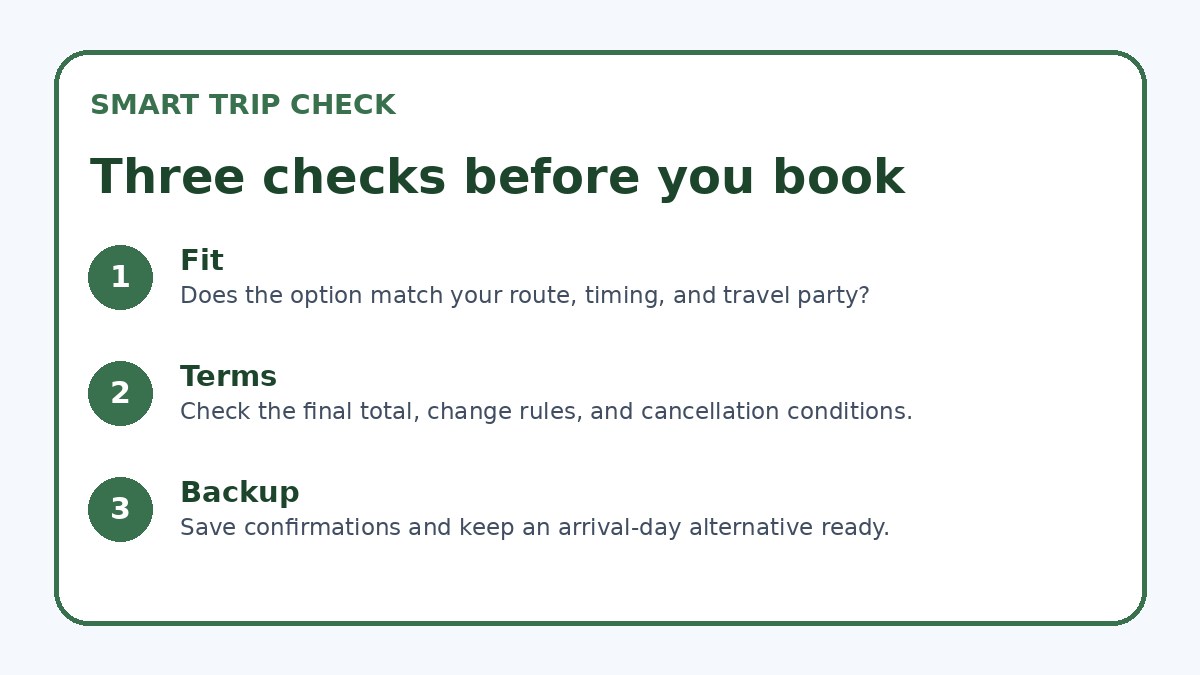
Before you book, verify exactly what documents the rental firm will require at pickup. This typically includes a passport, a valid driver’s licence, and sometimes an International Driving Permit or official translation for non-Japanese licences. Confirm whether the rental firm accepts your licence country, whether age limits apply, and whether you must present a return ticket or proof of onward travel. When in doubt, take screenshots or print the provider’s booking page requirements to show at the counter.
Payment and deposits are also important for solos who manage funds closely. Many firms place a hold on a credit card for the deposit—ask what amount is blocked, whether debit cards are accepted, and how long holds remain after return. If you expect to pay by cash or local card, confirm acceptance in advance. Finally, ask the company to point out any regional driving rules or seasonal considerations that affect pickup or return, such as winter tyre requirements or mandatory parking regulations in parts of Sapporo.
Frequently asked questions
Do I need an International Driving Permit to rent a car in Sapporo?
Requirements depend on the issuing country of your license and the rental company. Many Japanese rental firms accept licences from some countries directly, while others require an International Driving Permit (IDP) or an official translation. To avoid surprises, check the rental provider’s booking page for exact document requirements and confirm whether your home licence is recognized. If you’re unsure, obtain an IDP before travel and carry both the IDP and your original licence.
How do after-hours returns usually work for solo travelers?
After-hours returns are common but processes vary. Some companies provide a drop-box for keys plus instructions to park in a specific bay and leave a completed inspection form. Others ask you to take timestamped photos and email them. Ask the provider to explain their required documentation, where to park, and the timeline for releasing your deposit. Plan extra time to photograph the car and record mileage so you can prove condition and avoid disputes.
What should I check at pickup to avoid disputes later?
Walk the vehicle’s exterior and interior, noting scratches, dents, and cleanliness. Verify mileage on the odometer and that fuel level matches the rental contract. Confirm that spare tyre, jack, and emergency kit are present and that any promised navigation or ETC device is installed and functional. Take clear photos from multiple angles and get the agent to initial any pre-existing damage on the rental agreement. Keep a copy of the filled inspection sheet and photos until your deposit is returned.
Final planning note
For solo travelers in Sapporo, the smallest pickup or return oversight can create a disproportionate disruption to your itinerary. Focus on these four booking-stage checks: pickup and return locations and hours, required documentation, fuel and toll policies, and the after-hours/late-return process. Compare options against your arrival and departure times, luggage needs, and comfort with public transfers. Before finalizing a booking, verify the provider’s exact terms on the booking page and save screenshots. If you want a second place to compare availability and current conditions, you can check Trip.com, but always rely on the rental company’s published terms for final confirmation.
Continue planning
Check current options and final conditions
Use the provider page to confirm live availability, the final total, cancellation terms, and every condition that matters to your trip.
This evergreen planning guide was created with AI-assisted drafting and a structured quality review. It does not display live prices, schedules, availability, visa guidance, or provider rankings. Verify current details before booking. Some links are affiliate links; we may earn a commission at no additional cost to you.