
If you’re traveling from Rome to Florence, the practical question is simple: which station or terminal do you use, and how do you get between them without wasting time? For most visitors the best single step is to pick your arrival and departure stations first, then match trains and local transfers that minimize luggage handling and uncertain connections. That means comparing Rome’s main rail hubs and airports with Florence’s train stations, checking whether your ticket is direct or requires a change, and planning the last-mile transfer (taxi, bus, or rideshare) that fits your schedule and budget. Below you’ll find clear tradeoffs, decision criteria, and checklists so you can choose the transfer approach that fits your energy level, luggage, and sightseeing priorities.
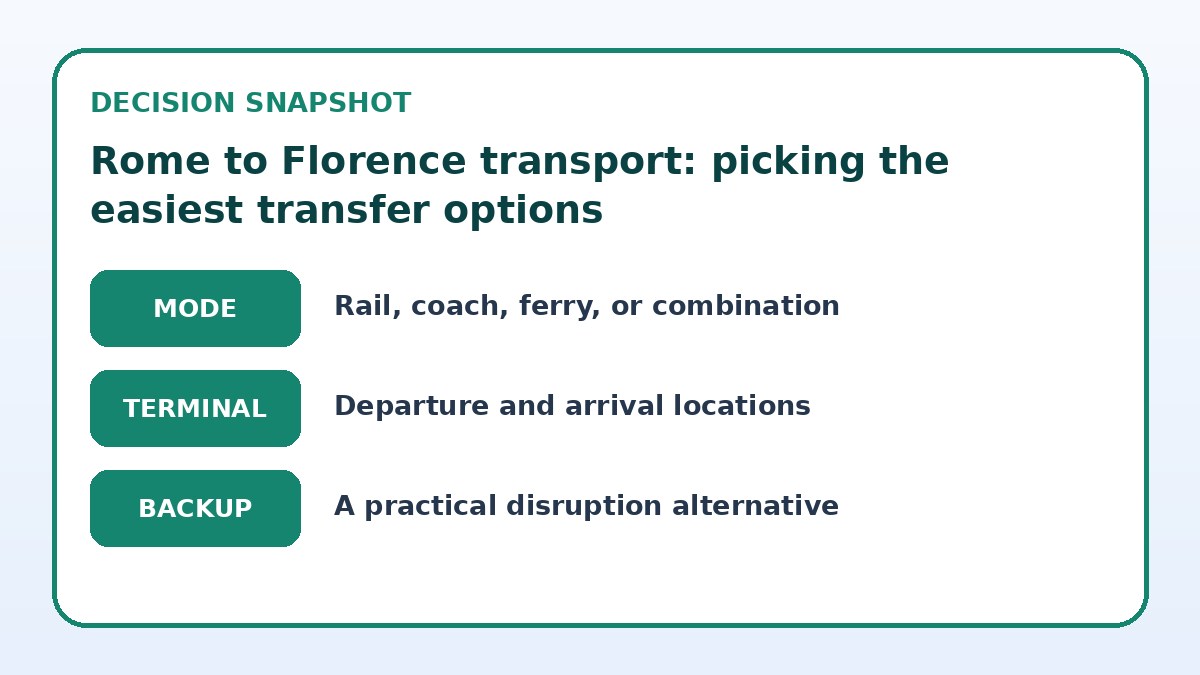
See current options before you compare the details
Availability and final conditions change. Open Trip.com now or keep reading for the practical comparison.
Which Rome stations and terminals to consider
Rome has more than one station and two airports; which matters depends on where your train or flight starts. Termini is the main rail hub with the most high-speed departures; Tiburtina handles some regional or alternative high-speed services and can be easier to reach from the eastern parts of the city. If you’re leaving from an airport, you’ll need to move from Fiumicino (major international hub) or Ciampino (smaller, often low-cost carriers) to a train station first. Each departure point changes the ground-time you must allow: trains from Termini give the widest choice and frequent departures, while leaving from Tiburtina can be more convenient if you’re staying nearby or connecting from a regional service.
For first-time visitors, the practical choice often comes down to proximity to your accommodation and how much luggage you have. If you’re in central Rome with manageable bags, aim for Termini because of direct high-speed services to Florence’s main station. If you’re arriving at Fiumicino airport, factor in the additional transfer to a station—this can be a shuttle, local train, or taxi—and check the estimated time and reliability of that connection before finalising your train booking. Always verify the departure station printed on your booked ticket and any platform or terminal notes on the provider’s final booking page.
Florence arrival options and last-mile choices
Florence’s main rail station is centrally located and serves the majority of high-speed services arriving from Rome; smaller stations or regional stops exist but are less common for long-distance travelers. Once you arrive, consider whether you want to walk, take public transit, or use a taxi or rideshare. Walking is often the fastest for centrally located hotels, while buses and taxis are better if you’re carrying heavy luggage, traveling late, or heading to a specific neighbourhood outside the historic centre. Check where your accommodation sits relative to the station and pick the transfer mode that keeps you comfortable without complicating onward travel.
If your arrival is at an alternative station or you disembark at a time when trains are less frequent, plan a backup: a taxi phone number, an app-based ride, or a clear bus route. Train arrival platforms and station exits can be busy—identify the correct exit for cabs or buses before you step off the train. Remember to verify on the train provider’s final booking page whether your ticket includes reserved seats or any carriage-specific arrival instructions, and double-check the walk or transfer time shown on your accommodation’s directions to avoid surprises.
| Approach | Best for | Tradeoff to check |
|---|---|---|
| Prioritise speed (direct high-speed trains) | Travelers with light luggage and tight schedules | May depart from a station that is less convenient to your lodging or airport transfers |
| Prioritise cost (regional trains or buses) | Budget-conscious travelers or those on flexible schedules | Longer total travel time and more transfers; more handling of luggage required |
| Prioritise simplicity (single transfer from airport to central station then one train) | First-time visitors who prefer predictable steps | Might be slower or slightly more expensive than complex connections optimized for time |
| Prioritise comfort (taxi or private transfer door-to-door) | Groups, heavy luggage, or those valuing minimal walking | Higher cost and variable availability, especially during peak times |
Ready to check the option that fits your plan?
Use your exact dates and traveler details so the provider page can show the current total and conditions.
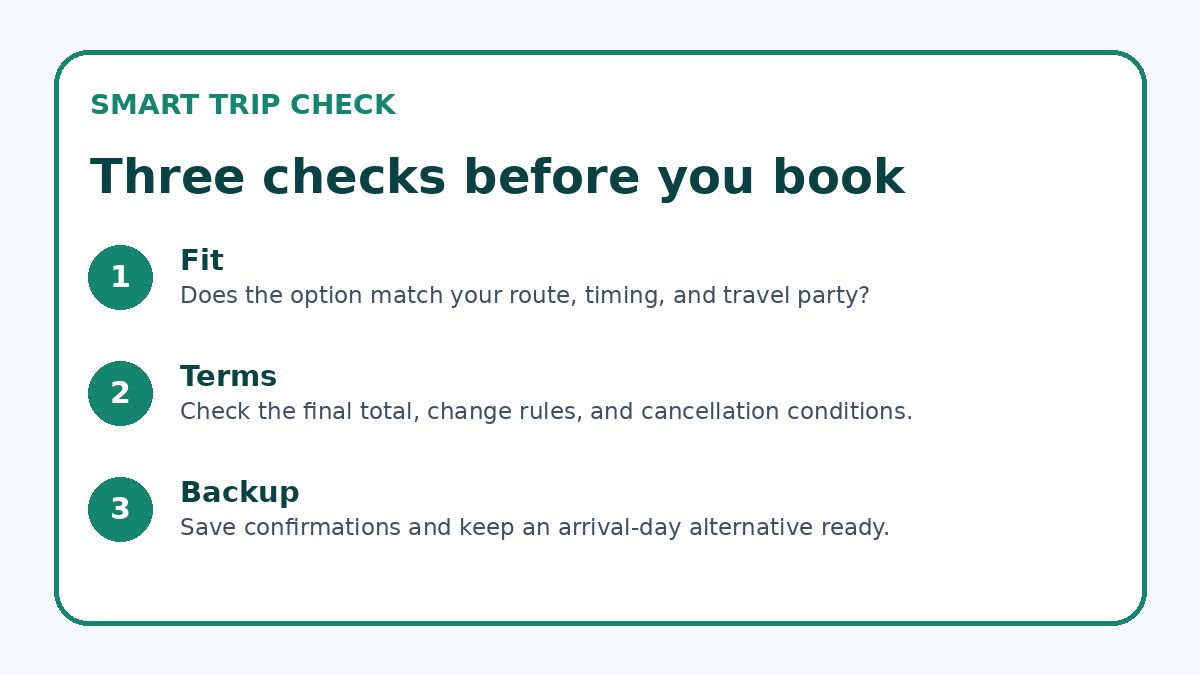
Comparing direct trains versus changes and mixed transfers
Direct high-speed trains between Rome and Florence simplify transfers: one boarding, fewer worries about missed connections, and predictable station-to-station timing. However, direct options may not align with your preferred departure station or local schedule—if you must leave from a smaller station or catch a specific flight, a connection could be necessary. When comparing direct and connecting routes, consider total door-to-door time rather than just in-train duration. Add realistic transfer times between stations or terminals, luggage handling time, and a buffer for delays when evaluating which option truly saves time.
If your route requires changing trains or switching from an airport to a rail station, plan the transfer leg with conservative timing and straightforward navigation. Choose connections with the same provider or clear transfer corridors where platforms and terminals are close together. When providers differ, read the final booking pages to confirm luggage rules, required check-ins, seat reservations, and any transfer guidance. If you must switch terminals at Rome’s airports, confirm shuttle frequencies and allow extra time for security or baggage collection as needed.
Before you book
- Confirm the exact departure and arrival stations printed on your train or flight booking before planning any transfers.
- Estimate door-to-door time by adding transfer, luggage handling, and buffer time; book trains that leave ample margin for your connection.
- If arriving by air, verify the recommended transfer options to the rail station on the airline or airport page before buying train tickets.
- Reserve taxis or private transfers in advance if you have heavy luggage, arrive late, or need a guaranteed pickup point.
- Pack essentials and documents in a small day bag so you can move quickly if you must switch trains or terminals.
- Save key addresses and a local contact number in your phone and a paper copy in case mobile service is unreliable.
Practical tips for luggage, timing, and peace of mind
Pack and plan according to the types of transfer you’ll face. If your itinerary involves airport-to-station moves or multiple changes, travel with luggage that’s manageable on stairs and through crowded platforms. Use luggage tags and keep essential items in an easily reachable bag. Also, plan arrival and departure times to avoid peak commuter hours if you dislike crowds; alternatively, booking slightly earlier or later trains can reduce the scramble at busy platforms and give you more comfortable last-mile transfer options.
Buy tickets that match your risk tolerance: flexible tickets or those that allow exchanges make a stressful connection easier to handle, but such options can be more complicated—verify refund and change policies on the provider’s final booking page. Consider local transfer services only after checking current availability and pickup points. Finally, have contact info for your accommodation and a backup transfer plan (known taxi number, local bus line, or rideshare app) in case your scheduled connection is disrupted.
Frequently asked questions
Do I need to change stations when travelling from Rome to Florence?
Not always. Many high-speed services run directly between Rome’s major station and Florence’s main station, meaning no intermediate station change is necessary. However, whether you need to change depends on where your journey starts (city centre or airport) and the specific train service you book. If your ticket shows a departure from a secondary station, or if you arrive into Rome by flight at one airport but your train departs from a different station, plan a transfer between those points. Always confirm the departure and arrival stations and any transfer instructions on the provider’s final booking page before travel.
How much time should I allow for transfers at Rome airports or between stations?
Allow more time than a quick map suggests. For airport-to-station transfers, factor in baggage collection, the transfer itself, and potential security or traffic delays. For city-to-city station transfers within Rome, allocate at least 45–60 minutes for simple moves; if you’re navigating unfamiliar terminals, travelling with small children, or carrying oversized luggage, build in 90 minutes or more. If you’re connecting between providers or switching from a flight to a train, choose a larger buffer and verify transfer options on airline and train provider pages before booking to avoid tight connections.
What’s the easiest way to handle luggage during transfers between Rome and Florence?
Choose luggage based on the transfer type you expect: rolling suitcases or backpacks work best for mixed walking and platform transfers. If you prefer not to handle bags on stairs or crowded platforms, consider pre-booking a taxi or private transfer for the airport-to-station leg or a door-to-door option for the whole trip. Verify baggage allowances and carriage rules on the train company’s final booking page—some services have specific space or size rules for large items. Keep important items in a carry-on and use luggage straps or tags to make identification easy during any handoffs.
Final planning note
Travel between Rome and Florence can be straightforward if you plan the station and terminal parts first. Start by confirming the exact departure and arrival points shown on your tickets, then match ground transfers that minimize steps and luggage handling. Decide whether speed, cost, or simplicity is most important to you, and select trains and local transfers accordingly. Always verify transfer options, luggage rules, and any seat or carriage notes on the provider’s final booking page before you commit. When you plan conservatively and have a backup transfer, you’ll reduce stress and have more energy to enjoy Florence when you arrive.
Continue planning
Check current options and final conditions
Use the provider page to confirm live availability, the final total, cancellation terms, and every condition that matters to your trip.
This evergreen planning guide was created with AI-assisted drafting and a structured quality review. It does not display live prices, schedules, availability, visa guidance, or provider rankings. Verify current details before booking. Some links are affiliate links; we may earn a commission at no additional cost to you.