
If you arrive in Seoul late at night with extra luggage, the practical priority is simple: book a hotel that allows easy, low-effort arrival and temporary luggage handling. That means choosing a property near a reliable transfer option (airport express, major train or bus stop, or a consistent taxi route), confirming late check-in and luggage storage rules, and picking a room or service that reduces hauling—ground-floor rooms, elevators, or porter assistance. Think in terms of minutes and friction: how long will you wait for transport, carry bags from vehicle to room, or store luggage if you want to explore briefly? This article walks through the tradeoffs—location vs. price, storage options, and transport connections—so you can pick the best Seoul hotels and the right arrival plan for your personal tolerance for carrying bags and navigating after a long day of travel.
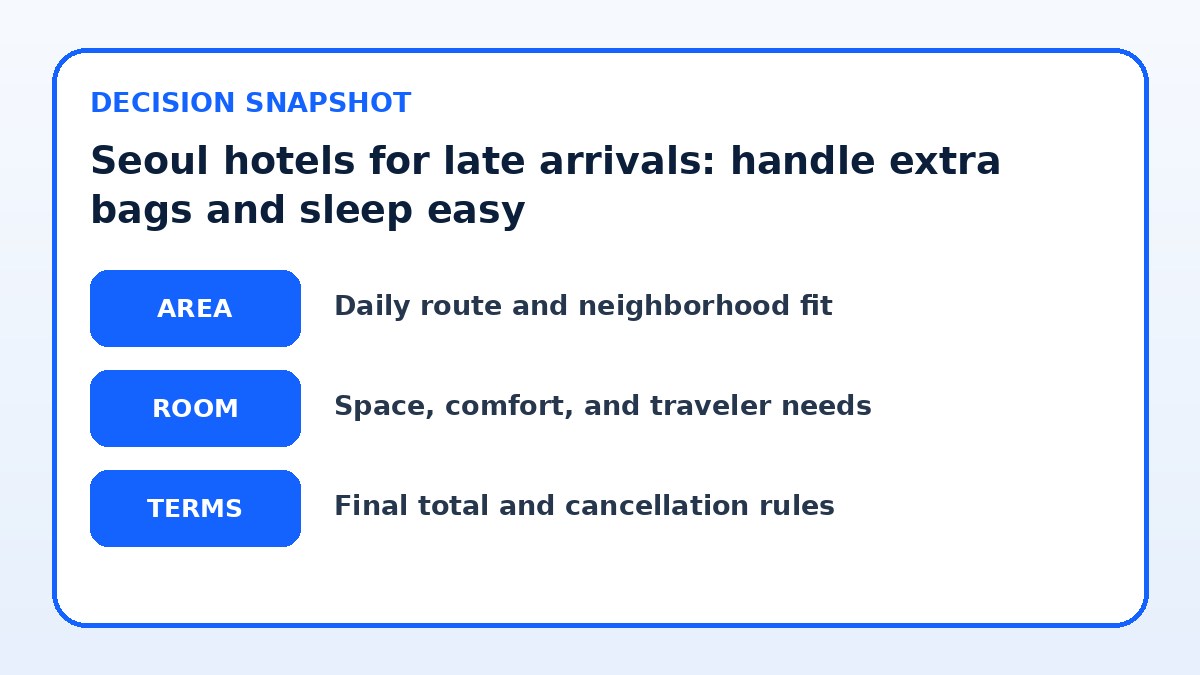
See current options before you compare the details
Availability and final conditions change. Open Trip.com now or keep reading for the practical comparison.
Choose location based on your arrival method
Where you stay should flow from how you reach Seoul. If you arrive at Incheon Airport and prefer rail, hotels near Seoul Station or major subway lines that connect to the AREX (Airport Railroad Express) will minimize transfers and time hauling luggage. If you arrive late and plan to take a taxi, choose neighborhoods with straightforward routes to and from the airport—central districts like Myeongdong, Jongno, or Gangnam are common choices because drivers know them well. For bus arrivals or long-distance trains, pick hotels close to the terminal to avoid dragging bags across poorly lit streets or multiple staircases late at night.
Compare transfers by estimating door-to-door time and how much of it involves stairs, long corridors, or crowded platforms. An extra 10–20 minutes on a moving train is usually easier than 10 minutes of carrying bags down steps and across a plaza. Check maps for pedestrian routes from the drop-off point to the hotel entrance—look for shortcuts, covered walkways, or elevators at stations. If you have many or heavy bags, prioritize fewer transfers and flatter, shorter walks rather than the cheapest neighborhood.
Verify late-check-in and luggage handling options
A late arrival is only smooth if the hotel knows you are coming. When booking, explicitly confirm late check-in policies and whether the front desk is staffed 24 hours. Ask whether the hotel accepts arrivals after midnight and what ID or reservation proof is required. If the hotel uses key-card lockboxes or concierge handoffs after-hours, request step-by-step instructions and a direct contact number. Written confirmation in the booking record or an email is invaluable—rely on what the hotel shows on its final booking page or booking confirmation rather than general claims.
Also check luggage handling services: does the hotel provide porter service, a bell desk, or secure luggage storage if you plan to step out the next morning? Some hotels allow same-day storage for arriving guests; others restrict storage to certain hours or require a fee. If you plan to explore after a late arrival or return late from a day trip, confirm that bag retrieval is possible at any hour. When the hotel’s web page is unclear, call and ask for the exact procedure you will follow on arrival and retain that information.
| Approach | Best for | Tradeoff to check |
|---|---|---|
| Central hotel near subway/rail link | Minimizing transfers and walking with luggage | May be busier and slightly more expensive than peripheral options |
| Hotel with 24-hour front desk and porter | Late arrivals needing immediate help moving bags | Service convenience can come with added fees or limited availability |
| Budget hotel with luggage storage only | Short stays where you want to leave bags and explore | You must carry bags to/from storage and return during desk hours |
| Airport-area hotel with shuttle service | Very late arrivals wanting the shortest transfer time | Less convenient for central-city starts the next morning |
Ready to check the option that fits your plan?
Use your exact dates and traveler details so the provider page can show the current total and conditions.
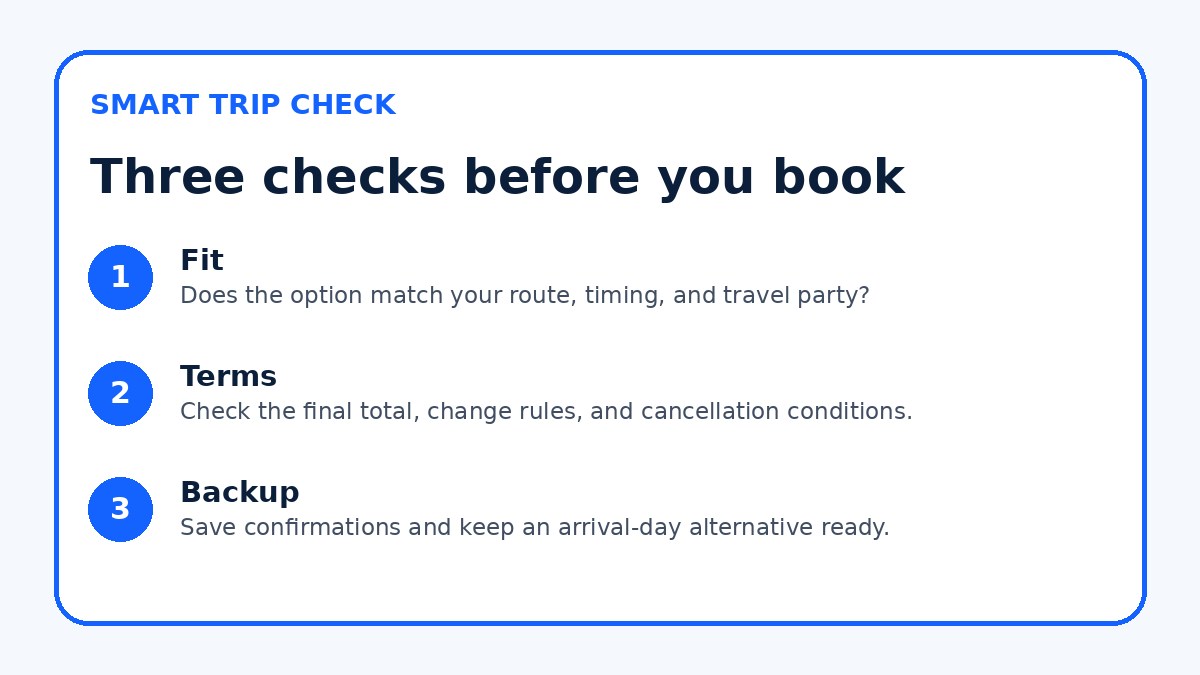
Room type and hotel layout matters more than price
When traveling with extra luggage and arriving late, the room’s location and the hotel’s layout can save you significant effort. Ground-floor rooms or those near elevators reduce carrying distance. Narrow hallways, historic buildings with tight staircases, and small boutique properties can make moving large suitcases difficult—if mobility matters, choose a modern building with wide corridors and reliable lifts. If you have an option, request a room close to the entrance and ask whether staff can help with bringing luggage upstairs.
Consider room size and storage features too: a larger room with a closet or luggage rack simplifies unpacking for a long stay, while a compact room may force you to keep suitcases on the floor. If you are staying just one night, you might prefer a standard room and use luggage storage rather than paying for a higher-category room. For stays of several nights with many bags, investing in a larger room or a suite often reduces daily friction and keeps the trip comfortable.
Before you book
- Before booking, map the route from your arrival point (airport terminal, long-distance bus/train station) to the hotel entrance and time it roughly.
- Confirm late check-in policy and 24-hour desk availability in writing on the hotel’s final booking page or confirmation email.
- Ask the hotel whether they offer porter service, luggage storage, or ground-floor rooms and note any conditions or fees.
- Request a room close to elevators or the entrance, or explicitly ask for a ground-floor or low-floor room if mobility is a concern.
- Arrange transport that matches your luggage and arrival time—pre-booked shuttle, airport taxi queue, or documented ride-hailing instructions.
- Pack an accessible overnight bag with essentials and documents to avoid opening large suitcases in public while managing arrival logistics.
Arrival timing, local transport, and safety at night
Late arrivals change the relative value of transport choices. Night buses or late subway services can be cheaper but may involve walking across dark streets or waiting in less trafficked stations while handling bags. Taxis offer door-to-door service and usually represent lower hassle when hauling heavy luggage late at night; consider official airport taxis or ride-hailing options that display the driver and plate. If peace of mind is critical, pre-arranged hotel pickups remove uncertainty—confirm the exact pickup point, driver contact, and cancellation policy before you book.
Factor safety and local conditions into your plan: check whether sidewalks are lit and whether the route from drop-off to hotel is straightforward. If you don’t know the city layout well, choose streets with active businesses or hotels nearby rather than quiet residential alleys. Keep essential documents and one small bag with valuables accessible, and use luggage tags with your contact information. Finally, when relying on third-party transfers, verify provider details shown on the booking page and keep emergency numbers in an accessible place.
Frequently asked questions
Can I rely on luggage storage if I arrive after midnight in Seoul?
Many hotels in Seoul offer luggage storage, but policies vary widely. Some keep bags behind the front desk 24/7; others allow storage only during staffed hours or require retrieval by a certain time. Always ask for the exact process—and whether any ID, claim ticket, or fee will be required—and get the information in writing (booking confirmation or email). If luggage storage is essential to your plan, confirm availability on the hotel’s final booking page and call the property if the listing is ambiguous.
Is taking a taxi from Incheon to central Seoul better with heavy luggage?
Taxis reduce transfers and door-to-door carrying, which often makes them a sensible choice for heavy or multiple bags, especially late at night. However, consider traffic, which can extend time, and the need for larger vehicle types if you have oversized items. If you prefer a taxi, use official airport taxi stands or reputable ride-hailing services and confirm estimated costs on booking platforms. For absolute certainty, a pre-arranged hotel pickup can remove uncertainty—verify pickup points and driver contacts before you travel.
Should I choose a hotel near Seoul Station or a neighborhood closer to attractions?
Choose based on priorities. Hotels near Seoul Station or major transit hubs make arrivals and departures easier when you have lots of luggage because they minimize transfers and often have elevators and clear taxi access. If your main goal is sightseeing immediately after arrival, staying near key attractions might reduce transit once you’re checked in but could increase arrival friction if multiple transfers are required. Weigh the convenience of arrival (less carrying) against the convenience of your planned activities for the stay.
Final planning note
A late arrival with extra luggage in Seoul is manageable with a few focused choices: pick a hotel aligned with your arrival method, verify late-check-in and storage procedures in writing, and favor rooms and properties that reduce carrying distance. The ideal hotel balances the time and physical effort of arrival with your budget and plans for the following day—central transit access minimizes hauling, porter services cut the effort, and ground-floor or elevator-adjacent rooms remove awkward carries. Before you finalize any booking, check the hotel’s final booking page for current policies and confirm any transfer or pickup details by phone or email. With those checks done, you’ll transform a potentially stressful late-night arrival into a quick handoff and a comfortable first night in Seoul.
Continue planning
Check current options and final conditions
Use the provider page to confirm live availability, the final total, cancellation terms, and every condition that matters to your trip.
This evergreen planning guide was created with AI-assisted drafting and a structured quality review. It does not display live prices, schedules, availability, visa guidance, or provider rankings. Verify current details before booking. Some links are affiliate links; we may earn a commission at no additional cost to you.