If you’re renting a car in Abu Dhabi for business, the fastest way to avoid unexpected charges is to check the fuel policy and mileage rules before you book. Fuel policies determine whether you return the car with a full tank, pay for refuelling by the supplier, or accept a pre-purchase arrangement. Mileage rules set daily or total limits, and excess-kilometre fees can be substantial if your meetings require longer drives. Also check insurance cover, cross-emirate travel permissions, and whether the supplier allows airport pickups or requires local ID or business documentation. Confirm these items on the supplier’s final booking page — policies and fee schedules change frequently — and compare similar options (fuel-first vs. mileage-first approaches) to decide what saves time and money during a packed business trip.
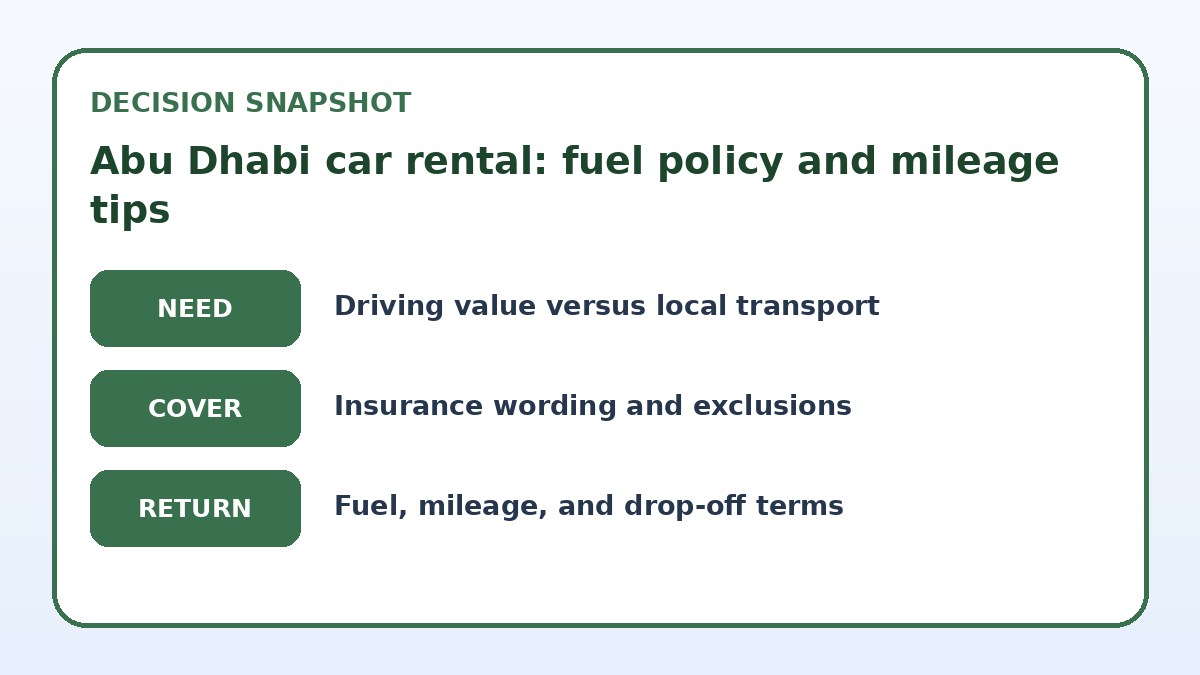
See current options before you compare the details
Availability and final conditions change. Open Trip.com now or keep reading for the practical comparison.
Understand common fuel policies and how they affect business days
Car rental companies typically offer a few standard fuel options: full-to-full, pre-purchase, and supplier-refuelled. Full-to-full means you pick up with a full tank and must return full; it’s straightforward for short trips or if you can refuel before drop-off. Pre-purchase lets you pay upfront for a tank at pick-up; this can be convenient if you’re pressed for time but often costs more per litre than local pumps. Supplier refuelling means the company will top up the tank for you at drop-off and add a refuelling fee; this is the most expensive choice but can save time when you cannot return the car with a full tank.
For business travelers, the right choice depends on your itinerary and schedule. If you have meetings near easy fuel stations and a reliable window to refuel before drop-off, full-to-full usually avoids extra supplier charges. If your schedule prevents a timely return, pre-purchase or supplier-refuelled options reduce stress but increase costs. Always check whether the booking page lists the supplier’s per-litre rate, an administrative surcharge, or a flat refuelling fee, and whether any fuel used during inspection or transfer is billed differently. That detail determines whether convenience is worth the premium.
Mileage allowances: predict excess-kilometre costs for business routes
Mileage policies vary: some rentals include unlimited kilometres, others set daily or total limits. For business travelers who will move between Abu Dhabi’s business districts, airport, and outlying offices or sites, estimate the day’s total kilometres rather than relying on map-app distances alone. Traffic patterns, detours, and return trips can add unexpectedly to your tally. If the car has a tight daily allowance, you may hit excess charges quickly, particularly if you plan a site visit outside the city or a one-day trip to neighbouring emirates.
To compare options, calculate a conservative kilometre forecast for each rental day and multiply by the supplier’s per-kilometre excess fee to estimate potential overage costs. If excess-kilometre fees are high, an upgrade to a plan with a higher allowance or unlimited kilometres can be cheaper. Confirm how the supplier measures kilometres — odometer at pick-up vs. electronic logs — and whether any cross-emirate driving counts differently. These are the specifics you must verify on the final booking page before committing.
| Approach | Best for | Tradeoff to check |
|---|---|---|
| Full-to-full fuel policy | Travelers with time to refuel before return and who want lowest fuel charges. | Requires planning a refuelling window and proof of tank level at drop-off to avoid disputes. |
| Pre-purchase fuel | Visitors short on time who prefer a quick drop-off without refuelling. | Convenient but often more expensive than local pump prices and may leave unused paid fuel. |
| Supplier-refuelled (pay on return) | Those unable to refuel before drop-off or returning outside business hours. | Most costly per litre plus administrative fees; good for time savings, not for cost savings. |
| Unlimited mileage | Business itineraries with many transfers, out-of-city meetings, or unpredictable routes. | Higher daily rate but avoids unpredictable excess-kilometre charges that complicate expense reports. |
Ready to check the option that fits your plan?
Use your exact dates and traveler details so the provider page can show the current total and conditions.
Insurance, refuelling incidents, and what to verify on booking pages
Insurance cover impacts fuel and mileage decisions. A collision or roadside incident that leaves you needing refuelling or towing could lead to fuel-related charges that some policies exclude. Understand whether your corporate insurance or credit card secondary coverage applies in the UAE, and whether the rental company requires additional waivers that change how fuel charges get billed. Also check whether running out of fuel is treated as negligence and what the supplier’s roadside assistance policy includes and excludes.
On the supplier’s booking page, verify these exact items: whether refuelling fees include an administration surcharge, how excess kilometres are calculated and billed, whether fuel disputes can be challenged and with what evidence, and the process for claiming insurer reimbursement. If you rely on a corporate account, confirm who is billed for extra charges and whether invoices meet your company’s accounting needs. If the booking page lacks clarity, use the supplier’s contact channel to get written confirmation before finalizing the reservation.
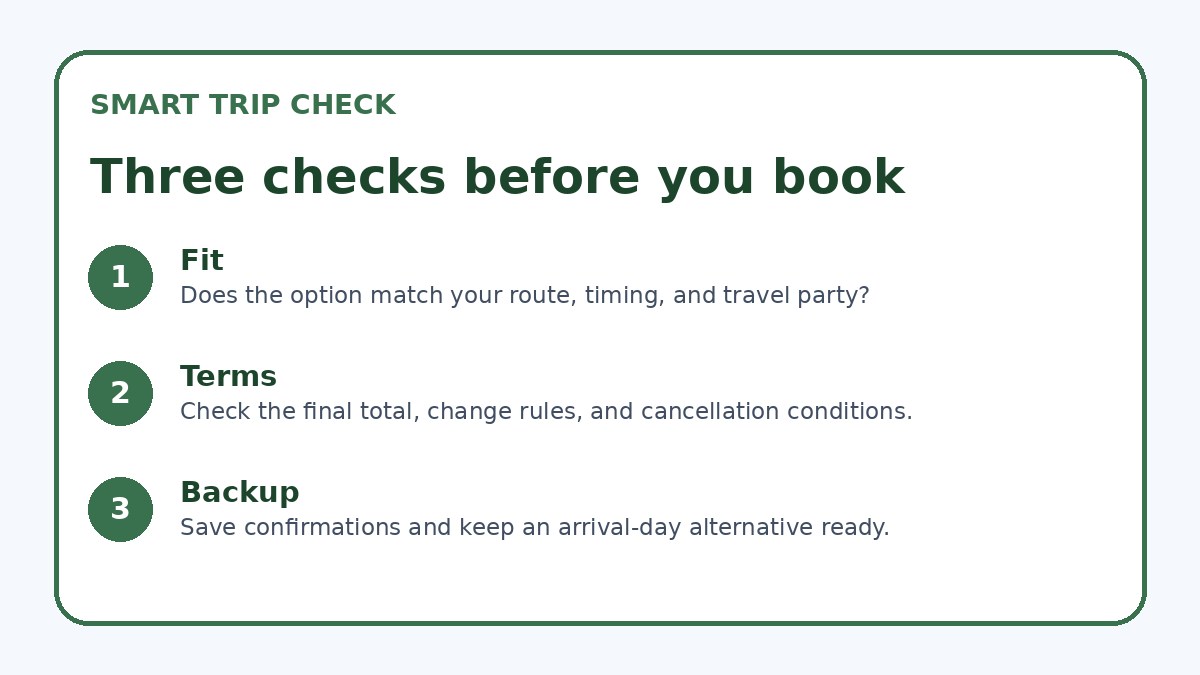
Before you book
- Read the rental supplier’s fuel policy on the final booking page and note whether it is full-to-full, pre-purchase, or supplier-refuelled.
- Estimate daily kilometres for your business itinerary and compare against the rental’s mileage allowance and per-kilometre excess fee.
- Confirm on the booking page whether corporate insurance, credit card coverage, or supplied waivers affect fuel-related charges and roadside incidents.
- Ask for written confirmation from the supplier if any fuel or mileage terms on the booking page are unclear or missing detail.
- Photograph the odometer and fuel gauge at pick-up and drop-off and keep all fuel receipts to support any billing disputes.
- Decide before booking whether time savings or cost control matters more and choose fuel and mileage options that align with that priority.
Practical choices and tradeoffs for busy business travelers
If time is the limiting factor, prepay or supplier-refuel options reduce stress at drop-off but carry a price premium. Choose these when your schedule offers no convenient fuel stop or when you’re returning the car from a remote meeting. If cost control is crucial and you can plan a short fuelling window before drop-off, full-to-full is usually the best value — provided you document fuel level at pick-up and keep the fuel receipt for proof in case of disputes. Photographs of the tank gauge on pickup and drop-off are also a simple way to protect yourself.
For multi-stop or inter-emirate trips, lean toward rentals with generous mileage allowances or unlimited kilometres. This prevents unexpected line items for excess kilometres and simplifies invoicing for corporate expense reports. Balance that against the daily rate and available upgrades; sometimes spending a bit more per day for higher mileage is cheaper than paying high per-kilometre penalties. Always record pick-up and drop-off odometer readings and retain fuel receipts; these small administrative steps make post-trip reconciliations much easier for busy travelers.
Frequently asked questions
Can I refuel the car anywhere in Abu Dhabi before returning it?
Yes, most public petrol stations in Abu Dhabi accept major payment methods and are available across the city, but check the rental’s return location requirements first. Some airport or depot returns require you to use nearby pumps before drop-off because the supplier inspects fuel level on handover. If you plan to refuel yourself, confirm the supplier’s expectation for the fuel grade (petrol vs. diesel) and whether they accept a receipt as proof. Take a timestamped photograph of the gauge and keep the pump receipt to avoid disagreements over tank level.
How do excess-kilometre charges get calculated and billed?
Excess-kilometre charges are calculated by multiplying the number of kilometres driven beyond the agreed allowance by the supplier’s per-kilometre rate. Suppliers typically list this rate on the booking page, but if it’s not explicit, request it in writing before booking. Billing may appear on a deposit hold or as a post-rental charge to the payment method on file, and corporate billing arrangements can vary. Record odometer readings at pick-up and drop-off and keep those photos to contest any unexpected charges with the supplier or your company’s expense team.
If I run out of fuel or have a breakdown, who pays for refuelling or towing?
Responsibility depends on the rental contract and the insurance/assistance package you purchased. Some contracts treat running out of fuel as user negligence and bill you for refuelling plus an administrative fee; roadside assistance may be included or sold as an add-on. Towing after breakdown may be covered by the supplier’s roadside service if included in your agreement, but insurance exclusions can apply. Check the supplier’s booking page for roadside assistance terms and verify what your corporate policy or credit card protection covers before departure.
Final planning note
For business travelers in Abu Dhabi, checking fuel and mileage rules before booking prevents last-minute hassles and unexpected charges. Decide whether you value time savings or strict cost control: full-to-full is usually best if you can refuel before drop-off, while pre-purchase or supplier-refuelled options trade higher cost for convenience. If your itinerary includes extensive driving, choose a rental with higher or unlimited mileage to avoid per-kilometre penalties. Always verify exact fuel rates, excess-kilometre charges, and insurance details on the supplier’s final booking page, secure written confirmations when needed, and document pick-up and drop-off readings to protect your corporate expense report. If you want to compare current options, you can check listings on Trip.com for availability and supplier policies before you finalize a reservation.
Continue planning
Check current options and final conditions
Use the provider page to confirm live availability, the final total, cancellation terms, and every condition that matters to your trip.
This evergreen planning guide was created with AI-assisted drafting and a structured quality review. It does not display live prices, schedules, availability, visa guidance, or provider rankings. Verify current details before booking. Some links are affiliate links; we may earn a commission at no additional cost to you.