If you’re finishing a business trip in New York City, plan the return trip to the airport around your flight’s check-in and the city’s variable traffic. The most practical answer: choose the transfer mode that matches your party size, luggage, luggage-handling needs, and required arrival margin at the airport. For one or two travelers with minimal luggage, express public transit or a shared ride can save time and stress; for groups, heavy luggage, or late-night departures, a prepaid car or private transfer may be more reliable. Decide first on which airport you’re leaving from (JFK, LaGuardia, Newark, or a private-terminal option), then compare travel time windows, pick-up flexibility, and how much time you need for security and flight re-checks. Verify schedules and pick-up meeting points on the provider’s final booking page before you commit.
See current options before you compare the details
Availability and final conditions change. Open Trip.com now or keep reading for the practical comparison.
Choose by airport and departure margin
Start by confirming which airport you’re leaving from and how early you want to arrive before your flight. Different airports have different connections and typical traffic patterns; what works for one—like a quick rail ride into Manhattan—may not suit another. For business travelers, pick an arrival margin that includes time for security lines and any airline counters where check-in or bag drop is required. If you’re tight on time, aim for a transfer method with fixed schedules or dedicated lanes rather than options that vary with traffic.
Once you’ve set your target arrival time, narrow choices by the predictable parts of the route: rail services and dedicated airport shuttles often have published timetables, while car services are subject to congestion. When planning, research how long it takes to reach the specific terminal from your pick-up point at different times of day. On providers’ booking pages, verify terminal drop-off details, where the driver will meet you, and whether there are any additional steps (like terminal transfers) after you arrive at the airport.
Compare transit, shared rides, and private cars
Public transit and airport express trains are frequently the fastest way through peak traffic, and they’re cost-effective for solo travelers who travel light. Shared rides (pooled ride-hailing) can reduce cost while offering door-to-door service, but pooling may add unpredictability in pick-up and routing. Private car services and black cars provide a single confirmed route and more luggage space, which is often desirable for executive travelers or small groups. Evaluate tradeoffs by thinking about your tolerance for potential detours and how essential on-board privacy or workspace is to your trip.
When comparing providers, check on-board amenities, cancellation and wait-time rules, and how last-minute schedule changes are handled. For rides booked through apps, review where drivers are permitted to pick up in dense neighborhoods or at hotel curbs—these rules can affect the actual time to start your journey. If you need to coordinate with colleagues arriving separately, look for options that allow multiple stops or pre-arranged meeting points without penalty; verify all those details on the provider’s final booking page.
| Approach | Best for | Tradeoff to check |
|---|---|---|
| Public transit / airport express trains | Solo travelers with light luggage aiming to avoid road congestion | Less privacy and limited direct terminal drop-off, may require walking or transfers with luggage |
| Shared ride-hailing / pooled services | Cost-conscious travelers who accept variable pickup times | Potential detours and uncertain pickup windows; luggage limits vary by provider |
| Prebooked private car or black car | Executives, small teams, or anyone needing a reliable, private transfer | Higher cost and subject to traffic delays; check vehicle size and pick-up rules |
| Private van or dedicated shuttle | Groups with multiple or bulky bags and equipment | Less frequent departures than cars and may require scheduled booking in advance |
Ready to check the option that fits your plan?
Use your exact dates and traveler details so the provider page can show the current total and conditions.
Account for luggage, team size, and equipment
Business travelers often carry laptops, briefcases, and presentation gear that require space and careful handling. Count items and consider their bulk: a single standard roller bag plus a personal item is different from multiple large cases or wheeled equipment. Private cars and dedicated vans give predictable cargo capacity and handling; when booking, confirm the vehicle class or van size and whether the driver will assist with loading. For teams travelling together, a small van can be quicker than multiple cars because it keeps everyone coordinated and avoids the risk of a member missing the group.
If you’re transporting fragile or high-value equipment, ask about secure stowage and insurance coverage through the provider’s booking terms. Some airport shuttles or shared services limit the number or size of items, so load limits are an important booking-stage check. For oversized or specialty gear, consider arranging a cargo service or contacting the provider in advance to confirm space and any additional handling fees; always verify these specifics on the final booking page before you finalize.
Before you book
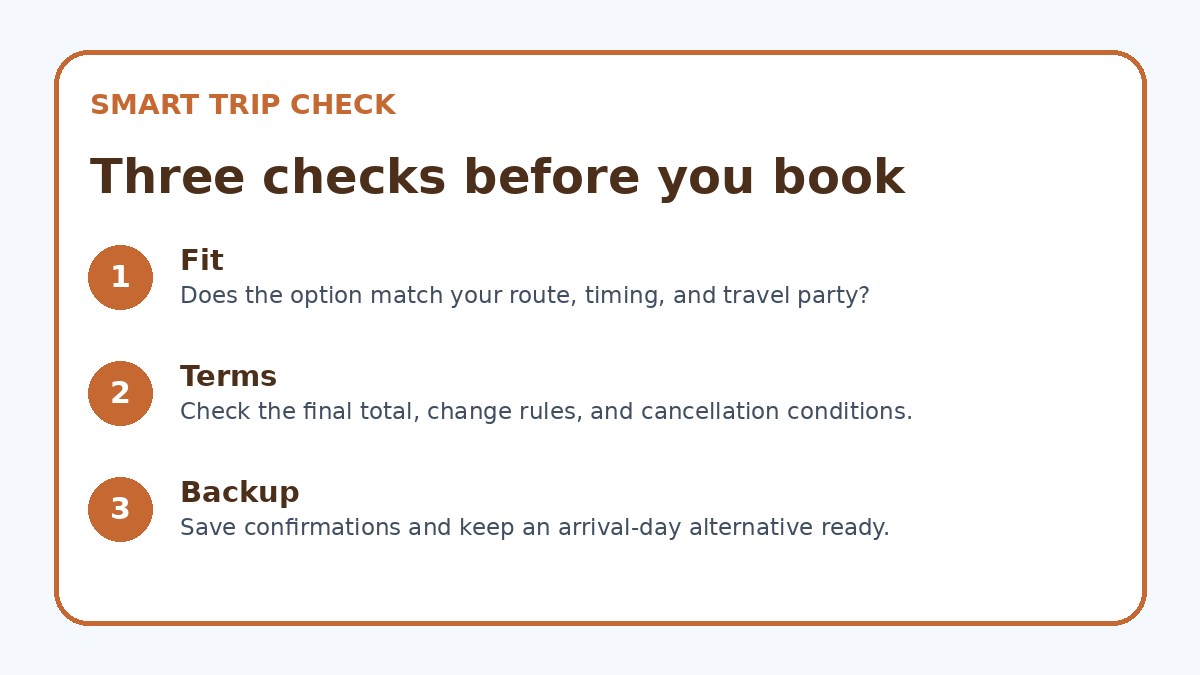
- Confirm the exact departure airport and terminal to match the correct transfer routing before booking.
- Count passengers and luggage accurately and verify the vehicle class or van size on the booking page.
- Decide your minimum arrival margin at the airport and compare that with each option’s typical variability.
- Check driver meeting point procedures (hotel curb, lobby, designated ride-hail zones) and how they communicate delays.
- Review cancellation, rescheduling, and wait-time policies on the provider’s final booking page.
- Verify tolls, surcharges, and whether corporate billing or receipts are supported if you require expense reporting.
Timing, flexibility, and what to confirm before booking
Before you hit book, jot down non-negotiables: minimum arrival time before departure, required pick-up window flexibility, and whether you need a dedicated vehicle. Compare cancellation windows and wait-time guarantees because business plans can shift. If your flight time is early morning or late night, prioritize services that clearly state overnight operations and have a visible way to contact support. Also confirm where the driver will meet you—hotel curbside, lobby, or a designated ride-hail area—which affects how soon the trip can start.
Always check the provider’s final booking page for exact pick-up location instructions, terminal drop-off details, luggage policies, driver contact methods, and any road toll or surcharge practices that may apply to your route. If you use a travel manager or corporate account, ensure your company’s preferred billing and reporting are applied. For availability and up-to-date options, you can compare current transfers on Trip.com, but verify every operational detail directly with the provider before relying on that booking.
Frequently asked questions
How far in advance should I book a New York City airport transfer for a business trip?
For predictable travel on busy days or for larger vehicles, book as early as possible to secure the right vehicle class and pick-up window. For private cars and vans, advance reservations give you confirmation of vehicle size and driver availability; same-day bookings are often possible but risk limited selection. For public transit or express services, you typically don’t need to book, but verify schedules and any seat-reservation rules. Always check the provider’s booking page for lead-time recommendations and cancellation terms to match your business schedule.
What should I do if my meeting runs late and I risk missing my scheduled transfer?
Contact the transfer provider immediately to explain the delay and request a later pick-up or a hold, if available. If the service permit changes, confirm any additional fees or rebooking rules on the provider’s final booking page. For critical flights, consider having a backup option—like a flexible private car or a transit route with frequent departures—so you have alternatives. If you book through a corporate travel desk, inform them early so they can assist with rebooking and cost handling.
Can I work during the transfer and still arrive prepared for a meeting or flight?
Yes, but your choice of transfer affects productivity. Private cars usually offer the quiet and space needed to focus, and some providers advertise onboard Wi-Fi or charging—verify those amenities before booking. Trains and airport express services can provide stable travel time but may be crowded during peak hours, reducing workspace comfort. Shared rides can be less predictable because of extra stops. If you must work en route, prioritize direct, private transfers or choose a non-peak time on scheduled rail services after confirming onboard conditions.
Final planning note
Planning the return trip to a New York City airport for business travel is about matching priorities—time certainty, luggage handling, privacy, and cost—to the right transfer type. Start by fixing your airport, terminal, and required arrival margin, then eliminate options that can’t meet those needs. Compare transit timetables, pick-up rules for ride-hailing, and vehicle classes for private cars or vans. Before confirming, check the provider’s final booking page for pick-up location, luggage rules, cancellation terms, and any surcharges; if you want a quick cross-check of availability, Trip.com can show current options but verify details with the provider. With a short checklist and one confirmed backup, you’ll reduce stress and arrive prepared for departure.
Continue planning
Check current options and final conditions
Use the provider page to confirm live availability, the final total, cancellation terms, and every condition that matters to your trip.
This evergreen planning guide was created with AI-assisted drafting and a structured quality review. It does not display live prices, schedules, availability, visa guidance, or provider rankings. Verify current details before booking. Some links are affiliate links; we may earn a commission at no additional cost to you.