If you and your partner are planning time in Amsterdam, the core choice is practical: rent a car for freedom and side trips, or use public transport for convenience inside the city and to nearby towns. For most couples whose plans focus on central Amsterdam — museums, canals, dining, and strolling neighborhoods — public transport and walking will be faster, simpler, and less stressful than driving. A rental car becomes more attractive if you plan multiple day trips beyond the region, want flexible rural itineraries, or are carrying bulky gear. Read on for the tradeoffs you’ll face, how to compare options for your exact itinerary, and a checklist of things to check before booking a rental or buying transit passes.
See current options before you compare the details
Availability and final conditions change. Open Trip.com now or keep reading for the practical comparison.
Practical tradeoffs: convenience, time, and stress
Driving through Amsterdam’s core trades off convenience outside the center for complexity inside it. The historic canal belt, narrow one-way streets, and many cycle lanes mean slow progress, segregated parking, and frequent stops. For couples who enjoy wandering, impromptu café stops, and hopping between attractions, public transport and walking remove the worry of searching for a space or interpreting local parking rules. Consider also that city vehicles are subject to restricted zones where nonresidents may face access limitations; verify any low-emission or restricted-access rules with official city sources before renting.
On the other hand, a car gives you flexibility for early-morning or late-night departures, unplanned detours, and carrying luggage or bulky items like bikes or surfboards. If both partners value independence from timetables and want to explore rural parts of the Netherlands or neighboring regions, the car can be a meaningful time-saver. Balance the extra navigation and parking stress against the activities you’ve prioritized: if most days are within Amsterdam proper, the car’s benefits will be limited.
Costs and logistics to compare before booking
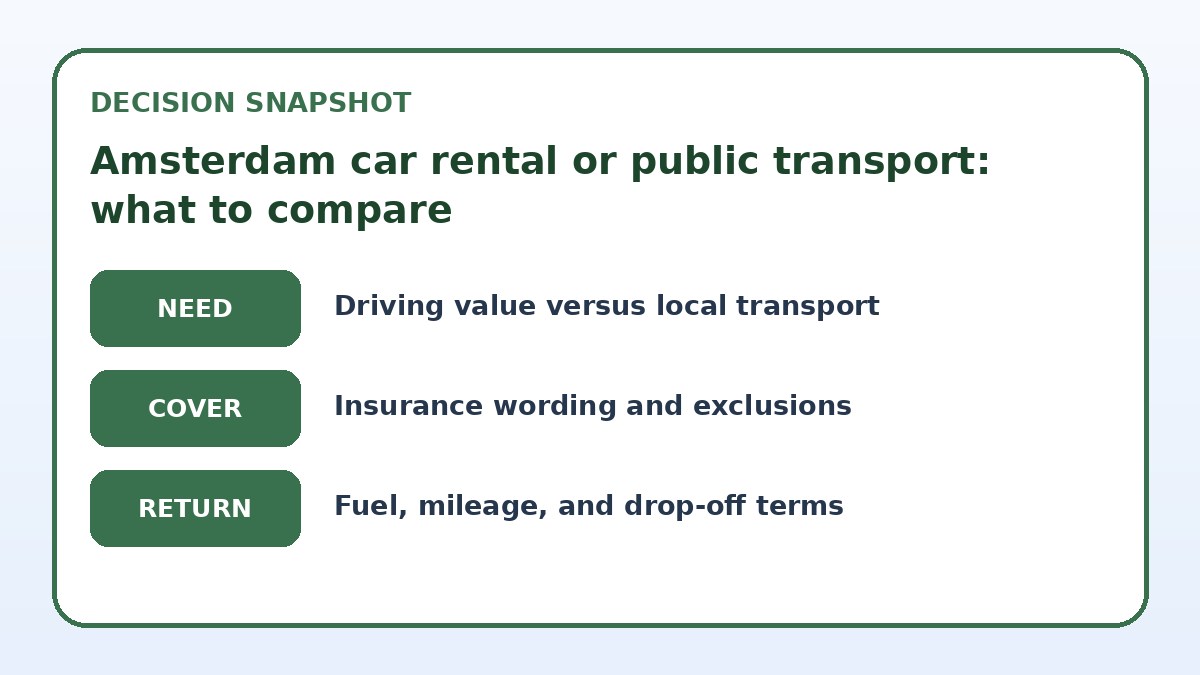
Compare total trip costs, not only the headline car rental rate. Add costs for fuel (or charges for electric vehicles), mandatory insurance options, parking, and possible city access fees. Also factor in one-way drop-off fees if you plan to return the car at a different location. For public transport, consider the right mix of single tickets, day passes, and regional train fares. If you’ll be taking several regional day trips, short-distance train tickets may be cheaper than car-related expenses and parking at busy destinations.
Logistics include where you pick up and drop off the car, parking availability at your accommodation, and whether you need additional equipment such as child seats or GPS. If you choose transit, check the locations of key tram and metro stops relative to your hotel and attractions; time saved by staying close to a major stop can outweigh small fare savings. Always verify provider-specific terms — liability limits, fuel policy, and parking rules — on the rental company’s final booking page before confirming.
| Approach | Best for | Tradeoff to check |
|---|---|---|
| Public transport and walking | Couples staying mainly in central Amsterdam who prioritize ease, less stress, and lower city costs | Less flexibility for remote day trips and carrying bulky gear |
| Renting a car for the whole stay | Couples planning several multi-site rural excursions, or those with mobility needs or heavy luggage | Extra parking, navigation stress, and restricted city access |
| Hybrid approach: transit in city + a few rental days | Couples wanting the best of both worlds — easy city life plus flexible excursions | Requires careful scheduling and possibly multiple bookings and pick-up logistics |
| Transit plus guided day trips by coach | Couples who prefer not to drive but want convenient access to popular nearby sites | Less privacy and flexibility compared with self-driving |
Ready to check the option that fits your plan?
Use your exact dates and traveler details so the provider page can show the current total and conditions.
Access and day-trip planning for couples
Plan day trips by mapping travel time and transfer points for public transport versus door-to-door driving time. Trains and regional buses connect Amsterdam to many nearby towns quickly, but they run on schedules and may require transfers. When you compare options, look at total door-to-door travel time, including walks and waits. If you’ll visit multiple scattered rural sites in a single day, a car often reduces total transit time; if you’ll visit one or two towns with direct train links, public transport is usually simpler and more relaxing.
Also consider how you want to experience each destination. Some rural roads and small villages have limited public transport frequency, so a car allows spontaneous stops and exploration. Conversely, popular towns and sites can have congested parking during peak season; arriving by train means you can avoid the hassle and walk straight from the station. For mixed plans, couples sometimes combine a few rented days with transit-based days — check with rental firms about short-term pickups and returns, and verify train timetables for any scheduled maintenance or planned route changes before you travel.
Before you book
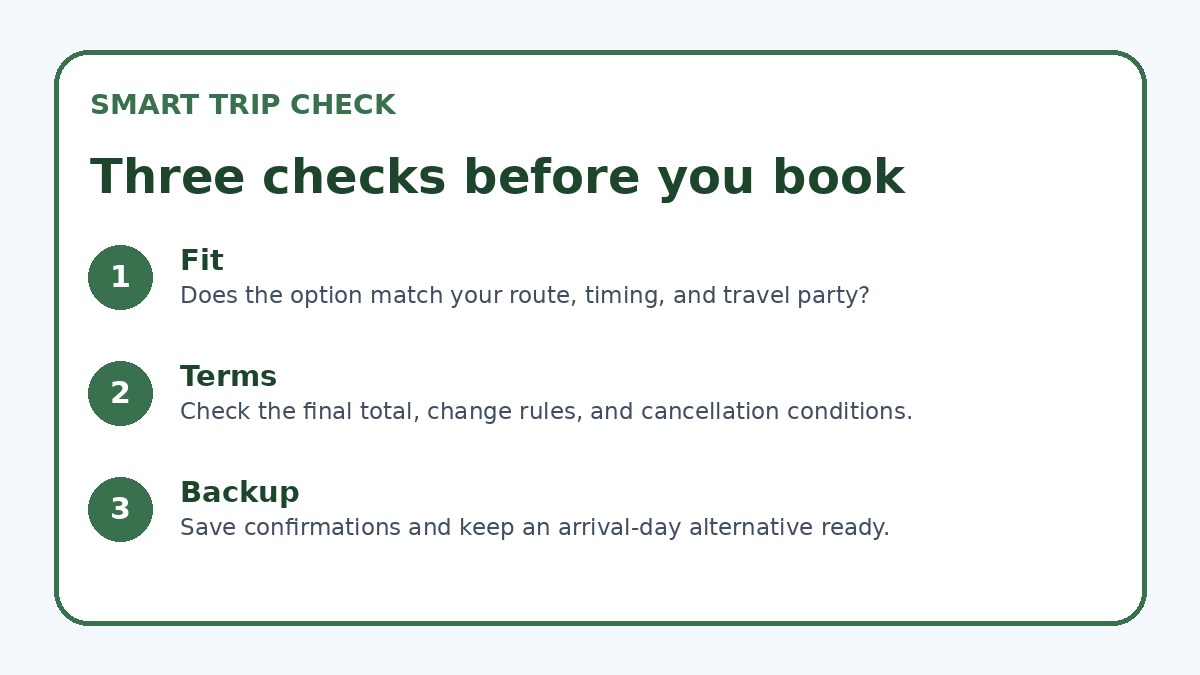
- Map your planned daily activities and mark which ones are inside Amsterdam’s central ring versus outside the city to estimate travel mode needs.
- If considering a rental, contact your accommodation to confirm parking availability, permit requirements, and overnight parking rules.
- Compare total costs including rental insurance options, fuel or charging needs, parking fees, and any one-way or drop-off charges.
- If you prefer transit, check tram and metro stop locations relative to your lodging and confirm train connections for each day trip.
- Decide whether you need extras (child seat, bike rack, GPS) and verify these options and fees on the rental company’s final booking page.
- If combining transport types, plan pickup and return times for the car around train schedules and confirm station-to-rental-office transfers.
Comfort, safety, and sustainability considerations
Comfort factors include how much luggage you carry, mobility needs, and how much walking you want. If one partner prefers avoiding long walks or uneven pavements, driving door-to-door can improve comfort. Keep in mind cycling is a primary mode of transport locally; many couples find a combination of walking, tram rides, and renting a bike for part of the stay is the most enjoyable local experience. Evaluate safety — in traffic, cyclists have priority in many places — and choose driving only if you are comfortable sharing narrow streets with many bikes and pedestrians.
Sustainability might influence your choice. Public transport and cycling have lower per-person emissions than driving. If reducing your trip’s carbon footprint matters, favor trains, trams, ferries, and bikes for city travel, and limit car use to essential rural excursions. If you do rent a car, consider hybrid or electric options but verify charging infrastructure and charger compatibility for EVs at your planned stops. Always check the rental supplier’s fuel and emissions policies on their booking page before finalizing.
Frequently asked questions
Is a car useful for a long weekend in Amsterdam as a couple?
For a long weekend spent mainly within Amsterdam’s central neighborhoods, a car is typically more hassle than help because of narrow streets, limited parking, and many attractions clustered close together. If your weekend includes a few early-morning departures to the countryside or you’re carrying bulky sports equipment, a car adds flexibility. To decide, list your must-see places and estimate whether they are inside or outside the city; if the majority are inside, rely on trams, walking, and short taxi rides instead.
How should couples combine car rental and public transport to get the best experience?
Many couples combine transit for city days and rent a car for a 1–3 day block when planning rural trips. Book the rental for just the days you need it and keep luggage minimal on transit days. When arranging this, check the rental company’s pick-up and drop-off locations and opening hours, and plan transfers between your hotel and the rental office. Also coordinate with train timetables so you don’t arrive at a rental desk outside operating hours; verify all supplier terms on their booking pages before you finalize.
Are there parking pitfalls couples should be aware of in Amsterdam?
Yes—parking in central Amsterdam can be limited, expensive, and regulated by permit zones. Many hotels do not have guest parking and may advise where to park or recommend public garages. Expect narrow streets and priority for bikes and trams near the center. Before you rent, ask your accommodation about recommended garages, typical walking time from parking to the hotel, and whether they can reserve a spot. Always check the rental and local authority websites for up-to-date parking rules and any restricted-access zones before you drive.
Final planning note
Choosing whether to rent a car in Amsterdam as a couple comes down to a simple test: will most of your time be inside the city or beyond it? If you’re centered on museums, canals, cafés, and strolling neighborhoods, public transport and walking will usually be faster, cheaper in hidden costs, and more relaxed. If your plans involve several dispersed rural destinations or heavy gear, a rental for specific days can add meaningful freedom. Use the checklist to map your days, verify parking and rental terms, and decide whether a hybrid plan — transit in town with selected car days — gives you the right balance of convenience and flexibility.
Continue planning
Check current options and final conditions
Use the provider page to confirm live availability, the final total, cancellation terms, and every condition that matters to your trip.
This evergreen planning guide was created with AI-assisted drafting and a structured quality review. It does not display live prices, schedules, availability, visa guidance, or provider rankings. Verify current details before booking. Some links are affiliate links; we may earn a commission at no additional cost to you.