
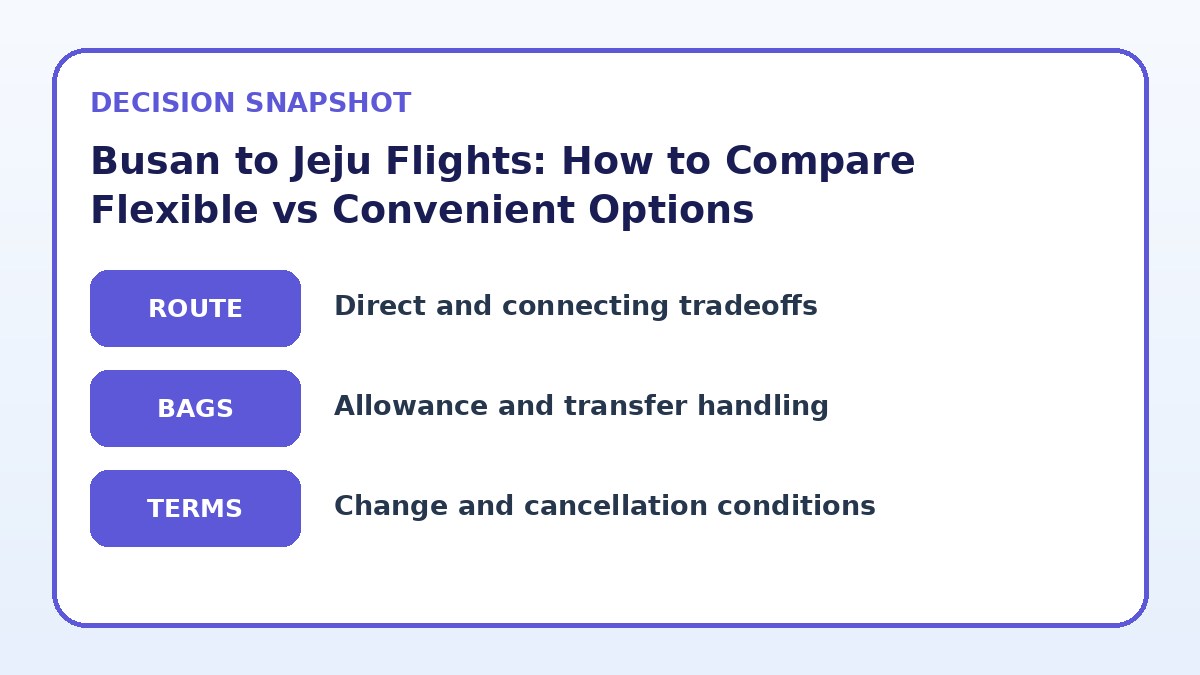
Practical answer first: for most couples, prioritize convenience if you have a short trip or fixed commitments, and prioritize schedule flexibility if you’re traveling around unpredictable plans, medical needs, or want cheaper last-minute swaps. Start by comparing direct flights (faster, fewer moving parts) with options that allow easy changes or refunds. Also factor in how you’ll get to and from airports, luggage needs, and whether airline or airport connections add risk to a tight itinerary. In the next sections I’ll unpack tradeoffs—time saved vs flexibility cost, how early booking affects choice, and what to verify on the airline’s final booking page. Remember: confirm baggage rules, change/cancellation policies, check-in deadlines, and any connection minimums on the provider’s page before you commit; Trip.com can be a useful place to compare current availability but always verify details with the airline.
See current options before you compare the details
Availability and final conditions change. Open Trip.com now or keep reading for the practical comparison.
Direct vs connecting flights: time, interruption, and couple dynamics
For couples, a direct flight often equals less hassle: you’ll spend less time in transit, have fewer opportunities for missed connections, and can plan around one arrival and one departure time. That simplicity helps when you’re coordinating romance-focused activities like sunset dinners or timed tours. Direct service reduces the number of times you’ll manage carry-on swaps, bathroom breaks, or entertainment devices, which keeps the travel experience smoother and more private.
However, direct flights can be less flexible and sometimes more constrained in terms of departure times. Connecting options may offer more schedule choices or lower upfront ticket costs, but they introduce risk—if the first leg is delayed you may miss the next flight. For couples comfortable with some unpredictability, connections can be fine, but plan longer connection windows and confirm the same-ticket protections versus separate bookings to avoid being stranded.
Flexibility features to prioritize and what they cost
When flexibility matters, look beyond the buzzword and read the concrete terms: free or low-cost change windows, refundable fares, same-day standby, and transferable tickets. These features let couples adapt without a tangle of surprise fees. Consider who in the couple is more likely to need changes—one partner’s schedule or health considerations might justify paying extra for flexible fares so the other can travel worry-free.
Flexibility often carries a premium or a different fare structure, and airlines bundle change and cancellation rights differently across ticket classes. Some low-fare tickets appear cheap but add costly fees for any change; others include a modest flexibility allowance. Compare the total cost if you expect to change plans: initial fare plus likely fees versus a slightly higher flexible option. Always inspect the provider’s final booking page to confirm exactly what changes are allowed, who pays reprice differences, and whether vouchers or refunds apply.
| Approach | Best for | Tradeoff to check |
|---|---|---|
| Choose direct, less-flexible fare | Couples with tight schedules or short trips | Higher risk if plans change; fewer change options and possibly higher change fees |
| Choose direct, flexible fare | Couples who value speed but want change options | Higher upfront cost for flexibility; fewer departure time choices than connecting options |
| Choose connecting, low-cost fare | Couples prioritizing lower ticket price and more schedule choices | Longer total travel time and higher risk of missed connections or delays |
| Choose connecting, flexible fare | Couples needing schedule adaptability and broader time options | Best balance of choice and flexibility but usually the most expensive total cost |
Ready to check the option that fits your plan?
Use your exact dates and traveler details so the provider page can show the current total and conditions.

Airport access and timing: couple-friendly transit choices
Convenience isn’t only about flight time—get to know the time and effort of reaching each airport. From Busan, different airports or terminals may offer faster train, bus, or taxi links; from Jeju, consider how long it takes to reach your accommodation from the airport and whether you’ll need car rental or public transport. For couples who prefer low-stress travel, choosing a departure that reduces transfers and long waits often pays off.
Also factor in check-in and boarding windows: some fare classes require earlier check-in or have stricter drop-dead times for online check-in. Build a buffer for security lines, bathroom breaks, and one last coffee together. If you plan to share luggage or bring items that require special handling, add time for baggage drop and pick-up. Verify airport transport schedules on provider pages and local transit sites before booking to avoid unpleasant surprises.
Before you book
- Confirm whether the fare includes checked baggage for your shared luggage and note size/weight limits on the provider’s final booking page.
- Check change and cancellation rules exactly as stated by the airline—look for fees, voucher-only policies, and rebooking price differences.
- Measure door-to-door time by adding transit time to and from airports, security and check-in buffers, and likely baggage handling.
- Decide which partner handles logistics (booking, check-in, transport) and make a shared checklist so responsibilities are clear before travel day.
- If you plan connections, pick minimum connection times significantly longer than the airline’s minimum and consider same-ticket protection.
- Verify arrival-ground transport options on Jeju—car rental, buses, taxis—and the timing relative to your flight arrival before finalizing the booking.
Booking strategy: compare total journey cost and risk
When you compare flight offers as a couple, look at the total door-to-door journey cost and the practical risks. Add taxi or train fares, luggage fees, and potential rebooking fees to the base fare. If a slightly more expensive ticket saves you a long transfer or offers a generous change policy, it can be the smarter choice for a relaxed trip together. Don’t forget to consider non-monetary costs: tiredness, missed plans, and missed romantic moments can outweigh small savings.
Also discuss roles and preferences with your partner before booking: who cares more about punctuality, who gets anxious with tight connections, and who prefers saving money? Use that to select options—one partner may accept a connecting itinerary while the other opts for a direct flight with a flexible change rule. Finally, when a provider’s site shows the fare you want, verify baggage allowances, change fees, and check-in deadlines on that final booking page; Trip.com is a reasonable place to compare availability but not a substitute for the carrier’s terms.
Frequently asked questions
Should couples always pick direct Busan to Jeju flights if available?
Not always. Direct flights reduce coordination points and usually shorten travel, which is great for couples with limited time or when you want to minimize hassle. But direct fares may have limited departure times and less flexible change policies. If your schedule is fluid or one partner may need to change plans, a fare with flexible change terms—whether on a direct or connecting ticket—might be a better choice. Always weigh total door-to-door time, not just airborne minutes, and confirm the airline’s change and baggage rules on its booking page.
How much buffer time should couples leave for connections or getting to the airport?
Aim for generous buffers that reduce stress. For domestic Busan–Jeju trips, allow time for travel to the airport (train, bus, or taxi), airport check-in and security, plus an extra margin for traffic or delays. For connections, choose transfer times substantially longer than airline minimums—especially if you must change terminals or collect checked luggage. If either partner prefers a relaxed pace, add more buffer. Check the airline’s recommended check-in and boarding times on the final booking page and plan transit accordingly.
What’s the simplest way for couples to compare flexible options when booking?
Create a short comparison that lists total door-to-door time, fare class and change/cancellation policy, and extra costs like baggage or transfers. Note whether the ticket allows free changes or refunds and whether those changes are subject to fare differences. Use a travel aggregator like Trip.com to see options quickly, but always confirm the exact fare rules and fees on the airline’s final booking page before purchasing. Discuss with your partner which tradeoffs—time versus flexibility versus cost—matter most and let that guide your selection.
Final planning note
Selecting Busan to Jeju flights as a couple comes down to a simple tradeoff: fewer moving parts and faster travel versus the safety net of flexibility. If your itinerary is tight or you value a low-stress arrival, favor convenience—direct routes, sensible departure times, and clear airport transfer plans. If plans may change, or one partner needs the freedom to alter travel, pay for flexibility or a refundable option and accept a longer or slightly costlier journey. Whatever you choose, compare total door-to-door time, read the airline’s fare rules on the final booking page, and coordinate roles so one of you isn’t scrambling at the last minute. That way you protect both your schedule and your shared travel mood.
Continue planning
Check current options and final conditions
Use the provider page to confirm live availability, the final total, cancellation terms, and every condition that matters to your trip.
This evergreen planning guide was created with AI-assisted drafting and a structured quality review. It does not display live prices, schedules, availability, visa guidance, or provider rankings. Verify current details before booking. Some links are affiliate links; we may earn a commission at no additional cost to you.