If you’re planning Sydney to Melbourne flights with children, the practical answer upfront is simple: pick the option that minimizes stress for your family’s priorities. A nonstop flight usually saves transfer hassle, eliminates the risk of a missed connection, and simplifies managing kids, strollers and carry-on snacks. A connecting itinerary can make sense when it offers better departure times, seat availability for groups, or lower fare for the same family composition. Before booking, compare total trip time (door-to-door), transfer complexity, baggage rules, and the airport terminal layout at the connection. Verify final baggage and seat-selection rules, change and cancellation terms, and any minimum connection times directly on the airline or booking site—especially if you book separate tickets. Trip.com is one place to compare current availability, but always check the carrier’s official booking page for the authoritative conditions on your itinerary.
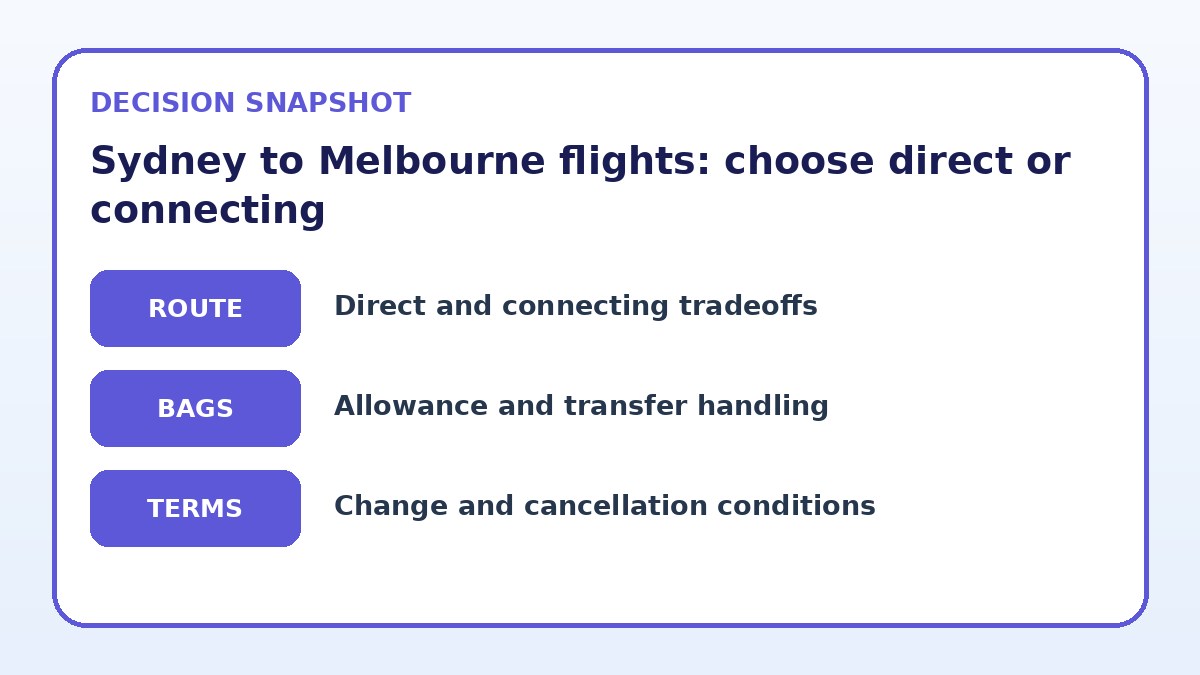
See current options before you compare the details
Availability and final conditions change. Open Trip.com now or keep reading for the practical comparison.
Weighing nonstop convenience against the connecting tradeoffs
Nonstop flights deliver a compact travel experience that many families value. With no transfers to manage, you’re only responsible for one check-in, one security pass, and one boarding procedure; that reduces logistical friction when handling children, car seats, and multiple bags. For short domestic hops like Sydney to Melbourne, the brief time onboard means fewer opportunities for meltdowns during transfers and less disruption to nap schedules. The convenience also simplifies contingency planning: if something goes wrong it’s easier to work with a single carrier to rebook or access support.
By contrast, connecting flights introduce both more variables and potential advantages. A connection might split a long wait into two shorter flights for nervous flyers or unlock a departure time that better fits evening or early-morning routines. However, connections add transfer time, possible terminal changeovers, and the added coordination of moving children and luggage between gates. If the connection is tight or requires changing terminals or rechecking bags, the stress and time overhead can overshadow any fare savings or schedule benefits. Think beyond ticket price to consider the whole family’s tolerance for transitions.
Safety, comfort and managing luggage with kids
Families often ask about car seats, stroller policies and checked-baggage allowances. On nonstop itineraries you only need to follow the boarding rules of a single carrier for permitted carry-on items, gate-checked strollers, and child restraint devices, which simplifies preparation. Seat selection is another comfort factor: being able to reserve a row or bulkhead seats together in advance reduces in-flight squabbles and improves supervision. Also consider the in-flight services that matter to families—meals, entertainment and lavatory access—knowing that shorter nonstop flights may have different service levels than longer or connecting legs.
With connections, verify whether baggage transfers are automatic or if you must reclaim and recheck luggage between flights; that distinction changes how much you need to ferry strollers and child gear through the airport. If you buy separate tickets on different airlines, you may be responsible for your own transfer and the risk of missed connections increases. For parents who prefer certainty, paying a little more for through-checked bags and guaranteed connections on one ticket can be worth the peace of mind. Always confirm baggage allowances and gate-check policies on the airline’s final booking page so you’re not surprised at the airport.
| Approach | Best for | Tradeoff to check |
|---|---|---|
| Nonstop flights | Families prioritizing minimal transfers, simpler logistics and faster door-to-door trips. | May offer less flexible schedules or higher fares compared with some connecting options. |
| Connecting flights with same-airline connection | Families seeking more schedule choices while keeping baggage and rebooking protections on one ticket. | Adds transfer time and potential gate or terminal changes that increase complexity. |
| Connecting flights on separate tickets | Budget-focused families willing to accept more risk for lower fares or unique timing combinations. | You may need to recheck bags and assume responsibility for missed connections and tight transfers. |
| Split travel strategy (drive+fly or compare nearby airports) | Families aiming to optimize departure times or minimize very early/late airport runs. | Adds ground travel planning and could shift stress from the air to the road or transit portions. |
Ready to check the option that fits your plan?
Use your exact dates and traveler details so the provider page can show the current total and conditions.
Timing, scheduling and airport logistics to compare
When choosing between options, calculate total travel time: include driving or public transit to the airport, recommended check-in and security times for families, boarding windows, flight duration, and connection layovers. For example, an early-morning nonstop that requires a 90-minute drive may be less appealing than a later connecting itinerary closer to home, depending on kids’ sleep schedules and your tolerance for pre-flight wakeups. Also check how airport terminals are laid out—some connections require shuttle transfers or long walks that can be difficult with toddlers and luggage.
Consider peak travel periods too. School holiday and weekend traffic can lengthen pre-flight times at both airports and affect security queues. A connection during a low-traffic time might be smoother than a nonstop at a peak hour. If you face tight connections, look for minimum connection times published by carriers and factor in potential delays. When provider-specific timing or terminal details could change, verify them directly on the airline’s or airport’s official pages before you finalize bookings.
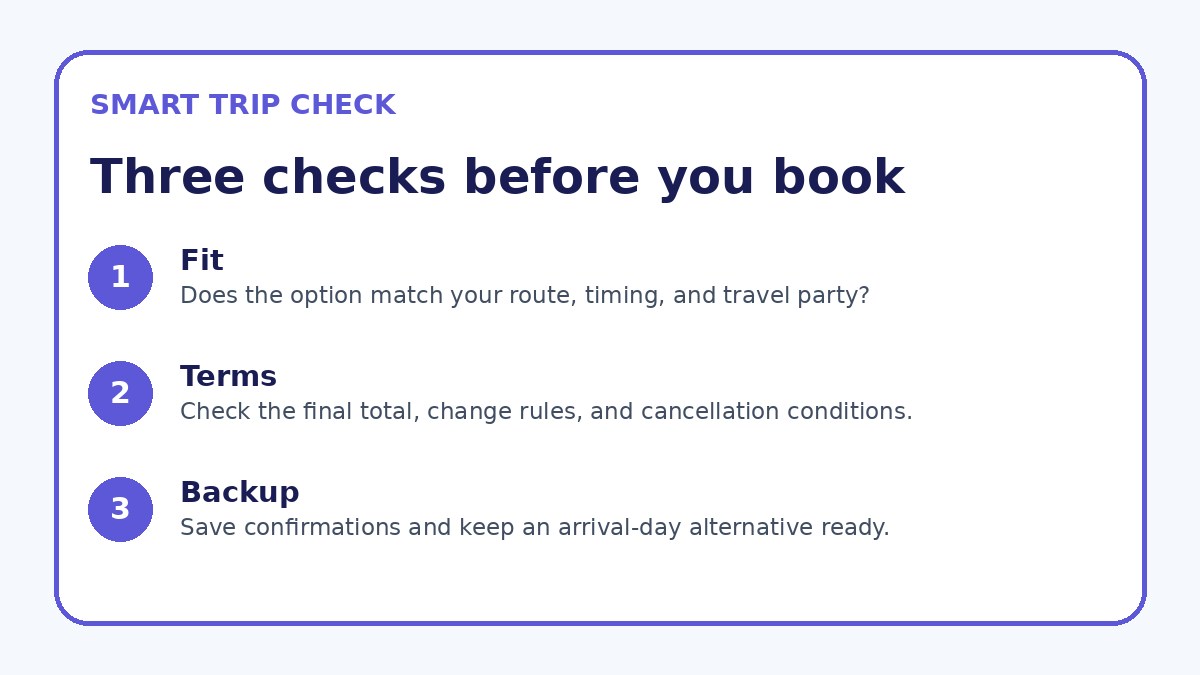
Before you book
- Calculate door-to-door time including driveway or train, recommended family check-in time, security lines, and any connection layover.
- Confirm seat availability for your full party and reserve adjacent seats or a family-friendly configuration before finalizing the ticket.
- Verify baggage allowances, gate-check stroller policies and whether bags transfer automatically on connecting itineraries on the airline booking page.
- Check change, cancellation and rebooking policies for both segments when booking connections, especially across different carriers.
- Plan for contingencies: pack essential items in carry-on bags (meds, snacks, chargers, a change of clothes) and bring comfort items for kids.
- Compare travel insurance options that cover missed connections, delays and baggage loss, and read exclusions relevant to family travel.
Money, flexibility and how to protect your plan
Price is often compelling for families, but budget decisions should include the hidden costs of connections: additional meals, airport lounge access, or unexpected overnight stays if a connection is missed. Flexible fares that allow free changes or carry generous rebooking terms are particularly valuable for families because illness and changing plans are common. If you choose a connecting itinerary to save money, ensure the ticket’s transfer and rebooking protections match your family’s risk tolerance. Travel insurance that covers missed connections and baggage issues can be helpful—read the policy terms carefully so you know what’s covered.
When comparing offers, don’t forget to check seat availability for your whole party before committing. A lower-price connecting fare that can’t guarantee adjacent seats may be less practical than a slightly higher nonstop that seats your family together. Also confirm refund, cancellation and same-day change policies on the carrier’s booking page; airlines and codeshare partners often have different terms for changes, and those details determine whether a small schedule disruption becomes a major headache.
Frequently asked questions
Is a nonstop flight always the fastest door-to-door option between Sydney and Melbourne for families?
Not always. A nonstop flight has the shortest airborne time but door-to-door speed depends on driving time to the airport, security waits, and how early you need to arrive with children. A well-timed connecting itinerary departing from a closer terminal or at a more convenient hour can equal or beat a nonstop’s door-to-door time. Always map your home-to-airport route, typical traffic at your departure times, and the check-in guidelines the airline recommends for families before choosing.
What should I do if my connecting flight is delayed and I’m traveling with young children?
First, contact the airline(s) as soon as a delay becomes probable to understand rebooking options and assistance. If both legs are on the same ticket, the carrier is usually responsible for finding alternatives; if tickets are separate, you may need to rebook yourself. Keep essentials—snacks, medication, and entertainment—in a carry-on so kids remain comfortable, and ask gate staff about family boarding or lounge access. For complex cases, escalate politely to a supervisor and document delays and communications in case you later claim compensation or reimbursement.
How do I decide whether to check or carry a stroller and car seat for a family trip?
Decide based on child age, connection plan and personal tolerance for hauling gear. Gate-checking a stroller allows you to use it through the terminal and hand it to staff before boarding, which is often easiest for infants and toddlers. If you have connecting flights that require you to reclaim and recheck baggage, consider carrying a lightweight stroller and using a car seat designed for travel or renting one at your destination. Check the airline’s specific policies—some allow free checked car seats and strollers, but rules vary, so verify them on the airline’s booking page before departure.
Final planning note
Families making the Sydney to Melbourne trip should balance convenience, total travel time, and risk tolerance. Nonstop flights simplify logistics and reduce the number of transitions, which is often the right choice for families with very young children or tight schedules. Connecting itineraries can offer schedule advantages or cost savings but bring added transfer work and potential complications, especially if connections are tight or tickets are split between carriers. Before booking, calculate door-to-door time, confirm seating for the whole party, and verify baggage and change policies on the airline’s official page. With those checks done, you can pick the option that best fits your family’s comfort and contingency needs.
Continue planning
Check current options and final conditions
Use the provider page to confirm live availability, the final total, cancellation terms, and every condition that matters to your trip.
This evergreen planning guide was created with AI-assisted drafting and a structured quality review. It does not display live prices, schedules, availability, visa guidance, or provider rankings. Verify current details before booking. Some links are affiliate links; we may earn a commission at no additional cost to you.