If you and your partner are deciding between a flexible schedule and a convenient connection for Seoul to Busan flights, the practical answer is this: choose based on how fixed your plans are and how much time you want to spend on ground transfers. For couples who prize spontaneity—late-night plans, same-day changes, or multi-stop sightseeing—flexible ticket rules and more departure options matter. If your priority is minimizing transit hassle, prioritize convenience: nonstop options (if available), simpler airport transfers, and departure times that match your arrival or hotel check-in. Before you click buy, compare fare rules for changes and refunds, total door-to-door travel time, and the precise transfer options at each airport or nearby stations. Verify final baggage rules, change fees, and exact connection details on the airline or booking page before confirming.
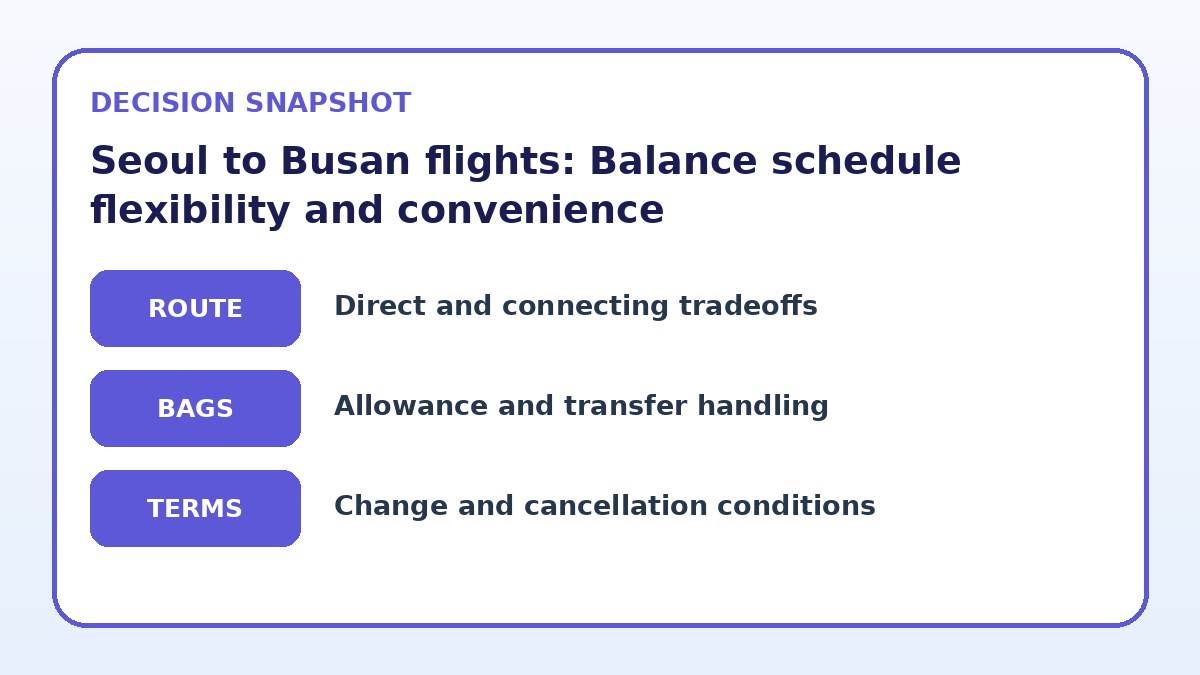
See current options before you compare the details
Availability and final conditions change. Open Trip.com now or keep reading for the practical comparison.
Decide what flexibility means for your trip
Start by defining how flexible you need to be as a couple. Are you planning a fixed schedule—dinners, performances, or sightseeing reservations—or is your trip open to improvisation? Flexibility can mean different things: the ability to change departure times with low or no penalty, refundable or partially refundable tickets, and multiple daily departure options so you can adapt if your plans shift. For spontaneous couples, those features reduce stress and let you prioritize experiences over strict logistics.
When weighing options, convert abstract flexibility into concrete scenarios you might face: a delayed morning departure from Seoul, a sudden desire to stay an extra night in Busan, or a need to move to an earlier flight. Check what each fare class allows for changes, how easy it is to rebook online or through customer service, and whether name changes are permitted. If your itinerary relies on other reservations—hotels, tours, or train tickets—factor in any time and cost implications of changing your flight.
Prioritize convenience: door-to-door thinking
Convenience is more than the in-air experience; it’s the whole journey from your front door in Seoul to your hotel in Busan. Consider where you’ll start and finish: some airports or terminals have faster public transport links, simpler taxi flows, or more frequent express services. A flight that saves 30 minutes of airborne time can still be slower overall if it adds complicated transfers, long security lines, or an extra connection. Couples valuing ease often accept a slightly higher fare in exchange for fewer logistical headaches.
Map out the entire travel chain: transit to the airport, check-in and security, time before departure, and transfer options at the arrival point into Busan. For convenience-minded pairs, look for seats that board together, minimal layovers, and arrivals at a terminal with easy onward transport. Also think about arrival times; a late-night arrival might be less convenient even if the flight itself is direct. Confirm taxi ranks, shuttle schedules, and whether train or bus services operate at your planned hour before committing.
| Approach | Best for | Tradeoff to check |
|---|---|---|
| Flexible-fare approach | Couples who expect itinerary changes or want peace of mind about refunds | Higher upfront cost or fewer low-fare options, but simpler changes and fewer penalties |
| Convenience-first approach | Couples prioritizing minimal transfers, short door-to-door time, and easy airport access | May pay more and have fewer departure times that match ideal schedules |
| Mixed strategy (flexible legs + convenient arrival) | Couples balancing spontaneity with a smooth end-to-end experience | Requires more research and possibly booking across different fare types |
| Budget-minimizing approach | Couples willing to trade flexibility and some convenience to reduce ticket cost | Tighter change rules and potential extra costs for baggage or rebooking |
Ready to check the option that fits your plan?
Use your exact dates and traveler details so the provider page can show the current total and conditions.

How to compare direct and connecting options
Don’t assume a direct route is always the right choice. Direct flights reduce the number of touchpoints and the risk of missed connections, but they can be less frequent or have less convenient schedules. Connecting flights can open up more departure windows and potentially lower fares, and sometimes a well-timed connection still yields a better door-to-door time. For couples, compare the total journey disruption: number of transfers, minimum connection time, and the complexity of changing terminals.
When you look at connecting itineraries, examine each connection as if booking separate legs: how long is the layover, do you need to clear immigration or recheck baggage, and how easy is it to rebook if delays occur? If you rely on a single ticket, verify the carrier’s protection for missed connections. For self-connecting options, ensure you have adequate buffer time and know local transit options in case you need to move between terminals. Always confirm these specifics on the airline or booking provider’s final page before payment.
Before you book
- Confirm fare change and cancellation rules on the final airline or booking page before you pay.
- Verify baggage allowances, carry-on sizes, and fees for both travellers to avoid surprises at check-in.
- Match departure and arrival times to your planned activities and hotel check-in hours.
- Check terminal names and ground-transport options at both ends, including late-night service availability.
- Select seats together or confirm seat assignment policies so you board as a pair.
- Note the exact steps to rebook or request assistance from the carrier if your flight is delayed or rerouted.
Practical checks and couple-friendly tips before booking
Before confirming any Seoul to Busan flights, run through a short checklist together. Review the fare rules for changes and cancellations, look at baggage allowances per person, and confirm seat selection options so you can sit together. Make a note of the airport terminals and the planned method of transfer for both ends of the trip—some airports have multiple terminals with different ground-transport choices, which affects convenience for couples carrying luggage or with mobility concerns.
Also check arrival times against hotel check-in hours and any onward reservations, so you’re not forced into an expensive early check-in or a long wait. If either of you has travel credits, elite status, or baggage needs, apply those during booking to avoid surprises. When you need to compare live availability and current rules, places such as Trip.com can show options, but always verify final baggage, change, and refund terms on the carrier’s official booking page before payment.
Frequently asked questions
Should couples always pick direct Seoul to Busan flights for convenience?
Not necessarily. Direct flights remove the risk of missed connections and often shorten in-air time, but convenience depends on the whole journey. If a direct departure time forces an awkward transfer or a late arrival at your hotel, a connecting option with a better schedule or easier airport access can be more convenient overall. Always compare total door-to-door travel time, terminal logistics, and ground transport options rather than judging solely by whether a flight is nonstop.
How much flexibility should we buy if we have reservations tied to specific dates?
If you have time-sensitive reservations—events, hotel nights with strict check-in rules, or tours—prioritize fares that allow changes with minimal penalty or that offer partial refunds. Flexible tickets reduce stress and potential extra costs if plans shift. However, flexible fares may cost more: weigh that premium against the expense and inconvenience of rebooking other reservations. Confirm on the airline’s booking page exactly what fees, timelines, and online rebooking options apply before choosing a fare.
What day-of-travel strategies can couples use to reduce hassle?
Arrive at the airport with a shared plan: assign one person to manage documents and the other to oversee luggage and mobile confirmations. Check in online to select adjacent seats if allowed, and confirm baggage tags and boarding passes together. Allow extra buffer time for security and transit between terminals, bring snacks and a small charger to stay comfortable, and save the airline’s contact methods in case you need to rebook. Finally, if your arrival time is late, pre-book reliable ground transport or confirm hotel late-check-in options.
Final planning note
Choosing between schedule flexibility and convenience for Seoul to Busan flights comes down to how you and your partner value time, certainty, and ease. If your plans might change, prioritize flexible fares and multiple departure options so you can adapt without stress. If you want a smooth, low-effort journey together, focus on flights and schedules that minimize transfers and align with your door-to-door timing. Often a hybrid approach—flexible options for the leg most likely to change and convenience for arrival logistics—serves couples best. Whatever you pick, verify fare rules, baggage policies, and exact connection details on the carrier’s final booking page before you complete payment.
Continue planning
Check current options and final conditions
Use the provider page to confirm live availability, the final total, cancellation terms, and every condition that matters to your trip.
This evergreen planning guide was created with AI-assisted drafting and a structured quality review. It does not display live prices, schedules, availability, visa guidance, or provider rankings. Verify current details before booking. Some links are affiliate links; we may earn a commission at no additional cost to you.