For a business traveler finishing a short Osaka trip, the return to the airport is the last logistics hurdle to conquer. Start by deciding the trade-off you accept: speed versus predictability versus cost. If your priority is minimizing risk of missing a flight, prioritize transfers with guaranteed seat reservations, reliable luggage handling, and direct routes even if they take a little longer. If flexibility matters—late meetings or changing departure times—favor options with easy rebooking or frequent departures. Before booking, check your flight’s recommended check-in and security times, factor in peak-hour traffic, and verify the provider’s final booking page for luggage rules, cancellation terms, pick-up points, and estimated journey times.
See current options before you compare the details
Availability and final conditions change. Open Trip.com now or keep reading for the practical comparison.
Decide your priority: speed, certainty, or flexibility
Begin by deciding which factor is most important for your return: minimum travel time, certainty of arrival, or scheduling flexibility. Fastest options are appealing when you have a late check-out and a buffer before your flight, but fastest doesn’t always mean most reliable in rush-hour traffic. Certainty means choosing a service with reserved seats, fixed pickup times, and a documented cancellation policy—these reduce stress when a delay would be costly. Flexibility matters if your meetings might run late; high-frequency trains or services with short-notice changes let you adapt without paying hefty change fees.
To make this choice practical, list the non-negotiables: required arrival buffer at the airport, acceptable walking distance with luggage, and whether you need assistance with bags. Compare average door-to-door estimates rather than raw in-vehicle time—account for getting from your meeting spot or office to the pickup point. For business trips, time lost in transit equals lost work time. Once you know which trade-offs you accept, shortlist options to compare schedules, booking terms, and what the provider’s final page says about luggage and pickups.
Compare common transfer approaches and what to verify
Common approaches include fixed-schedule airport buses, direct shared shuttles, private car transfers, taxis, and public rail. Each has a predictable pattern: buses are cost-efficient and often use curbside stops; shared shuttles can be door-to-door but may detour; private cars offer the most control; taxis are ubiquitous but subject to traffic; rail is fast and punctual on schedule. When comparing, check frequency during your departure window, where pickups and drop-offs happen, and whether the service guarantees space for large suitcases or freight items you might have.
Because provider policies change, verify these items on the provider’s final booking page before you commit: exact pickup location wording, vehicle category (to ensure luggage fits), cancellation and change fees, and any supplement for early-morning or late-night departures. For rail options, review station transfer times and whether you need to change lines with luggage. If a direct service is available, check whether it truly goes to the terminal door or to an airport station that requires an internal transfer.
| Approach | Best for | Tradeoff to check |
|---|---|---|
| Private car transfer | Maximizing control and door-to-door comfort | Higher cost and subject to road traffic; verify vehicle size and baggage policy |
| Airport express train or rail | Predictable running times and speed between major hubs | Requires station access and handling luggage on stairs or escalators |
| Fixed-schedule airport bus | Cost-effective and simple curbside boarding | Less flexible timing and possible stops en route that extend duration |
| Taxi or rideshare | On-demand pickup and point-to-point convenience | Variable price and journey time depending on traffic; check surge or night rates |
Ready to check the option that fits your plan?
Use your exact dates and traveler details so the provider page can show the current total and conditions.
Timing and contingency planning for business schedules
Set a practical buffer for arrival at the airport based on your risk tolerance and airline guidance. For business travelers a single missed connection can disrupt meetings and incur extra costs; consider adding time for unexpected delays like heavy traffic or last-minute stops for colleagues. If you must attend early-morning meetings, arrange a transfer that runs reliably at that hour or plan an earlier night near the airport. When booking, note any minimum arrival time your airline recommends and use that as a baseline to work backward to the departure time from your hotel or office.
Always prepare two contingencies: a primary transfer and a backup plan you can activate quickly. The backup could be an alternate express train, a taxi app preloaded with payment, or a list of nearby car services. Make sure your phone has local connectivity and the apps or numbers needed. If your primary transfer requires a specific meeting point, confirm it the day before and allow an extra 10–20 minutes to get there, especially in unfamiliar neighborhoods where elevators or exits can add unexpected walking time.
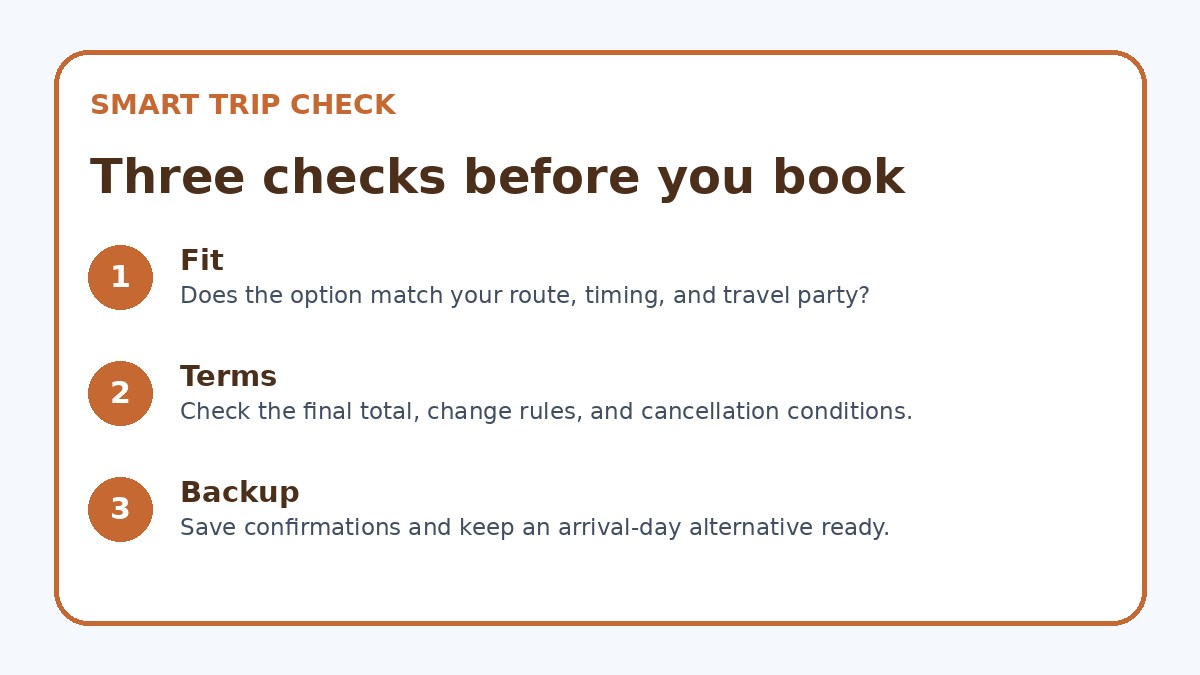
Before you book
- Confirm your flight’s recommended airport arrival time and add an extra buffer suited to your risk tolerance.
- Check the provider’s final booking page for exact pickup location, vehicle type, and baggage limits before reserving.
- Compare door-to-door time estimates rather than just in-vehicle travel time when choosing between options.
- Save contact details, booking confirmations, and a local phone number for the transfer provider in multiple places on your device.
- Prepare a backup transfer plan (alternate train, taxi app, or shuttle) and pre-load any required payment methods.
- Inform reception or your meeting host of your planned pickup point and any mobility or luggage needs the day before.
Booking logistics: what to confirm right before you reserve
Before you click confirm, double-check the pickup address and instructions and match them against your hotel’s known entrance or lobby name. For office pick-ups, specify the building entrance and floor if the service requests it. Check baggage allowances, vehicle type, any waiting-time rules, and whether the driver will assist with luggage or if extra fees apply. Verify whether the quoted price covers tolls, ferry segments, or bridge fees that could apply on certain routes—if it doesn’t, plan an allowance in cash or card.
Also verify the change and cancellation policy for the specific booking window you need; some providers offer more flexible rebooking for business travelers at a higher fare, which may be worth it to avoid stress. If you rely on public transit, confirm the last train or bus times for your airport and whether service levels differ on weekends or holidays. Finally, store screenshots or booking confirmations in multiple places on your phone and send a copy to a colleague or assistant so someone else can act if your schedule changes unexpectedly.
Frequently asked questions
How early should I leave central Osaka for the airport when traveling for business?
Aim to work backward from your airline’s recommended arrival time at the terminal and add a safety buffer that matches your tolerance for risk. For many business travelers the sensible approach is to build in extra time for urban traffic, hotel checkout formalities, and unexpected meeting overruns. If using road transport, give yourself more buffer during weekday morning or evening peaks. If taking rail, align your departure with a reliable express service time and allow extra minutes for getting from your office or hotel to the station with luggage.
Is a private transfer worth the extra cost for a short Osaka stay?
A private transfer can be worth the premium if your schedule is tight, you have several pieces of luggage, or you need guaranteed meeting-point pickup. The main advantages are door-to-door service, driver assistance, and fewer unknowns in the journey. Weigh that against traffic risk and the availability of express rail, which can sometimes equal road travel time at a lower cost. If choosing private transfer, verify vehicle size, luggage allowances, and the provider’s waiting-time and cancellation policies on their final booking page.
What should I check on the booking page after selecting an Osaka airport transfer?
On the provider’s final booking page, verify the exact pickup address (including building name and lobby), vehicle category and luggage capacity, permitted waiting time and related fees, and clear change or cancellation terms. Also check whether tolls, parking charges, or night surcharges are included in the quoted fare. If the service offers meet-and-greet, confirm the meeting point instructions. For rail or bus, confirm station names, platform transfer requirements, and whether assistance is available for heavy luggage.
Final planning note
Planning the return trip to Kansai or Itami airports from Osaka as a business traveler comes down to clarifying priorities and then verifying details. Decide whether you value speed, certainty, or flexibility, then narrow options by door-to-door time, luggage handling, and the provider’s change policy. Always confirm pickup points, vehicle and baggage details on the final booking page and keep a simple backup plan you can activate quickly. With those checks in place you reduce last-minute stress and preserve the last part of your trip for focused work or a calm transition home.
Continue planning
Check current options and final conditions
Use the provider page to confirm live availability, the final total, cancellation terms, and every condition that matters to your trip.
This evergreen planning guide was created with AI-assisted drafting and a structured quality review. It does not display live prices, schedules, availability, visa guidance, or provider rankings. Verify current details before booking. Some links are affiliate links; we may earn a commission at no additional cost to you.