If you’re a first-time visitor arranging a family road trip in Dubai, the practical essentials are straightforward: choose a well-located base for mornings and evenings, rent a reliable mid-size SUV or people carrier with child-seat options, confirm insurance and cross-emirate permission, and map one comfortable day drive per full day of travel. Those decisions shape comfort more than sightseeing lists. For families, minimizing wasted transit time and avoiding last-minute surprises—parking limits, toll tags, and hotel parking rules—makes the trip enjoyable. This guide walks through where to stay for easy road access, how to select a car and protection level, how to build a kid-friendly driving itinerary, and what last checks to do on booking pages so you’re ready to drive with confidence.
See current options before you compare the details
Availability and final conditions change. Open Trip.com now or keep reading for the practical comparison.
Choosing where to stay to make driving simple
When planning a family road trip in Dubai, pick one or two bases rather than relocating every night. Staying in a central Dubai neighbourhood gives shorter drives to many city attractions, while a beachside suburb gives easier access to coastlines and relaxed evenings. For families with younger children, prioritize accommodation with free or easy hotel parking, elevator access, and rooms that open to a corridor or balcony so parents can monitor kids without constant carrying.
Think about how you will use the car each day: morning drives to attractions, midday rest back at your base, and evening outings for dining. If you plan a full-day outdoor trip to desert areas or neighbouring emirates, consider a base closer to major highways to reduce urban traffic time. Before you book, check the hotel’s parking policy, height limits, and whether there are extra fees—confirm those exact conditions on the hotel or booking provider’s page.
Picking the right rental vehicle and extras
For family comfort in Dubai, favour a mid-size SUV or a people carrier with three comfortable seats across the rear and a roomy boot for strollers and shopping. A diesel or petrol choice is typically offered; pick what you’re used to and check fuel policies on the booking page. Confirm the vehicle’s air-conditioning performance and consider a vehicle with tinted rear windows to reduce direct sun exposure during daytime drives with children.
Always add or verify child seats, booster seats, and roof storage if needed. On the rental provider’s final booking page, check whether child seats are free or charged, the exact model of the vehicle being offered (or its category), and whether roadside assistance and a local phone number are included. If you will cross into neighbouring emirates or drive desert tracks, confirm cross-border permissions and any restrictions directly on the rental contract before collecting keys.
| Approach | Best for | Tradeoff to check |
|---|---|---|
| Rent a larger SUV | Families who need space for three child seats and lots of luggage | Higher fuel use and possibly higher rental and parking costs |
| Rent a compact car | Couples with small children and light luggage seeking easier parking | Less interior space and tighter fit for multiple car seats |
| Book child seats through the rental company | Travelers who want convenience and guaranteed fitting standards | Additional daily charge and variable seat models |
| Bring your own car seats | Families wanting familiar seats and no rental-seat charges | Logistics of transporting bulky seats and ensuring compatibility |
Ready to check the option that fits your plan?
Use your exact dates and traveler details so the provider page can show the current total and conditions.
Designing family-friendly driving days and stops
Build itineraries that alternate shorter themed mornings with optional longer afternoon drives. Children cope best with predictability: plan a 90–120 minute drive followed by a park, beach or indoor play area for an hour. Use shaded picnic spots or malls for midday breaks in hot weather. Identify restroom stops and simple meal options en route; a relaxed lunch stop breaks up driving and reduces stress for parents.
When mapping longer drives—whether coastal routes, cultural sites, or desert edges—factor in traffic patterns and prayer times which can affect travel speed. Keep one buffer hour for unexpected stops and add a familiar entertainment kit for the car: snacks, refillable water bottles, a first-aid kit, wet wipes, and lightweight blankets. Download offline maps for your planned route and have a plan B in case a stop is crowded or closed.
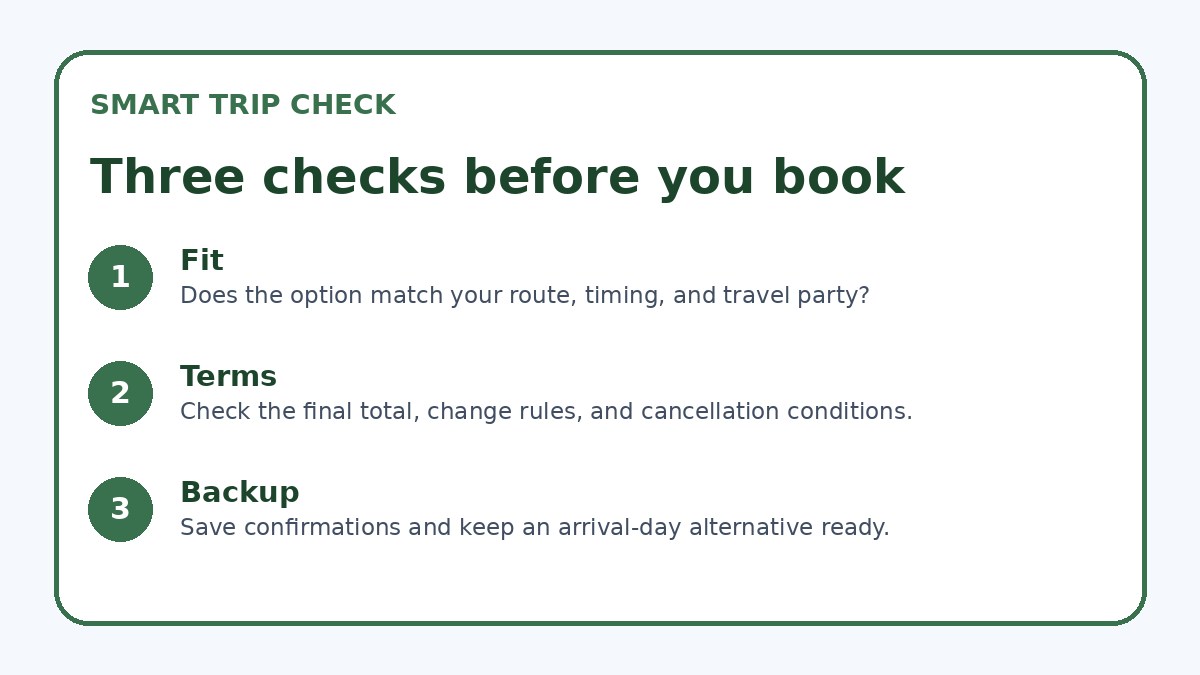
Before you book
- Confirm the car category and exact model or a similarly sized substitute on the rental provider’s final booking page.
- Verify inclusion or cost of child seats, booster seats, and confirm ISOFIX or seat-belt installation compatibility.
- Check insurance excess levels, roadside assistance coverage, and whether collision damage waivers or additional protection are available.
- Find out if a toll tag or electronic payment device is fitted and how toll charges are billed to your rental.
- Photograph the car’s condition at pickup, note existing damage on the rental form, and keep time-stamped images until the return is complete.
- Save the rental agreement, insurer contact, and local emergency numbers on your phone and carry printed copies in the car.
Final checks before you book and collect the car
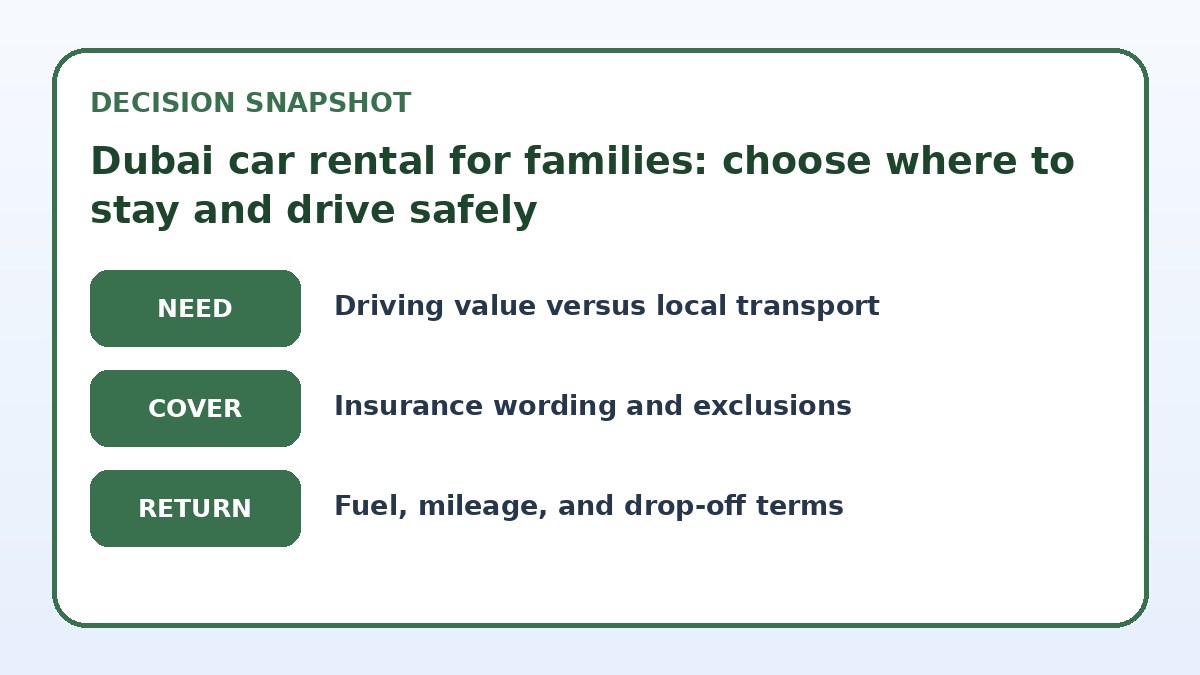
Before you confirm any booking, verify the contract items that most affect families: excess and deposit amounts, fuel policy, mileage limits, child-seat charges, toll tag procedures, and roadside assistance. These details can change by supplier and vehicle class, so read the rental provider’s final booking page and policy documents. If you rely on an app or third-party aggregator, compare the supplier’s own terms as they will govern damage claims and pickups.
On collection day, inspect the car carefully with photos and a walk-around record; confirm the number and condition of supplied child seats and that seat belts and anchors function correctly. Ask about local traffic rules you should be aware of—toll tags, speed enforcement, and parking payment methods—and where to reach local support if you need help. Keep all booking confirmations, insurer contact details, and roadside assistance numbers easily accessible in your phone.
Frequently asked questions
Is renting a car in Dubai necessary for a family trip?
Renting a car is not strictly necessary—Dubai has taxis and reliable ride-hailing—but a rental gives flexibility for family pacing, early starts, and drives to beaches, desert fringes, or neighbouring emirates. For families with young children, a car reduces walking and transit transfers and makes transporting strollers and luggage simple. Decide based on your planned itinerary: if most activities are central, public transport and rideshares may suffice; if you want scenic drives or remote day trips, a rental is worth arranging.
What should I check about child seats and car seat laws?
Different countries and rental companies have specific child restraint expectations; check the rental provider’s child-seat options and installation instructions on the final booking page. Confirm that the seats meet safety standards, that the vehicle has the right anchors or belts, and that you understand how to install them. If you bring your own seat, verify compatibility with the car model and ensure it is not expired or damaged. Ask the rental desk to demonstrate seat installation if you are unsure.
How can I plan drives to avoid Dubai traffic with children?
Avoid peak commuting windows when possible; plan longer drives for mid-morning or late afternoon outside rush hours. Start early to reach popular attraction parking before crowds, and schedule indoor or shaded activities for midday heat. Use real-time traffic apps on the day to choose the fastest route, and factor in extra time for rest stops and meals. If a planned stop becomes congested, have alternate nearby options such as parks, waterfronts, or family-friendly malls to switch to quickly.
Final planning note
A family road trip in Dubai rewards simple, practical planning more than ambitious schedules. Choose one or two convenient bases, pick a vehicle with clear child-seat and luggage capacity, and confirm insurance, tolls, and cross-emirate permissions on the rental provider’s booking page before you pay. Build daily drives that balance short, predictable stops with one longer scenic outing, and pack essentials—shade, snacks, entertainment, and a first-aid kit—to keep children comfortable between stops. With those checks completed, you’ll have the flexibility to enjoy beaches, cultural sights, and desert edges at your family’s pace.
Continue planning
Check current options and final conditions
Use the provider page to confirm live availability, the final total, cancellation terms, and every condition that matters to your trip.
This evergreen planning guide was created with AI-assisted drafting and a structured quality review. It does not display live prices, schedules, availability, visa guidance, or provider rankings. Verify current details before booking. Some links are affiliate links; we may earn a commission at no additional cost to you.