
If you need to travel from Dubai to Doha for business, start with a short, actionable checklist: decide nonstop or connecting, confirm flexible change options, match flight times to meetings, and check baggage and airport transfers. Business trips hinge on timeliness and minimizing friction, so your pre-booking decisions should prioritize schedule reliability, sensible buffer times, and the simplest airport connections. This article gives an efficient checklist you can apply at the booking stage, then walks through the tradeoffs—when to accept a lower fare for more risk, how to weigh seat and luggage choices, and what to verify on the carrier’s booking page. Use these steps to make a confident booking that aligns with your schedule, company policy, and the expectation of arriving ready for work.
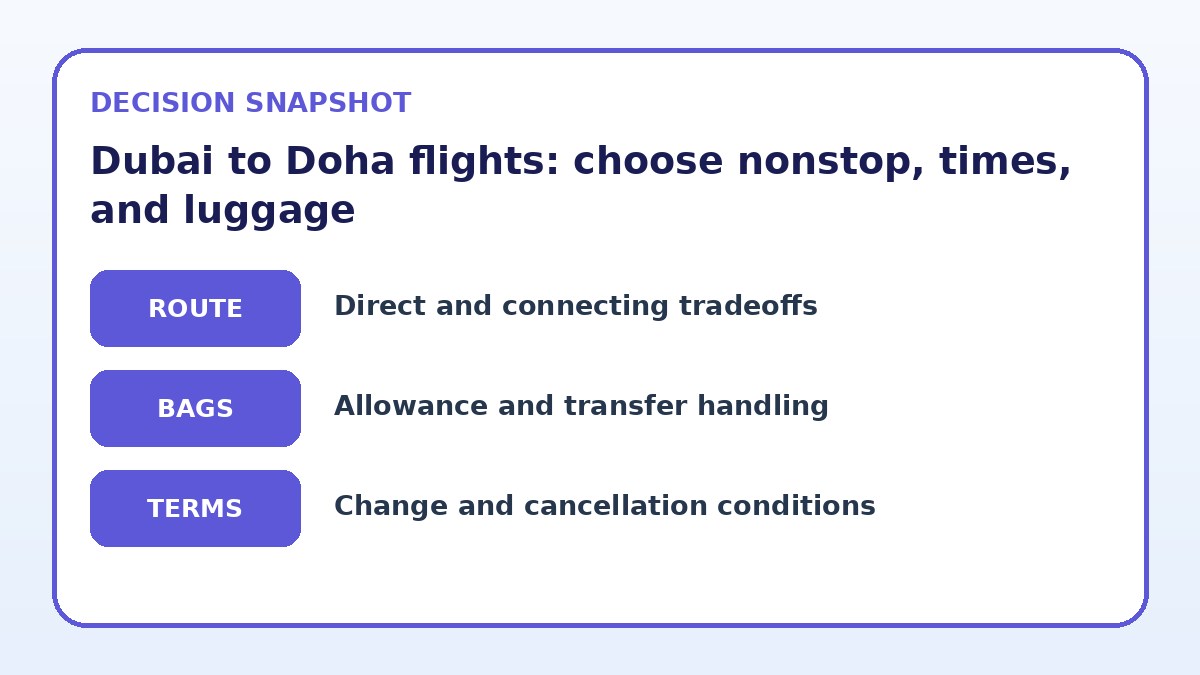
See current options before you compare the details
Availability and final conditions change. Open Trip.com now or keep reading for the practical comparison.
Choose nonstop or connecting flights with business priorities
For most short international hops like Dubai to Doha, a nonstop flight reduces the chance of missed connections and simplifies airport transfers. Start by listing your meeting times and work backward: choose an outbound that arrives with comfortable time before the first commitment and a return that leaves after you’re realistically done. If a nonstop at the right time is available, it often wins for reliability and lower stress. However, nonstops may be fewer and sometimes more expensive—or they may only operate at inconvenient hours—so don’t dismiss connecting options without comparing total travel time and risks.
When considering connecting flights, compare total elapsed time and the minimum connection time at the transit airport. A connection can be attractive if it opens a better schedule or lower fare, but it introduces more variables: potential delays, additional boarding, and transit terminal transfers. If your company allows self-transfer itineraries (separate tickets), factor in the risk and plan extra buffer time and protective travel insurance. Always verify connection details on the booking page—terminal, minimum connection time, and whether the airline protects through-checked bags—so you can assess whether the connection fits your business tolerance for complexity.
Match schedules to ground logistics and meeting windows
Flight time alone doesn’t determine door-to-door duration. Before booking, estimate ground time at both ends: travel to Dubai airport (including traffic and drop-off), arrival procedures, and transfer from Doha’s arrival terminal to your hotel or office. For morning meetings, aim to arrive the night before if possible; for midday meetings, leave a generous buffer for customs, taxi queues, and possible delays. If you must travel the same day as a meeting, pick flights with substantial slack and consider premium services like fast-track immigration or airport meet-and-greet if those options are available and cost-effective for your company.
Account for airport choice and transfer methods when comparing flights. Dubai has multiple airport terminals and transport options—confirm which terminal the flight uses and whether your ground transport provider or car service can meet you there. In Doha, check which terminal your flight arrives into, how long immigration queues typically are, and the typical ride time to your destination during the time of day you’ll travel. Verify transfer providers’ pickup policies and any supplemental time they recommend; these small confirmations reduce stress and help you choose the flight that best aligns with your on-the-ground plan.
| Approach | Best for | Tradeoff to check |
|---|---|---|
| Nonstop flights | Minimizing travel time and connection risk | May have limited schedules or higher fares at preferred times |
| Connecting itineraries | Accessing better departure/arrival times or lower fares | Adds complexity and the risk of missed connections |
| Flexible/flexible-change fares | Business travelers needing schedule certainty and last-minute changes | Usually costs more upfront compared with restricted fares |
| Restricted/nonrefundable fares | Travelers with fixed plans and tight travel budgets | Higher financial risk and penalties for changes or cancellations |
Ready to check the option that fits your plan?
Use your exact dates and traveler details so the provider page can show the current total and conditions.
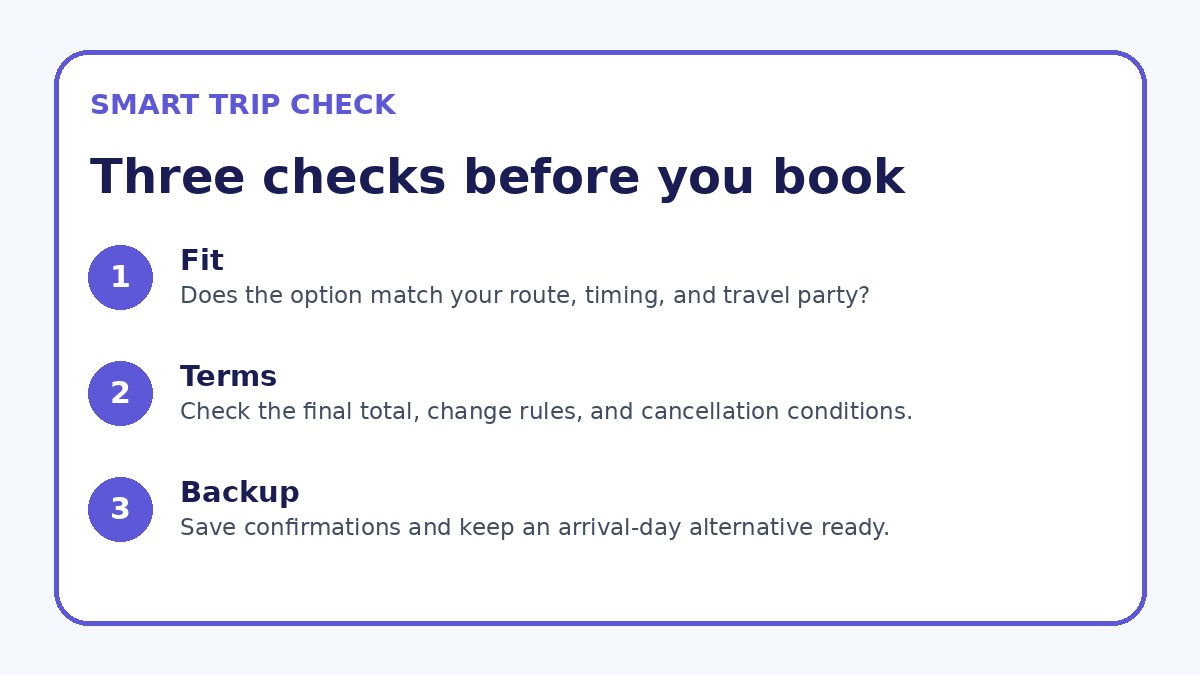
Fare rules, flexibility, and corporate policy alignment
Before finalizing a booking, read the fare rules on the airline’s booking page: change fees, refundability, and the upgrade or standby policies. Business travel often needs last-minute adjustments, so prioritize fares that match your company’s flexibility needs—even if the base fare looks higher. If your company requires refundable or flexible tickets, filter results accordingly during search. Where the booking page language is unclear, contact the airline’s reservations team or your travel manager to get written confirmation of what changes are allowed and what penalties apply.
Also check how rewards, corporate discounts, and expense reconciliation interact with the fare you’re considering. If you’ll earn mileage or use corporate rates, confirm eligibility and whether booking through a travel management system affects flexibility. For group or multi-leg itineraries involving other colleagues, ensure the fare conditions are compatible across all legs. Finally, if you rely on a travel agency or platforms like Trip.com for comparisons, use their tools to cross-check availability—but always verify final fare rules and seat assignments on the carrier’s own booking page before committing.
Before you book
- Confirm whether a nonstop flight exists at the times you need and compare the total door-to-door time versus connecting options before filtering results.
- Verify fare rules on the airline’s official booking page: change and cancellation fees, refundability, and any conditions for rebooking or standby.
- Check baggage allowance (carry-on and checked) for the fare class you choose and add extra baggage at booking if company policy requires it.
- Match the flight’s departure and arrival terminals with your planned ground transport, then book or confirm transfers and factor in realistic traffic or queue times.
- Select a seat and confirm onboard amenities (power outlets, Wi-Fi) if you need to work during the flight; pay for seat selection at booking if necessary.
- If traveling on company policy, record the fare code and supplier confirmation, and keep screenshots of the carrier’s booking page in case rules or details change later.
Seat selection, baggage, and productivity onboard
Decide early whether you need specific seating—exit row for legroom, aisle for quick movement, or a window for rest—and check if that seat is included or costs extra. For a short regional flight, seat comfort still matters if you plan to work en route. If you’ll use a laptop or take calls, confirm onboard Wi-Fi availability and power options on the aircraft type shown during booking; these features can vary by flight and fare class. When necessary, choose a seat that supports your productivity needs rather than taking the cheapest available.
Baggage rules differ by fare and airline, and carry-on sizing is enforced. Confirm included checked baggage allowance if you travel with luggage beyond a business backpack. If your company reimburses baggage fees, keep receipts or book a fare that includes at least one checked bag to avoid split-authority expenses later. Also plan for expedited security lanes or priority boarding if those services are important for meeting tight schedules—verify availability and cost at booking so you’re not surprised at check-in.
Frequently asked questions
Should I always choose a nonstop Dubai to Doha flight for business travel?
Not always. Nonstops reduce the chance of delays and simplify transfers, which is valuable for business trips with tight schedules. But nonstops may operate at inconvenient hours or have limited availability, and sometimes a single-connection itinerary offers a better arrival time that fits meetings while keeping total travel time reasonable. Compare door-to-door times and the impact of a missed connection on your plans. If flexibility and lower price are priorities and you can build in buffer time, a connection can be acceptable—just verify protection for baggage and connection minimums on the booking page.
How much buffer time should I allow between landing in Doha and an important meeting?
A useful buffer depends on the factors you can’t control: immigration queues, baggage retrieval, and ground transfer time. For most business travelers arriving internationally, plan at least 90–120 minutes from touchdown to arrival at an inner-city meeting location when you must pass through immigration and collect luggage. If you can travel with carry-on only and use fast-track immigration or a meet-and-greet service, you can tighten that window. Always check which terminal you’ll arrive into and typical transfer times at your arrival hour, and build contingency time for traffic and possible delays.
What should I verify on the airline booking page before completing payment?
On the airline’s booking page, verify the exact fare rules (change and cancellation conditions), included baggage allowances, seat assignment options and fees, and the displayed terminal and aircraft type. Check whether the fare is eligible for mileage accrual and confirm any corporate discount codes or travel agency booking references. If the itinerary includes connections, confirm whether the airline protects the connection and whether bags are through-checked. Take screenshots or save confirmation pages so you have the documented terms if policy language differs later.
Final planning note
Booking Dubai to Doha flights for business is about aligning travel decisions with real-world constraints: schedule, flexibility, ground logistics, and company rules. Use the checklist to make deliberate choices at booking—decide on nonstop versus connecting based on door-to-door time, verify fare flexibility and baggage allowances on the carrier’s page, and confirm ground transfer details to ensure your arrival matches your meeting plan. When you prioritize predictable timing and document the booking conditions, you reduce day-of-travel stress and keep options open for changes. For quick availability checks, compare options on search tools like Trip.com but always confirm final fare rules and seat details on the airline’s official booking page before you commit.
Continue planning
Check current options and final conditions
Use the provider page to confirm live availability, the final total, cancellation terms, and every condition that matters to your trip.
This evergreen planning guide was created with AI-assisted drafting and a structured quality review. It does not display live prices, schedules, availability, visa guidance, or provider rankings. Verify current details before booking. Some links are affiliate links; we may earn a commission at no additional cost to you.