If you’re traveling from Los Angeles to San Francisco for the first time, the most practical approach is to pick the transport mode that matches your priorities—time, comfort, scenery, or budget—and then check three things on booking pages: total door-to-door time, baggage rules, and change/cancellation policies. Driving gives you flexibility but adds planning: route choices, rest stops, and parking. Flying is fastest air time but requires airport transfers and security time. Trains and long-distance buses often land in city centers and reduce transfers but can have limited frequency and variable durations. This article walks you through how to prepare for the travel day itself—what to pack, when to leave, which confirmations to have, and how to compare options—so you can make a confident booking and avoid last-minute stress.
See current options before you compare the details
Availability and final conditions change. Open Trip.com now or keep reading for the practical comparison.
Choose the transport that fits your travel-day priorities
Start by ranking what matters most for the travel day. If minimizing time between city centers is your priority, flying may win—but remember to add transfer time to and from airports, security lines, and early arrival recommendations. If you want a relaxed day with views and no airport transfers, a train or intercity bus that arrives downtown can be easier, though schedules can be less frequent. Driving gives complete control over timing and stops; it also shifts responsibility for navigation, tolls, and parking onto you. Make this priority decision first—time, convenience, scenery, or flexibility—because it shapes every subsequent booking choice.
Once you know the priority, compare options on equal terms. For flights, compare total door-to-door time including recommended pre-departure arrival. For trains and buses, check station locations relative to your lodgings and connection options on arrival. For driving, map realistic driving time windows including likely traffic and plan rest stops along the chosen route. Keep in mind that direct routes aren’t always offered; if a trip includes connections, factor in transfer difficulty and minimum connection times. Always verify transfer and baggage rules on the provider’s official booking page before committing.
Plan your travel day timeline and buffers
A clear timeline eliminates stress. Build a schedule that includes leaving time from your Los Angeles lodging, estimated travel time with buffers for traffic or delays, arrival time, and time to reach your San Francisco accommodation. If you’re flying, add recommended arrival-before-departure time and time for baggage claim. For trains and buses, include time to find the correct platform or bay and to board. If you’re driving, add extra time for peak traffic corridors and parking searches in San Francisco. Always plan a realistic buffer—somewhere between 30 minutes and two hours depending on mode and peak conditions—rather than relying on optimistic travel-time estimates.
Prepare a simple checklist you can follow on the day: confirmations and IDs ready, luggage staged, charging devices topped up, offline maps downloaded, and an alternative arrival plan if your connection changes. Share your estimated arrival time with someone at your destination. If you expect to arrive late, inform your accommodation about check-in flexibility. For routes with fewer departures, consider booking slightly earlier or later travel to avoid missing limited options. Keep provider contact numbers handy and know how to find real-time updates on the provider’s official booking page or a comparison site like Trip.com.
| Approach | Best for | Tradeoff to check |
|---|---|---|
| Fly (air travel) | Travelers prioritizing the shortest en route flying time | Extra time and complexity for airport transfers, security, and baggage; door-to-door time may be longer than it appears. |
| Train or long-distance bus | Those who prefer city-center arrivals and less transfer hassle | Schedules can be less frequent; travel time may be longer but includes more relaxed boarding procedures. |
| Drive yourself or rental car | People who want flexibility, scenic stops, and private luggage control | You manage traffic, navigation, tolls, parking, and fuel—plus potential stress in urban parking and driving. |
| Mix-and-match (fly one way, drive or train the other) | Travelers balancing speed one way and leisure or scenery on the return | Coordinating different bookings and arrival logistics adds planning complexity and possibly more transfer steps. |
Ready to check the option that fits your plan?
Use your exact dates and traveler details so the provider page can show the current total and conditions.
Pack and prepare for the travel-day experience
Think of the travel day as one long mini-trip. Pack a compact day bag with travel documents, snacks, refillable water bottle (empty through security if flying), hand sanitizer, mask if you prefer, and a small first-aid kit. Bring layers—the coast can be cool even when L.A. is warm—and a lightweight rain layer in case of coastal mist. Include charging cables and a battery pack, and make sure your phone has enough storage and battery for photos and navigation. For long drives, include paper maps or a printed directions sheet as a backup in case mobile service is spotty.
If you’re using public transport, label bags and keep valuables in a carry-on you can keep with you. For car journeys, secure loose items and set up a navigation plan with alternate routes in case of congestion or closures. If you rely on ride apps or local shuttles on arrival, check estimated wait times in advance and be ready for variable availability in busy areas. Finally, pack small comforts—eye mask, earplugs, a neck pillow—for naps on longer segments to arrive refreshed and ready to explore San Francisco.
Before you book
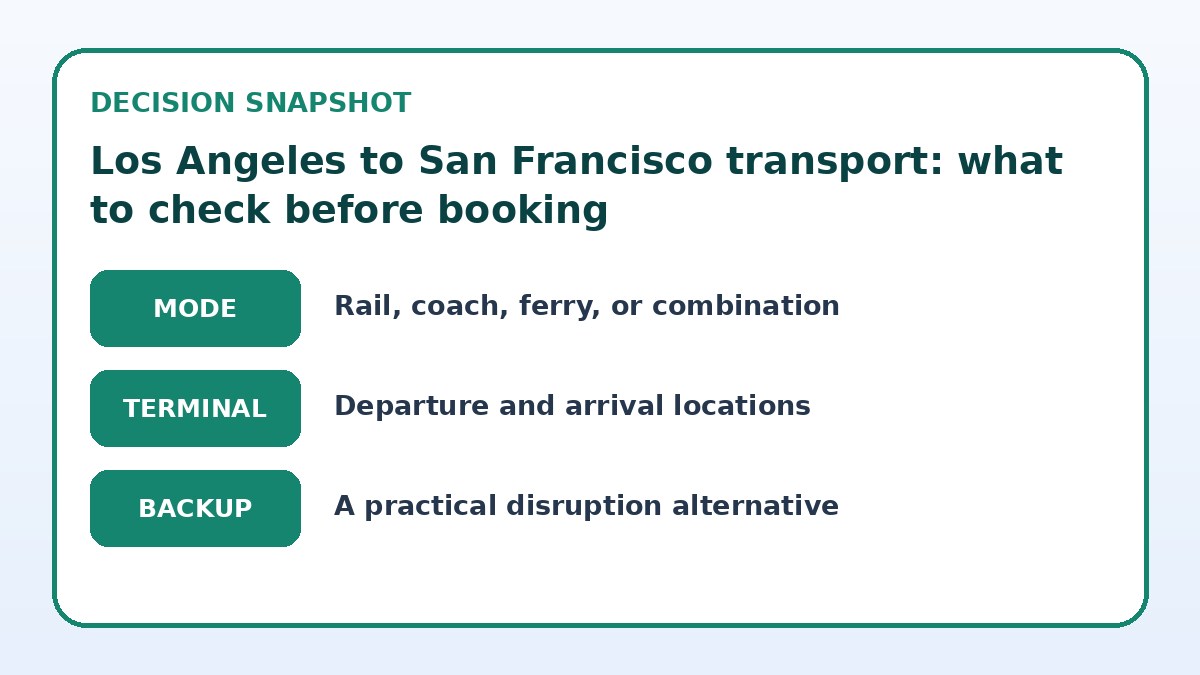
- Confirm the exact departure point (terminal, station platform, or bus bay) and save a screenshot of the map on your phone.
- Check door-to-door travel time rather than scheduled segment time; include transfers, security, and expected traffic.
- Verify baggage rules, size limits, and fees on the provider’s official booking page before you finalize any reservation.
- Download offline maps for your arrival area and save the address and phone number of your hotel or first stop.
- Pack a small travel-day kit: charger, snacks, refillable bottle, layers, basic first aid, and photocopies of important documents.
- Share your estimated arrival time with someone at your destination and keep provider contact details handy for last-minute changes.
Verify bookings and arrival logistics before you go
Confirm every element that affects the travel day: departure point (terminal, station, or bus bay), check-in or boarding window, baggage allowances, and the exact arrival stop. If your trip includes connections, double-check minimum connection times and transfer procedures. For flights, train lines, or bus services, view the provider’s official booking page for final rules on refunds, changes, and baggage—these terms can differ from what third-party aggregators show. If using a car rental or rideshare to the airport or station, check the pickup area and allow extra time for vehicle availability or traffic.
Plan your first hour in San Francisco: how you’ll get from arrival point to your hotel, where you’ll eat, and a low-effort first activity in case of delays. If your arrival is late, know your hotel’s check-in policy or the nearest 24-hour transport options. Keep digital copies of your bookings and IDs accessible, and if you prefer paper, print key confirmations. Finally, set up a simple backup plan—an alternate later train or flight, a different route, or a nearby hotel—so you can adapt the travel day without scrambling.
Frequently asked questions
Should I drive from Los Angeles to San Francisco or choose public transport?
Driving gives you route flexibility, scenic stops, and control over timing but adds responsibility for traffic, tolls, and parking in San Francisco. Public transport—trains or buses—reduces the stress of driving and often drops you closer to city-center hotels, but may take longer overall and run on fixed schedules. Flying reduces in-air travel time but needs airport transfers and security time. Decide by comparing door-to-door time, total cost including transfers and parking, and how much you value seeing the coast versus arriving fast.
How far in advance should I leave Los Angeles to avoid missing my connection?
Build a buffer that reflects your chosen mode of travel and peak-hour conditions. For flights, allow the recommended pre-departure arrival time plus extra for traffic to the airport. For trains and buses, aim to arrive at the station with enough time to find your platform and board without rushing. If driving, allow additional time for congestion, unforeseen delays, and parking. The exact buffer depends on time of day and day of week; check traffic forecasts and provider guidance on their booking page to set a realistic margin.
What are the most common last-minute problems on the travel day and how do I handle them?
Common problems include traffic delays, missed connections, unexpected baggage rules, and limited arrival transport at odd hours. To handle them, keep alternative travel options in mind (later departure, different station), carry contact numbers for your providers and accommodation, and have a backup plan for lodging if arrival is very late. Pack essentials in a carry-on, keep digital confirmations accessible, and use real-time apps or provider pages for status updates. If using third-party booking sites, always verify critical rules on the provider’s official page.
Final planning note
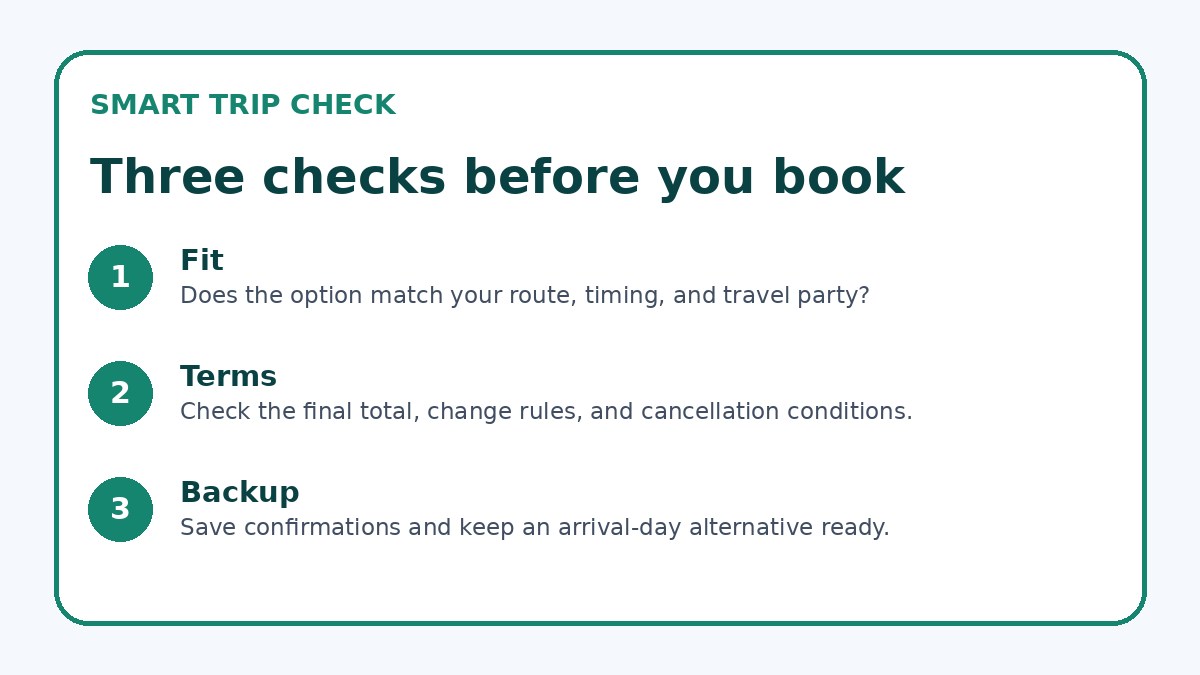
Preparing for a Los Angeles to San Francisco travel day boils down to three actions: pick the travel mode that matches your priorities, build a realistic door-to-door timeline with buffers, and verify key booking details on the provider’s official pages. Prepare a compact travel-day kit and share your arrival plan so small delays don’t turn into big headaches. If you’re comparing options, use total travel time and arrival convenience as your main metrics, and confirm baggage and change policies before you commit. For a quick comparison and current availability, you can check Trip.com, but always review the provider’s final booking page for the definitive terms and instructions.
Continue planning
Check current options and final conditions
Use the provider page to confirm live availability, the final total, cancellation terms, and every condition that matters to your trip.
This evergreen planning guide was created with AI-assisted drafting and a structured quality review. It does not display live prices, schedules, availability, visa guidance, or provider rankings. Verify current details before booking. Some links are affiliate links; we may earn a commission at no additional cost to you.