
If you’re a solo traveler planning a trip to Jeju, the practical question is: how far ahead should you book flights and accommodation so you balance cost, choice, and flexibility? A useful rule of thumb is to start actively looking 8–12 weeks before your intended travel dates, tighten choices 4–6 weeks out, and lock in bookings when you find options that fit your budget and cancellation tolerance. That window offers a reasonable mix of inventory and competitive fares without forcing you to commit months in advance. The right timing depends on your travel dates (weekday vs weekend), whether you need a specific room type or flight schedule, and how much flexibility you want if plans change. Below are clear tradeoffs, decision criteria, and a simple checklist to help you pick a realistic booking window for Jeju travel deals as a solo traveler.
See current options before you compare the details
Availability and final conditions change. Open Trip.com now or keep reading for the practical comparison.
Decide your must-haves first
Before hunting for deals, write down the non-negotiables that shape your booking window: exact travel dates, preferred neighborhoods on Jeju, bed type, accessibility needs, and whether you need airport transfers or a rental car. Solo travelers often prioritize location near transit or attractions, quiet rooms, and safety. These preferences narrow your supplier pool; if a specific neighborhood or single-room homestay is essential, you should expect to book earlier than someone willing to stay anywhere on the island.
Next, define your flexibility level. Can you shift travel by a few days for a cheaper flight? Will you accept a basic room with a strict cancellation policy to save money? If so, you can wait longer and act when a deal appears. If not, plan to book once layouts that meet your must-haves appear, even if the price isn’t the absolute lowest. Always check the provider’s cancellation and change policies on the final booking page before committing.
Timing by seasonality and weekday choices
Jeju’s demand fluctuates with Korean holiday periods, regional school breaks, and domestic travel trends. For popular travel weeks, inventory for small guesthouses and single rooms tends to thin earlier, so widen your search horizon and be prepared to book sooner. Conversely, if you target off-peak weekdays or shoulder-season travel, you can safely wait longer to compare options; last-minute inventory and occasional lower rates appear more frequently outside busy windows.
Also compare arrival and departure weekdays: midweek flights and stays often have better availability and lower rates than weekend-heavy itineraries. For solo travelers who can shift dates, swapping a weekend night for a Tuesday stay can produce more choice in accommodation and a smaller booking urgency. When comparing options, always verify final cancellation, baggage rules, and any seat-selection fees directly on the booking page—these provider-specific details change often.
| Approach | Best for | Tradeoff to check |
|---|---|---|
| Book 12+ weeks ahead | Travelers needing specific rooms, peak-week trips, or fixed itineraries. | Higher commitment; less chance to capitalize on last-minute fare drops. |
| Book 6–12 weeks ahead | Balanced option offering good choice and reasonable prices for most solo trips. | Moderate flexibility loss; may miss slight late discounts but avoids scarcity. |
| Book 4–6 weeks ahead | Flexible solo travelers who prioritize better prices over exact room selection. | Smaller inventory for niche accommodations; potential need for nonrefundable fares. |
| Book within 4 weeks (last-minute) | Highly flexible travelers seeking last-minute deals or short stay planning. | Limited choice, especially for single rooms and weekend dates; higher stress if options thin. |
Ready to check the option that fits your plan?
Use your exact dates and traveler details so the provider page can show the current total and conditions.
Balancing price risk vs flexibility
Lower-priced, nonrefundable fares and restricted-rate rooms typically come with the tradeoff of little to no flexibility. If your plans are firm, these can be a reasonable cost-saving choice. If there’s a chance your dates will change, factor in potential change or cancellation fees when you compare offers. The effective price difference between refundable and nonrefundable options is the price of flexibility; calculate whether that cost is worth the peace of mind for your solo trip.
Another tactic is a staged approach: reserve a refundable option early to secure the slot, then monitor deals and move to a cheaper, nonrefundable option if a clear saving appears. If you use this method, make sure you understand the provider’s rules for changing or canceling the refundable reservation so you avoid penalties. Tools like price alerts and a shortlist of preferred properties or flights help you act quickly when the right option emerges. Trip.com can be one place to compare current availability, but always confirm terms on the provider’s booking page.
Before you book
- Set price alerts for your intended travel dates and monitor them starting 8–12 weeks out to gauge typical rates.
- List your non-negotiables (neighborhood, room type, transport needs) and use filters to remove unsuitable options early.
- Compare refundable vs nonrefundable fares and calculate the potential change/cancellation cost before choosing.
- Confirm whether flights are direct or connecting and verify baggage and seat selection rules on the booking page.
- Check accommodation check-in time, late-arrival options, and proximity to public transport or rental car services.
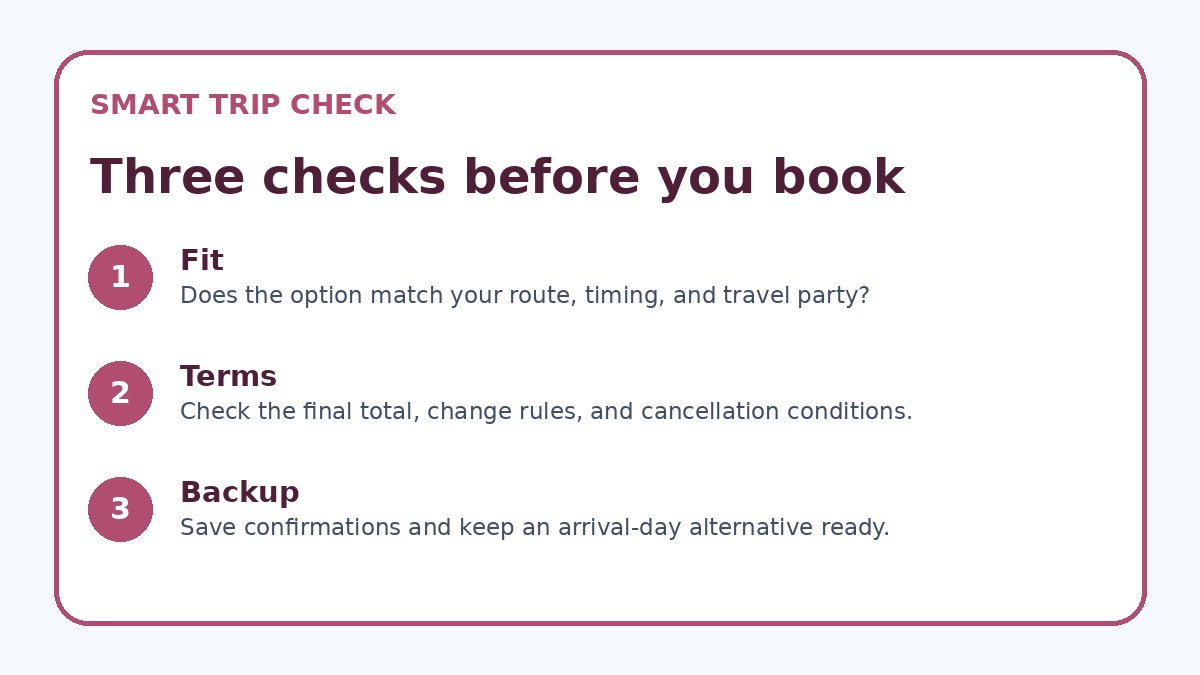
- Save booking confirmations, screenshots of terms, and note any free-change deadlines to avoid unexpected fees.
What to check before you click Book
Before finalizing any booking for Jeju travel deals, verify the essential details: exact travel dates, airport (Jeju International Airport), check-in and check-out times, whether a flight is direct or connecting, baggage allowances, and any meal or transport inclusions. The provider’s final booking page will list restrictions, change fees, and refund rules—read those carefully. For accommodation, confirm bed configuration, extra guest fees (if relevant), and whether taxes or city duties are included.
Also confirm local logistics solo travelers commonly need: proximity to bus stops or car rental facilities, late-check-in procedures, and emergency contact information. If you plan activities, check cancellation policies for tours and whether they require minimum participants. Keep screenshots or saved booking confirmations and note any deadlines for free changes. These small checks reduce surprises and let you confidently select a booking window that matches your tolerance for risk and need for convenience.
Frequently asked questions
How far ahead should a solo traveler book Jeju flights to balance cost and choice?
For most solo travelers, begin active fare monitoring about 8–12 weeks before departure; this period usually gives you a clear picture of price ranges and available schedules. If you must travel during national holidays or popular festival weeks, move that window earlier because single rooms and desirable flight times can fill faster. If you’re highly flexible on dates and can travel midweek, waiting until 4–6 weeks out can sometimes produce good deals. Always check the final booking page for fare rules, baggage allowances, and change fees before purchase.
Should I prioritize refundable rates for accommodation when traveling alone to Jeju?
Refundable rates offer valuable peace of mind for solo travelers, particularly if your schedule could change or you prefer avoiding last-minute stress. The tradeoff is usually a higher upfront cost. If your plans are fixed and you’re comfortable accepting the risk, a nonrefundable rate can lower cost. A compromise is to temporarily book a refundable room to secure your preferred location, then switch to a cheaper nonrefundable option if a clear saving appears—confirm the provider’s change rules on the booking page to avoid penalties.
Can I wait for last-minute deals for Jeju and still get a good solo travel experience?
Yes, last-minute deals sometimes appear, especially outside peak season and for midweek stays, but they’re less reliable for single-room inventory and weekend travel. If you choose this approach, maintain a shortlist of acceptable hotels and flexible flight options, and be ready to commit quickly. Understand that convenience factors—specific neighborhoods, special room types, or airport transfers—may be limited. Always verify cancellation terms and any added fees on the provider’s booking page before confirming a last-minute reservation.
Final planning note
Choosing a realistic booking window for Jeju travel deals as a solo traveler means balancing choice, price, and personal flexibility. Start monitoring options around 8–12 weeks before travel to learn normal rates and availability, tighten your choices 4–6 weeks out, and be prepared to book earlier for peak dates or specific room needs. Define your non-negotiables, compare refundable and nonrefundable options carefully, and always verify the provider’s final terms before purchasing. With a clear checklist and awareness of tradeoffs, you’ll pick a booking window that fits your comfort level and reduces last-minute surprises.
Continue planning
Check current options and final conditions
Use the provider page to confirm live availability, the final total, cancellation terms, and every condition that matters to your trip.
This evergreen planning guide was created with AI-assisted drafting and a structured quality review. It does not display live prices, schedules, availability, visa guidance, or provider rankings. Verify current details before booking. Some links are affiliate links; we may earn a commission at no additional cost to you.