If you are planning a business trip from Seoul to Hong Kong, start by assembling a short pre-booking checklist that prioritizes time, flexibility, and predictable arrival. The practical answer: compare direct versus connecting options for total door-to-door time, pick a fare with the change/refund flexibility you need, confirm airport transfer times at both ends, and verify entry requirements and luggage rules on the airline’s final booking page. That groundwork reduces surprises when meetings are fixed or schedules shift. Below you'll find clear decision criteria, tradeoffs to weigh (price vs. schedule vs. change fee), and a compact, actionable checklist you can use before clicking confirm. Use this as your planning backbone whether you travel weekly or occasionally for important client meetings.
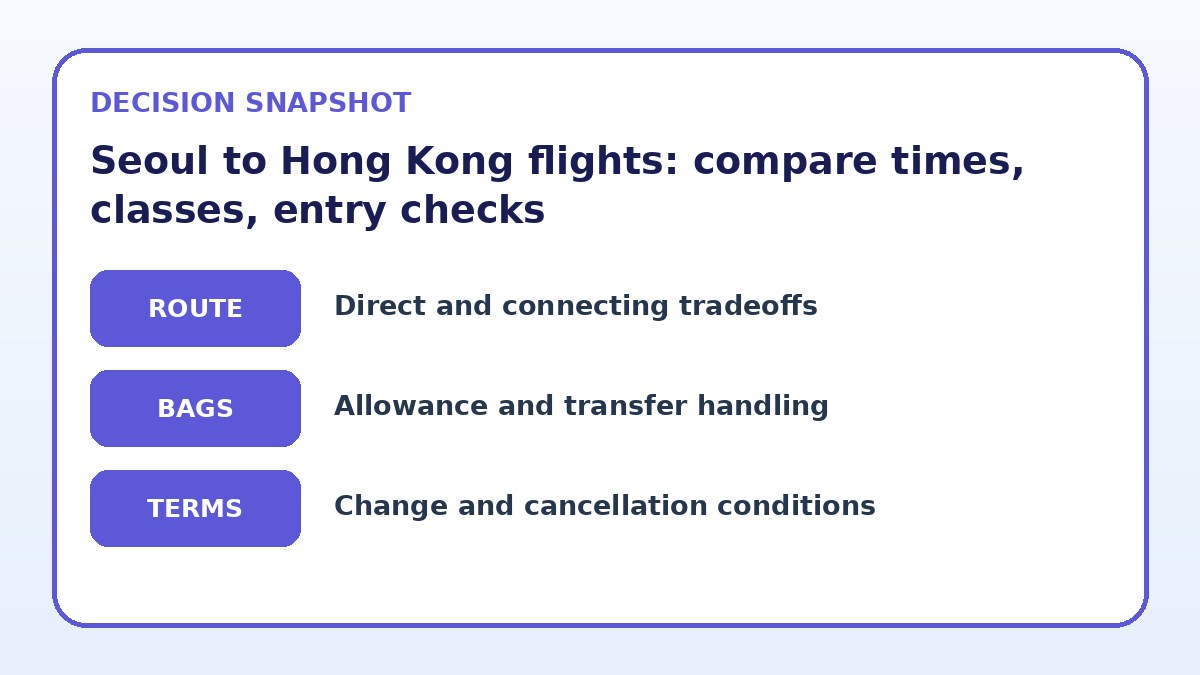
See current options before you compare the details
Availability and final conditions change. Open Trip.com now or keep reading for the practical comparison.
Direct versus connecting flights: speed, reliability, and cost
When choosing between direct and connecting flights from Seoul to Hong Kong, treat the comparison as door-to-door rather than just airborne time. Direct services usually cut total travel time and reduce the number of things that can go wrong—missed connections, additional security checks, or luggage mishandling. For a business traveler with tight schedules, the time saved on a direct flight can outweigh a higher ticket price. However, direct flights may operate at peak times, limiting your flexibility for ideal departure or arrival windows.
Connecting itineraries can offer more departure options and sometimes lower fares, but they introduce transfer risk and longer total travel time. If your meeting schedule is tight, factor in minimum connection times at the transit airport and consider whether you need a buffer to recover from delays. Always check the layover duration and whether the same ticket covers both segments; if they are separate tickets, you assume more risk. Use a consistent metric—total door-to-door time including transfers, transport to/from airports, and recommended pre-departure arrival—to decide which option aligns with your priorities.
Fare rules and flexibility: what to verify before paying
Business travel often requires changes; before booking, read the fare conditions on the final booking page. Look specifically for the cost and process to change dates, how refunds are handled, whether name changes are permitted, and if there is a difference between refundable and non-refundable fares. Check whether a fare class includes free seat selection, priority boarding, or lounge access—these can affect comfort and productivity during travel and may be worth an upgrade.
Don’t rely on summary labels like “flex” or “business” without verifying details. Airlines sometimes bundle different flexibility features under common names but handle change fees, fare differences, and deadlines differently. If you expect potential itinerary shifts, compare the real cost of a more flexible fare versus the risk of change fees on a cheaper ticket. When in doubt, confirm those exact terms on the carrier’s checkout or contact center, and make a note of any change-fee waivers tied to elite status or corporate agreements.
| Approach | Best for | Tradeoff to check |
|---|---|---|
| Choose direct flights | Time-sensitive schedules and fewer transfer risks | Usually higher base fares and less departure time flexibility |
| Choose connecting flights | Lower fares and more departure/arrival slot options | Longer door-to-door time and greater chance of missed connections |
| Book flexible/refundable fares | Frequent itinerary changes or uncertain meeting dates | Higher upfront cost compared with basic restricted fares |
| Book basic non-flexible fares | Fixed plans where cost minimization is primary | Limited or costly changes and stricter baggage/seat rules |
Ready to check the option that fits your plan?
Use your exact dates and traveler details so the provider page can show the current total and conditions.
Schedule fit and ground logistics: beyond the flight time
Evaluate the full travel chain: time to travel to the departure airport in Seoul, recommended check-in and security buffer, flight time, arrival procedures in Hong Kong, and transfer time to your meeting location. Incheon and Gimpo offer different international options and ground transport choices; check which airport your flight uses and plan accordingly. For morning meetings, an evening or red-eye flight may work, but consider whether you will be rested and productive upon arrival.
Also plan return logistics—late-night arrivals in Seoul or morning departures from Hong Kong can affect hotel checkout and meeting timing. If you need to work inflight or between connections, verify Wi-Fi availability or seat power on the specific aircraft on the airline’s seat map page. For multi-leg journeys, pick layovers that preserve a realistic margin for delays while minimizing wasted time; business travelers benefit from a predictable itinerary even if it costs a bit more.
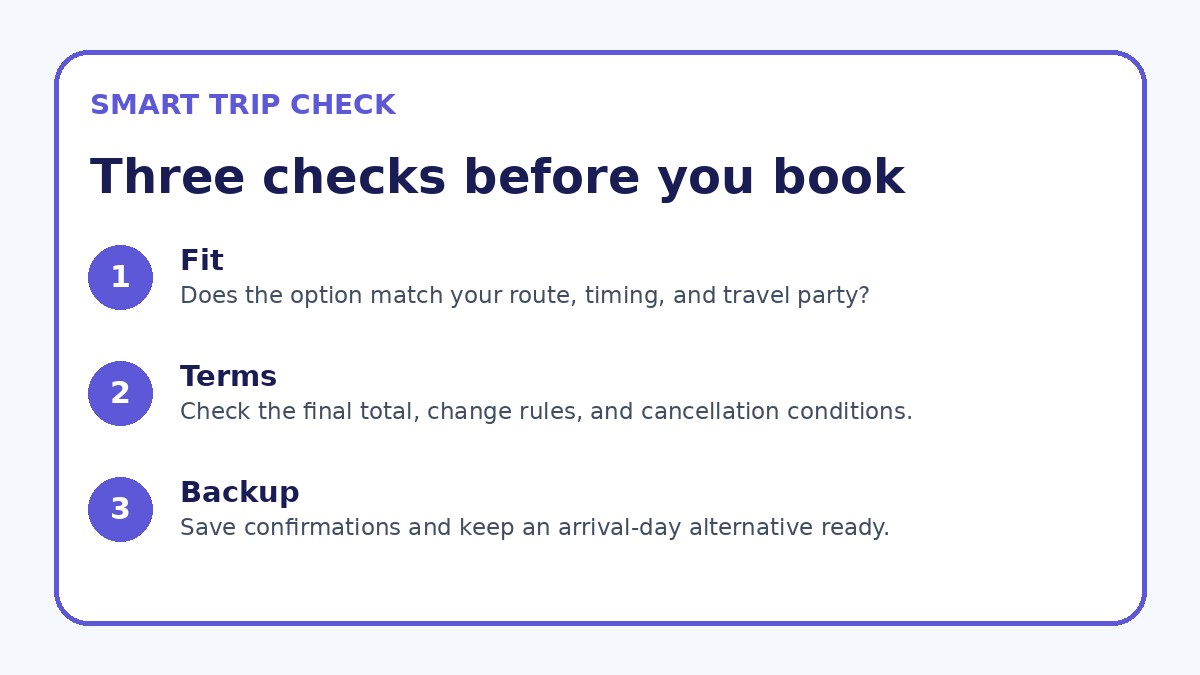
Before you book
- Confirm which Seoul airport (Incheon or Gimpo) your chosen flights use and estimate door-to-door travel time from your office or hotel.
- Compare total travel time for direct and connecting itineraries, including layovers and minimum recommended connection buffers.
- Read the fare rules on the airline’s final booking page: change fees, refundability, luggage allowance, and seat selection policies.
- Verify arrival airport procedures in Hong Kong and the typical time to clear immigration and reach your meeting location by ground transport.
- Check corporate travel policy for allowed classes, pre-approval requirements, and whether bookings must use a preferred vendor or code.
- If productivity in transit is necessary, confirm seat amenities (power, Wi‑Fi) on the specific aircraft via the airline’s seat map or final booking details.
Costs, corporate policy, and what to confirm with procurement
Before booking, reconcile your personal preferences with corporate travel policy: allowable classes, preferred carriers, expense thresholds for upgrades, and required pre-approvals. Some companies mandate using contracted vendors or specified booking tools; others allow flexibility but require receipts and documented fare rules. Confirm whether you can book a refundable fare and get approval afterward, or if pre-authorization is needed for higher-cost options.
When uncertain, collect evidence to justify the choice: total door-to-door time comparison, estimated savings in time for client meetings, and fare rule screenshots. If booking outside a corporate portal, verify whether the trip will still qualify for corporate rates or loyalty credit. Remember to check the airline’s final booking page for the exact fare code, change penalties, and baggage terms before submitting expenses—these details determine what your company will reimburse and how easily you can adapt the booking if plans change.
Frequently asked questions
Should I prioritize a direct flight from Seoul to Hong Kong for a half-day meeting?
If the meeting timing is tight and you must maximize on-site availability, a direct flight often makes sense because it reduces overall travel uncertainty and transfer time. However, direct flights can be more expensive or depart at inconvenient times. Compare the earliest arrival among direct options with the best connecting itineraries’ door-to-door time. Also factor in the time you need to be rested and ready; an earlier arrival with a short nap or hotel day room might be preferable to a late-evening direct arrival.
How do I protect myself against sudden itinerary changes or canceled flights?
Purchase a fare that explicitly states its change and cancellation terms on the airline’s booking page; refundable fares and higher-flexibility classes are the simplest protection. Alternatively, check if your corporate card or travel policy includes trip interruption coverage and whether your company has negotiated flexible change terms with certain carriers. For added resilience, allow buffer time in your schedule, and consider buying travel insurance that covers business disruptions if your employer doesn’t provide it. Always save screenshots of fare rules and booking confirmations.
What should I verify about baggage and meeting equipment when booking?
Before finalizing the booking, confirm the checked and carry-on allowances listed on the carrier’s checkout page—business-class and certain fares often include larger allowances. If you travel with presentation equipment or samples, check whether they count as standard baggage, require special handling, or incur oversize fees. Also verify whether priority check-in and expedited baggage handling are included or available as add-ons; these can save time when you land and need to head straight to a client meeting.
Final planning note
Booking Seoul to Hong Kong flights for business requires balancing time, flexibility, and corporate rules. Use door-to-door time as your primary metric, verify fare rules on the airline’s final booking page, and confirm ground logistics at both airports. Choose direct flights when time and reliability outweigh cost; pick flexible fares when schedule changes are likely. Keep your procurement team informed, save fare-rule screenshots for expense claims, and verify seat and baggage amenities if you need to work or carry equipment. For quick comparison of current options and availability, you can optionally check providers like Trip.com, but always validate critical details on the carrier’s official booking screen before you pay.
Continue planning
Check current options and final conditions
Use the provider page to confirm live availability, the final total, cancellation terms, and every condition that matters to your trip.
This evergreen planning guide was created with AI-assisted drafting and a structured quality review. It does not display live prices, schedules, availability, visa guidance, or provider rankings. Verify current details before booking. Some links are affiliate links; we may earn a commission at no additional cost to you.