If you’re traveling alone in Seoul, the fastest way to decide is to match your plan to the city’s strengths. For most solo visitors staying in central neighborhoods and visiting major attractions, public transport is the simplest, safer, and more reliable option. Rent a car when your itinerary includes day trips beyond the subway’s reach, flexible rural exploration, or equipment-heavy activities like hiking with bulky gear. This guide compares Seoul car rental against buses, subways, taxis, and rideshares on convenience, cost factors, time, and stress—so you can make a practical choice before booking. Read the tradeoffs and the decision checklist to finalize whether driving adds value to your solo trip or creates unnecessary hassle.
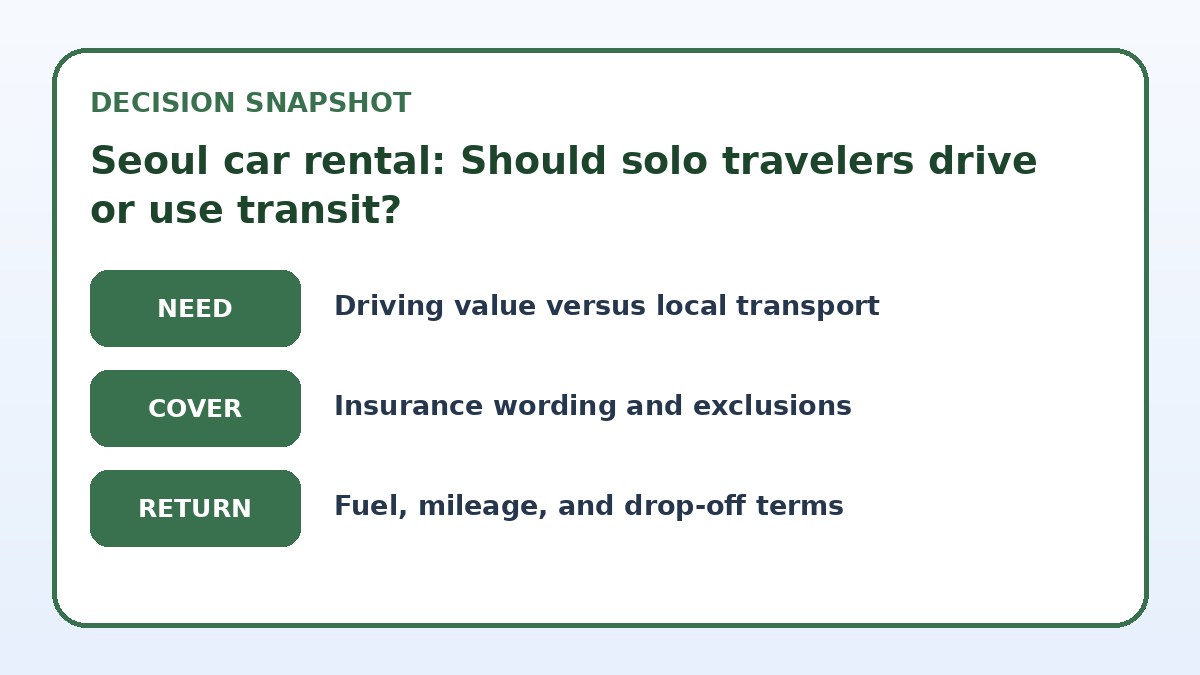
See current options before you compare the details
Availability and final conditions change. Open Trip.com now or keep reading for the practical comparison.
How Seoul’s public transport works for solo travelers
Seoul’s public transport network—subway lines, frequent buses, and plentiful taxis—lets solo travelers move efficiently across the city without the cost of parking or the stress of navigating unfamiliar roads. Stations and major stops cover tourist hubs, business districts, and transfer points to regional rail. For a solo traveler with a compact itinerary concentrated in central areas, transit often becomes the default: trains run regularly, transfers are straightforward, and you can travel hands-free, which matters when you’re carrying a backpack or camera gear.
Using transit also reduces decision fatigue. You won’t worry about parking spaces, local driving etiquette, or unfamiliar signage. If a trip requires a door-to-door option at odd hours, taxis or app-based rides can bridge gaps. Before relying solely on public transport, plan for any late-night returns and check whether your destination requires uphill walks or final-mile transfers—factors that can influence whether a taxi or short-term car hire might still be a better option.
When renting a car makes sense for solo trips
A rental becomes compelling when your solo itinerary extends beyond Seoul’s urban core: national parks, coastal routes, or small towns with limited public schedules. Driving gives you schedule control, easier gear transport, and the freedom to stop for viewpoints or spontaneous detours that a strict timetable won’t allow. If your travel style values flexibility and you anticipate multiple out-of-town day trips, the convenience of a car can outweigh the urban inconveniences.
However, the benefits are conditional. Confirm parking availability at your accommodation and key stops, and review whether toll roads or restricted zones affect your planned route. Account for the mental load of driving in unfamiliar traffic, interpreting signs, and interacting with local authorities if a problem arises. For many solo travelers, renting a car for one or two specific days and otherwise using transit offers a balanced compromise.
| Approach | Best for | Tradeoff to check |
|---|---|---|
| Public transport (subway, buses, taxis) | Urban sightseeing, shorter stays, and travelers who want to avoid parking and driving stress | Less flexible for rural day trips and early-morning departures; may require transfers or last-mile taxis |
| Renting a car for entire trip | Full control, multi-destination rural routes, and heavy-gear travel where schedules are restrictive | Adds parking, tolls, navigation stress, and potential delays in urban traffic |
| Hybrid approach (rent for select days) | Solo travelers splitting time between central Seoul and planned out-of-city excursions | Requires planning pickup/drop-off logistics and may increase total rental costs per day |
| Taxi/rideshare-only | Short trips with door-to-door convenience or late-night travel when transit is limited | Higher per-trip cost than transit; cumulative fares can exceed a short-term rental for long distances |
Ready to check the option that fits your plan?
Use your exact dates and traveler details so the provider page can show the current total and conditions.
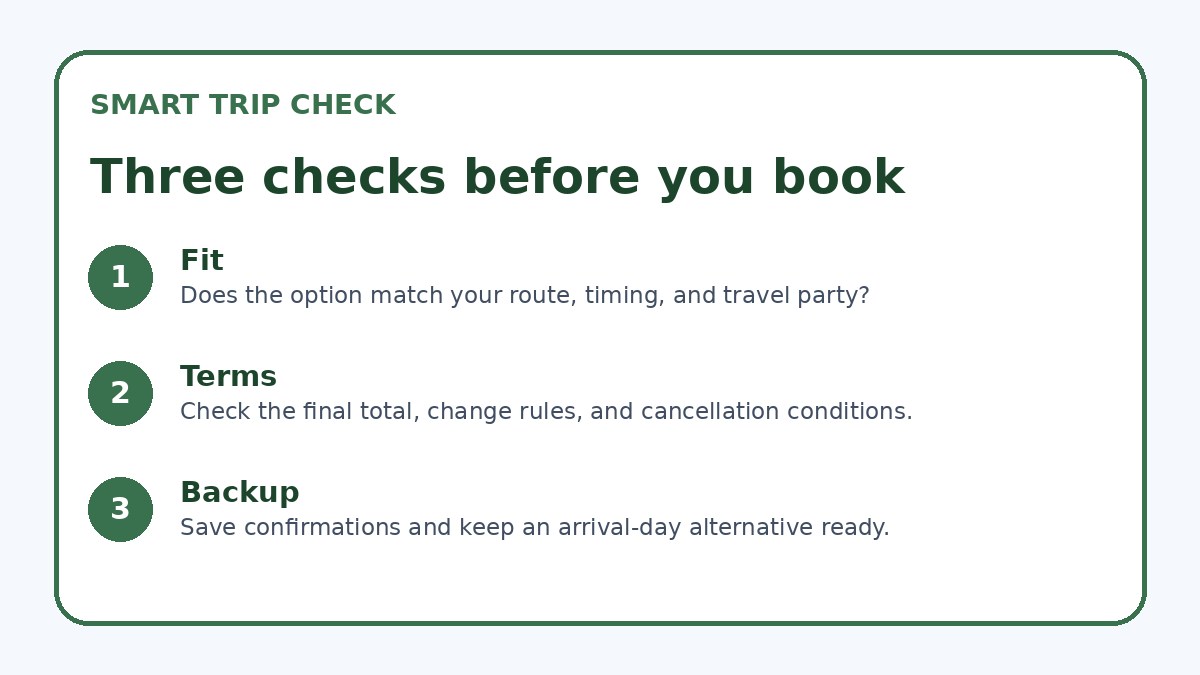
Practical tradeoffs: cost, time, and stress
Compare true costs beyond the rental rate: fuel, parking fees, tolls, insurance options, and the time you’ll spend searching for parking or dealing with traffic. Public transport costs are predictable and remove parking hassles, but can consume travel time if transfers or off-peak schedules are required. Time savings from a car appear when public connections are infrequent or when multiple destinations are far apart; otherwise, transit’s direct routes and faster central mobility can be superior.
Stress is harder to quantify but often decisive. Solo travelers balance the convenience of privacy and control in a car against the fatigue of heavy traffic, navigation, and unfamiliar road rules. If you’re comfortable with city driving abroad and can verify parking for each night, stress will be lower. If not, public transit keeps you focused on experiencing the city rather than managing a vehicle.
Before you book
- Map every planned stop and mark the nearest subway/bus line or station to check walk times and transfers.
- Confirm parking availability and nightly parking fees at each accommodation before booking a rental car.
- Compare door-to-door travel times for transit plus taxis versus estimated driving time for each day’s route.
- Review rental terms on the provider’s final booking page: insurance options, age requirements, deposit hold, and fuel policy.
- Estimate extra costs: parking fees, expressway tolls, fuel, and any additional driver or cross-border charges.
- Plan for emergencies: save local emergency numbers, the rental company’s contact, and have a map app with offline maps.
How to decide before booking a Seoul car rental
Start with a day-by-day map: mark each destination, note the nearest subway or bus options, and identify any long-distance legs that lack regular public service. Estimate door-to-door times by comparing transit connections and taxi alternatives to the driving time between points. If most destinations are within 10–15 minutes of a subway or bus stop, transit likely suffices. If several key stops are remote or require early departures, a rental could be justified.
Next, verify logistics you cannot infer: parking availability at your accommodation, whether tolls or congestion zones apply to your planned roads, and the rental company’s insurance and driver requirements. For provider-specific details—vehicle rules, available insurance coverage, pickup/drop-off locations, and local traffic restrictions—always confirm on the rental company’s booking page. You can also cross-check inventory or availability on Trip.com, but verify final terms with the provider.
Frequently asked questions
Is driving in Seoul difficult for foreign solo travelers?
Driving in Seoul can be challenging for visitors who aren’t used to high-density city traffic, narrow lanes, and frequent sign changes. Language on some road signs or parking machines may be limited, increasing the need to rely on navigation apps. If you’re comfortable driving in busy cities and have experience with GPS navigation in non-native language settings, the transition is manageable. Otherwise, relying on transit and taxis reduces the learning curve and the stress of negotiating unfamiliar traffic patterns alone.
Can I use international driving permits for Seoul car rental?
Rental companies commonly require a valid driving license and may accept an international driving permit (IDP) depending on your home country and the rental firm’s rules. Requirements differ by provider, so before booking check the rental company’s official terms on their booking page. Make sure your permit and any translated documents match the rental agreement’s requirements to avoid being refused pickup or facing additional administrative hurdles when collecting the vehicle.
What if I want to rent a car for just one day of a multi-day Seoul stay?
Renting for a single day can be an efficient compromise if only one day of your itinerary is remote or gear-intensive. To save time, reserve a pickup location convenient to your accommodation or a major transit hub, and confirm the company’s pickup/drop-off windows and policies. Factor in the time to collect and return the car, potential additional fees for one-way rentals, and whether parking at your starting and ending points is available and affordable.
Final planning note
For most solo travelers staying within Seoul’s central neighborhoods, public transport combined with occasional taxis offers the least stressful, most reliable way to explore. Rent a car when your trip includes several day trips to rural areas, flexible timing needs, or bulky equipment that’s inconvenient on trains and buses. The best approach for many is hybrid: use transit in the city and rent a car only for the days when it provides clear time or access advantages. Before you book, map your daily legs, check parking and rental terms on the provider’s booking page, estimate hidden costs, and decide whether the convenience of a vehicle outweighs the extra logistical effort.
Continue planning
Check current options and final conditions
Use the provider page to confirm live availability, the final total, cancellation terms, and every condition that matters to your trip.
This evergreen planning guide was created with AI-assisted drafting and a structured quality review. It does not display live prices, schedules, availability, visa guidance, or provider rankings. Verify current details before booking. Some links are affiliate links; we may earn a commission at no additional cost to you.