For most couples staying inside Rome’s central neighbourhoods, public transport and walking solve the city’s core needs: sightseeing, dining and short trips. A Rome car rental is useful if you plan day trips outside the centre, want the flexibility of countryside stops, or carry bulky gear, but it adds parking, restricted zone (ZTL) risks, and traffic stress. This guide gives a clear short answer up front, then walks through decision criteria—time, comfort, cost, itinerary shape—and practical checks to make before booking a car or buying transit passes. Read this to decide whether to base your plans around buses, trams and metro or to reserve a compact rental for selected days, and to learn exactly what to verify on provider pages before you pay.
See current options before you compare the details
Availability and final conditions change. Open Trip.com now or keep reading for the practical comparison.
Practical quick answer and when each option wins
Choose public transport if your couple’s trip focuses on central Rome: the Colosseum, Vatican area, Trastevere, and short museum or food-walking days. Rome’s metro, trams and buses plus abundant walkable streets let you move between main sights without paying for parking or worrying about restricted traffic zones (ZTL). Evenings are simpler too—no need to find paid overnight parking or return to a rental location at odd hours. For couples who value relaxed strolls, spontaneous route changes, and easy dinner plans, transit and taxis usually beat car ownership inside the city.
Pick a Rome car rental if your itinerary includes multiple day trips beyond the metro and main commuter rail lines: rural wineries, hill towns in Latium, the Amalfi coast stretches beyond train connections, or if you’re carrying sports gear or a baby seat that complicates transit. A car reduces dependence on train schedules, lets you reach smaller villages, and can be more comfortable for long drives together. The tradeoff is extra planning—parking, fuel, and legal restrictions—and the need to compare rental terms carefully to avoid unexpected charges.
Costs, comfort and time—how to compare realistically
When comparing cost, think beyond the headline rental rate. For a car, factor fuel, parking, possible congestion charges, extra insurance, and any one-way drop fees. For public transport, count multi-day passes, regional train fares for day trips, taxis for late-night returns, and time spent transferring between modes. Comfort also matters: couples who value private space and door-to-door transfers may accept a higher outlay for a rental on long day trips, while those who prefer not to drive in unfamiliar traffic will likely appreciate transit’s predictable structure.
Time comparisons should include realistic door-to-door durations. Driving can be faster to some rural destinations, but city driving, looking for parking, and navigating ZTLs often erases any time advantage inside Rome. Regional trains or buses may take longer on paper but deliver you directly to many town centres without parking stress. To decide, outline the exact day trips you want, map typical rail or bus connections, and compare total travel time plus walking and waiting rather than just in-vehicle time.
| Approach | Best for | Tradeoff to check |
|---|---|---|
| Public transport and walking | Couples staying in central Rome who want low hassle and easy evenings out | Less flexibility for rural day trips and reliance on schedules for some destinations |
| Rent a car for the whole stay | Couples planning many off-the-beaten-path drives or carrying bulky equipment | Extra costs, parking difficulties, ZTL rules, and driving stress in city traffic |
| Rent a car for select day trips only | Couples who want city convenience but occasional countryside flexibility | Need to coordinate rental pick-up/drop-off and factor daily rental or one-way fees |
| Public transport plus taxis/ride-hailing | Couples who want transit savings with occasional private rides for late nights or luggage | Higher per-ride taxi costs but no parking or insurance responsibilities |
Ready to check the option that fits your plan?
Use your exact dates and traveler details so the provider page can show the current total and conditions.
Logistics and legal checks before booking a car
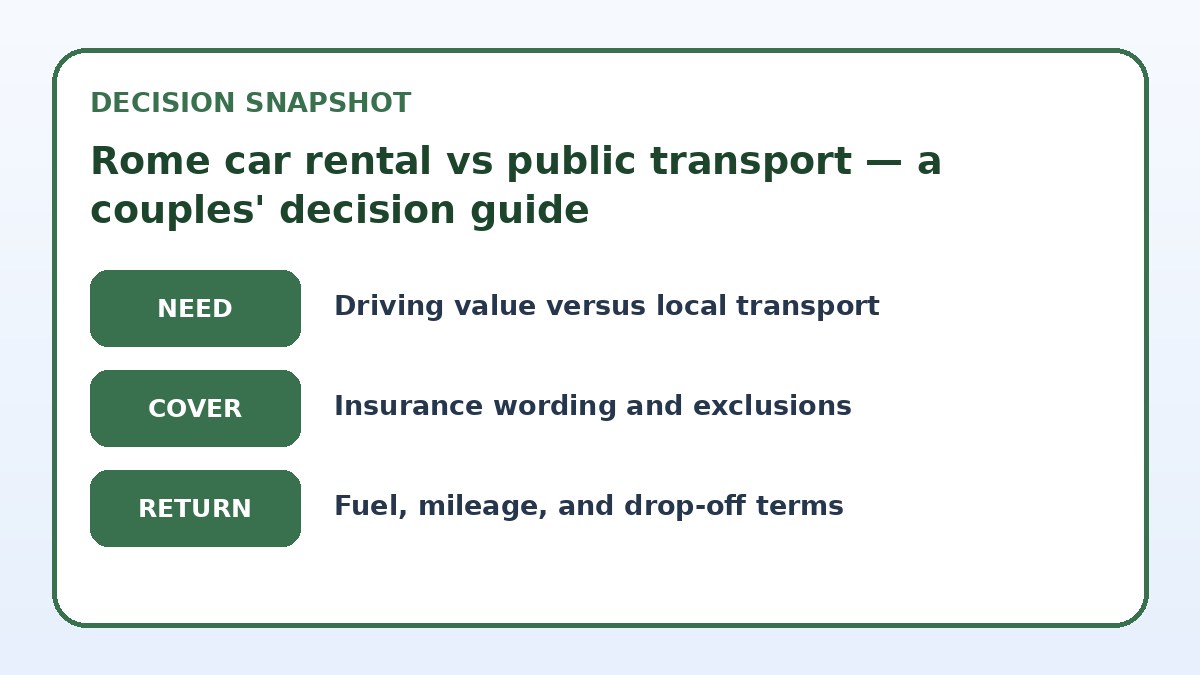
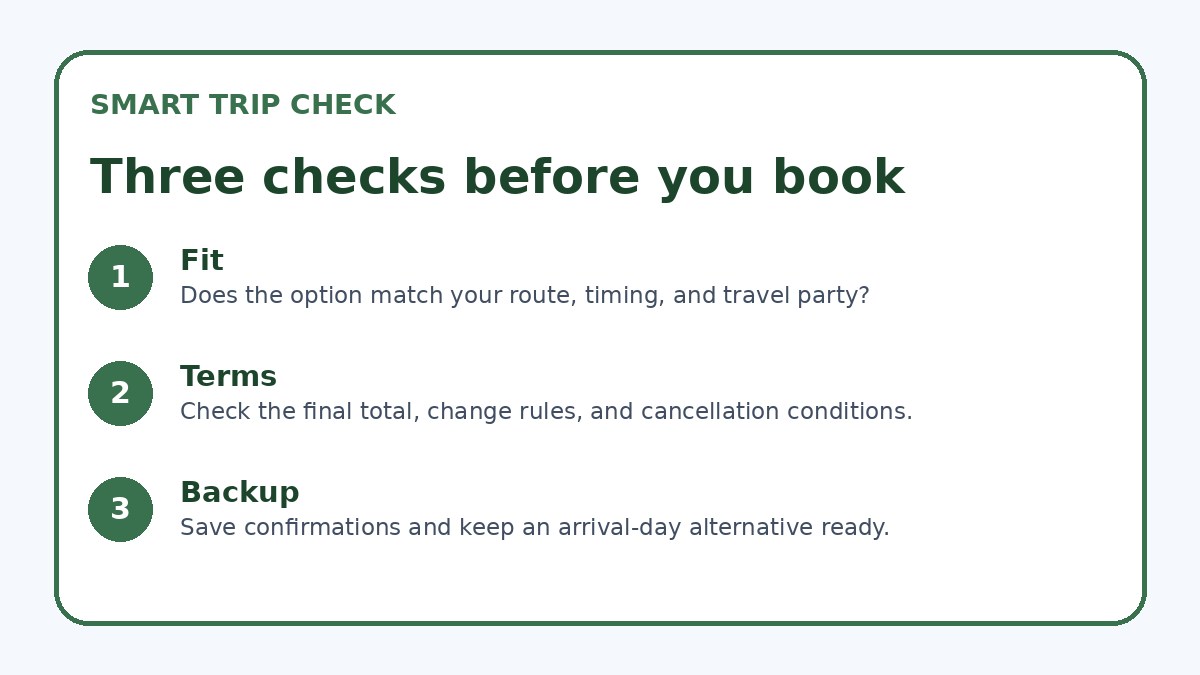
If you lean toward a Rome car rental, verify several provider-specific facts on the booking page before you commit. Confirm pick-up and drop-off locations and hours, fuel policy (full/empty), mileage limits, and whether tolls or motorway charges are handled automatically. Check the exact insurance coverages included and whether collision damage waivers or theft protection are optional extras. If you need a baby seat or an additional driver, add those costs into your comparison and confirm rules for cross-border travel if you plan to drive outside Italy.
ZTLs (limited traffic zones) cover much of Rome’s central area and are enforced with cameras; unauthorized entry typically leads to fines that are charged to the rental company, which may add administration fees. Ask the provider how they handle ZTL fines and whether they provide GPS with ZTL overlays. Also verify the supplier’s policy for fuel and damage claims—many disputes hinge on how minor body damage or underfueling is assessed—so get the inspection report and visual check recorded at pick-up.
Before you book
- Map your daily itinerary: mark each day’s start and end points and whether those places are inside Rome’s ZTL.
- If renting, confirm pick-up/drop-off locations, opening hours, and whether returns outside hours incur fees.
- Verify insurance details on the rental page: collision and theft coverage, excess amounts, and optional waivers.
- Check the provider’s policy on ZTL fines and ask how the company passes on camera-detected violations.
- Compare regional train and bus schedules for each planned day trip to estimate door-to-door travel time.
- Reserve or verify parking at accommodations and major day-trip stops; note any height, size, or overnight limits.
Using public transport and mixing modes as a couple
Public transport in Rome covers the central sights well; combine the metro for longer north–south and east–west hops with buses and trams for finer connections. Buy multi-day tickets if you expect several trips a day, and use regional trains for straightforward day trips to places like Ostia Antica or Tivoli where trains reach close to main attractions. Taxis and ride-hailing can fill gaps—especially late at night or when carrying luggage between stations and accommodations—without the responsibilities of driving yourself.
For couples seeking flexibility, a hybrid approach works well: base yourselves in the city using public transport, then rent a car for one or two planned day trips. This reduces parking hassle and ZTL exposure while still letting you access remote spots. When combining modes, coordinate pick-up times, confirm on-site parking availability at your day-trip destination, and keep reservations or contact numbers handy to avoid last-minute scrambling during your day together.
Frequently asked questions
Can couples rely on public transport alone to see Rome’s main sights?
Yes: most central attractions are reachable by metro, tram, bus and on foot. Using public transport avoids ZTL issues and parking headaches, making evenings and museum visits smoother. For some attractions on the city outskirts or for specific rural day trips, trains and buses may require additional transfers; check regional connections for your specific itinerary. If you prefer door-to-door comfort for certain days, plan a short car rental or use taxis selectively rather than renting for your entire stay.
What are the biggest hidden hassles when renting a car in Rome as a couple?
The common pitfalls are navigating ZTLs, finding legal parking near central hotels, unexpected insurance or damage fees, and administrative charges for camera fines. Also consider pick-up logistics: airport locations can be convenient but add traffic when leaving; city centre offices can be tight for manoeuvring. To reduce risk, photograph the vehicle at pick-up, get the written inspection, confirm fuel rules, and read the rental contract carefully. Always verify these details on the rental provider’s final booking page before you pay.
How should couples decide between renting for one day versus the whole trip?
Compare the number and type of off-city days you want. If you have one or two long day trips where a car significantly shortens travel time or opens unique destinations, a short rental is usually more practical and cheaper than keeping a car the whole stay. Balance this against the hassle of pick-up and drop-off each time. If most days involve countryside driving, a single continuous rental can be simpler. Run a quick cost/time estimate for the exact days you plan to drive and verify rental availability and pick-up hours before booking.
Final planning note
For most couples, public transport and walking will be the simplest, least stressful way to experience Rome’s compact historic core—no parking, no ZTL worries, and easy evening plans. A Rome car rental makes sense if your shared plans include several rural or coastal day trips that are poorly served by regional trains and buses, or if you need private space for equipment or mobility. The best compromise is often a hybrid approach: enjoy the city on foot and transit, and rent a car for the specific day(s) you need it. Before you book anything, map your itinerary, compare door-to-door times, and verify rental terms, insurance, ZTL policies and parking arrangements on the provider’s final booking page (Trip.com can be a place to compare availability if you wish).
Continue planning
Check current options and final conditions
Use the provider page to confirm live availability, the final total, cancellation terms, and every condition that matters to your trip.
This evergreen planning guide was created with AI-assisted drafting and a structured quality review. It does not display live prices, schedules, availability, visa guidance, or provider rankings. Verify current details before booking. Some links are affiliate links; we may earn a commission at no additional cost to you.