If you’re traveling solo to Auckland, the practical choice is to pick the hotel that supports how you plan to spend your days: stay central if you want quick access to bars, ferries and nightlife; choose a quieter neighborhood or higher-floor room if sleep, workspace and personal space matter more. This article gives a direct recommendation up front, then lays out the tradeoffs and the decision checklist so you can book with confidence. For most short solo trips where you’ll rely on transit and want to maximize sightseeing time, a central hotel near the waterfront, Britomart or Queen Street earns a slight edge. If you work remotely, need guaranteed quiet, or have an early flight and prefer less transit, prioritize room comfort and building amenities even if that means being a short bus or ferry ride from the central core.
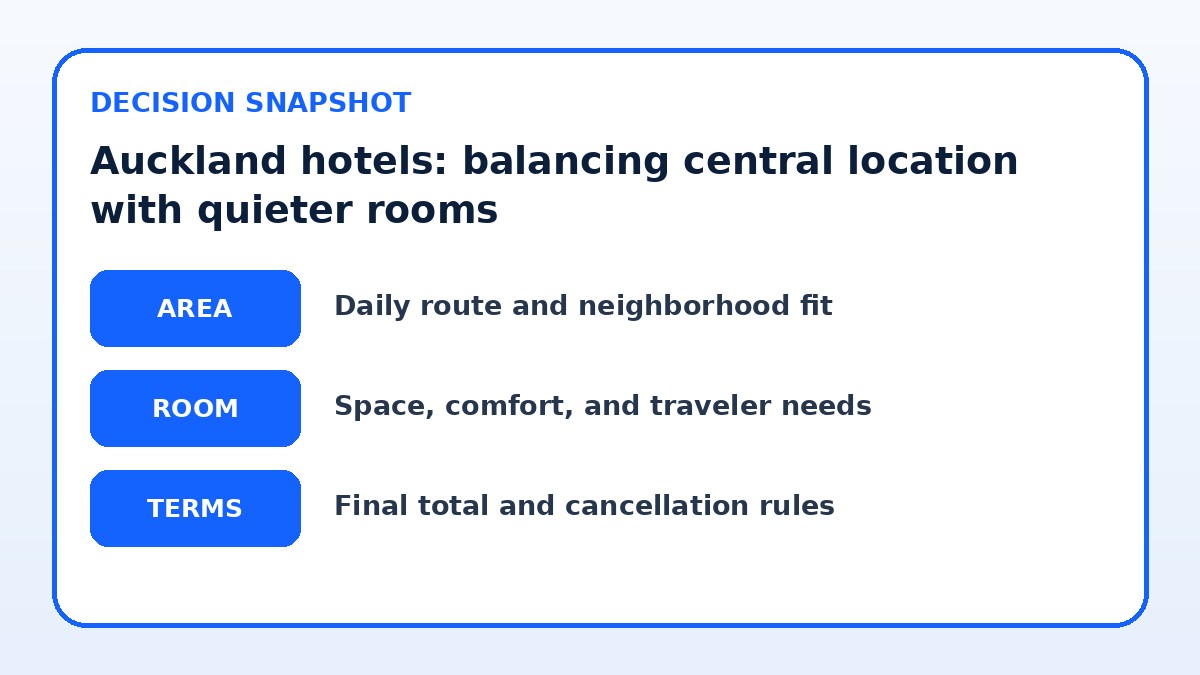
See current options before you compare the details
Availability and final conditions change. Open Trip.com now or keep reading for the practical comparison.
Practical short-stay choice: prioritize location
If you’re in Auckland for three nights or less and want to maximize sightseeing, prioritize a hotel within walking distance of the waterfront, Britomart, or Queen Street. Being central reduces transit time to ferries for Waiheke or Devonport, cutting the friction of returning late from a day trip. For solo travelers who value evening flexibility—sudden plans to join a tour, meet new people, or return from a late show—the convenience of central placement often outweighs a slightly smaller or noisier room.
Still, central doesn’t automatically mean loud or uncomfortable. When booking, filter for rooms on higher floors, ask about double-glazing or street-facing noise, and confirm whether the property has quiet rooms or a business center if you need to work. Verify cancellation and check-in policies on the hotel’s booking page, and check recent guest comments specifically about noise and sleep quality before finalizing a central-location booking.
When to choose room comfort and quieter neighborhoods
Choose comfort if you plan to work remotely, need reliable sleep, or value a calm base after full days of activity. Suburbs like Parnell or Ponsonby, or boutique hotels on quieter side streets, frequently offer larger rooms, better in-room desks, and less street noise. For the solo traveler who will spend significant time in their room—editing photos, joining video calls, or catching up on rest—the trade-off of extra transit time can be worthwhile for a comfortable bed, blackout curtains, and a usable workspace.
When you prioritize room comfort, confirm specifics that matter: ask about Wi-Fi bandwidth stability, the quality of the desk and chair, power outlet placement, and whether the hotel offers soundproofing or quieter floors. Because neighborhood distance affects evening transport, check local late-night transit options and taxi or rideshare availability before you book. Always verify those transport options on the booking site or local transit pages to avoid surprises when you arrive.
| Approach | Best for | Tradeoff to check |
|---|---|---|
| Stay central (waterfront/Britomart/Queen Street) | Sightseeing-heavy itineraries and late-evening flexibility | Smaller rooms, potential street noise, and often higher rates |
| Choose quieter neighborhoods (Parnell, Ponsonby) | Restful nights, larger rooms, and local cafés | Extra transit time to central attractions and ferries |
| Book a mid-distance hotel with good transit links | Balanced budgets wanting both space and reasonable access | Requires checking bus/ferry timetables and occasional taxi rides |
| Prioritize room amenities and business facilities | Remote work, long stays, and digital nomads | May be located further from evening entertainment and waterfront views |
Ready to check the option that fits your plan?
Use your exact dates and traveler details so the provider page can show the current total and conditions.

Balancing budget, transit, and solo-traveler safety
Budget inevitably shapes the balance between location and comfort. In central neighborhoods you may trade square footage for proximity, while farther-out properties often deliver more space and amenities for the same price. Weigh where you’ll spend most of your time: if you plan long daytime excursions leaving early and returning late, a quieter, better-equipped room outside the center may offer better value even after adding transit costs.
Safety is essential for solo travelers. Look for well-lit streets, 24-hour reception or key-card access, and reviews that mention staff responsiveness and local safety. If you plan late-night returns, prioritize hotels that can call reliable local taxis or have secure late check-in. Check the hotel’s final booking page for exact entry policies, reception hours, and any security features you consider important, rather than assuming those details from promotional text.
Before you book
- Decide your primary daily priorities (sightseeing, remote work, nightlife) and rank them before searching hotels.
- Map hotel locations against your must-see places and calculate transit times at the times you’ll travel.
- Read recent guest comments focused on noise, Wi-Fi reliability, and bed comfort—not just overall ratings.
- Confirm provider-specific facts (check-in time, shuttle service, breakfast policy, late arrival procedures) on the hotel’s final booking page.
- Ask the hotel about room options (higher floors, quiet rooms, soundproofing) and request them when booking if needed.
- Plan for late-night returns: verify local taxi/rideshare availability or hotel-arranged transport for evenings.
Practical checks before you book an Auckland hotel
Before you confirm, compare two or three properties that represent the location-comfort spectrum you’re weighing. Read recent guest comments focusing on noise, bed quality, Wi-Fi, and the feel of the neighborhood after dark. For any provider-specific fact—late check-in, airport shuttle, breakfast availability, or pet policies—verify the details on the hotel’s final booking page or contact the property directly; these operational items change more often than location and room size.
Also map estimated travel times from each hotel to the activities you value most: ferry terminals, the Sky Tower, museums, or the city’s nightlife areas. Use a transit planner or ride app to compare typical journey times at the times you expect to travel. If you’ll work remotely, test the hotel’s Wi-Fi policy (some properties limit daytime bandwidth or charge for upgrades) and ask about quiet hours or availability of an on-site business space before booking.
Frequently asked questions
Is downtown Auckland the best place for solo travelers to stay?
Downtown Auckland is often the most practical base for solo travelers who prioritize quick access to ferries, restaurants and nightlife. The short walking distances and transit options reduce time spent commuting, which is useful on short itineraries. However, downtown rooms can be smaller and noisier, so if you value sleep and a larger workspace you'll need to check room-specific details such as soundproofing, higher-floor options, and in-room amenities before booking. Verify operational details like check-in times on the hotel’s booking page.
How much transit time should I accept to get a quieter or cheaper room?
Acceptable transit time depends on your plans. For day-trip-heavy itineraries, adding 15–30 minutes each way can be reasonable if it delivers a better room and quieter evenings. If you’ll return late or have tight scheduled activities, aim for under 20 minutes to central points or reliable direct bus or ferry connections. Always test transit options at the specific times you'll travel—weekend and late-night services differ—and confirm rideshare or taxi availability for late returns.
What room features matter most for a solo traveler balancing comfort and location?
Prioritize features that affect rest and productivity: a firm comfortable bed, blackout curtains, reliable high-speed Wi-Fi, a proper desk and chair, power outlets near the desk and bed, and good lighting. Soundproofing or a higher-floor room reduces street noise if you’re near busy areas. If you plan to cook or store snacks, check for a kitchenette or mini-fridge. For each of these features, verify the specifics on the hotel’s booking page rather than relying on promotional blurbs.
Final planning note
Balancing location and room comfort in Auckland comes down to your daily priorities. If you have just a few days and want the simplest logistics for ferries, restaurants and nightlife, a central hotel usually saves time and hassle. If you’ll spend substantial time in your room—working remotely, recovering from jet lag or valuing quiet—choose a quieter neighborhood or a property that emphasizes room comfort, then confirm Wi-Fi and workspace details before booking. Use the checklist and comparison points above to narrow options, read recent guest comments about noise and sleep, and always verify any operational facts on the hotel’s final booking page. Comparing a mix of central and quieter properties, and factoring in late-night transport options, will help you make a confident choice that fits how you plan to experience Auckland.
Continue planning
Check current options and final conditions
Use the provider page to confirm live availability, the final total, cancellation terms, and every condition that matters to your trip.
This evergreen planning guide was created with AI-assisted drafting and a structured quality review. It does not display live prices, schedules, availability, visa guidance, or provider rankings. Verify current details before booking. Some links are affiliate links; we may earn a commission at no additional cost to you.