If you’re traveling from Dubai to Abu Dhabi with bulky or extra luggage, the most practical answer is to pick a door-to-door transfer that minimizes walking and terminal-to-terminal transfers: a pre-booked private car, airport transfer service, or dedicated luggage-friendly shuttle will keep bags secure and reduce repeated handling. For budget-conscious travelers who can manage stairs and transfers, point-to-point public transport combined with a short taxi or rideshare at each end can work, but it increases luggage handling. Decide first whether you want fewer handoffs (fewer chances for delays or lost items) or lower cost. This guide focuses on station and terminal transfers—how to evaluate pickup/dropoff points, what to expect at major terminals, and the practical checks to make on booking pages so your extra luggage doesn’t become an avoidable hassle.
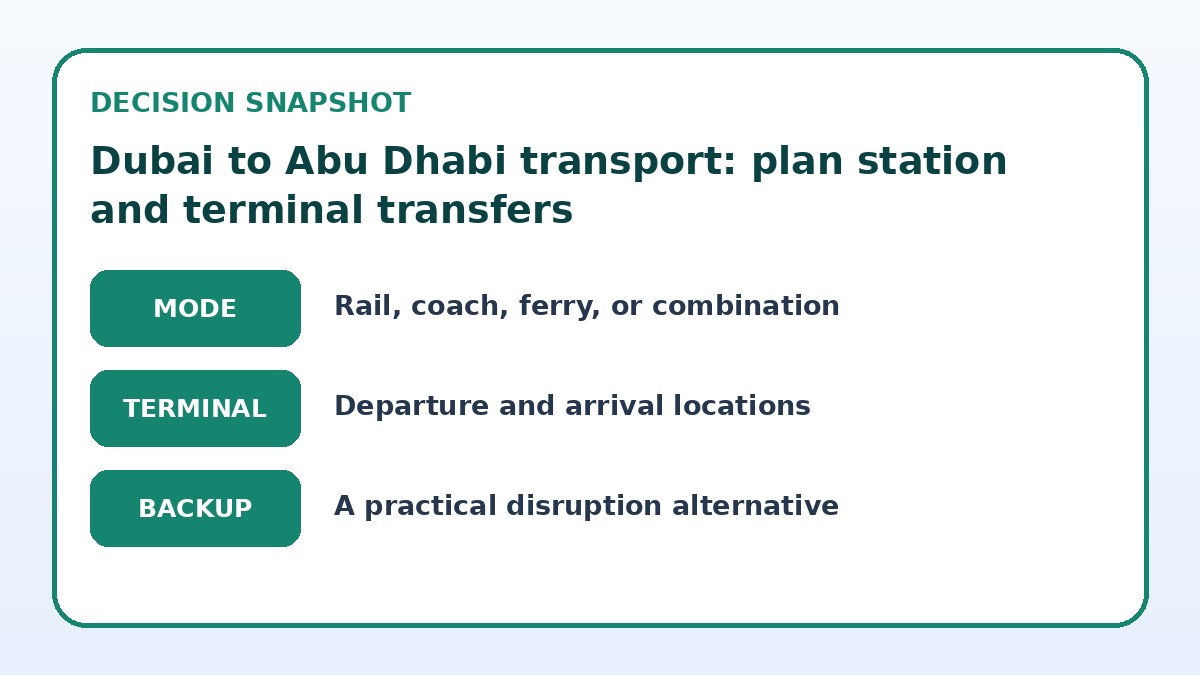
See current options before you compare the details
Availability and final conditions change. Open Trip.com now or keep reading for the practical comparison.
Where transfers meet luggage needs
Terminals, train stations, and bus depots differ in how easy they make moving large luggage. Major terminals often have elevators, escalators, and covered dropoff zones; smaller station stops may require stairs or curbside handling. When you plan, identify the precise pickup and dropoff point—an airport arrivals hall, a hotel side entrance, or a named station exit—so you, the driver, and any transfer service all have the same meeting place. A single agreed-upon location cuts down on last-minute shuffling and the risk of having to carry bags across busy roads or through crowded concourses.
If your route includes a rail segment, check station architecture and access: is the platform level with the train? Is there a staffed help desk that can assist with loading luggage? These details matter when you have oversized or multiple bags. For mixed-mode journeys (train then taxi), allow extra time to move luggage between modes and, where possible, choose stations with lifts, ramps, or staffed porter services. If the provider offers a door-to-door option, confirm whether that service includes assistance loading and unloading luggage at both ends.
Comparing transfer types for extra luggage
Private transfers: pre-booked cars, minibuses, or airport shuttles are the simplest for large luggage because they drop you at a curb, hotel entrance, or terminal door. The main tradeoff is cost and potential need to reserve a larger-vehicle option in advance; a standard sedan may not fit multiple large suitcases and passengers. When booking, check the vehicle size, number of pieces accepted without extra charges, and the exact pickup/dropoff wording on the booking page—some services list only a terminal name and require you to confirm a meeting point later.
Public transport and rideshares: trains, coaches, and public shuttles are cheaper but usually require more handling: walking from a coach bay to a station concourse, lifting bags onto racks, or moving between platforms. Rideshares give flexibility and lower walking, but vehicle availability and trunk space vary. If choosing public modes, plan every leg with luggage in mind—select the most direct route with the fewest transfers, and opt for an onward taxi from the station if the final dropoff is not luggage-friendly.
| Approach | Best for | Tradeoff to check |
|---|---|---|
| Pre-booked private transfer | Travelers who want minimal handling and direct door-to-door service | Higher cost and need to reserve appropriate vehicle size in advance |
| Station-to-station public transport with taxi connections | Budget-conscious travelers willing to handle baggage between legs | More physical handling and potential stairs or long walks with luggage |
| Rideshare from terminal or station exit | Flexible travelers needing a quick, single-hop solution at each end | Vehicle trunk size varies and may not fit multiple large bags reliably |
| Luggage-friendly shuttle services | Groups with multiple bags who prefer shared cost and larger vehicles | Fixed pickup/dropoff points can still require short walks to the terminal |
Ready to check the option that fits your plan?
Use your exact dates and traveler details so the provider page can show the current total and conditions.
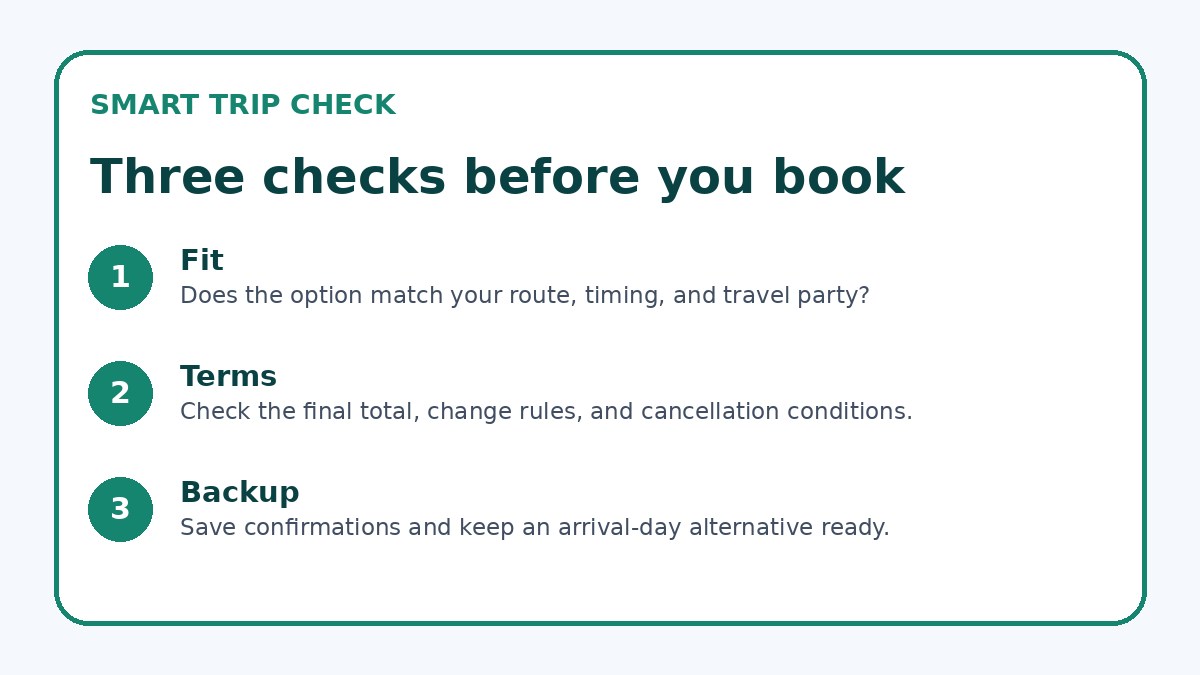
What to verify before you book
Always read the provider’s booking details carefully for any size or piece limits, specific pickup/dropoff points, and stated assistance levels. Many providers will note whether help loading luggage is included or whether transfers are curbside only; these are terms that change frequently, so verify them on the provider’s final booking page or confirmation email. Confirm the exact terminal name, gate or exit number if available, and whether there is a baggage-handling service or porter at either end that you can hire on arrival.
Also check cancellation and change policies in case your plan shifts, and whether the transfer provider requires flight or train numbers to monitor delays. If you must switch between stations or terminals, identify sheltered walkways, elevator locations, and taxi ranks before you travel. For last-minute comparisons of available services and current conditions, Trip.com can be used to view options, but always double-check any important facility claims or meeting-point details directly with the provider listed on the final booking page.
Before you book
- Confirm exact pickup and dropoff points on the provider’s final booking page (terminal name, exit number, or hotel entrance).
- Reserve a vehicle size that comfortably fits all passengers and all suitcases, noting any per-piece limits listed.
- Allow extra connection time if switching from a station to an airport terminal and identify lifts or ramps on the route.
- Photograph luggage and record identifying details before traveling in case you need to report damage or loss.
- Share flight or train numbers with the transfer provider so they can monitor delays and adjust pickup timing.
- Pack essential items and valuables in a small carry bag you keep with you during transfers and station walks.
Practical packing and arrival tips
Limit the number of separate bags where possible—one large, wheeled suitcase and one carry-on is easier to move than multiple medium bags. Use durable luggage with wheels and a sturdy handle, and consider luggage straps for extra security during transfers. If you have items that cannot be wheeled (odd-shaped equipment or fragile items), pack them in a protective case and pre-arrange assistance; notify the transfer provider on booking pages so they can allocate appropriate vehicle space.
On arrival, keep essential documents and small valuables in a compact day bag you carry. Photograph luggage and note serial numbers in case of damage during transfers. When you arrive at a station or terminal, move directly to your agreed pickup point rather than pausing in crowded areas; if you’re delayed, message or call your driver with clear location details such as the terminal entrance name, nearby landmark, or platform number so they can find you quickly.
Frequently asked questions
Can I take large suitcases on trains between Dubai and Abu Dhabi?
Train policies and carriage layouts change, so verify luggage allowance and carriage access with the operator before booking. If trains are part of your journey, check whether platforms are level with train doors, if there are dedicated luggage racks, and whether staff assistance is available for boarding with heavy bags. If the operator’s website or booking page doesn’t specify handling assistance, assume you’ll need to lift and stow your own bags and plan for a taxi at each end to reduce walking.
Where is the easiest place to meet a driver at major terminals?
The easiest meeting points are typically clearly signed curbside dropoff zones, arrivals halls, or designated taxi ranks near terminal exits. However, exact names and access points vary by terminal and provider, so confirm the meeting spot on the transfer confirmation or booking page. If the confirmation gives only a terminal name, message the provider to agree a precise exit, gate, or landmark—this prevents being directed to a staff-only area or a remote coach bay that requires carrying luggage a long distance.
Is it safer to pre-book a transfer or wait to hire a taxi on arrival?
Pre-booking locks in a vehicle size and luggage allowance and reduces the risk of being unable to find a suitable taxi at peak times; it also gives you a single point of contact if problems arise. Waiting to hire a taxi can save money but may leave you searching for a vehicle with enough trunk space, especially with multiple large bags. If you consider hiring on arrival, have a backup plan such as a rideshare app or extra wait time and be ready to split luggage between vehicles if necessary.
Final planning note
For travelers between Dubai and Abu Dhabi carrying extra luggage, prioritise fewer handoffs and clear, written meeting points. Pre-booked private transfers and luggage-friendly shuttles reduce physical handling and simplify arrivals, while public transport plus taxis can save money at the expense of more transfers and potential stair or platform navigation. Before you commit, verify vehicle size, exact pickup/dropoff wording, and any assistance included on the provider’s final booking page. Pack strategically, allow extra time for connections, and keep essential items with you so that moving between stations and terminals becomes manageable rather than stressful.
Continue planning
Check current options and final conditions
Use the provider page to confirm live availability, the final total, cancellation terms, and every condition that matters to your trip.
This evergreen planning guide was created with AI-assisted drafting and a structured quality review. It does not display live prices, schedules, availability, visa guidance, or provider rankings. Verify current details before booking. Some links are affiliate links; we may earn a commission at no additional cost to you.