If your priority is moving between Rome and Florence efficiently with business luggage, start by deciding whether you need door-to-door convenience or station-to-station speed. For most business trips, a morning or late-afternoon high-capacity train plus a compact, wheeled carry-on and one checked roller bag balances speed, comfort, and mobility. If you have bulky equipment, multiple suitcases, or tight schedules, consider a private transfer or an airport-to-city link that minimizes station handling. Whatever you choose, compare options by luggage rules, station layout, platform access, and transfer logistics rather than only by advertised travel time. Before you finalize, verify luggage allowances, platform accessibility, lift/escalator availability, and any station luggage storage options on the provider’s official booking page. You can also check aggregate availability on Trip.com, but confirm details with the carrier or transfer company before booking.
See current options before you compare the details
Availability and final conditions change. Open Trip.com now or keep reading for the practical comparison.
Choosing between train and private transfer
For business travellers carrying luggage, the core trade is speed versus door-to-door convenience. Trains between Rome and Florence typically deliver fast station-to-station travel with frequent departures; they are efficient when you are near the central stations and comfortable managing bags on platforms and in station concourses. Private transfers remove platform and staircase worries and drop you directly at your hotel or meeting address, which can be a decisive advantage for heavy or delicate equipment, last-minute meetings, or when time on the clock is paramount.
When evaluating both modes, think beyond trip duration. Estimate the total door-to-door time including transfers to stations or airports, luggage handling, and local traffic. Check whether stations you’ll use have elevators or lifts, and whether car drop-off points at hotels or meeting venues are convenient for drivers to load and unload. Always review the provider’s luggage policy, vehicle size limits, and any pickup instructions on the final booking page so you can match expectations with what they actually permit.
Packing smart for station layouts and platform access
Station architecture affects how you should pack. Rome’s larger stations typically have long concourses and multiple platforms, while Florence’s main station is more compact but can still be busy during peak hours. Prefer wheeled luggage with strong handles and smooth-rolling wheels; that reduces strain when navigating short flights of stairs or long corridors. Organize important documents, chargers, and a change of clothes in an easily reachable carry-on so you can access them without unpacking your checked bag on a platform or in a waiting area.
Also use packing strategies that minimize friction: compressible packing cubes, dedicated compartments for tech gear, and a small shoulder bag or briefcase for meeting necessities. If you carry a laptop, make sure it fits a slim sleeve that slides into your carry-on so you can keep it with you during boarding and disembarkation. Consider a luggage tag with your contact details and a visible itinerary card in case bags are set aside or stored in station lockers temporarily.
| Approach | Best for | Tradeoff to check |
|---|---|---|
| High-speed train (station-to-station) | Travelers with moderate luggage who prioritize overall speed and punctuality | You handle your own bags at stations and may navigate stairs or crowded platforms |
| Regional or intercity train with connections | Those prioritizing cost flexibility or non-peak departures | More transfers increase luggage handling and total door-to-door time |
| Private transfer or car service | Business travelers with heavy, delicate, or multiple suitcases needing door-to-door service | Potentially longer journey in traffic and higher cost compared with non-stop trains |
| Train plus taxi for last mile | When you want fast rail travel but need a hassle-free arrival at a specific address | Requires coordination and a short period of luggage transfer between modes |
Ready to check the option that fits your plan?
Use your exact dates and traveler details so the provider page can show the current total and conditions.
Managing luggage at stations, platforms, and transfers
Allow extra time for moving through stations: finding your platform, dealing with crowds, and lifting bags onto racks or storing them in dedicated baggage areas all add minutes to the advertised travel time. When you arrive at your origin station, locate elevators or ramps if you’re carrying heavy bags; if these aren’t obvious from station photos or maps, check the operator’s accessibility notes before you head out. If you must change trains, verify transfer distances between platforms and whether you’ll need to cross via underpasses or overpasses that require stairs.
If you book a private transfer, confirm luggage capacity and loading procedures with the driver or company. For hybrid approaches—train plus taxi—the taxi can be a useful final-mile solution to avoid dragging luggage through hotel corridors. When possible, use pre-booked station luggage storage or a verified luggage delivery service to lighten your load between meetings. Always verify locations, hours, pricing, and size limits directly with the service provider before relying on them.
Before you book
- Confirm luggage allowances and permitted dimensions on the carrier or transfer company’s final booking page.
- Verify elevator, ramp, and escalator availability at departure and arrival stations before you travel.
- Reserve seats or request a vehicle large enough for all bags if the provider offers explicit capacity booking.
- Allow at least 30–60 extra minutes in station time for bag handling, platform changes, and security.
- Identify nearby short-term luggage storage or delivery services in case you need hands-free time.
- Keep digital and printed copies of your itinerary, pickup instructions, and contact details for the operator.
Booking checks and last-minute decisions
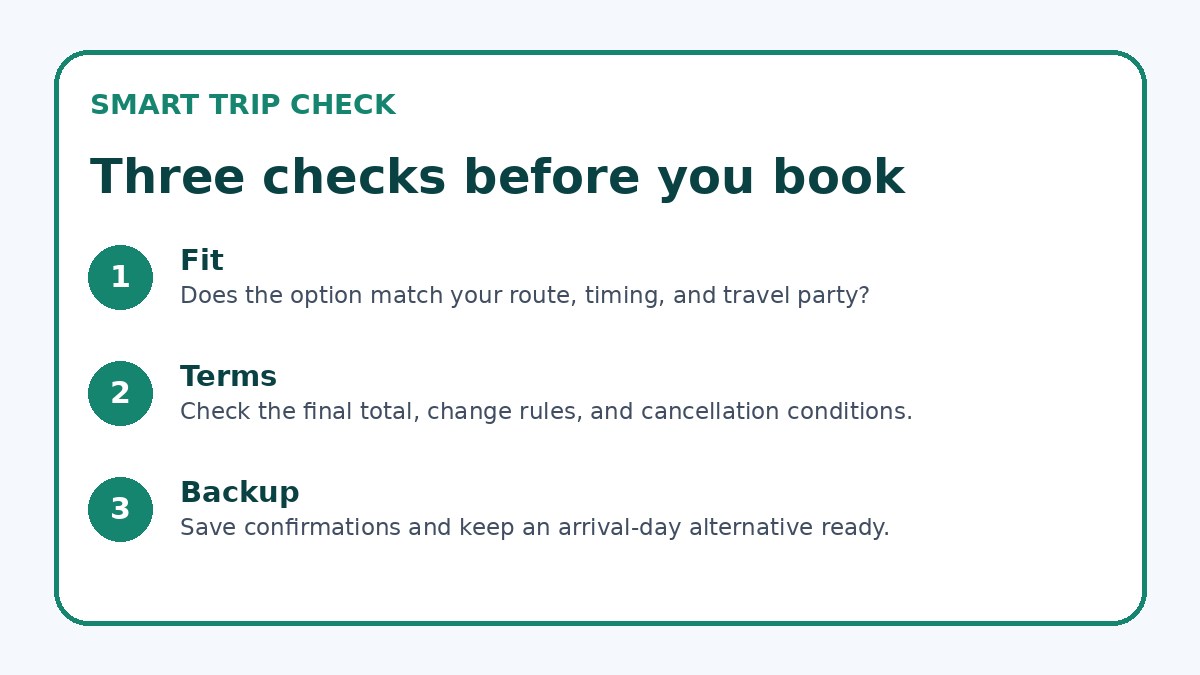
Before you commit, compare options on the factors that matter most for your trip: total door-to-door time, luggage allowances, station accessibility, meeting locations, and flexibility for schedule changes. For trains, review the carrier’s final booking page to confirm luggage policies (dimensions, weight limits, and number of permitted bags), platform information, and whether your ticket permits seat reservations or flexible changes. If choosing a private transfer, confirm vehicle type, exact pickup and drop-off points, and any surcharges for excess luggage or oversized items.
When time is tight, prioritize options that minimize handling—private transfers or trains that call at central stations with simple platform access. If your schedule allows, pick a slightly longer connection with fewer platform changes to reduce stress. Use Trip.com or similar aggregators to see availability, but always re-check the operator’s official terms and conditions so you’re not surprised by luggage restrictions or operational instructions at the last minute.
Frequently asked questions
How much luggage can I reasonably bring from Rome to Florence for a short business trip?
For a short business trip, most travelers find one wheeled carry-on plus one larger roller or checked suitcase sufficient. That setup gives you a place for suits or dresses, a laptop and chargers, and any presentation materials without making platform navigation overly awkward. If you have bulky equipment, consider shipping it ahead or booking a private transfer that can carry oversized items. Always confirm the specific baggage limits and vehicle capacity on the provider’s booking page to avoid surprises.
Are station lockers a reliable option if I want to leave luggage between meetings?
Station lockers and staffed left-luggage services are available in many Italian cities, but reliability and size limits vary by location and time of day. They can be a practical solution when you need temporary hands-free time for meetings, museum visits, or short errands. Before relying on them, check the operator’s current hours, size restrictions, and whether they accept large suitcases. If lockers won’t fit your bags, compare courier luggage delivery or hotel holding services as alternatives.
What should I check when booking a private transfer for business luggage?
When booking a private transfer, confirm the vehicle type and maximum luggage capacity, plus any fees for oversized items. Ask about where the driver will meet you (station exit, platform, or taxi rank) and whether they will help load and unload your luggage. Verify pickup and drop-off procedures, expected travel windows in case of traffic, and the company’s cancellation or change policy. Request a clear contact number for the driver or dispatch to coordinate any last-minute adjustments.
Final planning note
Planning Rome to Florence travel with business luggage becomes straightforward when you prioritize the elements that matter most: total door-to-door time, luggage handling, and the accessibility of departure and arrival points. For most business trips, a fast train plus sensible packing and a checked suitcase offers the best balance of speed and flexibility, while private transfers solve the handling problem when you have heavy or delicate cargo. Always verify luggage rules, station facilities, and pickup instructions on the operator’s official booking page before you finalize reservations. If you want a quick inventory of available options, aggregators such as Trip.com can surface current choices, but use them alongside the carrier’s or transfer company’s own terms to confirm details.
Continue planning
Check current options and final conditions
Use the provider page to confirm live availability, the final total, cancellation terms, and every condition that matters to your trip.
This evergreen planning guide was created with AI-assisted drafting and a structured quality review. It does not display live prices, schedules, availability, visa guidance, or provider rankings. Verify current details before booking. Some links are affiliate links; we may earn a commission at no additional cost to you.