If you’re booking Seoul to Tokyo flights for business, start with a short, practical checklist that prioritizes timing, seat flexibility, and required documentation. Business travel often hinges on small scheduling details — arrival time at your Tokyo meeting district, the ability to change plans quickly, and how airport transfers fit into a tight calendar. This article gives the essential checks to run before clicking “reserve”: how to compare direct and connecting options, what fare rules and seating features matter for meetings, which documents and entry verifications to confirm, and how to match departure airports and arrival terminals to ground logistics. You’ll get quick decision criteria up front, then guidance on tradeoffs so you can choose the option that keeps your trip reliable and professionally efficient.
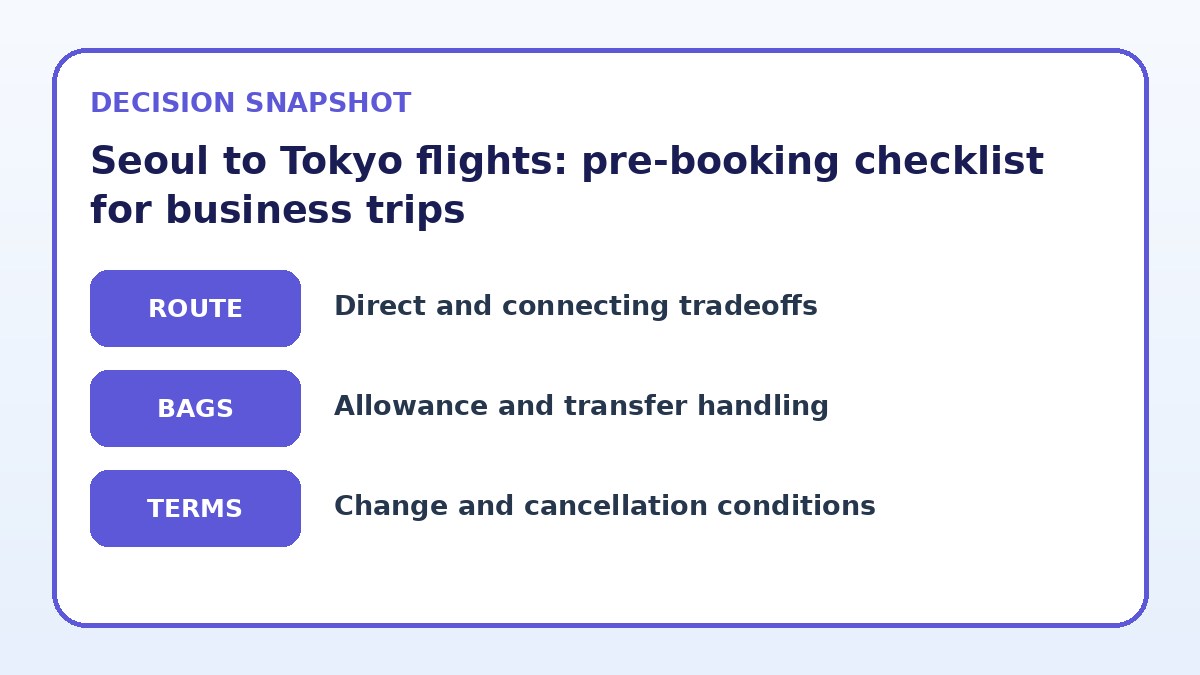
See current options before you compare the details
Availability and final conditions change. Open Trip.com now or keep reading for the practical comparison.
Choose airports and arrival windows that match your schedule
Seoul has multiple airports used for international travel; Tokyo has multiple arrival airports with different distances to business hubs. Before selecting a flight, map the airport-to-office transfer time for each option and factor in peak-hour congestion. For many business travelers, arriving earlier in the day lets you reach a hotel, freshen up, and make afternoon meetings. Conversely, late arrivals can compromise the first day. Check which airport terminals handle immigration and baggage for your carrier; that affects the layout of transfers and how quickly you can leave the airport.
When you compare itineraries, use realistic transfer times rather than optimistic minimums. If you rely on scheduled trains, buses, or taxis to reach central Tokyo, confirm their typical operating hours and frequency at your expected arrival time. If you need to arrive near a specific district (for example, Shinjuku, Marunouchi, or Ginza), test a few route options to identify the fastest combination of flight time plus ground travel. This upfront mapping helps you choose flights that minimize the risk of missing meetings or needing last-minute transport alternatives.
Weigh direct versus connecting itineraries
Direct flights reduce complexity: fewer takeoffs and landings, and no missed-connection risk. However, connecting itineraries can offer more departure time choices or lower out-of-pocket cost. Rather than assuming a direct flight is always preferable, compare total elapsed time and how connections align with your calendar. Look at connection minimums and whether both legs are on a single ticket; a single-ticket itinerary generally protects you if a delay causes a missed connection, while separate tickets create risk and likely extra cost to rebook.
When evaluating connecting options, check transfer terminals, minimum connection times, and whether your baggage is checked through to the final destination. If a connection requires changing airports or long inter-terminal transfers, add cushion time and consider whether an earlier or later single-hop flight would be less stressful. Also consider the chance to work onboard: a daytime direct flight with reliable Wi‑Fi may let you prepare for meetings, whereas a late-night connection might be less useful for productive work.
| Approach | Best for | Tradeoff to check |
|---|---|---|
| Direct daytime flight | Arriving with time to reach meetings and work onboard efficiently | Often fewer schedule choices and can be more expensive than indirect options |
| Connecting flight with a long layover | Lower fares and wider schedule flexibility if you can handle a longer total time | Higher risk of delays and more logistics to manage between flights |
| Late-night or redeye flight | Preserving daytime for meetings and potentially saving daytime hours | Can reduce rest quality and make same-day productivity unreliable |
| Flexible refundable fare | Business travelers who must adapt plans quickly | Typically higher upfront cost compared with restrictive nonrefundable fares |
Ready to check the option that fits your plan?
Use your exact dates and traveler details so the provider page can show the current total and conditions.
Understand fare rules, seating, and work-friendly services
Business travelers should look beyond headline fares and read the fare conditions carefully. Key items include change and cancellation rules, redeposit or reissue fees, and whether name changes or re-routing are permitted without substantial penalties. If your company requires refundable or changeable tickets, filter for those fare classes explicitly. Also check baggage allowance rules: if you travel with a laptop bag plus a check-in bag, confirm how many carry-on items the fare allows and whether extra fees apply for additional pieces or overweight items.
Seat selection, business-class availability, and onboard amenities matter too. If working on the flight is important, verify Wi‑Fi availability and estimated onboard power access on the carrier’s official page. If privacy and comfort are priorities, compare legroom and recline for the cabin class you plan to book. Finally, check whether lounge access is included or obtainable via a day pass or alliance status — a lounge stop can be crucial for finishing work between flights and ground transfers.
Before you book
- Map your origin airport in Seoul and preferred Tokyo arrival airport, then estimate door-to-door transfer time to your meeting location.
- Compare total travel time and schedules for direct versus connecting itineraries; note connection terminals and minimum transfer times.
- Read fare rules on the carrier’s booking page: change fees, rebooking conditions, refundability, and baggage allowance.
- Confirm passport validity and check official government entry requirements and any carrier health attestations before booking.
- Verify which carrier issues the boarding pass for each segment (important for codeshares) and whether baggage is checked through.
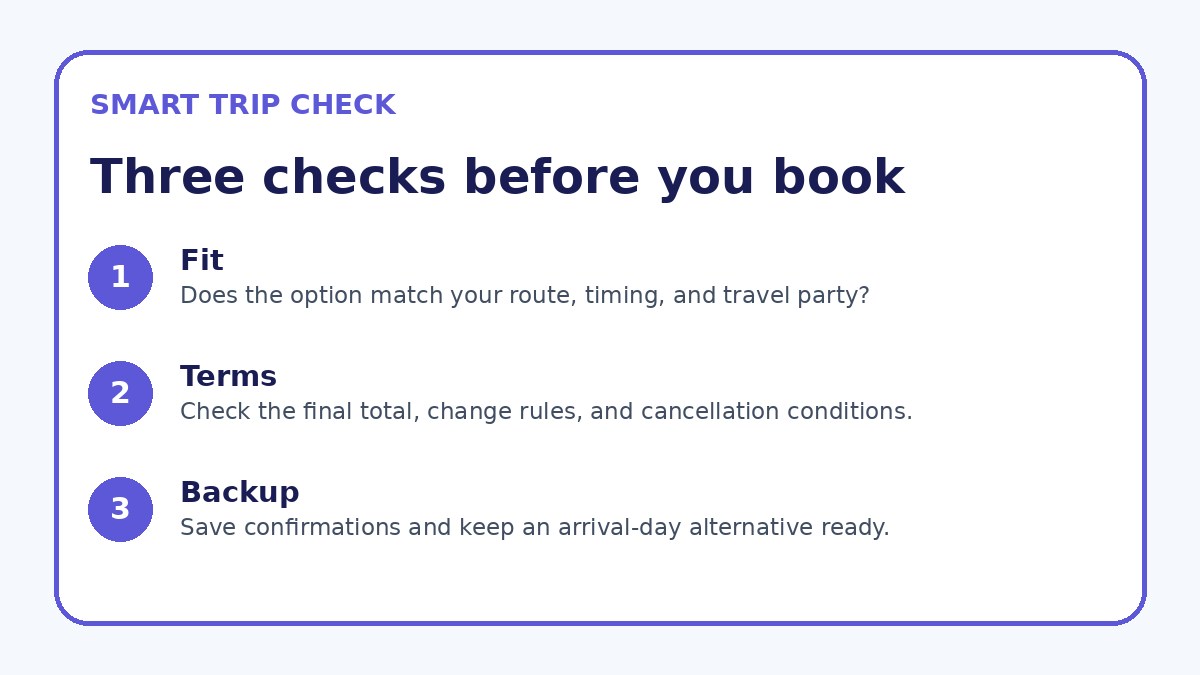
- Save booking confirmation and fare conditions; screenshot the carrier’s terms and the itinerary reference for corporate expense and emergencies.
Verify documentation, health checks, and booking details
Before you finalize any booking, confirm passport validity requirements and whether any entry paperwork, electronic pre-clearance, or health attestations are recommended. Use official government websites for visa and entry conditions and the airline’s booking page for health or testing requirements; rules can differ between carrier communications and government portals. Also verify the exact name, passport number, and contact details that must appear on the ticket. Small discrepancies between a passport and a booking can cause delays at check-in or immigration.
Double-check the booking page for baggage rules, seat assignments, and the fare class code so you understand what you purchased. If your itinerary contains codeshares or connections operated by different carriers, confirm which carrier handles check-in, boarding passes, and baggage handling. If you need to invoice the trip to your company or use a corporate travel policy, ensure your booking platform provides the necessary receipt and fare breakdown. Consider saving screenshots of the booking confirmation and provider terms in case you need to reference them later.
Frequently asked questions
Should I prioritize arrival time or lowest fare for a one-day business trip to Tokyo?
Prioritize arrival time when the meeting schedule is tight. A slightly higher fare that lands you earlier or at a closer airport can reduce transfer risk and stress. If your schedule allows flexibility or you can shift meetings, then lower fares with later arrivals or longer ground transfers may be appropriate. Balance the value of productive hours and reliability against ticket cost, factoring in potential taxi, train, and accommodation tradeoffs caused by arrival timing.
How do I decide between booking a single-ticket connection and two separate tickets?
A single-ticket itinerary is usually better for business travel because it typically includes protections if one leg is delayed and you miss the connection; the carrier will re-accommodate you under the same reservation. Separate tickets can be cheaper but expose you to risk: if the first flight is late, the second carrier is not obliged to hold the flight and you may need to buy a new ticket. Use separate tickets only when you have long buffers or are prepared to accept the rebooking cost and complexity.
What booking details should I verify on the airline page before completing payment?
On the airline booking page, confirm the exact fare class, change and cancellation penalties, baggage allowance, seat selection rules, and whether the flight is operated by a partner (codeshare) with differing procedures. Check which terminal the flight uses and whether Wi‑Fi or power is available if you need to work. Make sure traveler name spellings match the passport, and keep a record of the booking reference and fare conditions for corporate expense filing and any future changes.
Final planning note
A short pre-booking checklist makes Seoul to Tokyo travel for business far more predictable. Focus first on airport choices and arrival windows that suit your meeting schedule, then compare direct and connecting options by total door-to-door time and reliability. Read fare rules closely for change and baggage policies, and confirm entry documentation on official government and airline pages before you pay. Save confirmations and carrier terms to simplify corporate expense reporting and any necessary rebookings. If you want a quick comparison tool for live availability, you can check a platform like Trip.com, but always verify rules on the carrier’s official booking page before finalizing.
Continue planning
Check current options and final conditions
Use the provider page to confirm live availability, the final total, cancellation terms, and every condition that matters to your trip.
This evergreen planning guide was created with AI-assisted drafting and a structured quality review. It does not display live prices, schedules, availability, visa guidance, or provider rankings. Verify current details before booking. Some links are affiliate links; we may earn a commission at no additional cost to you.