
If you’re coming to Busan with oversized suitcases, camera bags, or equipment you want to avoid lugging up and down stairs, pick a hotel close to transport hubs first and everything else second. The practical choice is a hotel within a short walk of a major subway station or bus terminal, or one that advertises luggage storage and easy elevator access to rooms. That reduces time moving between transfers, plus it minimizes stairs and cobbled streets in neighborhoods like Gamcheon or parts of Haeundae. Before booking, check the hotel’s access details: elevator presence, number of steps from the street to reception, and whether staff can handle large bags. Also verify whether your arrival (flight, KTX, long-distance bus, or ferry) connects you to the same neighborhood or will require one extra transfer — a single extra transfer with luggage can change which neighborhood is most convenient.
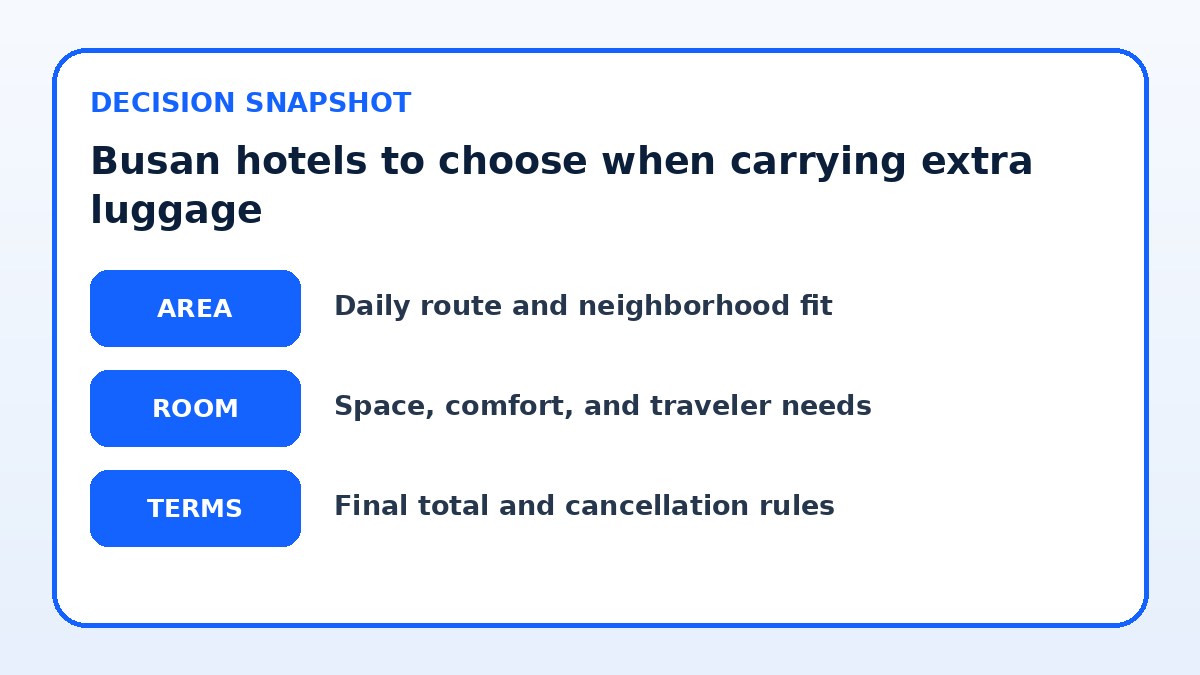
See current options before you compare the details
Availability and final conditions change. Open Trip.com now or keep reading for the practical comparison.
Start by mapping your arrival route
Plan where you’ll arrive in Busan — by Gimhae Airport shuttle, KTX to Busan Station, an intercity bus, or a ferry — then map the easiest transfer to hotels. If your itinerary includes a late arrival or early departure, a hotel next to a direct airport bus stop or the KTX station removes the stress of multiple transfers. Use a map to measure walking distance, but also note the presence of stairs, pedestrian overpasses, and road crossings; a five-minute walk across flat pavement is very different from a five-minute walk over several staircases when you’ve a heavy suitcase.
When comparing neighborhoods, think about reloads of luggage during your trip (day trips out of the city or moving hotels). Selecting a hotel near a major subway line or a hub with luggage-friendly taxis reduces those extra moves. If you plan to take day trips using regional trains, a hotel within easy reach of Busan Station or Centum City saves time. For seaside hotels in Haeundae or Gwangalli, check if the path from the station involves sand, stairs, or steep slopes; those details matter more than simple distance.
What to check on a hotel listing before booking
Look for explicit accessibility and transport notes: elevator access from street to reception, step-free routes, luggage storage, and mentions of porter service. If the listing is vague about stairs or elevators, contact the property directly and ask specific questions: how many steps lead to reception, is there a ramp or lift, and can staff help with heavy bags? If several properties interest you, ask each the same list of questions so you can compare apples to apples. When a property references a nearby subway station, confirm which station exit is closest — some stations have multiple exits that place you on different sides of large roads.
Also verify payment and booking conditions that affect arrivals with luggage: whether late arrivals are allowed without extra fees, whether they accept early luggage drop, and how they handle storage after check-out. These are provider-specific facts that can change, so always confirm them on the hotel’s booking page or by phone. Trip.com can be used to compare current availability and the provider’s most recent conditions, but treat Trip.com as a convenience for comparison and double-check the hotel’s own policies when planning around heavy baggage.
| Approach | Best for | Tradeoff to check |
|---|---|---|
| Stay near a major subway station | Travelers who want frequent, low-cost transfers with manageable walking. | May involve crowded streets and station exits with stairs; check elevator locations. |
| Choose hotels by Busan/KTX station | Those arriving by long-distance train or making regional day trips. | Busan Station areas can be busy; verify direct access and porter availability. |
| Pick a hotel with direct airport bus/limousine access | Late arrivals or those preferring fewer transfers with heavy suitcases. | Airport buses stop at specific hotels or curb points—confirm the exact stop and walking distance. |
| Opt for taxi-friendly or ground-floor properties | Travelers who prioritize door-to-door convenience above cost. | Taxis reduce walking but increase fare costs; ensure the hotel has a clear curbside drop-off. |
Ready to check the option that fits your plan?
Use your exact dates and traveler details so the provider page can show the current total and conditions.
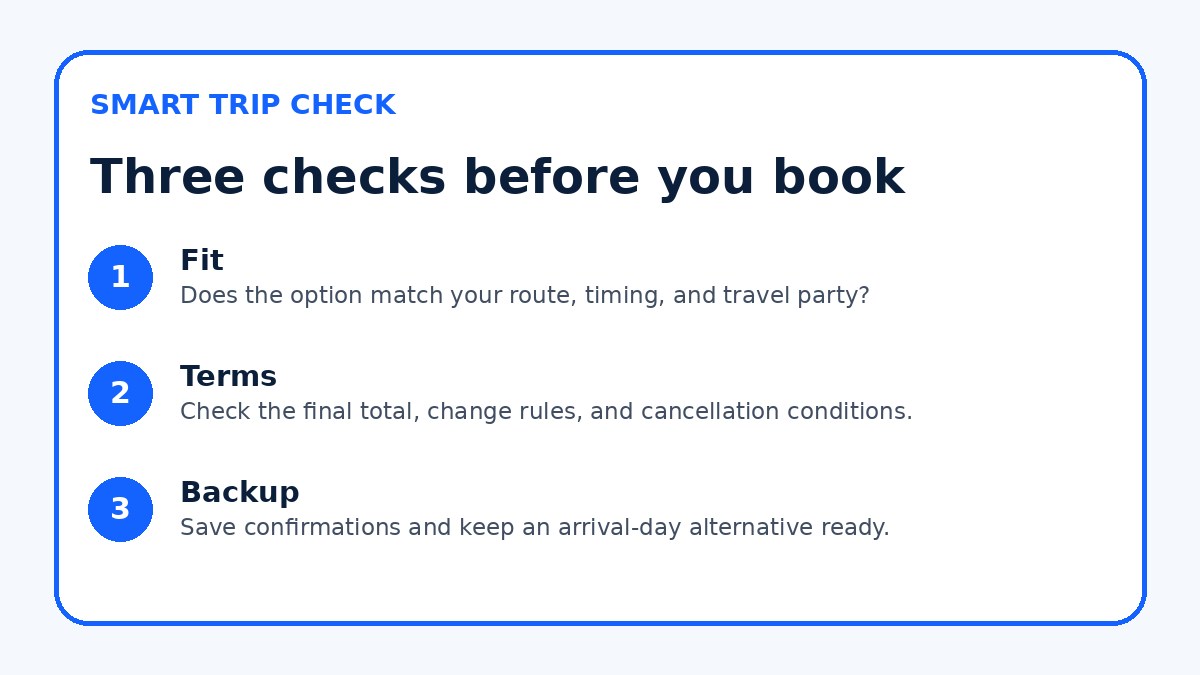
Choosing neighborhoods with luggage in mind
Central Busan neighborhoods like Seomyeon and Busan Station area are transport-rich and shorten transfers but can be busy and have narrow sidewalks. Seomyeon is a strong choice if you want multiple subway lines and bus options within a short walk; it’s ideal for transfers and shopping stops where you may leave items in a locker or store. For travelers with many bags who prefer a quieter street, look for hotels on secondary roads off the main strip; they still benefit from proximity to transport but often have gentler entrances and less street clutter to navigate.
Haeundae and Gwangalli are excellent if your priority is beaches and cruise/ferry access, but they sometimes require longer walks from the nearest subway exit and can involve stairs or short inclines. If you prefer seaside stays, select hotels explicitly advertising elevator access from street level and easy taxi drop-offs. For stays near Busan Station or Centum City, prioritize places with direct pedestrian connections or sheltered walkways; these features make moving bulky luggage between the station and hotel far easier during bad weather.
Before you book
- Map your arrival point in Busan and plan the exact transfer route to potential hotels before booking.
- Ask every hotel how many steps lead from street level to reception and whether lifts reach guest floors.
- Confirm the hotel’s luggage storage policy and whether they accept early drop-off or late bag holding.
- Check nearby subway station exits for elevator locations and note which exit you should use.
- Compare taxi access and typical curbside drop-off points in front of the hotel for door-to-door convenience.
- Verify arrival-related policies (late check-in, extra baggage help) on the hotel’s booking page or by calling.
Transport modes to compare when you have heavy bags
Subway travel in Busan is efficient and avoids surface traffic; a single transfer on the subway is usually easier than a similar walk with heavy bags. However, consider the number of stairs at older stations and whether the station has escalators or elevators; station maps online or official transit apps list elevator locations, but they are subject to maintenance, so verify closer to travel. Taxis in Busan are plentiful and reasonably sized for two large suitcases, so for door-to-door convenience or when arriving late at night, a taxi might be worth the extra cost compared with juggling multiple subway transfers.
If you plan airport transfers, compare the direct airport limousine buses, which stop at many hotels, with local metro plus shuttle combinations. The limousine buses avoid stairs and offer a flat ride from the terminal to curbside hotel stops, useful when you have bulky luggage. When checking options, make sure to confirm the stop name and whether the hotel is served directly or requires a short walk. For KTX arrivals, a hotel on the same station complex or a short taxi ride can be preferable to connecting through crowded local trains with bags.
Frequently asked questions
Is it better to stay near Busan Station or near Haeundae with extra luggage?
Choose Busan Station if you value straightforward transfers to/from intercity trains and many local buses; the area minimizes further train transfers and usually shortens time handling luggage. Haeundae offers seaside convenience and beach access but can involve longer walks from subway exits and more stairs in parts of the neighborhood. If Haeundae is your target, pick a property that explicitly lists elevator access or direct taxi drop-off to reduce carrying heavy bags. Balance where you will spend most of your time versus where you arrive and depart.
Can I rely on taxis in Busan to handle large suitcases?
Taxis are plentiful and typically capable of carrying two large suitcases along with carry-on items, offering door-to-door convenience, especially for late arrivals or when you prefer to avoid transfers. For oversized or specialty equipment, call the taxi company in advance or request a jumbo taxi if available. Note that taxis vary in trunk size, so when transporting particularly bulky items it’s wise to confirm before you book. For predictable luggage handling, choose a hotel with a clear curbside entrance and staff who can assist with loading.
How do I verify a hotel’s accessibility and luggage services before booking?
Review the hotel listing for terms like elevator, step-free access, luggage storage, and porter service, but treat online descriptions as a starting point. Contact the property directly with specific questions: number of steps to reception, whether lifts serve guest floors, maximum luggage they can store, and any arrival-hour limitations. Confirm these details on the hotel’s booking page and ask for written confirmation if you have special requirements. You can use Trip.com to compare current availability and listings, but always double-check the hotel’s own policy for the latest conditions.
Final planning note
When luggage matters, the smartest booking choice for Busan hotels is the one that reduces the number of times you must lift or wheel your bags between transport and your room. Prioritize proximity to a subway exit with elevators, a hotel on a direct airport/limousine bus route, or a property with clear taxi drop-off and ground-floor access. Ask concrete, specific questions about steps, luggage storage, and staff assistance, and verify those answers on the hotel’s booking page before finalizing. Doing this planning up front saves time and stress during arrivals, departures, and any overnight moves between neighborhoods in Busan.
Continue planning
Check current options and final conditions
Use the provider page to confirm live availability, the final total, cancellation terms, and every condition that matters to your trip.
This evergreen planning guide was created with AI-assisted drafting and a structured quality review. It does not display live prices, schedules, availability, visa guidance, or provider rankings. Verify current details before booking. Some links are affiliate links; we may earn a commission at no additional cost to you.