Practical answer first: for a solo traveler building a multi-city ground-transport plan from New York City to Washington, DC, pick one primary transport mode (train, bus, or car) for the backbone of the trip, then layer short hops or overnight stops where you want to spend time. Choose an arrival hub in DC and a departure hub in NYC that match your lodging and onward plans to minimize transfers. Book tickets for the backbone leg early enough to secure flexible fare or refundable options, and reserve local connections within 24–48 hours of that backbone departure so you can respond to delays. Decide whether you value speed, cost, scenery, or convenience, because a plan that mixes train and bus or adds a driving segment will change where you stay and how much buffer time you need.
See current options before you compare the details
Availability and final conditions change. Open Trip.com now or keep reading for the practical comparison.
Choose your backbone: train, bus, or driving
Pick the backbone leg first because it defines timing, luggage constraints, and where you’ll arrive and depart in each city. Trains typically offer more comfortable seats, easier walk-on access in central stations, and predictable city-center arrival points; buses can be cheaper and more frequent but often use outlying terminals; driving gives you ultimate flexibility and access to small towns en route but requires parking and highway navigation. Decide if you prefer fewer stops and straightforward changes (favor trains or driving) or lower cost with more terminals (buses).
Practical decision steps: list the neighborhoods you want to visit in NYC and DC, then map the main terminals that serve them—this tells you whether a train’s central route or a bus terminal transfer adds extra travel time. If you plan overnight stops en route (for sightseeing or rest), choose backbone segments with reliable schedules so you can book local lodging confidently. Always note luggage rules, wheelchair access, and whether reservations are required, and verify those on the carrier’s final booking page before purchasing.
Designing multi-city stops and stays
When building a multi-city plan, pick stopover towns or neighborhoods that minimize backtracking. For a New York to DC corridor, think of logical midpoints or interest points—coastal towns, historic cities, or college towns—that sit close to your chosen route. Choose hotels or guesthouses near the station or bus terminal you’ll use next to reduce transfer time and stress. If you prefer fewer logistics, plan one primary stop instead of multiple short hops; if you want to explore, keep hops to two or three maximum to avoid frequent packing and unpredictable transfers.
Timing each stop matters: schedule arrival at least a few hours before sunset to settle in safely and to leave early the next day if you have a long connection. For solo travelers, prioritize neighborhoods with good evening transit or safe, walkable streets. Confirm local transit options for the first and last mile of each stop—night buses, rideshare coverage, and taxi availability are crucial for late or early departures. Before booking, check route maps and provider pages for the exact pick-up and drop-off points because terminal names and signage can differ.
| Approach | Best for | Tradeoff to check |
|---|---|---|
| Single-mode train backbone | Travelers who value comfort, central stations, and predictable transfers | Often higher base fares and less access to remote towns without added local transit |
| Single-mode bus backbone | Budget-focused travelers willing to accept longer travel times | More frequent terminal changes and variable comfort; verify exact terminal addresses |
| Drive yourself or rent a car | Those needing flexible schedules, scenic stops, or remote access | Parking stress in cities and highway driving responsibilities; factor rental and parking rules |
| Mixed-mode (train + bus or car) | Travelers who want both speed and local exploration between cities | More planning required, larger transfer buffers, and multiple provider rules to verify |
Ready to check the option that fits your plan?
Use your exact dates and traveler details so the provider page can show the current total and conditions.
Transfers, luggage and safety for solo travelers
Plan transfer windows conservatively: urban traffic, security lines, and platform changes can eat time. For same-station transfers, 30–45 minutes may suffice; for transfers that require local transit, rideshare, or crossing a large terminal, budget 60–120 minutes. Keep essential items in a daypack—medications, charging cables, a change of clothes, and travel documents—so a delayed luggage transfer won’t derail the next leg. If you carry checked bags, verify the carrier’s rules on the final booking page since policies differ widely.
Solo travelers should prioritize personal safety: choose well-lit transfer routes and avoid isolated waiting areas at night. Share your itinerary with a trusted contact and use phone tracking when making late-night transfers. Consider travel insurance that covers missed connections if you’re chaining independently booked legs. When booking, look for options with flexible change terms or refundable components; exact cancellation and change terms must be confirmed on the provider’s checkout page.
Before you book
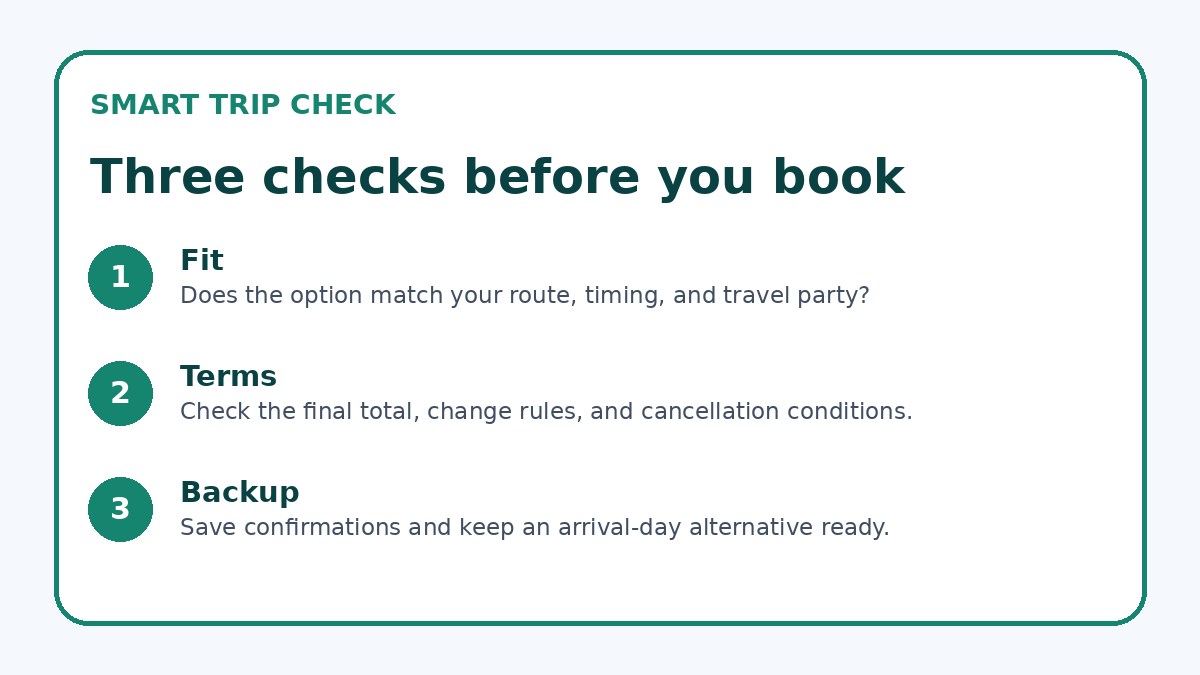
- Choose a backbone transport mode and list its main terminals in NYC and DC to match lodging locations.
- Map your intended stopovers and book accommodations within easy reach of the next departure point.
- Reserve backbone tickets with flexible or refundable options where possible; confirm change policies on the booking page.
- Build at least 60–120 minute transfer buffers for intermodal or off-site terminal changes.
- Pack a carry-on daypack with essentials to cover a missed connection or delayed luggage.
- Share your itinerary with someone, enable phone location sharing for key segments, and note emergency contacts.
How to compare costs, convenience, and flexibility
Weigh three variables: door-to-door time, out-of-pocket cost, and flexibility to change plans. A faster backbone with a later change fee might be worth it if time is scarce; a cheaper, slower route may free budget for better local accommodations. Build a simple spreadsheet or notes comparing total travel time (including transfers), number of changes, and whether each option allows refunds or easy date changes. For each option, check baggage allowances and whether seats are assigned—these practical details affect comfort and transfer speed.
Also consider logistics like where you’ll sleep and how you’ll get to and from terminals at odd hours. If your itinerary relies on small local operators, verify pickup and drop-off locations and contact details on the provider’s final booking page. If you want a single site for quick comparison, you may check Trip.com for current availability, but always cross-reference with the carrier’s own site for official policies and the most up-to-date schedules.
Frequently asked questions
Should I take a direct train, or break the journey into multiple short hops?
A direct train reduces the number of transfers and usually simplifies logistics, which is good when minimizing stress and transfer risk. Multiple short hops let you explore intermediate towns and can lower per-leg costs, but they require more planning and buffer time—especially as independent bookings increase the risk of missed connections. Decide whether you prioritize sightseeing or simplicity, then ensure each separately booked leg has enough transfer time and clear refund/change rules, which you must verify on each provider’s final booking page.
How much buffer time should a solo traveler allow between connections?
For transfers within the same station, 30–45 minutes is often adequate for most solo travelers who move quickly and have minimal luggage. When transfers require local transit, rideshare, or crossing large terminals, plan 60–120 minutes to accommodate traffic, queues, and navigation. If your arrival or departure is at night, add extra time for safety and limited transit options. Check the exact pickup/drop-off points and any terminal transfer requirements on provider pages before finalizing.
What safety precautions should I take when traveling solo between NYC and DC by ground?
Choose central, well-lit stations and reputable accommodations near arrival points to minimize risky transfers, especially after dark. Keep important documents and essentials in a daypack, avoid displaying valuables in crowded areas, and use official taxi ranks or recorded rideshare apps for late transfers. Share your itinerary with a trusted contact and enable location sharing for critical legs. Confirm station facility details and terminal locations on the carrier’s booking page so you’re not surprised by late changes to pickup points.
Final planning note
Building a multi-city ground-transport plan from New York City to Washington, DC as a solo traveler means deciding early whether you want speed, savings, or exploration. Choose a backbone mode to anchor timing and terminals, then add stopovers that minimize backtracking and keep connections short. Prioritize safety and simplicity for evening transfers, and verify exact pickup/drop-off points, baggage policies, and change or refund rules on each provider’s booking page before purchase. With conservative transfer buffers and logical stop placement, you can balance comfort, flexibility, and the chance to see interesting places along the corridor.
Continue planning
Check current options and final conditions
Use the provider page to confirm live availability, the final total, cancellation terms, and every condition that matters to your trip.
This evergreen planning guide was created with AI-assisted drafting and a structured quality review. It does not display live prices, schedules, availability, visa guidance, or provider rankings. Verify current details before booking. Some links are affiliate links; we may earn a commission at no additional cost to you.