
Practical answer first: for most couples visiting Paris, skip the car and use public transport plus walking—it's the least stressful, easiest for central sightseeing, and usually faster between monuments. Consider renting a car only if you plan several day trips outside Île-de-France, need special mobility support, or want to explore the nearby countryside on your own schedule. This article compares the two approaches across convenience, cost, sightseeing time, parking, and romantic logistics so you can choose confidently. I’ll explain the everyday tradeoffs and decision criteria you should use when you search for a Paris car rental or when you decide to embrace the city’s trains, trams, buses and bikes.
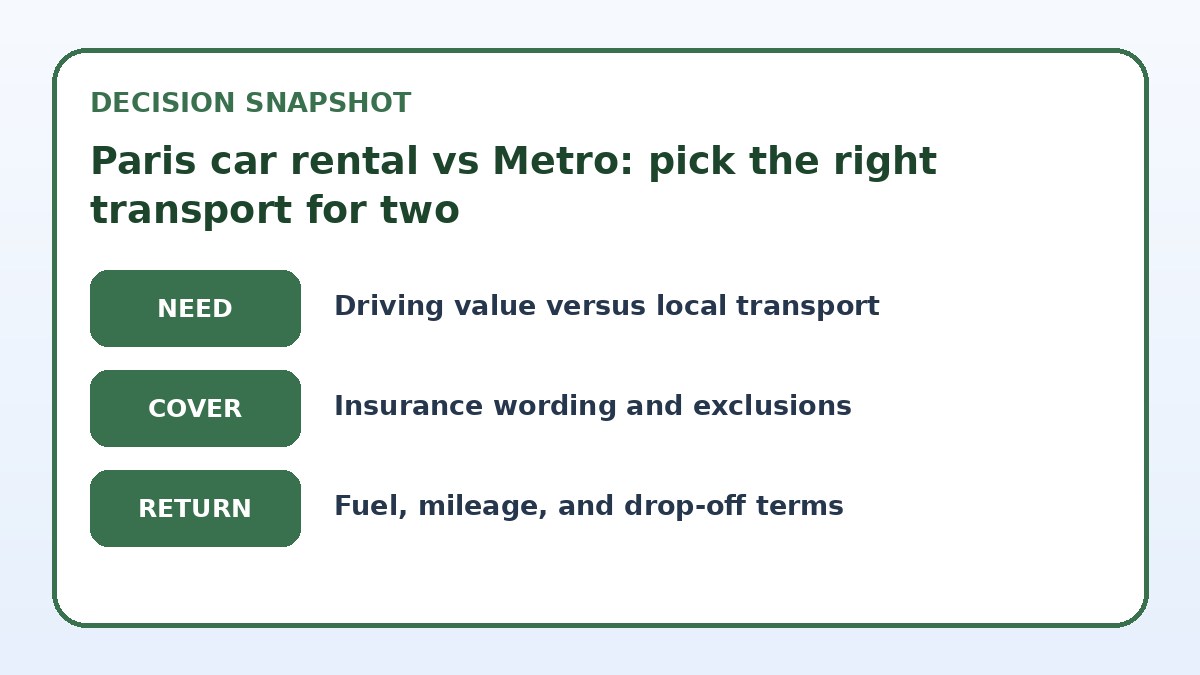
See current options before you compare the details
Availability and final conditions change. Open Trip.com now or keep reading for the practical comparison.
Convenience and daily logistics
Public transport in Paris is dense and frequent in the city center. Metro stations, trams and buses connect most major sights and neighborhoods, making it easy to move between museums, cafés and evening plans without worrying about ticketing beyond occasional zone passes. For couples, this means more time together moving between stops and fewer decisions about where to park. Walking between close attractions is often quicker than car travel once you account for finding parking, walking from a lot and paying fees.
Renting a car changes the day-to-day logistics immediately. You must consider pickup and drop-off times, the location of the rental office relative to your accommodation, and the availability of parking where you stay and at each stop. If your base is central Paris, parking garages are available but can be tight, require advance booking in some cases, and may enforce height or size limits. Plan each day with realistic driving distances and include time to find parking and reach your destination on foot.
Cost and what to compare
When weighing costs, look beyond the headline rental rate. For city stays, include fuel, parking, congestion-related charges, tolls for highways if you drive out of Paris, insurance options, and any extra driver or young-driver fees. Public transport costs are simpler: single fares, day passes, or multi-day cards that cover unlimited travel within set zones. For couples who travel light, bulk public-transport passes and occasional taxis or ride-hail rides can be very economical compared with the cumulative costs of a car.
If you do consider a Paris car rental for day trips, estimate costs per day including predictable parking and fuel for planned routes. Compare that total against train or coach tickets for the same day trips—trains to nearby regions can be faster and more relaxing, but trains may require transfers or walking with luggage. When supplier specifics matter, verify fees, fuel policies, and insurance on the rental provider’s final booking page, and consider checking availability on Trip.com for a quick comparison of current rental options.
| Approach | Best for | Tradeoff to check |
|---|---|---|
| Public transport and walking | Couples staying in central Paris who want low-stress sightseeing and romantic strolls. | Less flexibility for countryside day trips and carrying large gear; fixed schedules may limit remote connections. |
| Paris car rental for occasional day trips | Couples planning multiple out-of-city excursions or with specific mobility needs. | Higher total daily cost and hassle from parking, tolls and urban driving; not ideal for central days. |
| Hybrid: transit in city, car for select days | Couples wanting both stress-free city days and private trips to nearby regions. | Requires advance planning to coordinate rental dates and hotel parking; may slightly raise overall budget. |
| Drive-only approach | Couples with low tolerance for transfers, travelling with a lot of luggage, or long multi-destination road trips. | Frequent parking searches, city traffic, and limited maneuverability in narrow Paris streets reduce leisure time. |
Ready to check the option that fits your plan?
Use your exact dates and traveler details so the provider page can show the current total and conditions.
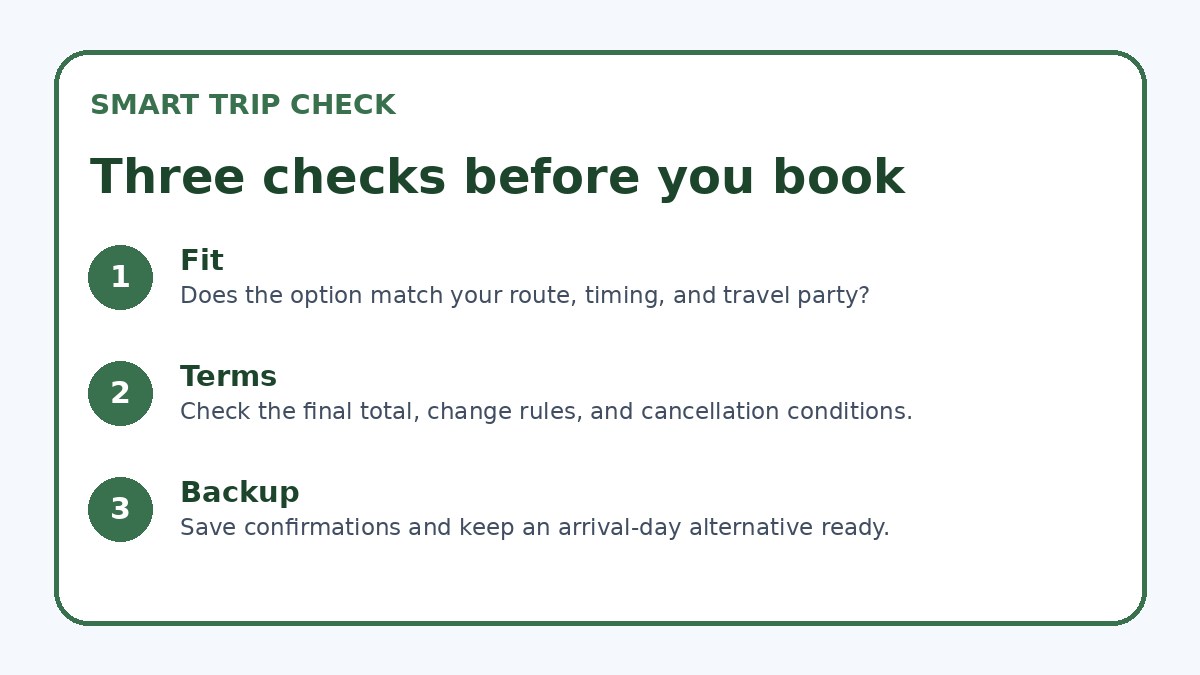
Sightseeing, romance and flexibility
Paris is compact and meant to be discovered on foot and by short transit rides—those spontaneous detours, cafés and quiet streets are part of the city’s charm. For couples, this style of travel encourages lingering at a bistro, wandering narrow roads, and pausing for photography without the pressure of returning to a parked car. Evening plans are simpler too: a late Metro, short taxi ride, or a scenic walk home keeps the mood intact without hunting for parking after dinner.
Driving offers flexibility for tailored excursions: you can leave when you want, visit lesser-known villages, or follow a scenic route at your own pace. For romantic weekend drives outside Paris—vineyards, châteaux or coastal stretches—the car can be a private bubble and an efficient way to stitch together places that are poorly served by public transport. Balance that flexibility against the reality of traffic, navigation stress, and the need to plan where you’ll park for the most romantic stops.
Before you book
- Map your daily itinerary and highlight which days require a car (day trips, mobility needs) to decide how many rental days you actually need.
- Check parking availability and costs at your accommodation and planned Paris stops before confirming a car rental.
- Compare total expected costs—rental rate plus fuel, tolls, parking and insurance—against multi-day public-transport passes.
- If renting, confirm vehicle size, fuel policy, included mileage, and any one-way drop fees on the rental company’s final booking page.
- Plan city days around walking and transit; reserve the rental for early departure days to avoid paying for unnecessary time.
- Download official transit maps and an offline navigation app so you can compare door-to-door travel times between driving and transit in real time.
When a car is a clear advantage
A Paris car rental becomes clearly advantageous if your itinerary includes several day trips to places with limited train service, carries bulky equipment like bikes or photography gear, or if you need door-to-door mobility for accessibility reasons. If either partner has limited mobility, a car can reduce walking and transfers and make hotel-to-site trips more comfortable. Also consider the timing of your travel—early-morning departures or late-night returns are easier with a car when public transport options are sparse.
Even with these advantages, use a hybrid approach: rent a car for the days you need it and rely on public transport while you stay in the city. This reduces parking fees and keeps most of your Paris days relaxed and walkable. When booking a rental, confirm vehicle size for Paris streets, whether there are one-way drop-off fees, and the exact pickup and drop-off terms on the rental company’s final booking page to avoid surprises.
Frequently asked questions
Is Paris car rental worth it for a long weekend as a couple?
For most long weekends focused on central Paris sights, a car is unnecessary. Public transport and walking cover the city efficiently and preserve time for leisurely meals and evening walks. A rental becomes worthwhile if your weekend includes planned day trips to rural areas or attractions that lack frequent train service. If you choose to rent, book only for the days you need the vehicle and verify pickup/drop-off logistics and parking with your hotel to avoid unexpected time sinks.
How do I decide between train day trips and driving from Paris?
Compare door-to-door time, frequency and convenience. Trains often take you quickly to major regional towns and eliminate parking worries, but they may require transfers or walking to final sites. Driving gives you direct access to remote villages and allows flexible timing, which is handy for couples who prefer a private schedule. When trains are competitive, they usually reduce stress; when destinations are poorly connected, a Paris car rental makes more sense—always check current schedules and station-to-destination transfers before booking.
What safety and documentation should couples check when renting a car in Paris?
Bring valid driving licenses for both drivers and the rental company’s required ID. Confirm what insurance is included and whether you need supplemental coverage for peace of mind; read the provider’s policy for collision damage waivers and fuel rules on their final booking page. Ensure you understand roadside assistance options, the company’s accident reporting process, and local driving rules like general urban restrictions. Verify any low-emission zone requirements and whether the vehicle will have the necessary stickers or permits.
Final planning note
Choosing between a Paris car rental and public transport comes down to tradeoffs: convenience versus flexibility, cost transparency versus private mobility. For most couples staying in central Paris, public transport plus walking preserves time for sightseeing and intimate moments without the hassles of city driving and parking. Rent a car selectively when your plans include several out-of-city excursions, require equipment transport, or need reduced walking for accessibility. Use the checklist above to compare total costs and logistics, and always confirm rental terms, insurance and parking arrangements on the provider’s final booking page before you commit.
Continue planning
Check current options and final conditions
Use the provider page to confirm live availability, the final total, cancellation terms, and every condition that matters to your trip.
This evergreen planning guide was created with AI-assisted drafting and a structured quality review. It does not display live prices, schedules, availability, visa guidance, or provider rankings. Verify current details before booking. Some links are affiliate links; we may earn a commission at no additional cost to you.