If your family is planning a San Francisco trip, the practical choice usually comes down to one question: do you buy a bundled travel package that includes flights, hotel, and maybe tours, or do you assemble each part yourself? For many families the answer depends on priorities: saving time and reducing planning stress often favors packages, while control over schedules, accommodations, and small details usually favors separate bookings. This guide walks through the tradeoffs specific to families—think nap schedules, stroller space, multiple rooms, and simple cancellation rules—and gives clear criteria to help you decide. Below you’ll find what to compare, the family situations that favor each approach, what to verify on provider pages, and a short checklist so you can book with confidence.
See current options before you compare the details
Availability and final conditions change. Open Trip.com now or keep reading for the practical comparison.
When a package booking makes sense for families
Family-friendly value in a package often comes from convenience and reduced administrative tasks. A bundled deal can consolidate flights, hotel reservations, airport transfers, and attraction passes into a single purchase and customer-service contact. That removes the need to coordinate separate confirmations, contact multiple providers if plans change, or reconcile different cancellation windows—particularly useful when juggling children’s schedules, naps, and unpredictable delays.
Packages can also simplify budgeting: you pay one total and avoid managing multiple payment dates. For families who prefer a hands-off approach or who have limited time to plan, packages reduce decision fatigue. However, convenience is only part of the picture; you should still examine the package components, room types offered for families, and specifics like seat selection and stroller-friendly transfers, because those operational details affect comfort on arrival and during your stay.
When separate bookings are the smarter choice
Booking flights, accommodation, and activities separately gives families control over the details that matter most on a trip with kids. You can choose flight times that align with children’s sleep patterns, select hotels with family rooms or kitchenette options, and pick neighborhoods close to parks, public transit, or attractions you plan to visit. If your family has special needs—car seats, dietary restrictions, or mobility concerns—separate bookings let you confirm accommodations directly with suppliers and adjust specific requests more easily.
Separate bookings also make it simpler to mix-and-match options: a low-cost carrier flight plus a highly rated family apartment, or a longer stay in one neighborhood and a short hotel stay elsewhere. This approach typically requires more time to research and manage multiple confirmations, and you’ll need to monitor cancellation and baggage policies across providers. Still, for families who value schedule control, room configuration, and being able to pivot plans without affecting an entire package, DIY bookings often win.
| Approach | Best for | Tradeoff to check |
|---|---|---|
| Bundled package | Families who prioritize convenience, single-point support, and faster planning. | Less control over flight times, room specifics, and separate cancellation windows for individual components. |
| Separate bookings | Families needing specific schedules, room layouts, or neighborhood choices. | More time to research and manage multiple confirmations and potentially higher coordination effort. |
| Hybrid approach (mix packages & a la carte) | Families wanting convenience for some parts (transfers/attractions) and control over flights or hotels. | Requires careful tracking of separate rules and may complicate changes across providers. |
| Using an aggregator site | Families comparing many options quickly and locating bundled or bundled-like discounts. | You must verify final policies on each supplier’s booking page; aggregator details may be summary-level only. |
Ready to check the option that fits your plan?
Use your exact dates and traveler details so the provider page can show the current total and conditions.
How to compare true costs and hidden tradeoffs
When comparing package and separate options, don’t focus only on headline prices. Examine what the package actually includes—are transfers door-to-door? Are attraction tickets for timed entry? Does the hotel room allow rollaway beds or cribs at no extra charge? For separate bookings, add the cost of airport transfers, baggage fees, local transit passes, and time spent coordinating to the ticket and hotel rates so you can compare on an apples-to-apples basis.
Also factor in risk and flexibility costs: how far in advance you must commit, the penalty to change or cancel, and insurance coverage for each element. Families may value refundable or flexible policies more highly than a small headline saving. Always verify these terms on the supplier’s final booking page—flight carriers, hotel chains, and tour operators sometimes show different cancellation windows and change fees at checkout, and those details determine whether a cheaper price is actually practical for your family.
Before you book
- Confirm hotel room configuration and bedding options suitable for your children directly with the hotel before booking.
- Compare flight times with your children’s sleep and meal schedules; prefer direct flights if long connections disrupt routines.
- Add transfer logistics to your cost comparison and verify car seats or stroller access with the provider.
- Read cancellation and change policies for each component on the supplier’s final booking page, not just the aggregator summary.
- Factor in added fees—baggage, resort taxes, parking, and attraction reservation fees—when comparing total trip costs.
- Reserve any timed-entry attractions or museum slots in advance and verify age-based pricing and rebooking rules.
Practical booking checklist and where to verify details
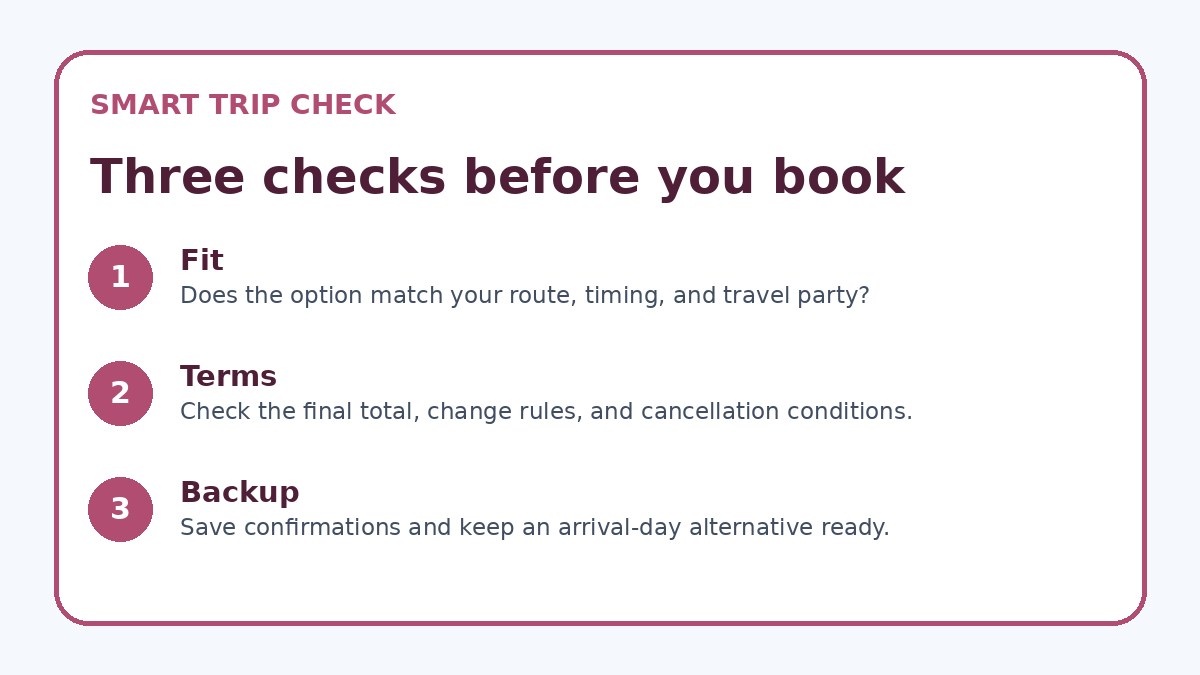
Before you finalize anything, use a short checklist focused on family needs: confirm room type and bedding options, check flight times relative to your children’s routines, verify transfer arrangements and stroller access, and read cancellation or change fees for every component. If you plan to bundle attraction tickets, confirm age categories and entry rules directly with the attraction; providers may have different date-change policies or timed-entry restrictions.
When using aggregator sites to compare San Francisco travel deals, you can save time, but always click through to the provider’s official confirmation pages before paying. On those final pages check exact fare rules, baggage allowances, seat selection fees, hotel taxes and incidental hold policies, and whether transfers include car seats or elevator access. Trip.com is an option to compare availability, but treat its listings like any other aggregator: verify the supplier’s final terms before accepting.
Frequently asked questions
Are packages usually cheaper than booking separately for a San Francisco family trip?
Packages can appear cheaper because they aggregate services and sometimes include bundled extras, but you should compare total costs carefully. Add separate fees such as baggage, transfers, parking, and local taxes when assembling an independent itinerary. Also weigh non-monetary costs—time spent coordinating and the value of flexible cancellation—especially important with children. For a reliable comparison, get the final price and fare rules from suppliers’ checkout pages and calculate the out-the-door cost for both approaches before deciding.
What family-specific details should I check that a package might hide?
Look for hotel room layout, crib or rollaway availability, and whether the listed room rate actually applies to families rather than single-occupancy pricing. Confirm that airport transfers accommodate strollers and car seats, and verify whether attraction tickets are timed-entry or date-specific. Packages sometimes summarize these features; always click through to supplier confirmations and contact providers directly if a booking page doesn’t state the operational detail you need.
If I mix a package with independent bookings, how do I manage changes or cancellations?
Track each component’s policy in a single document: supplier name, booking reference, cancellation window, and contact method. When a date change affects multiple items (for example, a flight change that shifts a hotel night), contact each provider promptly to learn options and fees. Consider travel insurance that covers multi-component disruptions and document any promised waivers or rebookings in writing. Aggregator customer service may help with bundled items, but direct supplier terms control refunds and changes.
Final planning note
There’s no one-size-fits-all answer for San Francisco travel deals when traveling with family. Choose a bundled package if you value time savings, single-point support, and a simpler booking experience; choose separate bookings if you need precise flight times, particular room setups, or neighborhood access. A hybrid approach often gives the best balance: bundle transfers and attraction passes for convenience, while reserving flights and family-suited lodging separately for control. Whichever route you pick, verify all operational details—baggage rules, room layouts, transfer facilities, and cancellation terms—on the supplier’s final booking pages before you pay, and keep a compact organizer with confirmations to make travel day less stressful.
Continue planning
Check current options and final conditions
Use the provider page to confirm live availability, the final total, cancellation terms, and every condition that matters to your trip.
This evergreen planning guide was created with AI-assisted drafting and a structured quality review. It does not display live prices, schedules, availability, visa guidance, or provider rankings. Verify current details before booking. Some links are affiliate links; we may earn a commission at no additional cost to you.