If you need to travel from Seoul to Jeonju for business, the practical priority is to choose a transport option that balances reliability with your calendar needs and in-transit productivity. Start by deciding whether a high-speed rail, intercity train, express bus, or private car/ride service fits the meeting times, luggage, and ability to work en route. Once you have a preferred mode, build in arrival and buffer times for transfers, local transit, and check-in at your meeting or hotel. Prepare an itinerary that lists departure station or terminal, transfer points, and contact details for local transport. Finally, verify the final operator schedules and seat availability on the provider’s official booking page; Trip.com can be a place to compare options but always confirm with the carrier before locking plans.
See current options before you compare the details
Availability and final conditions change. Open Trip.com now or keep reading for the practical comparison.
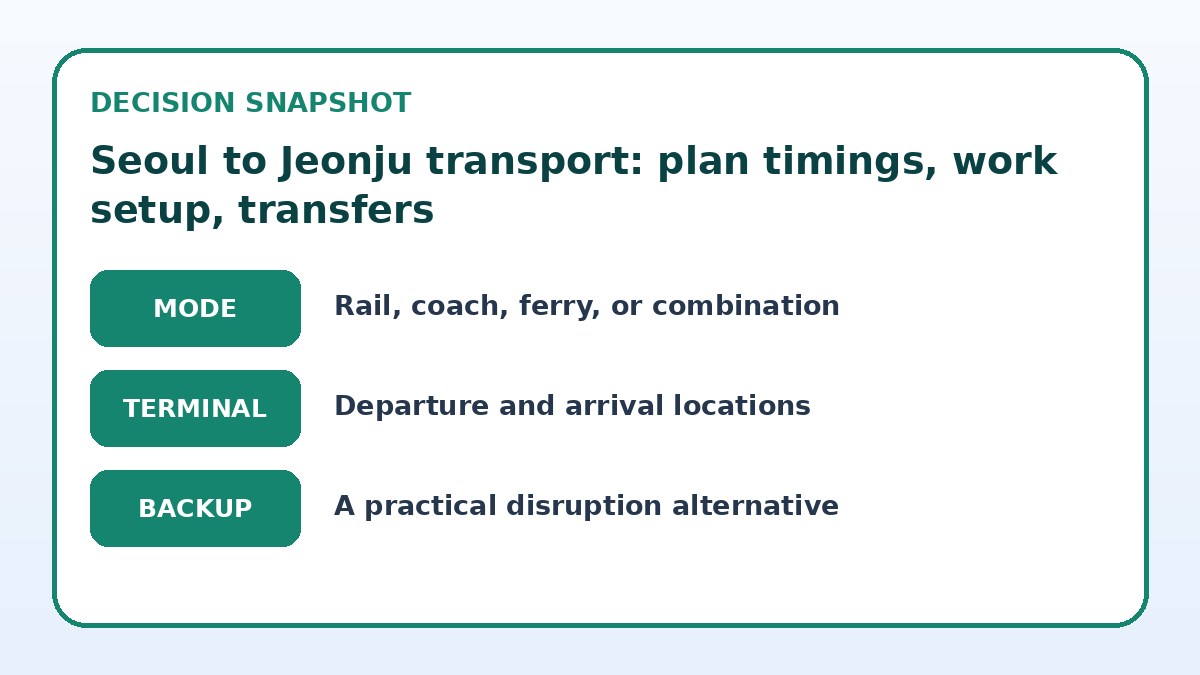
Decide the transport mode by prioritizing outcomes
For business travelers the core decision is outcome-driven: is your priority speed, guaranteed seat and workspace, or door-to-door control? High-speed or intercity trains often offer consistent ride quality and the chance to work with fewer interruptions. Express buses can be cheaper and may serve different station locations, but riding in traffic can be less predictable. A private car or ride service gives the most control over departure time and direct drop-off but transfers your risk to road conditions and driver availability. Compare how each option aligns with your meeting schedule, the need to work in transit, and how much luggage you’ll carry.
When provider-specific details may change—timetables, seat types, or baggage rules—check the operator’s booking page for the latest constraints before finalizing. If both direct and connecting services exist, compare total journey time, number of transfers, and transfer complexity rather than only advertised fastest time. Factor in the likelihood of delays and your tolerance for last-minute changes: if the meeting is high-stakes, lean toward options with easier rebooking policies or repeat departures that let you shift to a later service with minimal disruption.
Schedule and buffer: aligning transport with meeting times
Start by working backwards from the time you must be at your meeting or hotel in Jeonju. Allow for station arrival, security or ticket pickup, and boarding time in Seoul—what sounds like a five-minute walk can take longer in a busy terminal. Add a conservative buffer for delays on the route: for rail and scheduled intercity services, a 30–45 minute buffer is reasonable; for road travel, increase that to 45–90 minutes depending on rush-hour windows. If you plan to arrive the night before, you trade commute risk for a lost half-day but gain reliability.
If you have several service options during the day, pick one that leaves room to move to a later departure without dramatic loss—this is where frequency matters more than the absolute fastest trip. For overnight or early-morning travel, confirm the first available local transport from the arrival point to your meeting location and any hotel check-in cutoffs. When comparing choices, consider whether shifting to a later service incurs penalties; verify rebooking and cancellation policies on the provider’s final page before booking.
| Approach | Best for | Tradeoff to check |
|---|---|---|
| High-speed / intercity train | Reliable ride quality and productive in-seat work time | Fixed departure times and the need to reach stations early |
| Express or intercity bus | Multiple pickup locations and lower budget pressure | Greater exposure to road delays and fewer stable work surfaces |
| Private car or ride service | Door-to-door convenience and schedule control | Traffic risk and higher cost compared with scheduled public transit |
| Hybrid approach (train plus taxi) | Balanced speed with local last-mile flexibility | Requires coordination and slightly higher total coordination complexity |
Ready to check the option that fits your plan?
Use your exact dates and traveler details so the provider page can show the current total and conditions.
Pack and set up to work comfortably on the move
Organize a compact work kit designed for short business travel. Include a fully charged laptop and a small power bank sized to keep it or your phone running for at least one meeting’s worth of time. Bring noise-reducing earbuds or headphones and a lightweight stand to maintain an ergonomic position if you need to join calls. Put important documents, business cards, and any presentation files into an easily reachable sleeve or cloud folder that works offline. A lightweight charger pouch keeps cables untangled and accessible for quick security screening.
Think through what you can realistically accomplish during transit and structure your tasks accordingly. Reserve deep-focus work or edits for when you have reliable Wi-Fi or an uninterrupted block of time; use travel time for email triage, phone calls that withstand minor interruptions, or reviewing meeting notes. If you rely on cellular tethering, confirm your mobile data limits and consider downloading backup materials to your device. Packing a small collapsible umbrella, a travel-size hand sanitizer, and a printed copy of directions or a meeting contact number will reduce last-minute friction on arrival.
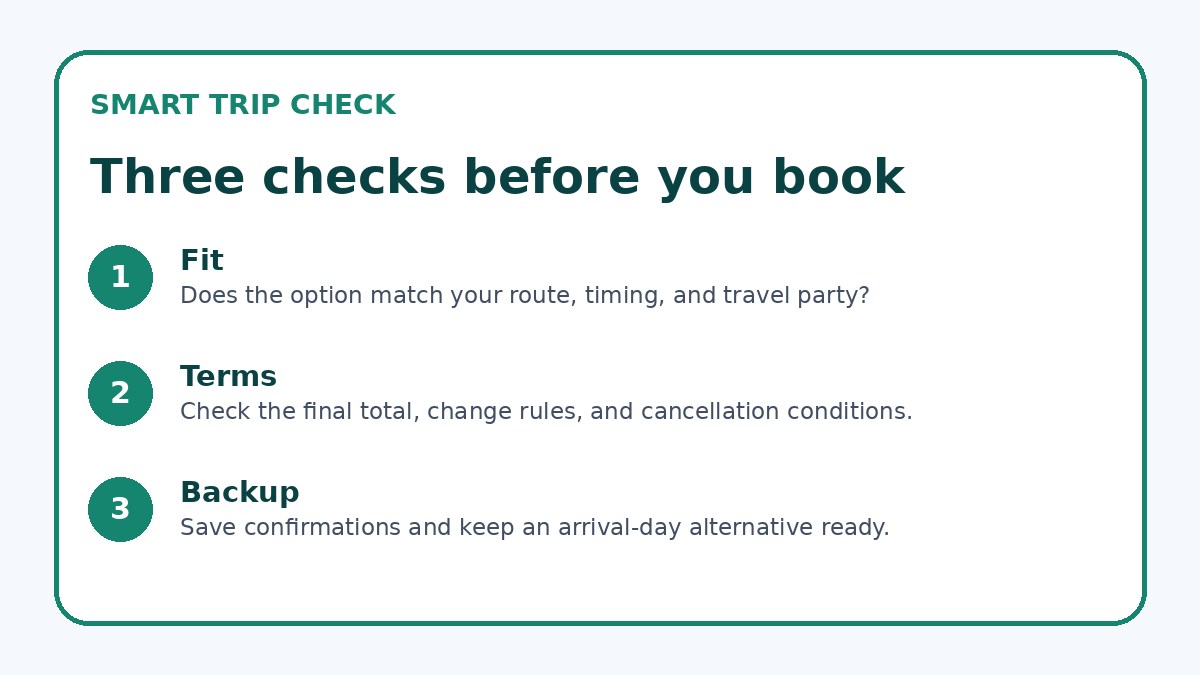
Before you book
- Confirm the exact departure station/terminal in Seoul and the arrival point in Jeonju, noting entrances and nearest platform numbers.
- Verify live schedules, seat availability, and rebooking rules on the provider’s official booking page before you finalize reservations.
- Pack a small work kit with charger, battery bank, earbuds, adaptors, and offline copies of key documents or presentations.
- Build schedule buffers of 30–90 minutes depending on mode, and identify at least two later services you could switch to if delayed.
- Install and set up local transport apps or taxi options useful in Jeonju, and save the meeting or hotel address in both local script and English.
- Share your itinerary and expected arrival time with meeting contacts, and include a mobile contact number for quick coordination.
On the travel day: execution, contingencies, and arrival
On the morning of travel, check live status updates for your chosen service and local traffic conditions. Have digital and paper backups of your ticket and reservation; screenshots can be helpful where connectivity is uncertain. Arrive at the departure point with time for security or ticket collection, and brief your colleagues about expected arrival windows and alternative contact numbers. If you must transfer en route, map the exact platform or terminal change and leave room for navigating between them with luggage.
Plan simple contingencies: know the next three departures after your booked service, the local taxi app options, and a nearby coworking or hotel space if you need a place to join a call on arrival. If any provider-specific requirements or restrictions might affect boarding or luggage, confirm those details on the operator’s final booking page before departing. Finally, once you arrive in Jeonju, allow time to freshen up before a meeting—five to ten minutes can make a big difference in professionalism and focus.
Frequently asked questions
Should I prioritize trains or cars when I must work during the journey?
If productive, uninterrupted work is essential, trains usually offer the best compromise because they typically provide a steadier ride, more space to open a laptop, and consistent schedules. Cars or ride services offer privacy and flexibility but road conditions can interrupt calls and make long-form work difficult. Consider whether you need stable Wi-Fi—trains may not guarantee connectivity, so download all materials and use mobile tethering as backup. Evaluate seat comfort, power access, and the likelihood of traffic to choose the mode that supports your work needs.
How much buffer should I leave for last-mile travel in Jeonju?
For most business trips a 30–60 minute buffer after arrival is prudent: it covers walking from the platform or bus station, transferring to a taxi or local bus, and any short wait for hotel check-in or a meeting room. If you arrive during peak hours or rely on local buses with less frequent service, increase this buffer toward 60–90 minutes. When in doubt, plan to arrive in Jeonju slightly earlier and use the time to prepare rather than risk being rushed; if you need to be conservative, arriving the evening before removes most same-day timing pressure.
What should I reconfirm on the provider booking page before leaving Seoul?
Check departure and arrival times, platform or terminal assignments, luggage allowances, and rebooking or cancellation policies on the operator’s final booking page because these items can change after initial search. Confirm whether you need to collect physical tickets or can use mobile boarding, and look for notices about service disruptions or planned maintenance. If you plan to change a reservation, verify the cost and process for amendments. Use Trip.com or similar aggregators for a quick comparison, but always confirm critical operational details directly with the carrier.
Final planning note
Preparing a business travel day from Seoul to Jeonju reduces stress and protects your professional time. Choose the transport mode that best matches your priorities—speed, workability, or door-to-door control—then schedule conservatively with buffers for transfers and local travel. Pack a compact, accessible work kit, download any offline materials, and confirm key booking details on the provider’s official page before departure. Communication matters: share your plan and a backup contact with meeting hosts, and identify fallback options in case of delays. With a clear checklist and a couple of contingency choices, you’ll arrive ready and punctual for your commitments in Jeonju.
Continue planning
Check current options and final conditions
Use the provider page to confirm live availability, the final total, cancellation terms, and every condition that matters to your trip.
This evergreen planning guide was created with AI-assisted drafting and a structured quality review. It does not display live prices, schedules, availability, visa guidance, or provider rankings. Verify current details before booking. Some links are affiliate links; we may earn a commission at no additional cost to you.