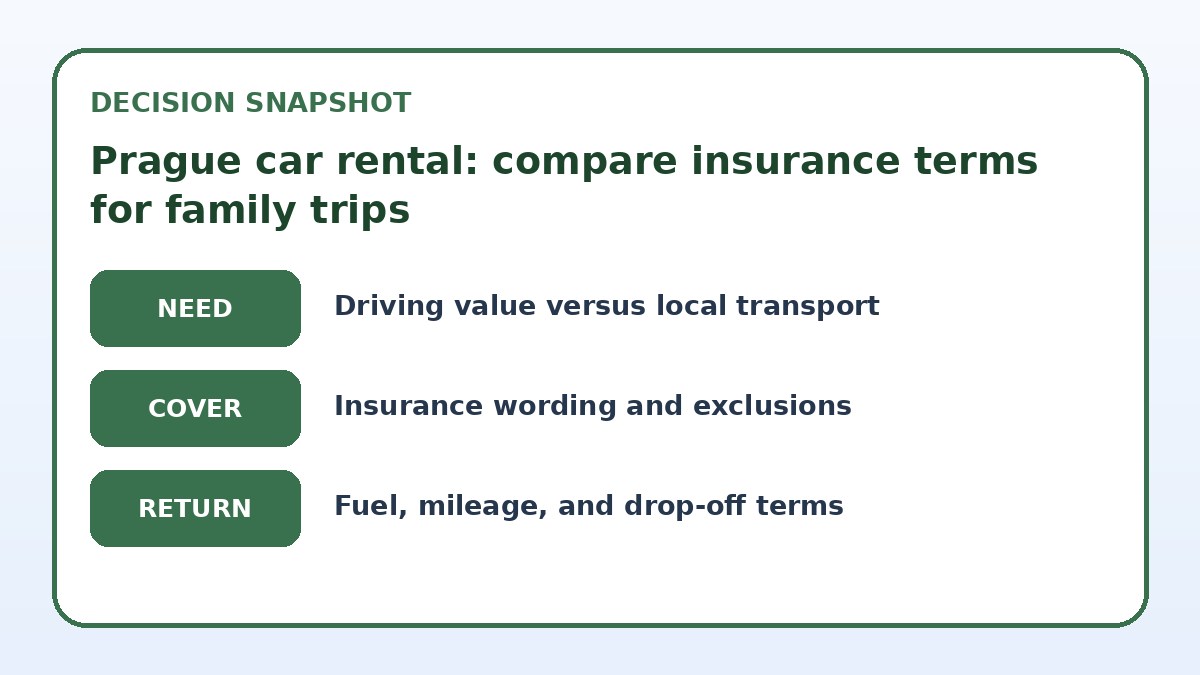
If you’re planning a family trip to Prague and will rent a car, the practical first step is to read the insurance wording line by line before you book. For families, that means checking who is an authorised driver, what the excess or deductible amount is, whether child seats and luggage are covered in a damage claim, and which roads or regions are excluded. Insurance jargon can hide important limits—loss of keys, windscreen damage, and towing costs are often separate items. In this article you’ll get plain-English explanations of the most common clauses, a decision approach for families (minimise hassle vs minimise cost), and a checklist of what to confirm on the final booking page. Follow these steps to avoid unpleasant surprises and keep the focus on sightseeing rather than paperwork.
See current options before you compare the details
Availability and final conditions change. Open Trip.com now or keep reading for the practical comparison.
Key insurance terms families must understand
Collision Damage Waiver (CDW) or Loss Damage Waiver (LDW) is usually presented as a reduction of your liability if the rental car is damaged. In practice, it doesn’t mean you pay nothing—most CDWs set a financial excess (also called a deductible) that you must cover before the waiver applies. Families should note the excess amount and how it’s charged: is it refundable on return if no damage occurs, or held as a pre-authorisation on your card? Also confirm whether the excess applies per incident or per rental, because multiple small claims over a holiday could add up.
Supplemental Liability Insurance covers damage you cause to other people or property and often has jurisdictional limits. Third-party liability is mandatory in many countries, but the rental company may offer top-up policies to increase those limits. For families carrying extra equipment—child seats, roof boxes, bikes—check whether damage to third-party property caused by secured accessories is covered. Finally, note special items like windscreen, tyre, and undercarriage cover: these are frequently excluded from basic CDW and need separate waivers if you want them covered.
Who’s covered to drive and why that matters
Many family trips involve more than one driver to share the workload. Rental contracts usually specify authorised drivers; anyone who drives without being listed may void the insurance. Some companies allow additional drivers free, while others charge per person per day. Importantly, the primary driver named on the booking is often the one whose credit card and ID are used for the security deposit—if a family member drives and causes damage but wasn’t authorised, the insurer can deny a claim and the family may face full liability.
Age and licence requirements are also key: young drivers or those with licences issued recently often face higher excesses or flat exclusions. If a parent plans to let a young adult relative drive, check the minimum age and years on licence required. International licences and non-EU licences may need translation or an International Driving Permit; the rental firm will state what documentation is acceptable and whether the insurance remains valid with those documents, so confirm this on the provider’s booking and pickup pages.
| Approach | Best for | Tradeoff to check |
|---|---|---|
| Keep standard cover with higher excess | Budget-conscious families who accept a predictable out-of-pocket risk | Lower daily cost but potential large immediate charge if you have an incident |
| Purchase zero-excess waiver from rental company | Families who value simplicity and minimal financial stress at pickup | Higher rental rate but fewer disputes and smaller security holds |
| Buy third-party excess reimbursement | Price-focused families willing to manage paperwork for reimbursement | Cheaper premiums but you must pay upfront and file a claim later |
| Add full protection (tyre, windscreen, undercarriage) | Families driving rural or rough roads, towing, or using roof boxes | Extra daily cost for broader cover; verify precise exclusions before booking |
Ready to check the option that fits your plan?
Use your exact dates and traveler details so the provider page can show the current total and conditions.
Choosing between cost and peace-of-mind options
Families on a budget might accept a larger excess to lower daily rental costs, but you must weigh that against the worst-case outlay if there’s damage. An optional zero-excess waiver increases the daily rate but reduces or eliminates the refundable security hold and the financial risk in case of an incident. Consider the maturity of drivers, planned routes (city only versus long rural drives), and how much you can comfortably absorb if something goes wrong. For shorter city stays in Prague with confident drivers, accepting some excess might be sensible; for long drives through unfamiliar roads, a stronger waiver could save stress.
Another tradeoff is using a third-party insurer versus buying cover directly from the rental company. Third-party policies can be cheaper and provide full excess reimbursement, but they often require you to pay the rental company first and then file for reimbursement, adding paperwork. Rental-company waivers typically let you avoid a larger initial hold on your card. For families with kids or tight schedules, the convenience of less paperwork and immediate resolution at pickup or drop-off can make the higher price worthwhile.
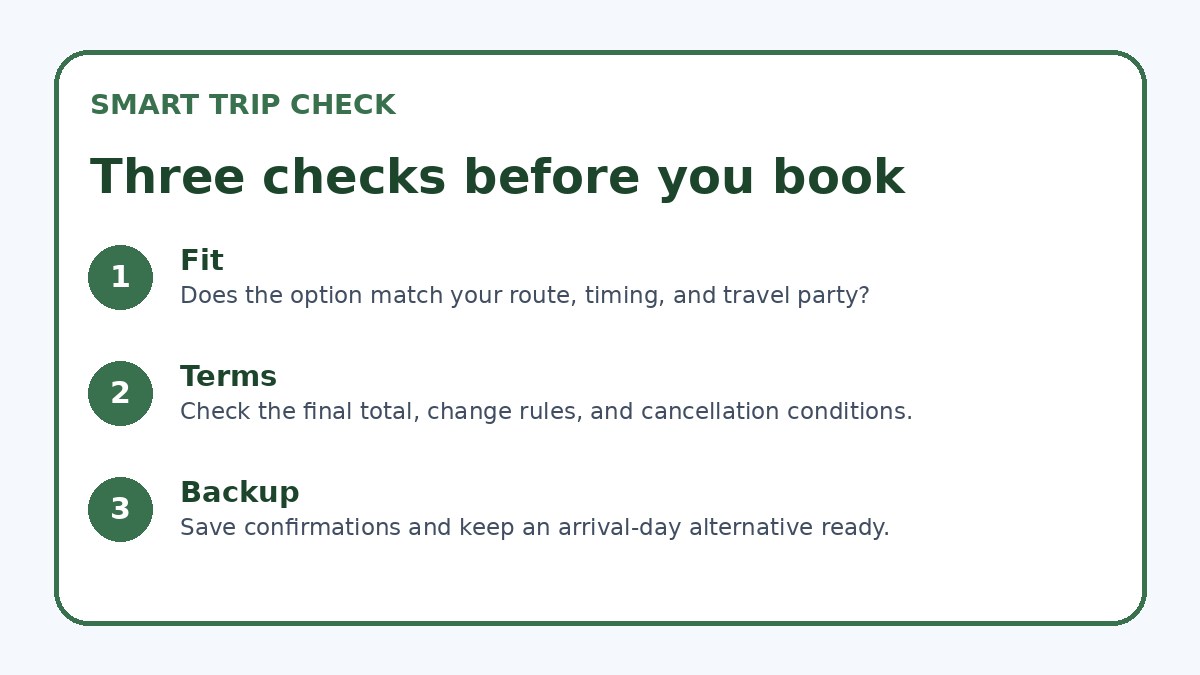
Before you book
- Confirm every intended driver is listed as an authorised driver on the rental agreement and meets age/licence requirements.
- Note the excess (deductible) amount and whether a zero-excess waiver is available and how it changes the security hold.
- Ask how child seats and stored luggage are treated in claims and have their condition recorded at pickup.
- Verify which items are excluded (windscreen, tyres, undercarriage) and whether optional add-ons cover them.
- Check the insurer’s claims process, emergency number, and the expected timeline for releasing pre-authorised holds.
- Take time-stamped photos or a video of the vehicle and document any pre-existing damage on the agent’s checklist.
Practical pickup and claims steps to limit family disruption
At pickup, inspect the car together and take time-stamped photos or a short video of all sides, the interior, tyre condition, and any pre-existing damage. Make the rental agent note every scratch and dent on the contract; if an item isn’t listed, it can become your responsibility. Confirm who is recorded as authorised drivers on the agreement, and check the insurer’s phone number and the rental company’s roadside assistance process. If you have a child seat or other accessories, examine how they’re mounted and whether their condition is recorded on the check-in paperwork.
If you need to make a claim, report incidents promptly according to the policy wording and preserve evidence: police reports for theft or serious collisions, photos, and repair invoices. Keep copies of all communications and note times and names of people you speak with. Families should also know the timeline and method for excess refunds—many deposits are pre-authorisations that are released within days, but some refunds depend on a damage assessment. Verify these refund and claims steps on the provider’s final booking page before accepting any waiver so there are no surprises after you return the car.
Frequently asked questions
Does adding an extra driver cost more and affect insurance?
Yes—many rental companies charge per additional driver, and policies require drivers to be authorised on the contract. An unauthorised driver involved in an incident can void insurance and transfer liability to the renter. Some firms include one extra driver for free; others make every additional name a charged add-on. Always confirm the exact extra-driver fee and whether adding them changes excess levels or eligibility—for example, younger drivers might increase the deductible. Check these details on the final rental booking page before you confirm.
Can I rely on my personal car insurance or credit card for Prague rentals?
Sometimes personal auto policies and certain credit cards offer secondary or primary rental coverage, but the extent varies widely. For families, verify whether those policies cover rentals in the Czech Republic, which types of damage are included, and whether they cover additional drivers and accessories like child seats. Many credit-card covers reimburse excess but require you to pay the rental company first and pursue reimbursement later. Before you travel, contact your insurers and card issuer, request written confirmation of cover limits and exclusions, and keep that documentation at pickup.
How do claims and security holds work when traveling with kids?
When you pick up the car, the rental company commonly places a hold on the renter’s credit card for the excess amount plus any extras; this reduces your available credit until released. With children, stress and time pressures make fast resolution important, so families may prefer options that avoid large holds or that provide immediate zero-excess waivers. If you have an incident, report it immediately, keep children safe, obtain police reports if required, and save all receipts. Check the provider’s stated timeframe for releasing holds and refunding charges on the booking page to plan around your family’s cash flow.
Final planning note
Renting a car in Prague can be a practical and fun way for families to explore beyond the city, but insurance wording matters. Read policies carefully: check authorised drivers, excess amounts, and specific exclusions such as windscreen or child-seat damage. Balance cost against convenience—decide whether a zero-excess waiver or broader protection is worth the daily premium, especially if you plan longer drives or have younger drivers. Before you confirm, verify the insurer’s claims steps, emergency contacts, and the rental company’s practice for security holds on the final booking page. Doing this homework keeps your family focused on the trip rather than unexpected bills.
Continue planning
Check current options and final conditions
Use the provider page to confirm live availability, the final total, cancellation terms, and every condition that matters to your trip.
This evergreen planning guide was created with AI-assisted drafting and a structured quality review. It does not display live prices, schedules, availability, visa guidance, or provider rankings. Verify current details before booking. Some links are affiliate links; we may earn a commission at no additional cost to you.