If you must be productive and punctual, the travel day between Osaka and Kyoto requires planning that treats transport as part of your meeting schedule, not an afterthought. Start by deciding the acceptable arrival window for your first Kyoto commitment and reverse-engineer departure options in Osaka. Factor in walking and transfer time inside stations, luggage handling, and the worst-case delay you can tolerate without missing a meeting. Pack an organized day-bag with chargers, printed confirmations, and meeting notes; keep the main suitcase stored or checked for a clean, mobile workday. This article gives a clear checklist, compares common decision approaches, and explains which trade-offs matter most for busy travelers moving between Osaka and Kyoto.
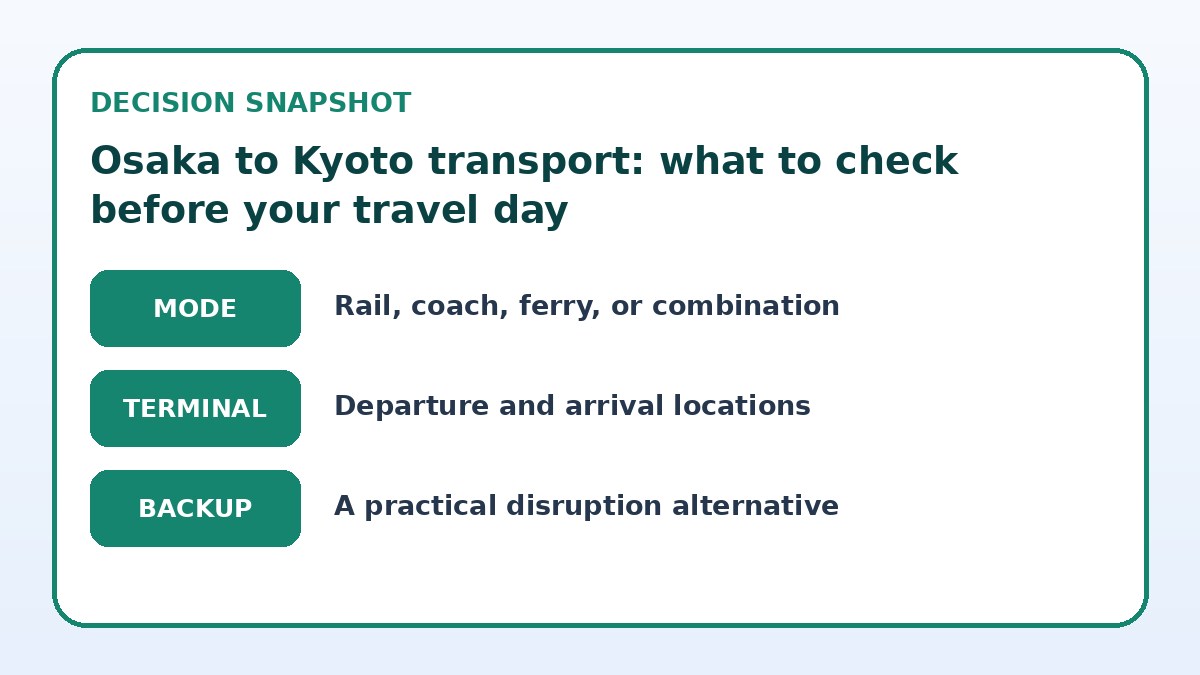
See current options before you compare the details
Availability and final conditions change. Open Trip.com now or keep reading for the practical comparison.
Set your arrival window and work backwards
Start by fixing the time you need to be at your first appointment in Kyoto, then subtract realistic transfer times to choose departure options from Osaka. Include walk times from Kyoto station platforms to taxis, buses, or the exit you’ll use; some platforms are far from station fronts and can add ten minutes or more, especially during busy hours. If you have a preferred café or hotel lobby for prep time, build that stop into the timeline. Business travel is about margins: plan for at least one hidden delay such as a crowded platform, slow elevator, or extra security checks.
Once you have a hard arrival time, identify two or three departure choices that meet it: a conservative one with extra buffer, a balanced option, and a faster alternative only to use if everything runs on time. Keep each option’s departure platform, transfer points, and expected travel mode written down or saved on your phone. If you’re coordinating with colleagues, share the conservative plan so everyone has the same cushion. Finally, prepare to switch plans if a train is canceled or crowded; having a backup avoids last-minute panic.
Luggage and mobility: pick the least disruptive approach
Luggage is the biggest friction point on a short intercity travel day. For short stays and one-day meetings, a carry-on and a compact briefcase keeps you agile and reduces dependency on lockers or hotel services. If you must bring a larger suitcase, decide whether to check it into a hotel or use station left-luggage services—both remove the need to drag baggage through platforms and escalators. Consider packable, easily identifiable tags and a small, reachable pouch for essentials like your business card, passport, and charger so you don’t have to open your main bag while en route.
Think through mobility around stations: not all station exits have escalators or elevators close by, and busy transfer corridors can slow you down. If you rely on taxis for the last mile, identify nearby taxi ranks at arrival stations on a map and estimate the queue time in peak hours. If you prefer to work on the move, choose a seat or vehicle where you can reliably use Wi-Fi or mobile data and where your laptop fits comfortably. The right luggage plan can buy you time and reduce stress on a tightly scheduled travel day.
| Approach | Best for | Tradeoff to check |
|---|---|---|
| Fastest-departure option | When shaving minutes matters and all parties are flexible with minor delays | Less buffer for unexpected delays and often requires precise transfers or station navigation |
| Most reliable option | Critical meetings where punctuality is non-negotiable | May take slightly longer and offer less continuous work time during transit |
| Work-on-the-move option | Maximizing productive time between cities | Requires power, stable connectivity, and a seat that supports laptop use |
| Luggage-light option | Single-day business trips and quick transfers between stations and meeting sites | Limits what you can bring; larger baggage must be stored or left behind |
Ready to check the option that fits your plan?
Use your exact dates and traveler details so the provider page can show the current total and conditions.
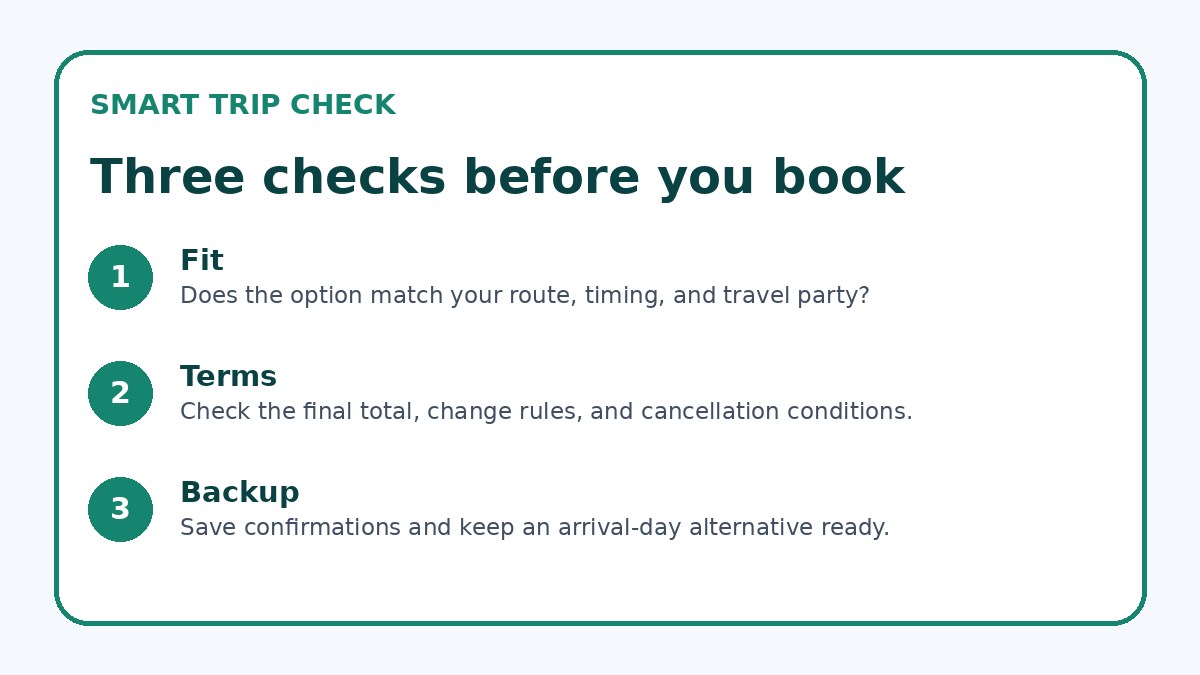
Choosing transport: reliability vs. speed vs. work time
Compare options by what matters most to you: door-to-door predictability, shortest elapsed time, or uninterrupted work time. Some services may be faster on paper but require more transfers or longer walks that eat into your buffer. If staying connected and working on the move is essential, pick a service and car type where you can open your laptop or phone without blocking an aisle—and test mobile coverage on the route beforehand if possible. For meetings where punctuality is non-negotiable, favor the option with the fewest handoffs even if it’s slightly slower.
When evaluating choices, list the practical constraints: frequency of departures, how often trains run during your slot, potential crowding at rush hours, and station complexity for transfers. Use live booking pages or apps to check seat availability and platform details close to travel, and confirm whether reserved seats are offered on the services you prefer. If using a third-party comparison tool like Trip.com, double-check the operator’s final page for the latest conditions and seat confirmations before you finalize the booking.
Before you book
- Confirm your arrival window in Kyoto and identify two backup departure options from Osaka.
- Decide on a luggage plan (carry-on, station locker, or hotel left-luggage) and locate the service points on a station map.
- Save offline copies of your itinerary, meeting addresses, and station exit maps to your phone or as prints.
- Charge all devices fully and carry a portable charger and necessary cables in your day-bag.
- Share your conservative schedule with meeting contacts and note a communication plan if your arrival changes.
- Check the operator’s final booking page or app for platform details and seat reservations before leaving for the station.
On-the-day checklist and contingency planning
On travel day, start with a quick systems check: confirm bookings, charge devices to full, and leave with time to handle an unexpected queue or elevator outage. Have printed or offline copies of directions and meeting details in case mobile data falters. Keep a lightweight charging plan—an easy-access power bank and the right cables—and a portable adapter if your devices need one. Dress in layers so you can stay comfortable whether you need to wait on a crowded platform or move quickly between heated and cool environments.
Build two contingency moves: one that keeps you on schedule (alternate service that gets you there with a small delay) and one that buys more time (reschedule a meeting slot or move it online if delays will be long). Communicate potential changes to hosts as early as possible and offer clear arrival options. If local roads or stations look unusually congested, prioritize predictability over squeezing minutes off the schedule—arriving calm and ready is better than arriving rushed and distracted.
Frequently asked questions
Should I reserve a seat or buy an open ticket for Osaka to Kyoto transport?
Reserving a seat reduces uncertainty if you value a guaranteed workspace and a specific seat type, especially during busy periods. An open ticket gives flexibility to choose an earlier or later service without rebooking, which can be useful if your schedule may shift. To decide, weigh how disruptive a missed reserved seat would be against the need to remain flexible. If you rely on a reserved seat, verify the operator’s seat reservation policy and cancellation rules on the provider’s final booking page before purchasing.
How much buffer time should I build for station transfers between Osaka and Kyoto?
A practical buffer is more than just travel time: include platform walking, ticket gates, and potential elevator or escalator waits. For business travelers, aim for at least 20–40 minutes of total buffer from your planned arrival at the station to your first appointment, depending on how far the meeting venue is from the station. If you must take a taxi from the station, add extra time for possible queues. Adjust the buffer based on local rush-hour crowding and whether you’re carrying bulky luggage.
What should go in my day-bag for a travel day between Osaka and Kyoto?
Include essentials you may need during transit and immediately after arrival: primary ID and business card, chargers and a power bank, headphones, a compact notebook or tablet, and any meeting materials you’ll need during the first appointment. Add a small hygiene kit (hand sanitizer, tissues) and an umbrella if rain is possible. Keep these items reachable so you don’t need to open your main luggage on a platform or in a crowded carriage, which saves time and keeps you prepared if plans change.
Final planning note
Treat the Osaka to Kyoto travel day as a scheduled leg of your business itinerary rather than downtime. Fix the arrival window for your first commitment, choose a luggage and transport approach that matches your priorities, and prepare backup options that preserve punctuality. With a short checklist, offline directions, and a communication plan for delays, you’ll reduce stress and maintain productivity. Verify seat and platform details on the operator’s booking page before departure, and consider local peak times when finalizing your plan so your travel day supports, not disrupts, your business objectives.
Continue planning
Check current options and final conditions
Use the provider page to confirm live availability, the final total, cancellation terms, and every condition that matters to your trip.
This evergreen planning guide was created with AI-assisted drafting and a structured quality review. It does not display live prices, schedules, availability, visa guidance, or provider rankings. Verify current details before booking. Some links are affiliate links; we may earn a commission at no additional cost to you.