If you’re flying solo from San Francisco to Vancouver, prioritize packing choices and realistic airport timing to avoid last-minute stress. Start by deciding whether you’ll travel carry-on only or check a bag — that decision affects when you leave for the airport, how you pass security, and what to expect on arrival in Canada. Factor in extra time for U.S. airport security and the Canadian entry process at Vancouver, and check airline baggage rules and carry-on size allowances before you finalize bookings. This article gives clear, practical rules of thumb for timing your departure, organizing luggage for transit and arrival, and comparing direct versus connecting flights so you can choose the option that fits your comfort level and budget.
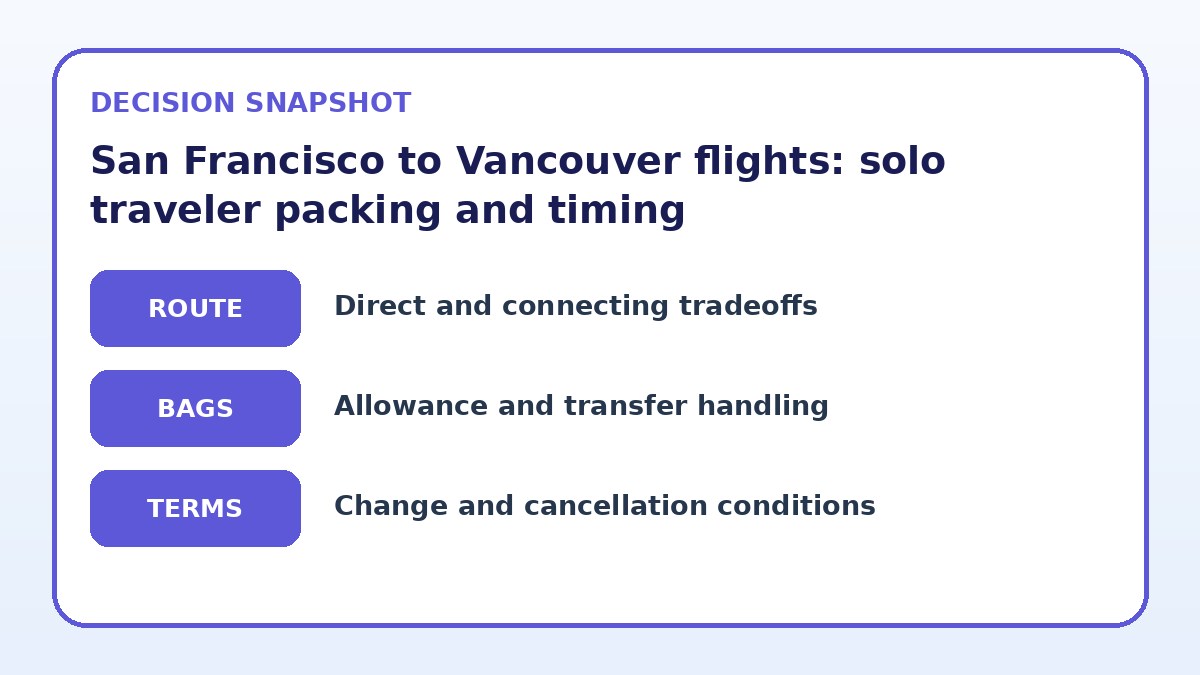
See current options before you compare the details
Availability and final conditions change. Open Trip.com now or keep reading for the practical comparison.
Choose carry-on or checked baggage based on priorities
Decide first whether speed or convenience is your top priority. Carry-on only speeds up your preflight process: you can skip the bag drop line, typically move through security faster, and leave the airport immediately on arrival. For a short trip with controlled packing, choose a compliant carry-on and a compact personal item. Measure your bag and check the airline's published dimensions and weight limits before you leave — airlines sometimes distinguish basic economy from standard fares when enforcing carry-on rules.
Checked baggage makes sense if you value less to handle in airports or you need more clothing and gear for weather variations in Vancouver. Remember that checking a bag adds steps: you must allow time for check-in or bag drop, possible fees depending on fare type, and waiting at the carousel on arrival. If you check, pack essentials and travel documents in your carry-on in case of delays. Also verify the airline’s checked-bag allowance, size limits, and their policy for domestic-to-international transfers.
Plan airport arrival time with realistic buffers
Plan your arrival at San Francisco International Airport based on the chosen baggage approach and flight type. For direct flights, allow 90–120 minutes if you travel with carry-on only and are comfortable with a brisk pace through check-in and TSA. Add a 30–60 minute buffer for peak times, long lines, or if you prefer a relaxed routine. If you’re checking a bag, increase that to 120–150 minutes to cover bag drop, security, and any unforeseen delays.
For itineraries with connections, give yourself extra cushion for potential missed transfers or baggage re-checks. If a connection requires changing terminals or re-checking luggage, add at least 60–90 minutes between flights beyond basic minimums. Consider the time of day: morning and late-afternoon bank rushes can slow ground transport and terminal queues. Finally, always confirm the airline’s recommended check-in cutoffs and arrive with time to spare for seat changes or unexpected issues.
| Approach | Best for | Tradeoff to check |
|---|---|---|
| Carry-on only | Travelers who prioritize speed through the airport and minimal baggage handling | Limits what you can pack and requires strict adherence to airline size and weight rules |
| Checked bag | Those needing more clothing or gear and who prefer hands-free movement at the airport | Adds check-in and arrival wait time, plus possible fees and risk of delays |
| Direct flight | Solo travelers wanting the simplest connection and least chance of missed transfers | May offer fewer schedule choices and sometimes higher fare or less convenient times |
| Connecting flight | Those looking for lower cost or more schedule options | Requires careful layover planning and attention to baggage transfer rules |
Ready to check the option that fits your plan?
Use your exact dates and traveler details so the provider page can show the current total and conditions.
Organize your bag contents for border entry and comfort
Since you’ll cross an international border, keep identification, travel documents, and any entry-related paperwork in a single, easy-to-reach place in your carry-on. For U.S. departures to Canada you’ll need a passport and, if applicable, other entry documents. Pack a compact toiletry kit that complies with liquid rules and a small change of clothes if your luggage could be delayed. Consider noise-cancelling headphones, a power bank, and a lightweight sweater for Vancouver’s variable weather—items that make the trip easier without adding checked-bag clutter.
Organize electronics and liquids so you can present them quickly at security: place liquids in a clear bag at the top of your personal item and keep laptops or tablets accessible for separate screening. If you check baggage, place fragile or valuable items in your carry-on. Use packing cubes to compress clothes and make it easier to pull what you need at security or customs inspections. Don’t forget chargers, a copy of your itinerary, and contact details for anyone meeting you in Vancouver.
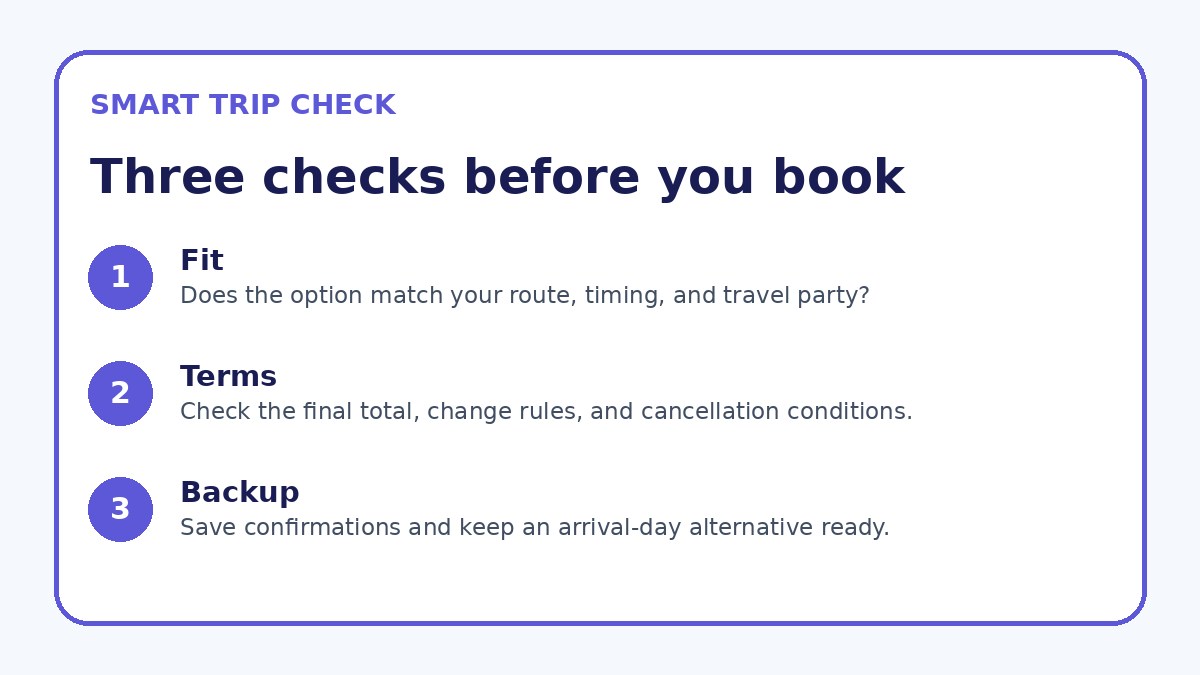
Before you book
- Measure your carry-on and personal item to verify they meet the airline’s published dimensions before booking.
- Decide whether to check a bag and factor 30–60 extra minutes into your airport arrival time if you do.
- Keep passport and any required entry documents in an easy-to-reach pocket of your carry-on.
- Pack liquids in a clear, resealable bag and place electronics where they can be removed quickly at security.
- Check whether your itinerary is nonstop or has connections and confirm if baggage is checked through to Vancouver.
- Confirm the airline’s check-in and baggage cutoff times on the booking page and set a reminder to arrive early.
Compare direct and connecting options with baggage and time in mind
Direct flights simplify planning: less chance of missed connections, no terminal changes, and usually faster door-to-door time. If you choose direct, you can often accept a tighter check-in margin because the risk of onward disruption is lower. However, direct flights sometimes have fewer nonstop departure times, which may push you into less convenient hours that affect transport to the airport or your overnight plans in the city of departure.
Connecting flights can offer more schedule flexibility or lower fares, but evaluate the layover carefully. Long layovers add transit time and can mean repeated security checks or re-checking baggage, while very short ones increase the risk of missed connections. When comparing options, check layover durations, whether baggage is checked through to your final destination or needs re-checking, and whether the connection requires changing terminals or clearing security again. Use those criteria alongside total travel time to pick the best practical itinerary for your solo trip.
Frequently asked questions
How early should I arrive at San Francisco airport for a direct flight to Vancouver?
For a direct San Francisco to Vancouver flight, aim to arrive 90–120 minutes before departure if you’re carrying only a compliant carry-on and prefer a streamlined pace. Add 30–60 minutes during high-traffic periods, if you’re unfamiliar with the terminal, or if you want time for food or lounge access. If you plan to check a bag, increase your arrival time to 120–150 minutes. Always check the airline’s stated check-in and baggage drop-off cutoff times on its booking page before you leave home.
Can I bring liquids and a full-size camera in my carry-on?
You can bring a full-size camera in your carry-on, but it should be easily accessible for separate screening at security. Liquids must comply with the usual carry-on limits (typically containers in a single clear bag), so check the TSA guidelines posted by your airline before travel. If you carry fragile electronics or camera gear, pack them with padding in your personal item or a protective case to avoid damage during transit. Verify any specific airline allowances or restrictions on the carrier’s final booking page.
What should I check about baggage transfer if my itinerary has a connection?
If your trip includes a connection, confirm whether the airline will check your luggage through to Vancouver or if you must collect and re-check it at the connection point. This affects minimum connection time and whether you need to pass security again. Look for notes about baggage transfer on the itinerary details when booking and, when in doubt, contact the airline or check the booking page for confirmed baggage handling instructions. Allow extra connection time if baggage re-check or terminal changes are required.
Final planning note
For solo travelers between San Francisco and Vancouver, the two pivotal choices are baggage strategy and realistic airport timing. Carry-on only offers speed and simplicity if you pack tightly and confirm size limits; checking a bag reduces what you carry but requires planned extra time and awareness of fees or waits. Direct flights cut the complication of transfers; connecting itineraries need careful layover and baggage-transfer checks. Before you finalize a booking, verify carry-on dimensions, checked-bag policies, recommended check-in times, and whether baggage will be checked through to your final destination on the airline’s booking page. For a quick availability check, Trip.com can help compare current schedules, but rely on the carrier’s official information for final confirmation.
Continue planning
Check current options and final conditions
Use the provider page to confirm live availability, the final total, cancellation terms, and every condition that matters to your trip.
This evergreen planning guide was created with AI-assisted drafting and a structured quality review. It does not display live prices, schedules, availability, visa guidance, or provider rankings. Verify current details before booking. Some links are affiliate links; we may earn a commission at no additional cost to you.