
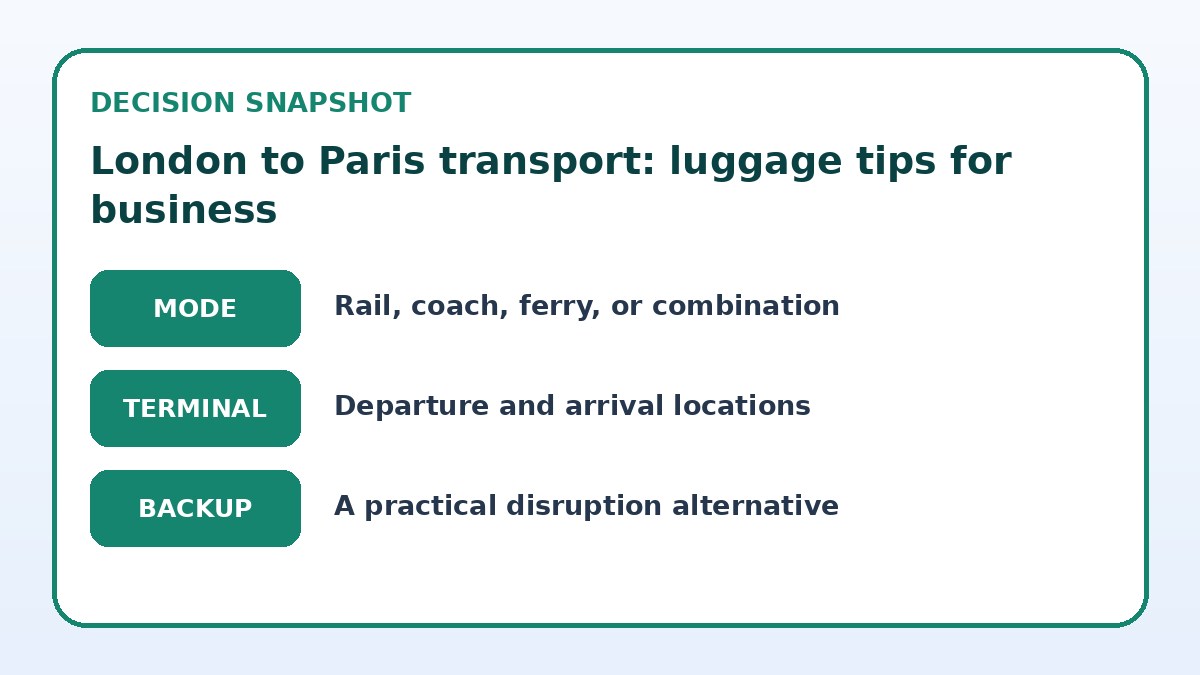
If you need to travel from London to Paris for business and must move a bag or two, the simplest practical answer is: choose the mode that balances schedule certainty, luggage allowance and station-to-meeting transfer time. For many business trips, that means Eurostar-style cross-Channel trains or flights paired with local transfer choices, depending on how many checked bags you have and whether you value getting straight to a central office. This article helps you weigh luggage volume against door-to-door time, luggage handling risk, and working time en route. It also explains what to check on booking pages, how to pack strategically for client meetings, and how to choose connections and transfers that reduce last-mile stress.
See current options before you compare the details
Availability and final conditions change. Open Trip.com now or keep reading for the practical comparison.
How luggage changes the London–Paris decision
Luggage affects the whole trip choice because it adds time, cost and risk. With one carry-on and minimal rolling luggage, trains between central London and central Paris often win: you avoid long airport transfers and baggage reclaim waits, and you can keep bags close in the train carriage. If you travel with bulky checked cases, technical equipment, or multiple suitcases, the extra handling required for flights and airports increases the chance of delays or mishandling. Factor in the effort to lift and stow heavy luggage on platforms and the transfer from station to hotel or meeting location.
Business travelers should think door-to-door time, not just in-air or on-rail time. A train that arrives downtown might beat a faster flight that lands far from the city once you add taxi or rail transfers, security, and baggage reclaim. Also consider how often you will need to move between meetings with luggage in tow. If you have a short overnight stay, fewer checked items and smarter packing reduce friction. For equipment that must remain with you—samples, demo kits, presentation materials—prioritize transport options that minimize handling and ensure secure storage next to your seat.
Train options: luggage rules, ease and tradeoffs
Trains between London and Paris are attractive for business travelers because stations are centrally located and usually have generous carry-on allowances. On most international trains you can bring multiple pieces of luggage on board without advance booking, and you handle your bags yourself, which reduces handling mistakes. However, space for large suitcases can be limited during peak services, and you may need to lift heavy pieces into racks or onto luggage shelves. For fragile or awkward items, bring protective covers and consider a small wheeled case that fits in overhead or under the seat.
When booking, check the carrier’s luggage policy, platform access, and any seat-type differences that affect storage space. If you want a guaranteed luggage spot or extra space, verify upgrade or premium-seat options before you complete your purchase. Also verify what happens with oversized items—some services require advance notice or special handling. On the booking page, look for exact baggage restrictions, dimensions, and any charges for unusually large pieces. If your schedule includes tight connections, allow extra time for moving luggage between platforms or between station and taxi rank.
| Approach | Best for | Tradeoff to check |
|---|---|---|
| International train (central stations) | Business travelers with carry-on or moderate luggage who prioritize central arrival and short transfers. | Limited space for many large suitcases and potential congestion during peak services. |
| Flight (airport to airport) | Trips requiring more checked baggage or when flight time plus fast transfers beats rail door-to-door time. | Added time and handling at check-in, security and baggage reclaim; transfer uncertainty at airports. |
| Private car or chauffeur | Transporting bulky, fragile or high-value items with minimal handling and direct door-to-door service. | Potentially slower in urban traffic and usually higher cost than public transport. |
| Mixed approach (train + local courier) | Keeping yourself mobile with carry-on while sending heavy or bulky items ahead via a courier service. | Requires coordination and trust in the courier; adds complexity and possible extra fees. |
Ready to check the option that fits your plan?
Use your exact dates and traveler details so the provider page can show the current total and conditions.
Flying: when it makes sense for business luggage
Flights can be faster if you depart from an airport near your origin or arrive at an airport closer to your final meeting than the train station. They are also beneficial if you must transport many or heavy checked items that are awkward to carry through station concourses. Airlines offer structured baggage allowances and dedicated cargo services for very large or fragile items, which can simplify logistics when the equipment is not suited to hand-carry. But remember that airport processes—time for check-in, security, potential delays and baggage reclaim—add unpredictability.
If you consider flying, compare total door-to-door time and confirm the airline’s checked baggage policies on the booking page, including size limits and excess-fee rules. Decide whether to check items or use a mix of checked and carry-on bags; fragile demo kits should usually travel as carry-on if permitted. Also plan transfers from the airport to your meeting—some airports have fast rail links, others require long taxi rides. When connecting, build buffer time for luggage transfer and verify whether the carrier will transfer bags between flights or if you must re-check.
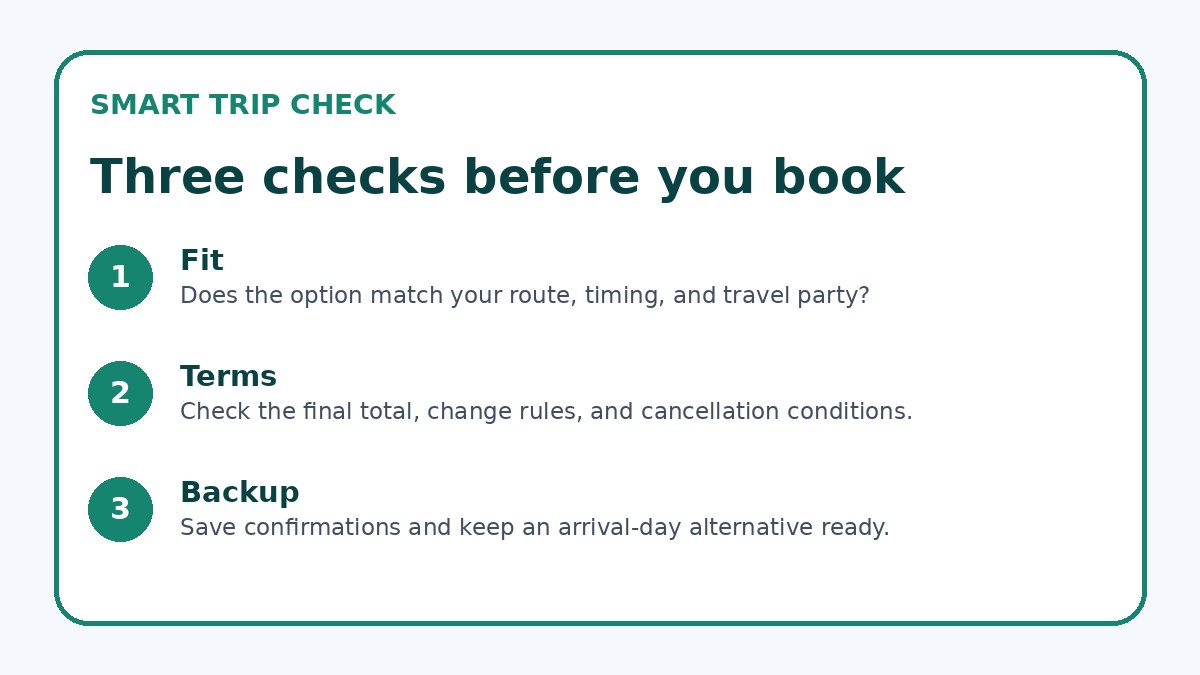
Before you book
- Check the exact baggage allowances and size limits on the provider’s booking page before you finalize any ticket purchase.
- Pack a carry-on ‘meeting kit’ with essentials—presentation materials, chargers, spare shirt—and keep it under your control at all times.
- Measure and weigh large items at home and, if oversized, contact the carrier or transfer provider to confirm handling and any advance notification.
- Build at least 60–90 minutes buffer for station or airport transfers in your schedule when traveling with checked luggage.
- If hiring a car or chauffeur, confirm trunk dimensions and whether the driver will assist with loading and unloading bulky items.
- Consider sending nonessential bulky freight ahead via a courier and reconciling delivery times with your meeting schedule.
Car and chauffeur options: control vs. urban time
Hiring a car or chauffeur delivers the most controlled luggage handling and can simplify moving bulky or multiple bags directly between addresses. This is often the best choice when you carry bulky presentation materials, samples, or exhibition gear that require careful handling. The driver can load and unload for you, and there’s no need to navigate stairs or tight storage areas. For longer groups or when public connections are cumbersome, a road transfer can also be the most predictable way to preserve working time in transit.
Tradeoffs are the city-center traffic and the potential for longer travel times during peak hours. Road transfers can also be more expensive and less environmentally friendly than train travel. Before booking, check driver access rules for city centers, drop-off points near meeting venues, and whether the vehicle has enough trunk space for your gear. If you need to carry high-value or delicate items, ask providers about insurance coverage, handling procedures and whether they supply protective blankets or straps for secure transport.
Frequently asked questions
Can I bring multiple suitcases on cross-Channel trains without paying extra?
Most international trains allow passengers to carry multiple items of luggage without a separate baggage fee, but space is not guaranteed and rules vary by operator. Before you book, check the service’s booking page for specific size and quantity guidance, and look for advice on oversized pieces. If you rely on large suitcases or awkward equipment, consider upgrading seats with extra storage or arriving early to secure space. For very large or special items, contact the operator directly to arrange handling or confirm if advance notice is required.
Should I check valuable demo kits or keep them as carry-on?
If your demo kit is small enough to qualify as carry-on, keep it with you to reduce the risk of damage or loss. Carry-on keeps high-value items within reach for meetings and avoids delays due to misplaced checked baggage. For larger kits that must be checked, pack them in hard cases with padding, document contents, and insure them separately if necessary. Whether flying or taking a train, check the provider’s rules on carry-on dimensions and any restrictions that might force you to gate-check items; verify these details on the booking page.
How much time should I allow between arrival and a first meeting in the city center?
Allow extra buffer time when traveling with luggage because baggage reclaim, transfers, and unexpected delays add variability. If you arrive at a central station by train, budget time for disembarking and a short taxi or public-transport leg; for airports add time for baggage and a longer transfer. A safe planning window is larger for flights—build in extra transfer and reclaim time—while trains can often reduce that margin. Always check current transfer times and local traffic conditions on the provider’s site and avoid back-to-back bookings with tight connections.
Final planning note
For business travelers moving between London and Paris, luggage considerations should shape the travel decision as much as schedule and cost. Trains offer central arrivals and simpler luggage handling for carry-on and moderate baggage; flights can make sense for large or heavy checked loads if total door-to-door time is competitive; private car services give controlled handling for bulky or delicate items. The practical step is to measure and list what you must carry, then compare total door-to-door time, luggage rules, and transfer logistics before booking. Verify baggage allowances, oversize policies and transfer options on the provider’s final booking page, and consider sending nonessential freight ahead when appropriate.
Continue planning
Check current options and final conditions
Use the provider page to confirm live availability, the final total, cancellation terms, and every condition that matters to your trip.
This evergreen planning guide was created with AI-assisted drafting and a structured quality review. It does not display live prices, schedules, availability, visa guidance, or provider rankings. Verify current details before booking. Some links are affiliate links; we may earn a commission at no additional cost to you.