If your family wants milder weather, fewer queues and better value, plan Brisbane travel around the city's shoulder seasons—spring (September–November) and autumn (March–May). The practical answer: aim to travel in those months, compare family-friendly accommodation near a park or riverfront transport, and book refundable or changeable fares for flexibility. For parents juggling school terms and older kids’ activities, target midweek stays and avoid school holiday peaks. Use broad deal searches to identify weekday versus weekend price patterns, then verify cancellation and baggage rules on the provider’s final booking page. Trip.com can be one comparison point for availability, but confirm final details directly with hotels, airlines, and attractions before committing.
See current options before you compare the details
Availability and final conditions change. Open Trip.com now or keep reading for the practical comparison.
Why shoulder seasons matter for families
Shoulder seasons give families a practical middle ground: weather is often comfortable for outdoor time, and attractions are typically less jammed than in peak summer months. For children who tire quickly, shorter lines at popular venues such as museums, zoos and river cruises mean you can fit more activities into each day without the stress of long waits. Less crowding also makes it easier to secure larger or connecting rooms and to find family seating at restaurants without extensive reservations.
Choosing shoulder months also helps manage budget and logistics. Schools and seniors often travel at different times, so targeted midweek travel can lower accommodation demand and simplify transport. Parents should weigh the reduced crowds against occasional weather variability—bring flexible clothing choices and consider booking refundable or modifiable options for travel and stays, checking the provider’s final booking page for exact change and refund policies before paying.
Choosing where to stay with kids in mind
For families, location beats star ratings: pick a base close to outdoor spaces, family-friendly dining, and easy transport. Riverside suburbs and inner-city areas with parks shorten transit times to attractions and provide safe morning strolls or playground breaks. Prioritize accommodations that offer family rooms, kitchenettes, or laundry facilities, and confirm on the booking page whether cribs, rollaway beds or adjoining rooms are available and any extra charges that apply.
Also compare staying in one central base versus splitting your stay across neighbourhoods. One base reduces packing and the hassle of moving with children, improving routine; two bases let you reduce daily transit and experience different local flavours. When comparing options, check walkability, public transport links and evening safety—verify transport schedules, stops, and any late-night service limitations on the official provider pages so you know how you’ll get around after dark.
| Approach | Best for | Tradeoff to check |
|---|---|---|
| Book midweek stays in shoulder months | Families who value quieter attractions and easier dining options | May miss weekend-only events or need to align with school schedules |
| Choose central hotels near riverfront/parks | Families prioritizing short travel time and easier daily routines | Higher nightly rates and less space than suburban apartments |
| Split your stay between two neighbourhoods | Families wanting varied experiences and reduced transit each day | Extra packing and time spent moving between accommodations |
| Prioritize refundable fares and flexible hotel rates | Families needing schedule flexibility or with young children | Flexible options can be more expensive than non-refundable deals |
Ready to check the option that fits your plan?
Use your exact dates and traveler details so the provider page can show the current total and conditions.
How to compare transport and flights for family comfort
When searching for Brisbane travel deals, prioritize flight times and layover lengths that fit your family’s routines. Early-morning or late-evening departures can be tough with young children, while long mid-day layovers may work with a nap plan. If both direct and connecting routes exist, compare total door-to-door time, chance of delays, and the need to change terminals—always verify baggage rules, seat assignment policies and whether family seating is offered on the airline’s final booking page rather than assuming based on search results.
Ground transport matters too. Research transfer options from the airport to your accommodation—book private transfers if you value door-to-door ease, or use public transit if it’s straightforward and you can manage luggage. If you’ll use local trains, ferries or buses frequently, look into family-friendly travel passes and whether prams are permitted. Confirm schedules and accessibility details on the transport operator’s site so you’re not surprised by limited services on weekends or public holidays.
Before you book
- Compare weekday versus weekend rates for your chosen shoulder month and note any midweek savings before booking.
- Confirm family room configurations, crib availability, and any extra-bed fees on the hotel’s booking page.
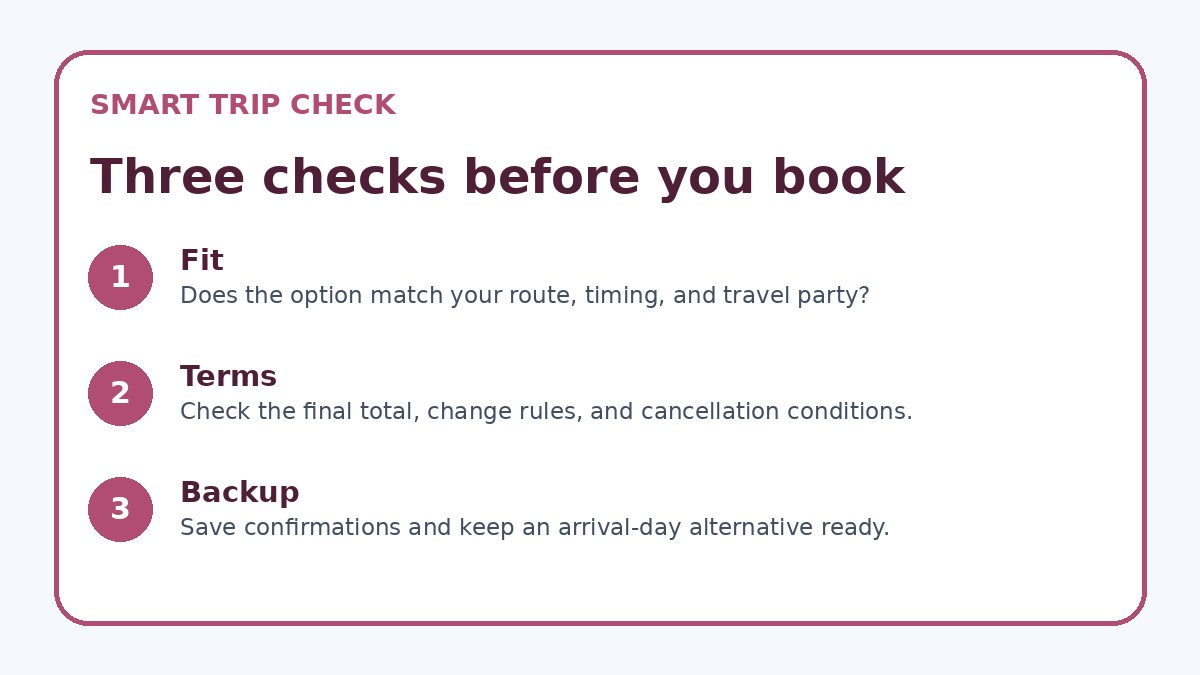
- Check the exact change and cancellation policies for flights and hotels on the provider’s final booking page before paying.
- Map distance from your accommodation to key attractions and local transit stops, timing sample journeys at family pace.
- Pack layered clothing, rain gear, sunscreen and a basic first-aid kit to handle shoulder-season variability without extra shopping.
- Identify a nearby supermarket, pharmacy and an urgent-care option so you can manage minor needs quickly during your stay.
Balancing savings, convenience and child-focused needs
Saving money often means tradeoffs: a cheaper hotel a train ride away adds daily transit time, while a pricier central hotel might reduce stress and let you rest between activities. Decide which is more valuable for your family—daily convenience and ease, or a tighter budget and more time in transit. Make a short list of deal criteria (price per night, breakfast included, laundry on site, proximity to parks) and compare properties directly rather than relying on a single filtered search.
Also consider package flexibility. Deals that look economical may be non-refundable or have strict change penalties—risky if a child gets sick or school plans change. Prefer options with reasonable modification terms and confirm those terms on the provider’s final booking page. Finally, weigh extra conveniences such as free breakfast, a kitchenette or an onsite pool; sometimes those amenities reduce food and activity costs enough to justify a slightly higher rate.
Frequently asked questions
Are Brisbane shoulder seasons safe weather-wise for kids?
Shoulder seasons usually bring mild, comfortable days suitable for outdoor activities, but weather can be changeable. For families, the main safety consideration is occasional rain or cooler evenings—pack layers, a waterproof light jacket and quick-dry clothing for kids. Check the local forecast for the exact dates you plan to travel and plan some indoor backup activities such as museums or play centres. If you’ll be near water, always supervise children closely and verify tide or river conditions at the attraction’s official site.
How do I find family-friendly Brisbane travel deals without sacrificing convenience?
Start by identifying the conveniences most important to your family—proximity to parks, kitchenette, laundry or an on-site pool—then filter search results to those features. Compare total trip cost including daily transport or meal expenses; a slightly higher nightly rate in a central location can save time and money on taxis and rushed meals. Use flexible fare filters to limit risk, and before committing, verify room amenities, child policies and any added fees on the provider’s final booking page.
Should we rent a car when visiting Brisbane in a shoulder season?
Renting a car gives flexibility for day trips and carrying gear, but it also adds parking costs and the need to manage driving with kids. If you’ll be based centrally and plan mostly inner-city activities, public transport and river services can be more convenient and stress-free. If you intend to explore surrounding beaches or national parks, compare the total cost and convenience of a rental versus guided day trips. Confirm car seat rules, parking availability at your accommodation, and any additional driver fees on the rental agreement page.
Final planning note
Planning Brisbane travel deals around shoulder seasons helps families get the best balance of pleasant weather, quieter attractions and reasonable value. Make decisions based on what reduces daily stress—location, flexible booking terms and child-focused amenities often trump the lowest upfront rate. Use midweek travel where possible and check provider pages for exact cancellation, baggage and child policy details before finalizing bookings. With a clear list of priorities and a few flexible options, your family can build a relaxed, adaptable itinerary that handles unexpected changes without wrecking the trip.
Continue planning
Check current options and final conditions
Use the provider page to confirm live availability, the final total, cancellation terms, and every condition that matters to your trip.
This evergreen planning guide was created with AI-assisted drafting and a structured quality review. It does not display live prices, schedules, availability, visa guidance, or provider rankings. Verify current details before booking. Some links are affiliate links; we may earn a commission at no additional cost to you.