
If you're a solo traveler renting a car in New York City, prioritize pickup and return terms before booking. The practical choice: select a pickup location and return window that match your arrival plans, tolerance for extra fees, and preferred level of airport vs. neighborhood convenience. Read the provider's final booking page to confirm exact hours, late-return grace periods, fueling and mileage rules, and whether drop-off at a different location is allowed. Consider airport pickups for one-stop travel from plane to car, neighborhood branches for easier street access and fewer toll complications, and off-airport shuttle policies for time cost. This article walks through how to compare those pickup choices, what to verify on the reservation page, and the tradeoffs solo travelers typically face so you can make a clear, confident decision.
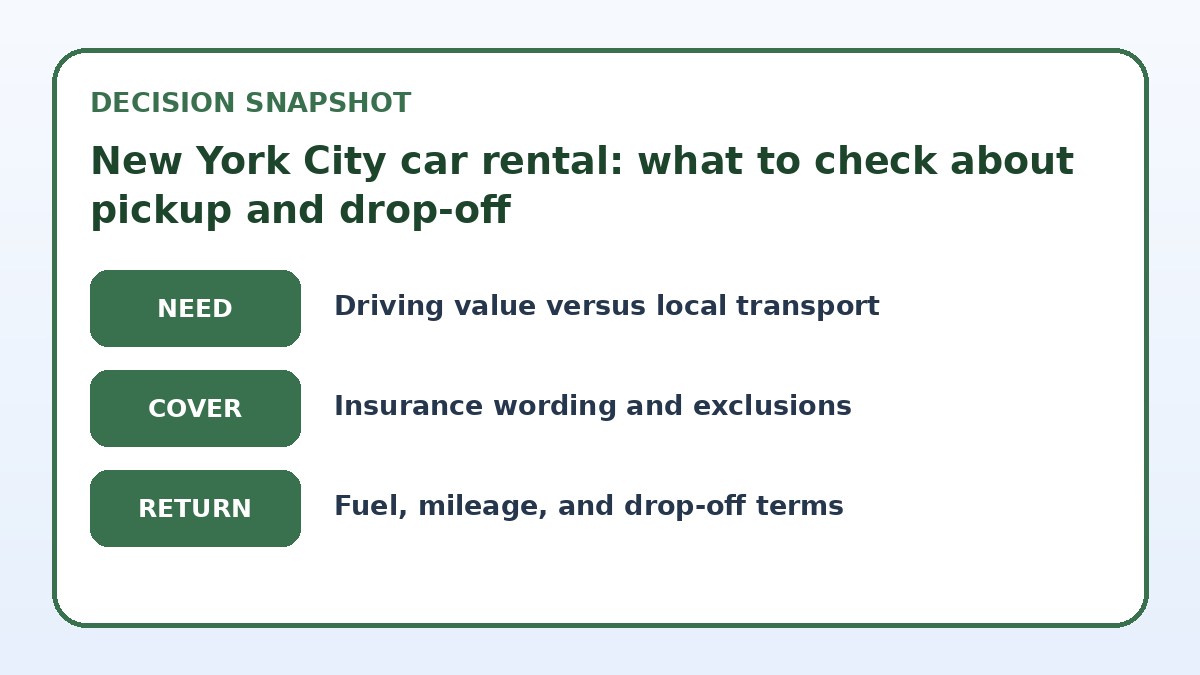
See current options before you compare the details
Availability and final conditions change. Open Trip.com now or keep reading for the practical comparison.
Pickup locations: airport vs. neighborhood branches
Airport pickup is often the fastest choice when you arrive by plane and want a single transfer from terminal to vehicle. Airports usually have multiple rental counters and on-site shuttles or direct lots; that reduces city transfers, helps if you carry luggage, and shortens the time between arrival and departure. However, airport pickups commonly include additional surcharges, busier pickup desks during peak times, and more traffic when you drive out of the airport. For solo travelers who value minimizing transit after arrival, an airport pickup can be worth the tradeoff if you check counter hours and shuttle arrangements before booking.
Neighborhood branches — those in Manhattan, Brooklyn, Queens, or near major transit hubs — can be easier to reach from subway or rideshare and may have lower fees or simpler returns. They can also be smaller, with fewer cars available, so confirm vehicle availability and hours. A neighborhood pickup lets you avoid airport congestion and can be better if you plan to spend time in the city before heading out on a day trip. For solo travelers comfortable with a short train or rideshare trip after arrival, a neighborhood branch often reduces surcharges and can make drop-off logistics more flexible.
Return windows, late fees, and grace periods
Return terms vary widely; many bookings list a scheduled return time and either a grace period or incremental late fees. Some policies allow a short grace period — often measured in minutes — before charges apply, while others bill by the hour or add a full extra day after a small delay. For solo travelers planning flights or trains on the same day as return, leaving a buffer between your scheduled drop-off and your departure time reduces stress. Always verify the provider's late-return calculation on the booking page so you can gauge whether it’s worth returning earlier or buying coverage that might soften penalties.
If your flight or train could be delayed, consider options that explicitly document late-return terms or offer an extended-return fee that caps penalties. Some companies will accept returns to an unattended drop box but still charge late fees based on their recorded drop-off time. When booking, look for clear language on how returns outside office hours are handled, whether they count as on-time, and whether you need to leave keys and paperwork in a designated spot. Solo travelers should plan the last-day logistics carefully: factor in traffic, urban parking, and the time needed to reach the terminal from the rental location.
| Approach | Best for | Tradeoff to check |
|---|---|---|
| Airport pickup and airport return | Minimizing transfers and luggage handling | Often higher surcharges and busy counters at peak times |
| City-branch pickup and city-branch return | Lower fees and easier urban access | May require an extra rideshare or transit trip to reach the branch |
| City pickup with airport drop-off (one-way) | Linear itineraries ending at an airport | Possible one-way fees and variable availability by vehicle type |
| After-hours drop-off to unattended lot or return box | Flexible departure times and late flights | Risk of fee disputes if condition or fuel status is unclear |
Ready to check the option that fits your plan?
Use your exact dates and traveler details so the provider page can show the current total and conditions.
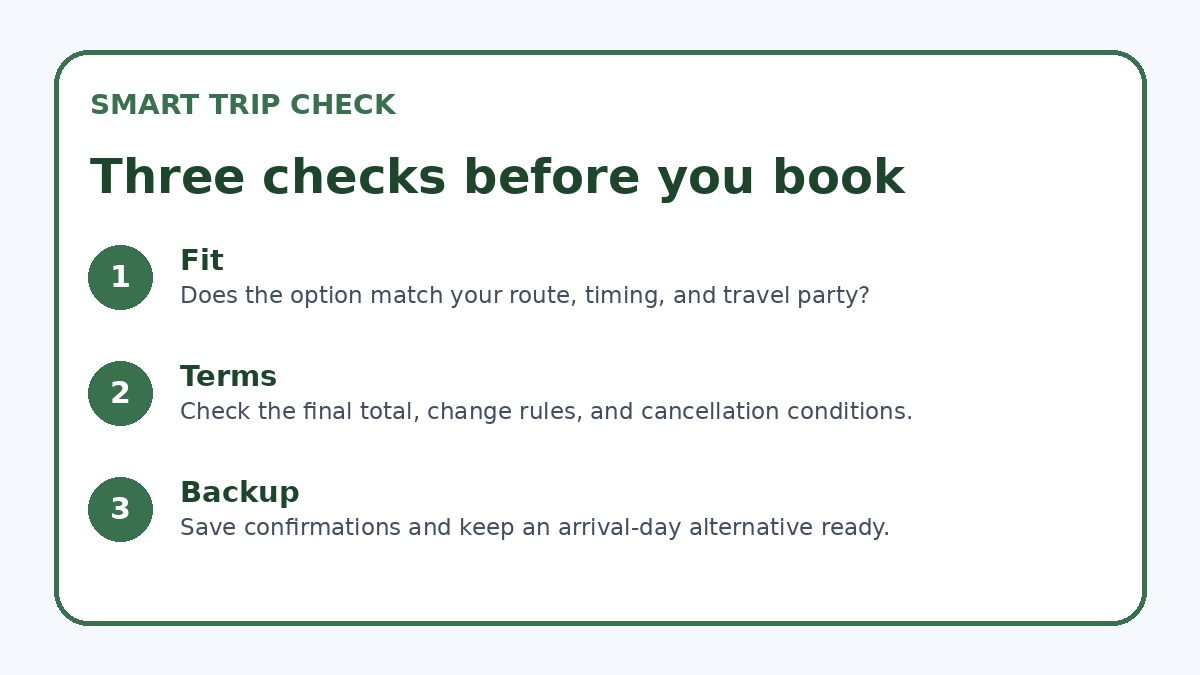
One-way rentals, different drop-off locations, and associated rules
A one-way rental — picking up in one place and returning in another — can be convenient if your New York City itinerary is linear. However, one-way rentals frequently include drop-off or relocation fees and may have restrictions on where you can return the car. Providers will often list which branches accept one-way returns and the fee structure on the booking page. Solo travelers should confirm allowed return branches, whether airport returns differ from neighborhood returns, and if the provider requires advance notice or an additional reservation for a different drop-off city.
If you plan to drop the car at an airport but pick up in the city (or vice versa), check whether shuttle transfers, off-site lots, or extended operating hours affect availability. Also verify whether the vehicle class you reserve is eligible for one-way drops; some specialty or luxury classes have stricter rules. Clarify whether the final invoice will reflect tolls, parking, or administrative fees connected to a one-way return. This step avoids surprises on your card statement and helps you compare whether the convenience is worth the additional charge.
Before you book
- Confirm exact pickup and return branch addresses and their operating hours on the provider's final booking page.
- Verify late-return policy details including grace period, hourly charges, and full-day assessments.
- Document vehicle condition with photographs and get any existing damage noted on the rental agreement.
- Decide on a fuel option (prepay, return full) and note the provider's refueling charge method.
- Check whether toll devices, parking fines, and city congestion charges are included or billed after return.
- If planning a one-way drop-off, confirm which branches accept returns and what one-way fees apply.
Fuel, mileage, damage reporting and inspection at return
Fuel policy choices affect both pickup convenience and return timing: prepay fuel, return full, or pay to top up at a station. Prepaying can save time at drop-off but may cost more than refueling yourself; returning full is usually the cheapest option if you can plan your last fill-up. Solo travelers should check whether the provider requires a full tank or will accept a partially filled tank and how they calculate refueling charges. Make a habit of taking photos of the fuel gauge and the car, and confirm where to leave keys if returning after hours.
Inspecting the vehicle at pickup and documenting existing damage protects you from disputes at return. Take time at pickup to photograph all sides, note tire and windshield conditions, and ask the agent to initial any existing marks on the condition report. On return, perform a short walk-around and keep photo timestamps or engine-off images showing mileage and fuel level. Confirm the damage-reporting process on the booking page and keep your rental confirmation until any charges clear; this is particularly important for solo travelers who do everything themselves and may have limited witnesses.
Frequently asked questions
Can I return a rental car after the office closes in New York City?
Many rental locations allow after-hours returns using an unattended drop box for keys and paperwork, but policies differ by branch. Verify the exact after-hours return procedure on the provider's booking page: some require an emailed photo of the car and posted drop-off check-in, while others timestamp the drop and bill based on recorded time. Also confirm who is responsible for fuel level and any damages found after an unattended return. For peace of mind, take photos showing the car, mileage, fuel level, and the drop-off location when you leave the vehicle.
What should solo travelers check about age and ID requirements?
Rental companies commonly require a valid driver’s license and a credit card in the renter’s name; some apply a young-driver surcharge for certain age ranges. Make sure the license is valid for the entire rental period and that any additional ID requested by the provider is available. Check the booking page for age-related limits, possible surcharge amounts, and if international licenses or endorsements are necessary. If you plan to use a debit card at pickup, verify the provider’s card policy ahead of time since many branches have specific requirements or hold amounts.
How do I avoid disputes over damage or fuel charges at return?
Avoid disputes by thoroughly documenting the vehicle at pickup and return: take time-stamped photos of all panels, tires, windshield, interior condition, mileage, and fuel gauge. Ask the agent to note any pre-existing damage on the rental agreement and keep a copy. Return with the agreed fuel level or follow the advertised refueling option, and obtain a final receipt or drop-off confirmation. If a charge appears later that you disagree with, contact the rental company first with your photos and documentation; if needed, use your card provider’s dispute process and keep all correspondence.
Final planning note
For solo travelers in New York City, pickup and return terms shape the whole rental experience. Choosing between airport convenience and neighborhood flexibility depends on how much you value fewer transfers versus lower fees; one-way options and after-hours returns add convenience but require careful verification. Before booking, read the provider’s final page for the exact branch hours, late-return rules, one-way availability, fuel policy, and any age or card requirements. Document the vehicle at pickup and keep all receipts and photos. Doing this short legwork before and during your rental reduces stress, avoids unexpected charges, and helps you make the most of your NYC itinerary. If you want to compare current availability and conditions, checking a multi-provider site such as Trip.com can be a useful step, but always confirm critical terms on the rental company’s final booking page.
Continue planning
Check current options and final conditions
Use the provider page to confirm live availability, the final total, cancellation terms, and every condition that matters to your trip.
This evergreen planning guide was created with AI-assisted drafting and a structured quality review. It does not display live prices, schedules, availability, visa guidance, or provider rankings. Verify current details before booking. Some links are affiliate links; we may earn a commission at no additional cost to you.