If your flight lands late in Osaka, prioritize a simple, low-stress transfer and an easy first-night stay. The immediate goals are: reach safe, convenient accommodation, keep arrival logistics minimal, and have contingency plans if connections are limited or you’re tired. For solo travelers that means weighing direct door-to-door options against public transport or a short overnight near the airport or a major station. This article explains how to choose an option based on arrival time, luggage, budget comfort, and personal safety preferences, and it lists exactly what to verify before booking. Read the quick tradeoffs, then use the checklists to finalize a booking that lets you start your Osaka trip calmly.
See current options before you compare the details
Availability and final conditions change. Open Trip.com now or keep reading for the practical comparison.
Decide by arrival time and tiredness
Late-night arrival spans a few different realities: you might arrive just after transit hours end, during a sparse overnight schedule, or at a time when many hotels’ front desks are quiet. Start by assessing how alert you’ll be on arrival. If you’re exhausted, a direct transfer or an airport-area hotel with 24-hour check-in reduces the risk of mistakes. If you’re only mildly tired and comfortable navigating stations, a combination of train or bus plus a short taxi can be faster and cheaper. Your tolerance for navigating unknown stations under time pressure should steer the choice.
Consider your luggage and mobility when choosing. A single backpack changes the calculus from several checked bags: fewer bags make public transport more viable. Similarly, if you have mobility needs or valuables, a private transfer removes the stress of stairs, crowded platforms, and carrying bags long distances. Think about how much orientation you want on night one—if you plan to get into the city and sightsee the next day, staying near a major station can be more convenient than an airport hotel, but that requires an extra late-night leg into town.
Compare transfer styles and what to verify
There are three practical categories: public transit (trains/buses), taxis/rideshares, and private pre-booked transfers. Public transit is often the most economical but can be limited late at night and can involve walking between platforms or stations. Taxis and rideshares give door-to-door convenience but can vary in availability and vehicle size. Private transfers booked in advance combine predictability with pickup confirmation; before booking, confirm the pickup terminal, meeting point, driver contact method, luggage limits, and any late-arrival surcharge on the provider’s final page.
When comparing providers, check cancellation and contact details. If a provider shows estimated travel time, use it as a rough guide and expect delays rather than exact arrival. Verify whether the service requires you to wait in a specific arrivals area, whether the driver monitors flight arrivals, and how they handle delays. If you plan to use a booking platform such as Trip.com to compare current availability, use that only as a starting point and then click through to the service’s own page to confirm final pickup instructions and any required traveler identification.
| Approach | Best for | Tradeoff to check |
|---|---|---|
| Public transit (train/bus) | Travelers comfortable navigating stations with light luggage | Limited late schedules and extra walking between platforms or to hotels |
| Taxi or rideshare on arrival | Solo travelers wanting immediate door-to-door transfer | Availability varies at night and may require waiting at designated ranks |
| Pre-booked private transfer | Those who want confirmed pickup and a predictable arrival process | Must verify pickup details, driver contact, and luggage rules on booking page |
| Airport-area hotel for first night | Travelers prioritizing rest and minimal late-night navigation | Adds an extra leg to reach central Osaka the next morning |
Ready to check the option that fits your plan?
Use your exact dates and traveler details so the provider page can show the current total and conditions.
Choose where to spend the first night
Your first-night location should minimize friction on arrival. Options typically include an airport hotel, a hotel near a major transport hub (like Namba or Umeda), or a neighborhood closer to expected daytime plans. Airport hotels remove the need for late-night travel but can isolate you from Osaka’s evening atmosphere. Staying near a main station shortens morning travel and gives you more evening options, but requires a late-night transfer into the city. Think about whether you’ll want to eat, walk around briefly, or sleep immediately—this will shape whether you prioritize proximity to restaurants or to rapid morning transit.
Evaluate safety and convenience: look for accommodations with 24-hour staff, clear arrival instructions, and easy contact methods. If you arrive very late, confirm late check-in procedures and whether the property will hold a key or provide a night desk. If you prefer to arrive in the city center at night, choose a place with clear late-night access instructions and plan a straightforward route from the airport to avoid multiple changes or long walks in unfamiliar areas.
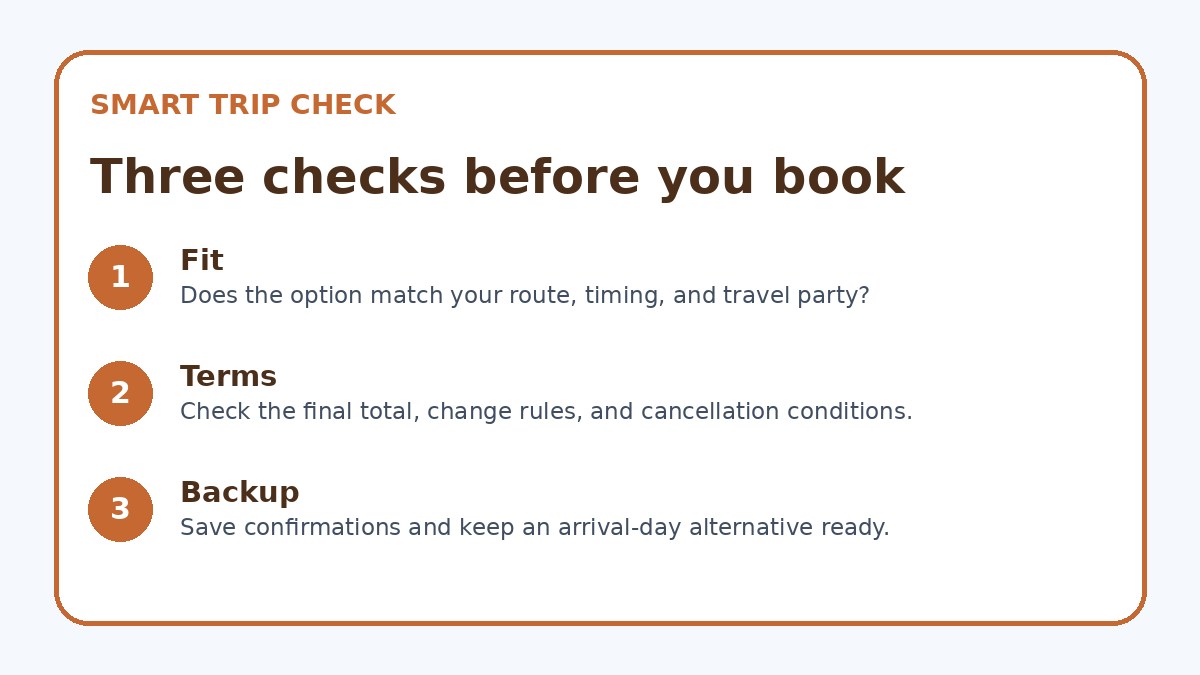
Before you book
- Confirm your arrival terminal and match it to the provider’s listed pickup terminal and specific meeting point.
- Save the transfer provider’s phone number and the hotel phone in both your phone contacts and a written note.
- Verify the provider’s flight monitoring, delay policy, and how they communicate changes on the final booking page.
- Plan one alternate: note the nearest taxi rank, a nearby 24-hour accommodation, or the first-morning train from the airport.
- Pack a charged power bank, a compact light source, and exact directions (station names and exit numbers) saved offline.
- Inform a friend or family member of your arrival time, chosen transfer, and hotel name, and send a quick check-in when you land.
Safety, communication, and backup plans
Solo travelers should prepare a simple communication plan. Share your arrival time and accommodation details with a trusted contact, keep a local SIM or roaming plan active for maps and calls, and save emergency numbers and the hotel phone in an accessible place. If using a driver-based transfer, confirm how they will identify you; if using public transport, save screenshots of station maps and the final leg’s directions so they’re accessible offline. Pack a small flashlight or phone power bank; low battery or poor lighting can escalate stress at night.
Always build at least one backup into your plan. If your preferred transfer is unavailable, know the next options: an on-demand taxi rank location, a nearby 24-hour hotel you could spend the night in, or the first-morning train from the airport. Consider arriving at a main terminal that offers clearer late-night services rather than a secondary terminal that might be quieter and harder to navigate solo. These contingencies should be checked on provider pages and station guides so you can act quickly without hunting for information at the terminal.
Frequently asked questions
Is public transport workable for late-night solo arrivals in Osaka?
It can be, but it depends on exact arrival time and your comfort with navigating stations. Late-night trains and buses may reduce frequency or stop running, requiring a taxi or alternative. If you have light luggage and are confident reading station maps and Japanese signage, public transit may be a low-cost option. Always check the last service times for your arrival date on transit operator sites or booking platforms, and have a backup plan if the schedule no longer matches your flight arrival.
Should I pre-book a private transfer or wait to book on arrival?
Pre-booking gives predictability and clear pickup instructions, which is valuable when arriving alone late. It often includes confirmed vehicle size and a contact method. Waiting can be fine if you prefer to compare on-the-ground options, but that adds uncertainty and requires you to navigate the airport at night to find a taxi rank or rideshare spot. If peace of mind matters to you, pre-book and verify meeting procedures and driver contact details on the provider’s final booking page.
Where is safest to stay the first night after a late arrival in Osaka?
Choose accommodation with 24-hour reception or explicit late-check-in instructions, located either near the airport or a major station like Namba or Umeda depending on your morning plans. Airport hotels minimize late-night travel, whereas station-area hotels shorten morning transfers into the city. Read reviews for recent reports about late arrivals, confirm arrival procedures directly with the property, and ensure you’ll have a reliable way to contact reception if your flight is delayed or you arrive much later than planned.
Final planning note
For solo travelers arriving in Osaka late at night, prioritize simplicity and safety. Decide whether you value a short, guaranteed journey (private transfer or taxi) or prefer to save by using public transit if your arrival time and luggage allow. Confirm pickup points, driver contact methods, and late-check-in rules on booking pages before committing. Pack practical items—power bank, offline directions, and a backup plan—and share your itinerary with someone you trust. With a straightforward transfer and a clear first-night choice, you’ll reduce stress and be ready to enjoy Osaka from the morning onward.
Continue planning
Check current options and final conditions
Use the provider page to confirm live availability, the final total, cancellation terms, and every condition that matters to your trip.
This evergreen planning guide was created with AI-assisted drafting and a structured quality review. It does not display live prices, schedules, availability, visa guidance, or provider rankings. Verify current details before booking. Some links are affiliate links; we may earn a commission at no additional cost to you.