If you’re traveling from Los Angeles to San Francisco with more or bulkier luggage than usual, the practical choice depends on how much you can carry, how flexible your schedule is, and how much time and effort you want to spend on transfers. For the least handling, driving your own vehicle or hiring a door-to-door car service keeps all your bags with you. If you prefer public transport, trains typically offer more generous luggage space and fewer size restrictions than flights or some buses, but they require checking dimensions and platform access. Flights can still be convenient for time-pressed travelers, but they often add checked-bag rules and handling steps. Read the tradeoffs below, decide what matters most—time, cost, or luggage security—and use the checklist at the end before booking. Use provider pages or Trip.com to confirm current luggage rules and booking conditions before you purchase.
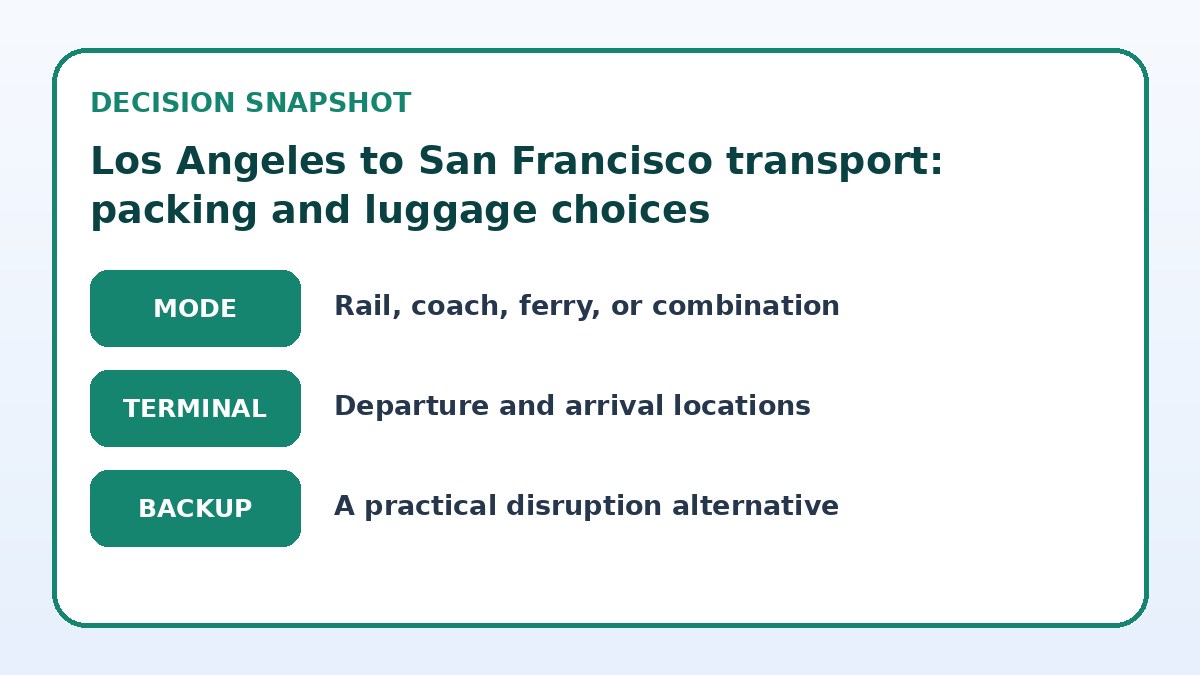
See current options before you compare the details
Availability and final conditions change. Open Trip.com now or keep reading for the practical comparison.
Drive or rent a car: best when luggage control is highest
Driving from Los Angeles to San Francisco keeps every bag where you want it: in your trunk or vehicle interior. That single-handler model reduces the risk of lost or delayed items and eliminates the need to fit luggage into a carrier’s size rules. It also gives you flexibility on departure time, stops, and loading layout—use a roof box, hitch carrier, or a larger vehicle to expand usable cargo space. Consider both comfort and visibility when loading; distribute weight low and forward and keep emergency items accessible in-cabin.
Tradeoffs include tolls, parking challenges in San Francisco, and the physical work of loading and unloading. Long drives require comfortable seats and a plan for breaks; if you’re not driving, hiring a private car service can be door-to-door but usually costs more. Also verify vehicle dimensions if you use roof-mounted carriers—roof box limits differ by model—and check rental company policies about transporting oversized items or leaving equipment like bicycles or skis attached when returning the vehicle.
Train options: simpler luggage rules and easier bulk handling
Intercity trains often make moving multiple large bags simpler: most services allow carry-on bags and larger suitcases without per-piece fees, and stations sometimes have level boarding or ramps that ease cart or dolly use. Trains give you space to stow larger items in bike or baggage areas on some services and let you move between cars while en route. If you have heavy trunks or cases, bring a compact luggage cart and check station elevator availability and platform access ahead of time so you can manage transfers without surprises.
You must still check the operator’s luggage policies and platform logistics before booking. Trains can have limits on bag size, the number of items, or require that very large items be registered or stored in a separate baggage car. Also plan how you’ll get from the station to your final address—trains often end in central locations with limited curbside loading. Confirm whether assistance is available for lifting or storing oversized items and what proof of ownership or labeling the carrier recommends for accountability.
| Approach | Best for | Tradeoff to check |
|---|---|---|
| Drive or private car | Total control over luggage and door-to-door convenience | Driver fatigue, parking and potential higher costs |
| Train travel | Fewer size restrictions and on-board space for bulky bags | Station transfers and final-mile logistics |
| Flights | Fastest city-to-city travel when time is limited | Checked-bag fees, transfers, and more handling steps |
| Bus or parcel shipping | Budget options or sending items ahead without carrying them | Variable luggage rules or lead time for delivery |
Ready to check the option that fits your plan?
Use your exact dates and traveler details so the provider page can show the current total and conditions.
Flights: fast travel but more steps for extra baggage
Flying can save hours but introduces more handling: you’ll need to check large or heavy items, follow airline size and weight rules, and allow extra time for check-in and baggage pick-up. Airports and aircraft vary in what they accept—soft bags may be easier to fit into overhead bins or closet space on certain regional services, whereas very large hard cases will require checked baggage handling. If you choose to fly, measure and weigh every bag at home, compare direct versus connecting itineraries for how many times bags may be transferred, and add buffer time for baggage claim and possible security inspections.
Before booking, read the airline’s exact baggage allowances and special-item policies on the final booking page; don’t rely on a third-party summary. Decide whether to ship very bulky items instead of checking them—shipping door-to-door can be more predictable for fragile or oddly-shaped gear, though it requires planning lead time. Also verify how you’ll get from the arrival airport to your accommodation with multiple bags, whether by rideshare, private transfer, or airport shuttle with luggage space.
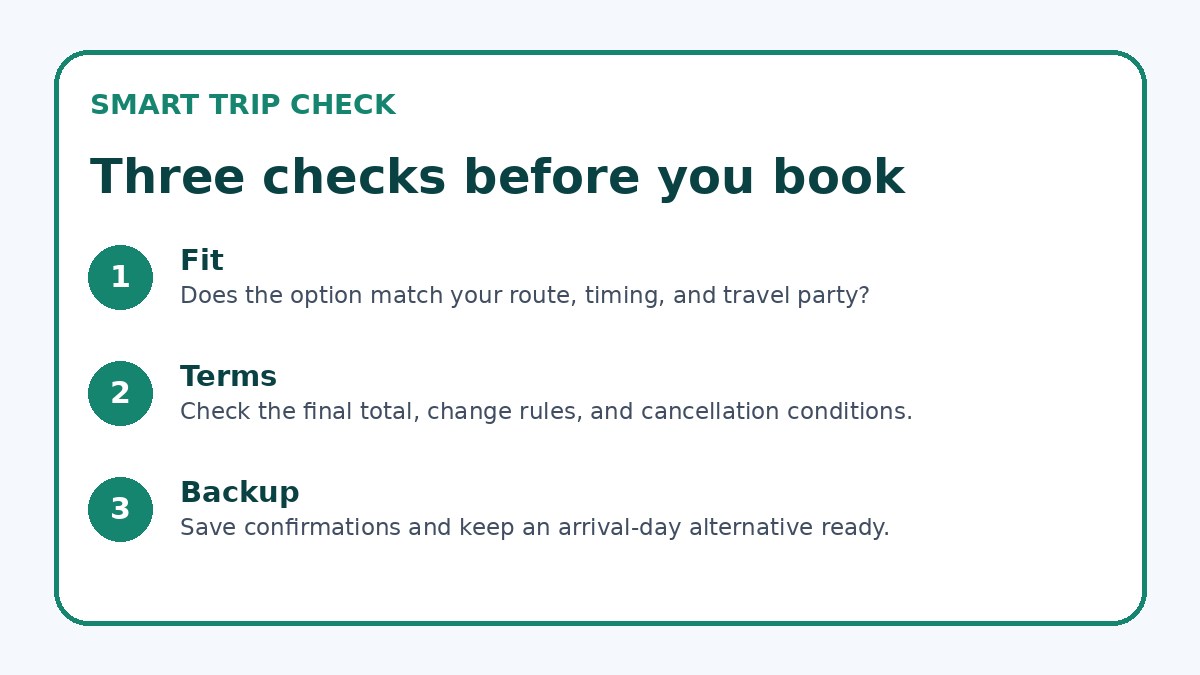
Before you book
- Measure and weigh every bag and compare dimensions to the carrier’s final booking page before you buy.
- Decide whether to carry, check, ship, or hire a vehicle for each oversized or heavy item.
- Confirm station or airport access: elevators, ramps, curbside loading, and baggage assistance availability.
- Pack essentials and valuables in a carry bag you keep with you during transfers and at the destination.
- Label every suitcase with name, phone, and destination address, and secure fragile items inside with padding.
- Compare door-to-door transfer options from the arrival point to your accommodation for oversized luggage.
Buses and parcels: budget and alternatives for heavy or odd-sized items
Intercity buses can be a budget-friendly choice but differ widely in luggage rules. Some carriers provide generous underfloor bays and allow multiple large suitcases, while others restrict count and size. If you plan to use coach services, seek premium or high-roof coaches that explicitly mention oversized-bag capacity. It’s smart to arrive early to ensure proper loading into the undercarriage and to label items clearly so drivers and handlers know where each bag belongs.
If bus or air options are unsuitable, consider parcel or freight services for bulky, unusually shaped, or valuable items—sending them ahead reduces hassle and keeps your personal travel light. Shipping requires advance planning: select a service with tracking, insured value options, and a reliable delivery window. Wherever you ship, make sure pickup and drop-off addresses are accessible, and check how fragile or high-value items must be packaged to meet carrier guidelines.
Frequently asked questions
Can I bring oversize or extra luggage on trains between Los Angeles and San Francisco?
Many intercity train services accept larger bags than airlines and do not charge per-piece fees, but allowances vary. Check the operator’s final booking page for exact size, weight, and item-count limits, and confirm whether you must register very large items in advance. Plan how you’ll move heavy cases at stations and whether elevators or ramps are available at your boarding and arrival points. Bringing a compact folding luggage cart usually makes transfers easier; confirm station rules about wheeled carts before arrival.
If I fly with extra bags, should I check them or ship them ahead?
Choosing to check bags versus shipping depends on timing, value, and fragility. Checked baggage is convenient for travel-day transport but adds handling steps and exposure to misrouting, and airlines may have size and weight limits. Shipping door-to-door gives control over scheduling and packaging, and may be preferable for fragile, bulky, or heavy items if you have lead time. Always verify airline checked-bag rules on the final booking page, compare shipping timelines and insurance options, and factor in pickup/drop-off logistics at both ends.
How do I handle final-mile transport in San Francisco with lots of luggage?
San Francisco’s hilly streets and limited curb parking mean planning final-mile logistics is crucial when you have many or heavy bags. Options include hiring a vehicle with sufficient trunk capacity, pre-booking a rideshare or private transfer with space for your loads, or arranging porter or hotel bell service if available. If you arrive by train or bus, check whether the station has short-term loading zones and elevators. Wherever you go, map an accessible route from drop-off to your accommodation and allow extra time for multiple trips or stair carrying.
Final planning note
Choosing how to travel from Los Angeles to San Francisco with extra luggage comes down to balancing luggage control, time, and convenience. Driving or a private car keeps bags with you but requires handling, parking, and possibly higher expense. Trains typically ease bulky-bag handling but need planning for station transfers. Flights save time but add checked-bag steps and stricter size rules; shipping items ahead or using parcel services can be a practical alternative for oversized or fragile gear. Before booking, verify luggage limits, transfer logistics, and assistance options on the provider’s booking page; you can compare current availability and rules on sites like Trip.com but always follow the carrier’s official terms. With the checklist above you’ll be ready to pick the option that matches your priorities and reduce surprises on travel day.
Continue planning
Check current options and final conditions
Use the provider page to confirm live availability, the final total, cancellation terms, and every condition that matters to your trip.
This evergreen planning guide was created with AI-assisted drafting and a structured quality review. It does not display live prices, schedules, availability, visa guidance, or provider rankings. Verify current details before booking. Some links are affiliate links; we may earn a commission at no additional cost to you.