If you’re planning a solo trip to Osaka, the practical choice comes down to two things: do you want to spend more time walking and exploring from a central base, or do you prefer larger, quieter rooms even if that means commuting a bit? For most solo travelers the best approach is to pick a primary priority—fast access to transit and nightlife, or a steadier, room-first experience—then use clear tradeoffs to narrow hotels. This article helps you decide by neighborhood, transportation links, nightly rhythm, and packing needs. I’ll also list questions to confirm on booking pages (transport times, room size, bed type, noise policy, and cancellation rules). Read this to make a straightforward call that fits how you’ll actually spend your days and nights in Osaka.
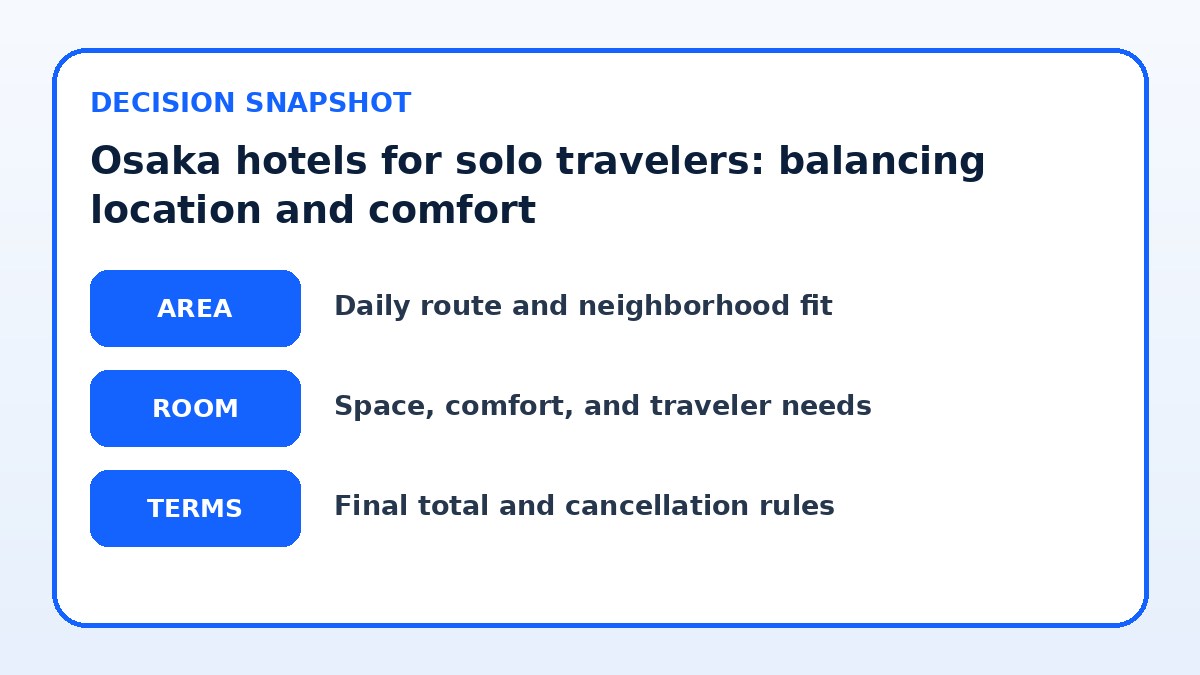
See current options before you compare the details
Availability and final conditions change. Open Trip.com now or keep reading for the practical comparison.
Decide your solo travel rhythm first
Start by picturing a typical day. If your plan is to be out well before breakfast and return late after a long evening—museums, arcades, street food, bars—then location matters most. Short walks from your hotel to the nearest subway or major district save time and help you feel secure returning alone at night. Compact rooms are often tolerable when you spend only sleeping hours inside, and a smaller room in a lively neighborhood can be better for energy and social opportunities than a large quiet room far away.
Conversely, if you need space to work, unwind, or recover between day trips, prioritize room comfort. Larger beds, quieter corridors, and in-room desks matter for freelancers, light sleepers, or travelers with unpredictable schedules. That may place you a few stops from central nodes; the tradeoff is extra commuting time. Weigh how many hours you'll actually spend in the room versus in Osaka’s streets—let that ratio guide whether to save time or invest in comfort.
Neighborhoods and what they mean for solo stays
Umeda (Kita) and Namba (Minami) are Osaka’s two most convenient bases. Umeda centers around major department stores, JR and subway hubs, and is well suited for daytime logistics and easy train links to neighboring cities. Namba is livelier at night, with restaurants, bars, and neon streets that suit sociable solo travelers. Hotels here often prioritize location over room size: expect compact rooms but excellent access to transit and nightlife. Choose these if arriving late or prioritizing quick connections is important.
If you want quieter nights without sacrificing too much transit convenience, consider neighborhoods like Tennoji, Shin-Osaka, or even the bayside. Shin-Osaka is especially convenient for shinkansen connections and often offers cleaner, newer hotels with a bit more room at a lower cost per square meter. Tennoji mixes local life with parks and museums. Bayside areas give space and scenic calm but require checking transit options; sometimes a short tram or bus ride is necessary to reach central districts.
| Approach | Best for | Tradeoff to check |
|---|---|---|
| Central, compact room (Namba/Umeda) | Explorers who prioritize minimal transit time and nightlife access | Smaller rooms and less private space for work or long rest |
| Larger room outside center (Shin-Osaka/Tennoji) | Travelers needing sleep, workspace, or quieter nights | Adds commuting time to reach main attractions and evening districts |
| Bayside or quieter residential area | Those wanting scenic calm and bigger rooms | May require tram or bus transfers and fewer late-night dining options nearby |
| Business hotels near transport hubs | Solo travelers valuing predictability and efficient transfer connections | Rooms balanced for function over luxury; limited living space and hotel amenities |
Ready to check the option that fits your plan?
Use your exact dates and traveler details so the provider page can show the current total and conditions.
How to compare room comfort on the booking page
Photos and star ratings can be misleading; focus on specific, verifiable details. Look for square footage or bed sizes, which some listings provide, and read room descriptions for mattresses, desk presence, and soundproofing notes. When these details are missing, use filters to target “larger rooms” or “suites” and check the bedding configuration to avoid single beds that are too narrow for your comfort. If you need a desk or workspace, confirm its presence in the room text—many compact economy hotels omit a usable surface.
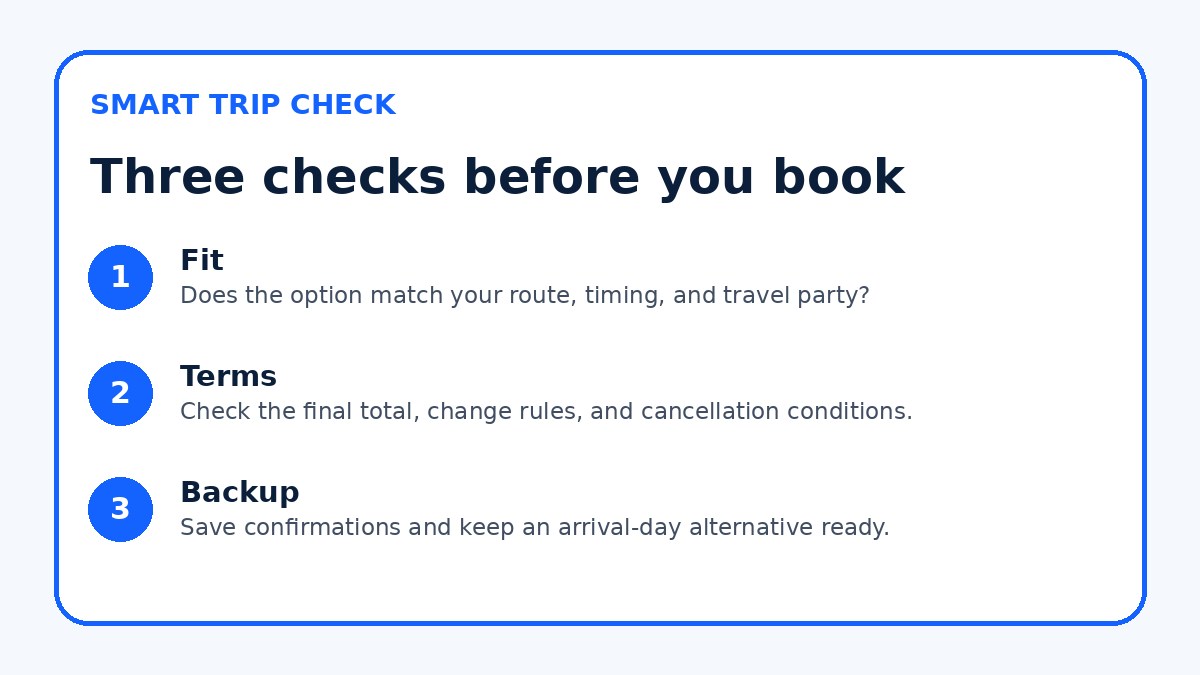
Always verify three things before committing: the exact room type you’ll receive, cancellation and modification policies, and whether the property charges extra for late check-in or holds your luggage. If you care about noise, ask on the booking page or in a pre-arrival message whether rooms face a busy street or an inner courtyard. For transit details, confirm walking time to the nearest station and which lines serve that station; this reduces surprises on arrival.
Before you book
- Confirm walking time to the nearest subway or JR station and which lines stop there on the hotel’s booking page.
- Check exact room dimensions or bed type in the room description, and message the property if sizes aren’t listed.
- Verify cancellation and modification policies before payment so your solo plan can flex if schedules change.
- Ask whether the booked room faces a street or courtyard if noise sensitivity matters, and request a quiet room if available.
- If you’ll work in your room, confirm the presence of a desk, reliable Wi‑Fi, and accessible power outlets in photos or the property description.
- Compare total door-to-door time for typical trips (airport, main daytime area, and evening return) to decide if a slightly farther hotel is acceptable.
Budgeting the commute: time versus sleep and space
Calculate door-to-door transit time for a few typical scenarios: airport to hotel, hotel to your main daytime area, and hotel to nightlife spots. A hotel a single station away might add just ten to fifteen minutes each trip but could significantly increase room size or quiet. Weigh that incremental commute against how much extra rest or work space you’ll gain—sometimes a longer, predictable commute is worth it for a calm retreat.
Remember that transit in Osaka is frequent, but transfers add friction when you’re carrying luggage or returning late at night. If your plan includes early departures for day trips to Kyoto or evening train travel, prioritize proximity to lines that serve those routes. For spontaneous nights out with no strict return time, being in the central entertainment districts reduces walking and ride-hailing needs, which may be preferable for safety and convenience as a solo traveler.
Frequently asked questions
Which Osaka neighborhood gives the best balance of location and comfort for a solo traveler?
There’s no single perfect neighborhood—choose by priority. If minimizing transit and maximizing nightlife access matters, Namba and Umeda keep you within walking distance of restaurants, bars, and major stations. For larger rooms and quieter nights, Shin-Osaka or Tennoji often offer more space and calmer streets while still connecting well to the city. Consider your typical day: if you’ll mostly be out exploring, central compact rooms make sense; if you’ll be working, sleeping in, or prefer calm, a short commute from a quieter neighborhood is preferable.
How can I avoid noisy rooms without sacrificing location?
Ask for a room facing an inner courtyard or higher floors when booking, and check guest photos and recent reviews for noise mentions. Choose hotels on side streets rather than main boulevards, and prefer properties with documented soundproofing or quiet-hour policies. If the booking page doesn’t state these details, message the hotel directly before arrival. Balancing location with noise control often means selecting a central hotel that offers quieter room types—even small hotels sometimes reserve ‘quiet’ rooms at the back.
Is it worth paying more for a larger room as a solo traveler?
That depends on how much time you’ll spend inside. If your itinerary includes long work sessions, extended downtime between trips, or you’re sensitive to sleep quality, a larger room can significantly improve your stay and productivity. If you’ll be out most of the day and evening, the extra cost may not translate to better travel experiences. Run a simple time-budget: estimate hours spent in-room per day and decide whether added comfort or a central location better supports your daily routine.
Final planning note
Choosing an Osaka hotel as a solo traveler is a personal tradeoff between time and comfort. Start by deciding whether your days will be dominated by exploration and nightlife or by rest and in-room work—this single choice narrows neighborhoods and room types quickly. Use the booking page to confirm concrete details: walking time to transit, room layout and bed type, noise orientation, and cancellation terms. If in doubt, favor a central hotel for short trips and social nights, and a hotel with bigger rooms when you need sleep and workspace; either approach can make a solo Osaka trip smooth when matched to your real daily rhythm.
Continue planning
Check current options and final conditions
Use the provider page to confirm live availability, the final total, cancellation terms, and every condition that matters to your trip.
This evergreen planning guide was created with AI-assisted drafting and a structured quality review. It does not display live prices, schedules, availability, visa guidance, or provider rankings. Verify current details before booking. Some links are affiliate links; we may earn a commission at no additional cost to you.