For a solo traveler flying from Seoul to Singapore, the most practical immediate choices are: limit yourself to one carry-on plus a personal item if you value speed and fewer airport touchpoints, or check one bag if you need more clothing and can accept extra time at check-in, baggage reclaim, and possible delays. Aim to arrive at the airport with 90–120 minutes before a short-haul direct flight, or 120–180 minutes if you have checked luggage, transfer connections, or prefer a relaxed buffer. These targets change if you opt for extra services (priority check-in, lounge access) or travel during peak holiday periods. This article explains the tradeoffs—cost, time at the terminal, security lines, immigration, baggage handling, and onward arrival needs—and gives clear, actionable steps so you can make a decision that fits your comfort level and itinerary.
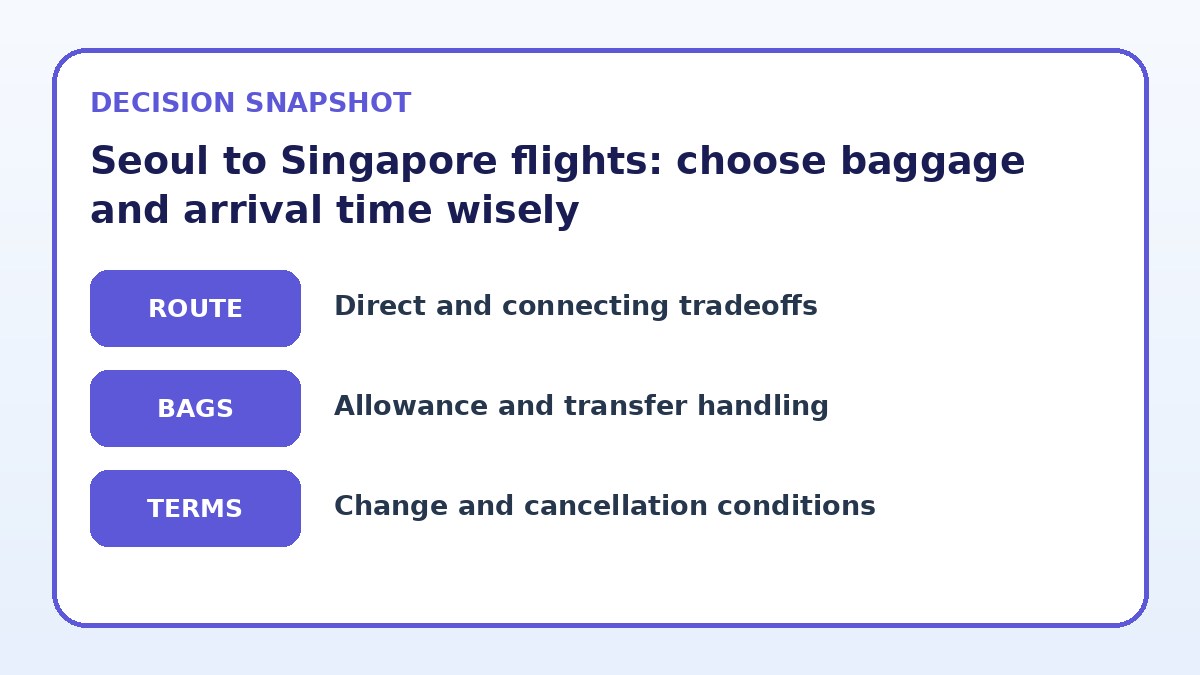
See current options before you compare the details
Availability and final conditions change. Open Trip.com now or keep reading for the practical comparison.
Choose baggage by weighing speed, cost, and comfort
Deciding between carry-on only and checking baggage is the single biggest choice that determines how much airport time you need. Carry-on travel cuts steps: no queue at bag drop, no waiting at baggage reclaim, and simpler transfers during connections. For solo travelers who value moving quickly through airports, a single well-packed cabin bag and a personal item that fits under the seat will usually be sufficient for trips of a week or less, provided you plan outfits that can be washed or mixed-and-matched.
Checked luggage makes sense when you need formal clothes, bulkier items, or prefer not to parcel your belongings into small bags. If you check a bag, add at least 30–45 minutes to your time at the departure airport for drop-off and security lines, and expect an additional 15–45 minutes at arrival to collect your luggage—more during busy periods. Also consider the physical effort and potential for luggage delays; if a missed connection would be disruptive, minimizing checked bags reduces the number of failure points.
Plan arrival time: rules, buffers, and peak periods
Airlines post recommended check-in and gate arrival times. Use those as a baseline: many short- to medium-haul international routes suggest checking in 90–120 minutes before departure when traveling without checked bags, and 120–180 minutes if you do check luggage. Beyond the airline guidance, think about airport size and peak hours—early morning and late evening can be busiest in Seoul, and holiday travel sees longer queues at both departure and arrival. Decide whether you want the stress-minimizing buffer of an extra 30–60 minutes.
If you plan an early check-in to secure preferred seating, or need to purchase last-minute items, add time. Allow extra for transport to the airport: factor in Seoul’s variable traffic if using road transfer, or the train schedule if using rail. For connections in Singapore, leave sufficient time to clear immigration and, if required, collect and re-check luggage. When booking, check the airline’s minimum connection times and read the provider’s final booking page for cutoffs and document verification rules.
| Approach | Best for | Tradeoff to check |
|---|---|---|
| Carry-on only | Short trips, speedy airport processing, and avoiding baggage reclaim | Limited clothing and souvenirs capacity; stricter liquid rules |
| Checked luggage | Longer stays or when you need bulky items and more wardrobe choices | Longer check-in and arrival times plus risk of delay or loss |
| Short connection with through-checked bags | Minimizing handling of luggage and simpler transfers | Higher stress if the connection is tight; verify airline’s minimum connection time |
| Longer connection or separate tickets | Lower stress and contingency time for missed flights or re-checking luggage | More time in transit, possible additional accommodation or transit costs |
Ready to check the option that fits your plan?
Use your exact dates and traveler details so the provider page can show the current total and conditions.
Navigating connections: re-checks, terminals, and transit time
For journeys that include a connection, determine early whether your itinerary is through-checked (single ticket) or requires you to collect and re-check luggage (separate tickets). Through-checked luggage usually saves time and headache, but you still might need to clear immigration in the transit country. If both flights are on one ticket, you generally proceed to the transfer zone; with separate tickets you must allow time to clear immigration, claim baggage, and re-check—an operation that can add one to several hours depending on the airports involved.
Terminal changes and shuttle transfers are another potential time sink. Research the layout of both departure and arrival airports and plan the minimum acceptable connection time based on whether you must change terminals, pass security again, or transfer between domestic and international zones. When in doubt, prioritize a longer connection if it prevents an overnight layover or a stressful rush—especially when you are solo with limited support for handling problems like missed flights or delayed baggage.
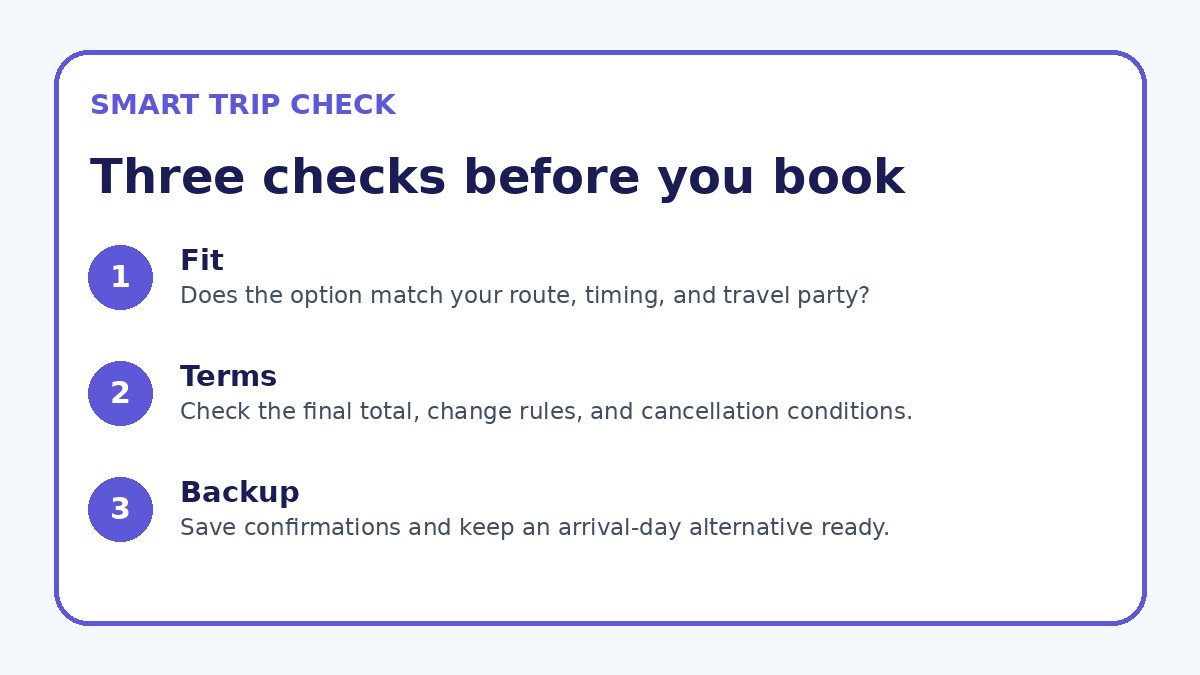
Before you book
- Confirm airline baggage allowance and size/weight limits on the airline’s final booking page before packing.
- Weigh your luggage at home and adjust to avoid last-minute check-in surcharges or repacking at the airport.
- Check-in online and download or screenshot boarding passes to reduce time at the terminal.
- Arrive at the airport with 90–120 minutes for carry-on travelers, or 120–180 minutes if checking bags or during peak hours.
- Pack a personal item with documents, essentials, medication, and a change of clothes in case checked baggage is delayed.
- If connecting, verify whether bags are through-checked and check minimum connection times on the itinerary or airline page.
Practical packing and timing tactics for solo travelers
Pack with a checklist that matches your choice: if carry-on only, use packing cubes, roll clothing, and choose lightweight shoes to maximize space. Keep essential documents, electronics, medication, and a change of clothes in your personal item in case your bag is delayed or you need items during the flight. Place liquids in a single clear bag and keep it at the top of your carry-on for faster security screening. A portable charger, a small lock, and a compact toiletry kit reduce stress and the need to shop at arrival.
On timing, book travel to the airport that leaves cushion for traffic and check-in processes: allow transit time plus 30–45 minutes buffer for urban transportation unpredictability. Check-in online and download boarding passes when possible; that can shave minutes off your airport time. If you want lounge access to rest between security and boarding, confirm access rules beforehand. Finally, verify everything on the airline’s final booking page—baggage allowances, fees, last check-in times, and seat selection options—because provider policies change and those details determine both cost and time at the airport.
Frequently asked questions
How much time should I allow at Incheon or Gimpo before an international flight to Singapore?
As a solo traveler, use the airline’s guidance as your baseline and then add a personal buffer. If you travel carry-on only, plan for 90–120 minutes before departure; this covers check-in counters if needed, security, and immigration. If checking luggage, add another 30–60 minutes for bag drop and potential lines. Account for airport transfer time from your accommodation and peak-hour crowding. Always verify recommended check-in and last-drop times on the airline’s final booking page because those cutoffs determine when desks and counters close.
Can I transit through a third country without collecting my bags on Seoul–Singapore routings?
Whether you must collect luggage at a transit airport depends on how tickets are issued and the airlines’ interline agreements. If your flights are booked on one ticket and the airlines have through-check arrangements, your bags are often tagged to the final destination and you stay airside. If you booked separate tickets or the carriers don’t have through-check agreements, you will normally clear immigration, collect baggage, and re-check it—requiring more time. Confirm baggage handling and transfer procedures on each airline’s booking page and the itinerary details before you travel.
What’s the easiest way to avoid long queues and save time at departure and arrival?
Minimizing time in queues starts with packing carry-on only and completing online check-in. Use fast-track lanes or premium services if your airline or airport offers them and you value time over cost. Travel during off-peak hours when possible, and have documents ready to show at security and immigration. For arrival, pre-fill required immigration or health forms if available, and use automated e-gates where eligible. Always verify any fast-track access rules and document requirements on the airline’s or airport’s official page before departure.
Final planning note
For solo travelers on Seoul to Singapore flights, prioritize the baggage strategy that matches your tolerance for airport time and the needs of your trip. Carry-on only will save time at check-in, security, and on arrival; checked luggage is sensible for longer stays but requires more time and acceptance of potential delays. Build arrival and connection buffers into your plans, check the airline’s final booking page for baggage rules and cutoffs, and pack a well-equipped personal item to manage surprises. With those steps you’ll keep decisions simple, reduce stress, and arrive in Singapore ready to move quickly—or relax—depending on your plan.
Continue planning
Check current options and final conditions
Use the provider page to confirm live availability, the final total, cancellation terms, and every condition that matters to your trip.
This evergreen planning guide was created with AI-assisted drafting and a structured quality review. It does not display live prices, schedules, availability, visa guidance, or provider rankings. Verify current details before booking. Some links are affiliate links; we may earn a commission at no additional cost to you.