If you and your partner are weighing Seoul airport transfer options, the practical choice depends on priorities: budget, luggage, comfort, privacy, and your first-day plans. Public options—buses, AREX train and subway—work well if you want low stress navigation, a reliable schedule, and flexibility to move around the city. Private transfers—taxis, app-based rides, or pre-booked cars—offer door-to-door convenience, privacy, and door-to-door luggage handling that saves time after a long flight. For most couples, the decision comes down to whether you value lower cost and the local transit experience or prefer a private ride that minimizes transfers and language friction. The rest of this guide breaks down tradeoffs, shows how to compare realistic choices, and provides a practical checklist so you can decide and book with confidence.
See current options before you compare the details
Availability and final conditions change. Open Trip.com now or keep reading for the practical comparison.
Why a couple’s priorities change the choice
Couples arrive with different trip rhythms: honeymooners, weekend city-breakers, and business companions will all value different things. One partner may relish the local commute, eager to dive into subway maps and try a city bus, while the other may prioritize rest after an overnight flight. Think about energy levels, how open you are to crowds, the amount of luggage, and any mobility needs. These human factors often outweigh raw cost numbers when deciding between public and private transfers.
Also consider how your first hours in Seoul will be spent. If you plan to check in, nap, and then wander nearby, a public option that lands you close to the neighborhood might be perfectly fine. But if you have a timed activity, a tight schedule, or want to get straight to a stored luggage facility or an early meeting, a private transfer reduces uncertainty and simplifies timing. Talk through these priorities together before you book.
Practical tradeoffs: time, cost, comfort, and experience
Public modes usually require at least one transfer—train to subway, bus to metro—so estimate your door-to-door journey including waits. Trains and buses run on published schedules and are often predictable, but they can be crowded during peak hours and involve stairs or long walks between platforms. For couples who enjoy blending into city life and don’t carry oversized bags, this can be part of the experience. Keep in mind language signage is generally good, yet checking maps and station exits ahead helps avoid rushed decisions with luggage.
Private transfers remove most of the handling: you get collected at arrivals, taken to your hotel door, and can ask the driver for direct routing. That convenience comes with tradeoffs: you may pay more and face variable traffic conditions, and you should verify vehicle capacity for luggage and car seat requirements if applicable. If privacy and minimal hassle are the priority—say you’re celebrating an anniversary or arriving late—private options can make the first hour in Seoul feel calm and intentional.
| Approach | Best for | Tradeoff to check |
|---|---|---|
| Public transit (train + bus) | Cost-conscious couples who enjoy local travel and don’t have oversized luggage. | More transfers, possible crowds, and walking between platforms or stops. |
| Direct private transfer (pre-booked car) | Couples seeking door-to-door convenience, privacy, and minimal walking after arrival. | Higher cost and potential traffic variability; verify vehicle/luggage capacity. |
| Taxi or app ride on arrival | Flexible couples who want a fast, familiar point-to-point option without advance booking. | Variable prices and driver language ability; confirm pickup spot if busy. |
| Hybrid: private to hub, public for last mile | Couples balancing cost and comfort; reduces transfers while saving money. | Requires planning and an extra short transfer; still involves some public transit navigation. |
Ready to check the option that fits your plan?
Use your exact dates and traveler details so the provider page can show the current total and conditions.
How to compare realistic door-to-door options
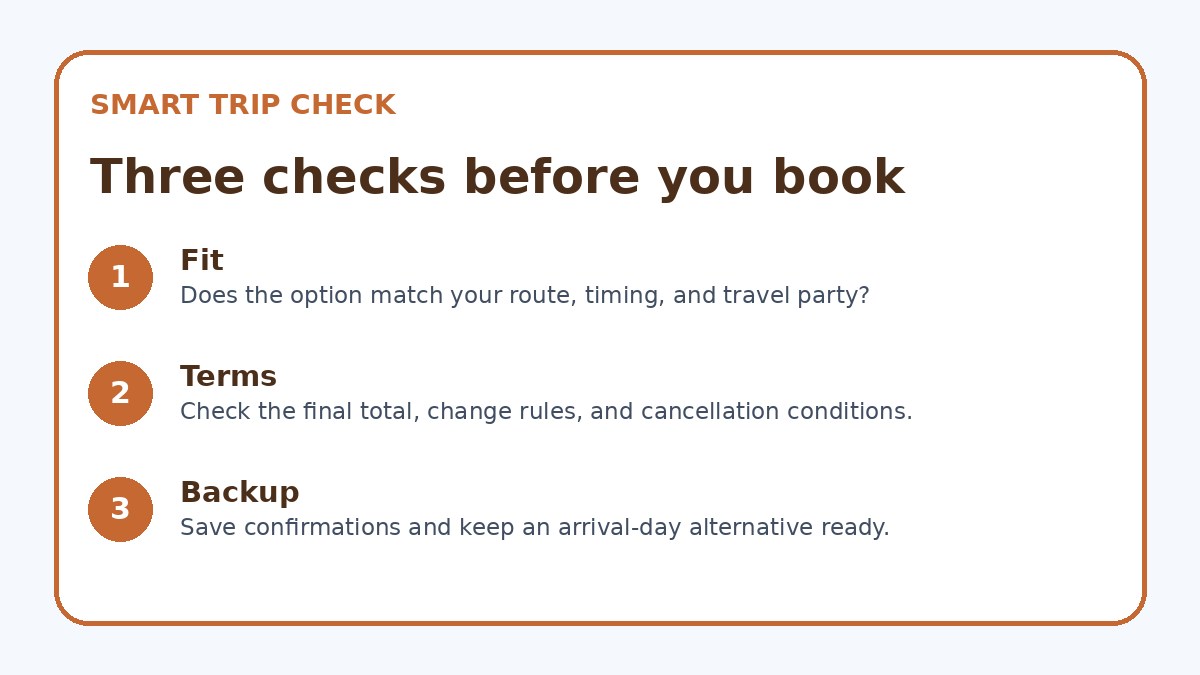
Make a simple comparison: total time, number of transfers, how much walking or stairs are involved, and luggage handling. For a public option, map the full route from the airport terminal to your exact hotel entrance, noting where you’ll transfer and how to buy tickets. For private transfers, read the supplier’s instructions about meeting points, whether drivers meet inside the terminal, and how they handle delays. When in doubt, contact the supplier and confirm pickup logistics on their booking page; avoid assuming a driver will wait unboundedly without clear terms.
Also consider mixed approaches: a private ride to a major station, then a short metro hop, or a public train into the city followed by a short taxi to your door. These hybrids can balance cost and comfort. When comparing, use the same arrival time and include realistic walking times between transport modes. If you want a quick comparison tool, you can check availability on Trip.com or the providers’ sites, but always verify final pickup instructions and vehicle details on the chosen supplier’s confirmation page.
Before you book
- Confirm your terminal and arrival gate, then identify the nearest official meeting or pickup point for private drivers.
- Count how many large suitcases and carry-ons you have and verify vehicle size or luggage limits on the provider’s booking page.
- Estimate door-to-door travel time for both public and private options including transfers and likely walking distances.
- Save your hotel address written in Korean and the closest station name in both English and Hangul on your phone.
- If taking public transit, download an offline subway map and screenshot station exits and transfer corridors in advance.
- Ask the private supplier how they handle flight delays, waiting time, and whether a local number is provided for driver contact.
Couple-specific tips for making the booking
If you pick public transport, practice the route once on paper: note station names in Hangul and English, identify the correct exits, and screenshot maps for offline use. Bring smaller bags in the carriage and keep valuables close. If either partner is unfamiliar with Seoul’s transit etiquette, agree on simple signals for when to ask for help—point at your map, show the hotel name, and don’t be shy to ask station staff for the correct transfer platform.
If you prefer private transfers, pick a supplier that clearly states vehicle size, luggage policy, and pickup meeting points. Confirm whether drivers can meet you inside arrivals or will wait at a curb, and arrange a local contact number if possible. For added comfort, book a vehicle slightly larger than you think you need so you and your partner can spread out. Finally, keep your hotel address written in Korean to show drivers who may not read Roman alphabet text fluently.
Frequently asked questions
Is public transit in Seoul safe and easy for couples unfamiliar with the city?
Yes—Seoul’s public transit is widely regarded as safe, clean, and well signed in English as well as Korean, making it a good option for couples who want to experience local life. However, unfamiliar travelers should prepare by checking their route, noting station exits, and being ready for crowds during peak commuting hours. If either partner has mobility concerns or you carry heavy luggage, a private option may be more comfortable. Carrying a paper or screenshot of your hotel address in Korean helps with any directions or assistance you might need.
When should we definitely choose a private transfer instead of public transport?
Choose a private transfer when minimizing hassle matters most—arriving late at night, having early meetings, traveling with a lot of luggage, or preferring privacy and a calmer first hour in Seoul. Private vehicles reduce walking and transfers and let you go straight to your accommodation without navigating stations together. Before booking, confirm pickup logistics, vehicle capacity, and any waiting-time policy on the provider’s confirmation page so there are no surprises at the terminal.
Can couples mix public and private options to optimize comfort and cost?
Absolutely. A common approach is to book a private ride to a main transit hub and then take a short subway or bus for the final stretch, or vice versa. This hybrid reduces transfers with luggage while keeping costs lower than a full door-to-door private ride. Plan the handover point carefully, check transfer times, and make sure both partners know the meeting place and how to proceed if plans change. Verify any pickup details if you pre-book part of the journey and keep confirmations easily accessible.
Final planning note
For couples arriving in Seoul, there is no single right answer—your choice depends on how much you value cost savings and a local transit experience versus convenience, privacy, and minimal handling of luggage. Public transit suits couples who enjoy integrating their arrival into local life and are traveling light; private transfers are best when you prioritize comfort, privacy, and a direct route to your door. Use the checklist to verify luggage capacity, meeting points, and travel times, and compare door-to-door scenarios before booking. Discuss priorities with your partner and pick the option that reduces stress on arrival so your trip can start well.
Continue planning
Check current options and final conditions
Use the provider page to confirm live availability, the final total, cancellation terms, and every condition that matters to your trip.
This evergreen planning guide was created with AI-assisted drafting and a structured quality review. It does not display live prices, schedules, availability, visa guidance, or provider rankings. Verify current details before booking. Some links are affiliate links; we may earn a commission at no additional cost to you.