
For families traveling from New York City to Washington, DC, the practical choice comes down to what matters most on your travel day: shortest door-to-door time, lowest fuss with luggage and children, or the most comfortable onboard experience. Decide between train, bus, driving, or air by listing priorities—doorstep convenience, cost flexibility, or on-the-road play space—and then compare total journey time including transfers and security checks. Pack a small day bag with essentials for each child, download entertainment ahead of time, and build in relaxed padding to handle delays without stress. Below I outline quick tradeoffs, what to check on provider pages, and a family-friendly checklist to make the travel day calm and predictable.
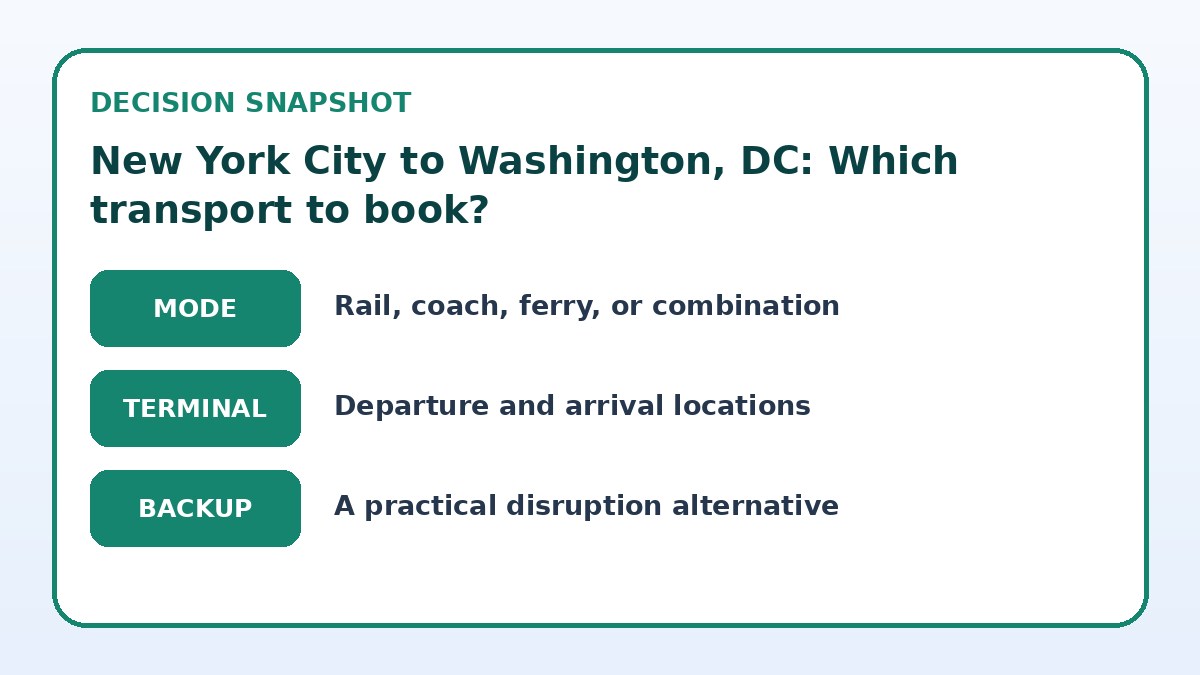
See current options before you compare the details
Availability and final conditions change. Open Trip.com now or keep reading for the practical comparison.
Choosing the right transport for your family
Start by listing what makes travel easy for your family: minimal transfers, onboard space to move, predictable timing, or flexibility to change plans. Trains often offer room to walk and bathrooms you can use freely; buses may be the most budget-conscious but can feel cramped on longer trips; driving gives door-to-door control and the ability to stop on your timetable; flights can be quickest in the air but require extra time for check-in and security. Think about how many caregivers are traveling, the ages of children, and whether naps or meal routines need to be maintained during the journey.
Once you know priorities, compare options on equal terms: calculate total door-to-door time, factor in time to reach and exit stations or airports, and consider how luggage will be managed at each step. For any operator you consider, check their family or child policies, seat assignments, restroom availability, and whether strollers must be checked. Use provider booking pages to confirm the exact service (direct or with transfers), boarding procedures, and change fees; Trip.com can be used to compare availability, but always verify details on the carrier’s official booking page before purchase.
Timing the travel day: when to leave and what to expect
Plan your departure time around your children’s routines where possible. Early morning departures let you travel during sleepier hours, while midday trips can accommodate school schedules or avoid rush-hour crowds on local transit. Whatever you choose, add buffer time for getting to the departure point—traffic, subway delays, or taxi pickup can easily add 30–60 minutes. For flights and some long-distance trains, providers recommend arriving earlier than you might for regional buses; double-check required arrival windows on the carrier’s page since these recommendations can change.
Think through checkpoints you’ll need to pass en route—ticket gates, security lines, baggage drop, and platform changes—and rehearse a simple plan with children so they know what to expect. Pack snacks, a small surprise toy, and short activities for transition periods like waiting in line. If you’re driving, identify child-friendly rest stops and route options in case you need to detour. For any plan, build in a recovery window at your arrival point so kids can unpack, stretch, and reset before your first activity.
| Approach | Best for | Tradeoff to check |
|---|---|---|
| Train (intercity rail) | Families who want space to move and fewer weather-related delays | Station-to-door time can be longer and seats may vary in comfort depending on the service |
| Car (drive) | Door-to-door control, flexible stops for naps and meals | Driving can be tiring for the driver and unpredictable with traffic; parking at arrival adds complexity |
| Bus (intercity coach) | Budget-conscious families and straight city-to-city routes | Less onboard space for active children and fewer restroom or stretching options |
| Air (flight) | Shortest in-air time for long-distance segments and families who prefer speed | Requires extra time for check-in and security; transfers and airport transfers add to total trip time |
Ready to check the option that fits your plan?
Use your exact dates and traveler details so the provider page can show the current total and conditions.
Packing and onboard comfort for kids
Create a family carry-on with layered clothing, medication, basic first-aid items, sanitation wipes, and easy-to-open snacks. Include a compact blanket, headphones sized for kids, and a power bank to keep devices charged. For babies and toddlers, bring a lightweight travel stroller that can be gate-checked if needed, a familiar toy, and extra diapers and changes of clothes in a clearly labeled bag. Organize items by who needs them and in what order you’ll need access—boarding, in-transit, and arrival—so you can hand things to caregivers quickly.
Think beyond comfort to practical details: a collapsible wet bag for soiled clothing, a small activity pouch with crayons and a sticker book, and a travel-size hand sanitizer. If you plan to buy food en route, check provider restrictions on outside food and whether there’s a cafe or trolley service. On trains and some buses, seats can be near restrooms or vestibules—decide if proximity to facilities is worth occasional noise. When booking seats, aim for a mix that keeps children close to caregivers while allowing an aisle seat for easier mobility.
Before you book
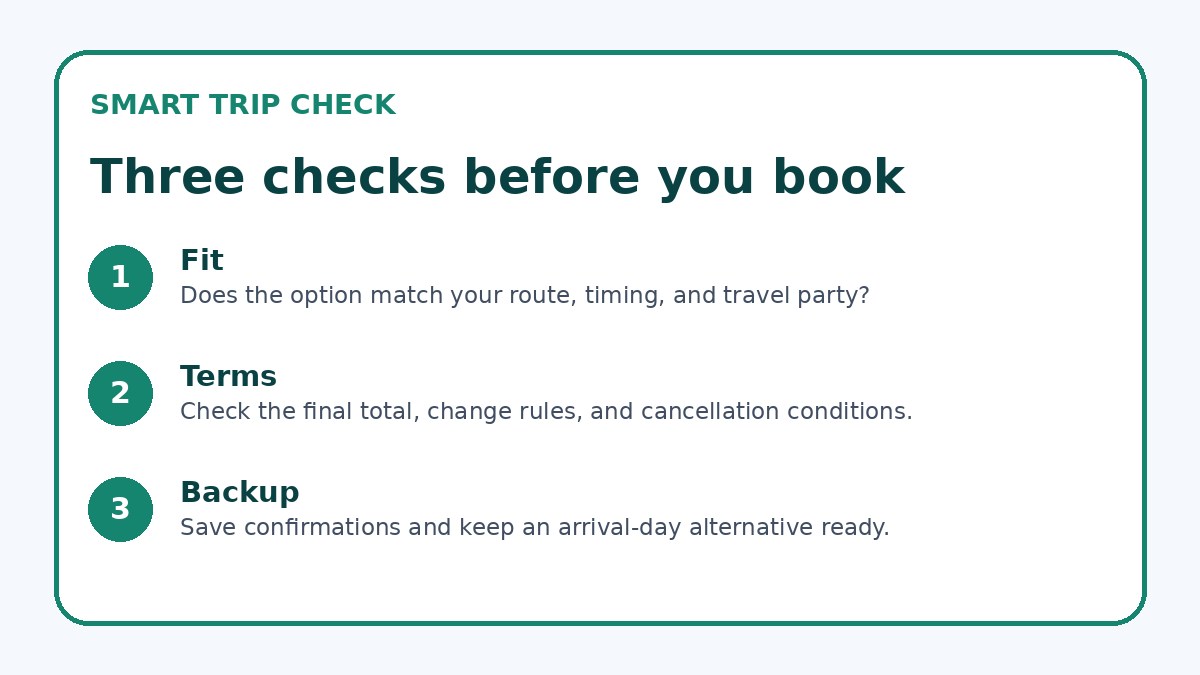
- Confirm total door-to-door travel time for each option, including transfers and local transport to departure and arrival points.
- Pack a family carry-on with snacks, medications, extra clothes, chargers, and a small activity kit for each child.
- Check the provider’s official booking page for baggage, stroller, and boarding or security arrival recommendations.
- Reserve seats where possible so caregivers and children sit together and avoid last-minute reshuffles.
- Plan one flexible window on arrival day for rest or recovery before tight schedules or tours begin.
- Save digital and printed copies of tickets and contact numbers, and share the itinerary with an emergency contact.
Booking, contingency planning, and last checks
When you’re ready to book, compare similar itineraries for total travel time, number of transfers, and the real-world convenience of stations or airports you’ll use. Confirm baggage allowances and stroller policies on the carrier’s official booking page, and note change or refund rules so you can adapt if a child falls ill or plans shift. If two options have similar timing and price, favor the one that reduces transfers or provides easier station access to minimize stress when traveling with luggage and kids.
Prepare for small emergencies with a simple contingency plan: a meeting point at terminals, a charged phone and spare battery, and local emergency numbers in your phone. Share the itinerary with a trusted contact and save screenshots of booking confirmations in case connectivity is limited. On the travel day, do a final check of passport or ID needs, tickets, and transport to the departure point. Keep receipts for any travel-related purchases—you may need them if you request a schedule change or refund later.
Frequently asked questions
Should we take the train or drive from New York City to Washington, DC with kids?
Choosing between train and driving depends on your family’s tolerance for time in the car versus transfers. Trains let kids stand, move, and use onboard restrooms without pulling over; they remove the stress of traffic for the driver and can be less taxing for caregivers. Driving gives full control over stops, nap schedules, and your packing, which helps with bulky gear. Compare total door-to-door time, parking or station access at both ends, and whether you prefer fewer handoffs or the flexibility to detour. Verify current schedules and station access on carrier booking pages before deciding.
How early should we arrive at the station or airport on travel day?
Arrival windows vary by operator and service type, so check the carrier’s official guidance before you go. For many intercity trains and buses, arriving 20–40 minutes before departure is often sufficient, while some longer-distance or higher-speed rail services and all flights typically recommend arriving earlier. Add extra time for family-specific steps—strollers, checking luggage, restroom stops, and calming anxious children. Factor in local transit or taxi unpredictability and allow a cushion that keeps everyone relaxed rather than rushed.
What are the smartest packing items for a family traveling this route?
Prioritize comfort, convenience, and quick access: a compact travel stroller, layered clothing, a small first-aid kit, and easy-to-eat snacks. Bring device chargers and a power bank, kid-sized headphones, reusable water bottles (refillable after security if flying), and sanitation wipes. Include a change of clothes per child and a zip or wet bag for soiled items. Pack activities that don’t rely on constant adult attention—sticker books, simple puzzles, and preloaded shows for older kids. Keep essentials in an easy-to-reach bag for quick access during boarding and transit.
Final planning note
Planning the travel day from New York City to Washington, DC for a family is mostly about prioritizing where you want to save stress: time, space, or flexibility. Make that decision first, then compare options on total door-to-door time, transfer complexity, and real family comforts like restroom access and seat room. Use carrier booking pages to confirm specific policies on luggage, strollers, boarding times, and seat assignments; Trip.com can help surface current availability but always verify details with the operator before paying. With layered packing, a clear arrival plan, and a little extra padding in your schedule, you’ll reduce last-minute friction and make the travel day a calmer part of the trip.
Continue planning
Check current options and final conditions
Use the provider page to confirm live availability, the final total, cancellation terms, and every condition that matters to your trip.
This evergreen planning guide was created with AI-assisted drafting and a structured quality review. It does not display live prices, schedules, availability, visa guidance, or provider rankings. Verify current details before booking. Some links are affiliate links; we may earn a commission at no additional cost to you.