
If you’re a first-time visitor to Seoul, the most practical upfront advice is simple: prioritize bookings with clear, flexible cancellation and change terms. That means checking the provider’s exact refund windows, change fees, partial refunds for unused services, and whether cancellations must be made through the original booking channel. For hotels and private rentals, look for free-cancellation cutoff times and any nonrefundable deposit language. For flights and packaged deals, compare the difference between a refundable fare, a standard fare with change fees, and carrier waivers that may apply. Tours, transit passes, and attraction tickets often have the strictest rules, so verify whether they allow date swaps or credit toward future services. Reviewing these details before you complete a purchase will reduce stress if your travel dates shift, health issues arise, or travel restrictions change.
See current options before you compare the details
Availability and final conditions change. Open Trip.com now or keep reading for the practical comparison.
How to read cancellation terms for flights
Airline cancellation rules vary by fare class and by where you purchased the ticket. When you search for Seoul travel deals, pay attention to labels like refundable, exchangeable, or nonrefundable; these are shorthand but the fine print matters. Look for the exact last date to cancel for a full refund, any percentage-based penalties, and whether the airline issues a travel credit instead of cash. Also confirm whether baggage fees and ancillary charges are refundable separately, since some carriers only refund the base fare.
If you book through an agent or third-party site, verify whether refunds or changes must be handled through that site or directly with the airline. Many carriers publish exceptions for involuntary schedule changes, delays, or illness, but those usually require documentation. When comparing direct and connecting flights, consider that changes to one segment can cascade into higher reissue fees. Finally, screenshot or save the final booking confirmation and cancellation section—if a dispute arises, that captured wording is often the clearest evidence of what you were promised.
Hotel and apartment booking flexibility
Hotels advertise a range of policies from flexible (free cancellation up to a day or more before arrival) to nonrefundable prepaid rates. For first-time visitors, flexible rates reduce stress if your schedule is tentative. Read whether the hotel treats cancellations as a full refund, a partial charge, or a forfeit of a deposit. Also check if the property enforces a penalty for early departure, whether taxes or resort fees are refundable, and how long it takes to process refunds—the timeline can affect how soon you’ll see money returned to your card.
Short-term rentals and platforms often have their own tiered policies and host-specific rules; some hosts require message-based cancellation requests rather than using the platform’s cancel button. Ask how and when the cleaning fee is handled on cancellation and whether platform protections exist for misrepresented listings. When booking multiple nights or special packages (breakfast included, airport transfer), confirm whether those extras are refundable independently or bundled into the main rate. Lastly, if you think you might extend your stay, check change rules and nightly rate guarantees before booking.
| Approach | Best for | Tradeoff to check |
|---|---|---|
| Book refundable rates | Travelers with uncertain schedules who want minimal penalty risk | Higher upfront cost and sometimes stricter booking windows for refundable fares |
| Choose nonrefundable saver deals | Confident planners seeking lower fares or bundled savings | Limited or no refund; changes often incur full rebooking costs |
| Use third-party aggregators | Quickly comparing multiple Seoul travel deals across suppliers | May require going through the aggregator for changes; final policy can differ from supplier |
| Buy travel insurance with cancellation coverage | Those wanting protection for unexpected illness or certain disruptions | Policies vary in covered reasons and require documentation and possible deductibles |
Ready to check the option that fits your plan?
Use your exact dates and traveler details so the provider page can show the current total and conditions.
Tours, attractions, and ground transport
Guided tours, attraction tickets, and shuttle transfers often have stricter timelines and limited refunds because they reserve seats and use third-party operators. Many vendors allow date changes for a fee or issue vouchers valid for a fixed period. Before buying, identify whether the ticket is time-specific (and nontransferable), whether the operator offers a partial refund for missed portions, and how rescheduling is handled if weather or a local event forces cancellation.
For public and private transport—such as intercity buses, express trains, or private transfers—confirm refund windows, no-show policies, and whether seat selection changes are permitted. If you plan to move around Korea during your Seoul stay, coordinate the timing of refundable or changeable tickets to avoid being stuck with nonrefundable segments. Where possible, leave a buffer day between critical connections so a single change doesn’t derail multiple reservations.
Before you book
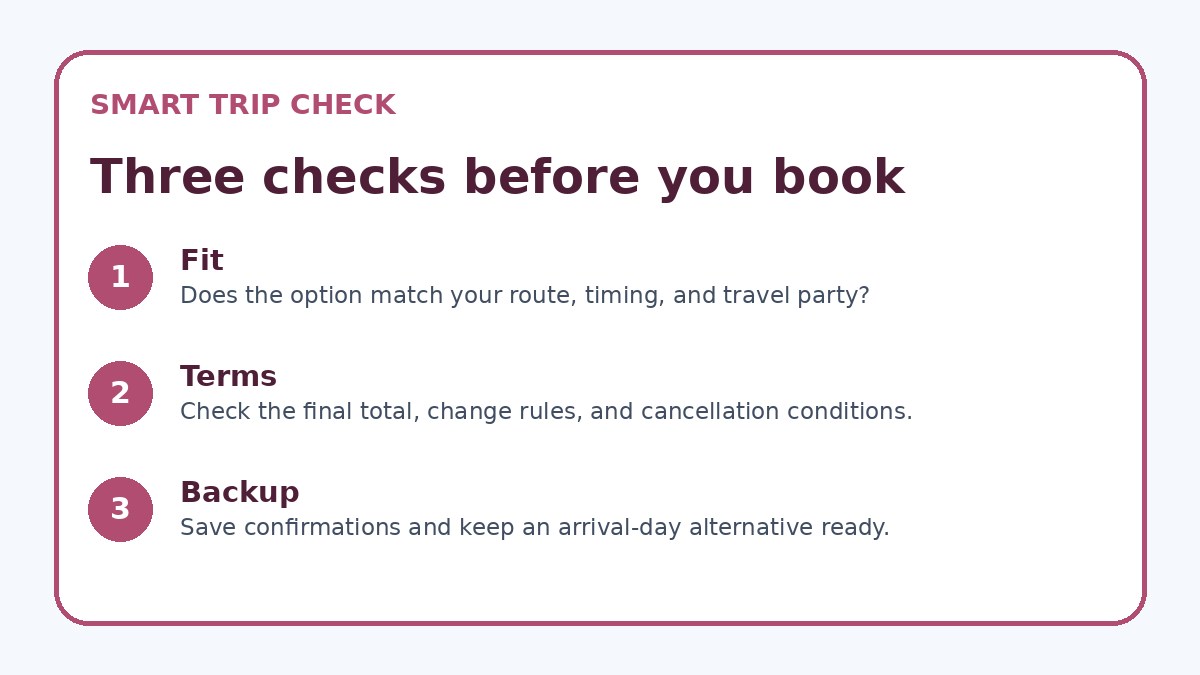
- Locate and save the exact cancellation paragraph on the final booking confirmation page before paying.
- Confirm who processes refunds—supplier or third-party site—and the expected refund timeline.
- Check whether change fees apply and how they differ from cancellation penalties for each booking.
- Verify whether extras (breakfast, transfers, tickets) are refundable separately from the primary reservation.
- Take screenshots of price and policy pages and retain confirmation emails for any later dispute.
- Compare refundable and nonrefundable options and price the maximum you’d pay for added flexibility.
Using travel insurance and booking channels
Travel insurance can add a layer of protection, but it rarely replaces reading supplier terms. Policies differ widely on covered reasons for cancellation—medical emergencies, provider bankruptcy, or travel advisories may be included or excluded—so read exclusions carefully. If you rely on insurance for flexibility, document everything: receipts, provider emails, doctor notes, and any official advisories that justify a claim. Also confirm whether the insurer requires you to seek refunds from suppliers first and how long you have to file a claim after an event.
Your booking channel matters. Direct bookings with airlines or hotels are typically easier to change because you deal directly with the supplier, while third-party platforms may add processing steps or different deadlines. Trip.com can be useful as a place to compare current availability and conditions, but always verify the final cancellation language on the supplier’s own booking page before completing a purchase. Ultimately, choose the channel that balances price, clarity of terms, and the customer service route you trust to resolve disputes.
Frequently asked questions
Can I rely on a third-party seller’s cancellation promise for a Seoul hotel booking?
You can rely on the cancellation terms the seller displays at booking, but verify the hotel’s own policy too. Third-party platforms sometimes repackage supplier rules or add their own terms, and in some cases changes or refunds must be initiated through the booking platform rather than the hotel. Before finalizing, open the hotel’s official booking or policy page and confirm there are no contradictory clauses. If discrepancies exist, contact the platform’s customer service and request written confirmation of which policy applies.
Is travel insurance a substitute for flexible booking when planning a Seoul trip?
Travel insurance is complementary but not a straight substitute for flexible bookings. Insurance can cover many emergencies, but it often excludes changes for buyer’s remorse, some travel advisories, or preexisting conditions unless explicitly stated. Policies also require evidence and timely claims, and you may be expected to seek refunds from suppliers first. For high-cost or nonrefundable components, consider layered protection: buy flexible fares where vital and use insurance for unexpected covered reasons.
What should I do immediately after booking Seoul travel deals to protect my flexibility?
Right after booking, save the confirmation, the cancellation wording, and any related emails; screenshot the full terms page. Note the last eligible cancellation dates on your calendar and set reminders a few days before each cutoff. If you purchased through an agent, confirm their process for changes and keep their support contact handy. Finally, check whether any travel advisories or provider waivers have been issued that might change rules and be prepared to supply documentation if you later submit a refund claim.
Final planning note
For first-time visitors booking Seoul travel deals, the practical path is to balance cost and peace of mind: identify which parts of your trip must be flexible and which you can book nonrefundable to save money. Always read the exact cancellation and change terms on the final booking page, confirm who processes refunds, and document the policy you were shown at purchase. Use refundable options for expensive or high-risk items, consider travel insurance for covered emergencies, and keep buffers between critical connections. That approach reduces stress and makes it far easier to adapt if plans change.
Continue planning
Check current options and final conditions
Use the provider page to confirm live availability, the final total, cancellation terms, and every condition that matters to your trip.
This evergreen planning guide was created with AI-assisted drafting and a structured quality review. It does not display live prices, schedules, availability, visa guidance, or provider rankings. Verify current details before booking. Some links are affiliate links; we may earn a commission at no additional cost to you.