If you need a quick practical answer: for most first-time visitors, intercity trains usually combine the best balance of speed, city-center convenience, and comfort; buses are cheaper for tight budgets but may sacrifice time and comfort; driving gives flexibility for side trips but adds parking and city driving complications. Start by deciding what matters most to your trip—time on travel day, how many bags you have, whether you want to stop en route, and how confident you are driving in Italy. Use that to narrow choices before comparing specific schedules, seat types, cancellation rules, and final booking pages on each provider’s site. If you like, use Trip.com to check current availability, but always verify fares, seat assignments, and change/ refund rules directly with the operator before confirming.
See current options before you compare the details
Availability and final conditions change. Open Trip.com now or keep reading for the practical comparison.
Start by defining your travel priorities
Before you search timetables, list what matters most for this leg: total door-to-door travel time, budget, luggage handling, and whether you want stops between Florence and Milan. If your itinerary allows only a few hours for transfer, prioritize faster connections and direct services that minimize transfers and local transit at each end. If you plan to linger in towns like Bologna or Parma, a flexible route or car rental could let you turn the transfer into part of the experience rather than a necessary chore.
Also consider comfort and accessibility needs: if you travel with elderly relatives, small children, or mobility equipment, focus on options with step-free access, reserved seating, and easily managed luggage policies. Booking refundable or changeable tickets becomes more important when plans may shift, so check the operator’s ticket conditions before committing. Finally, note arrival station location in Milan — some services stop at different stations — and verify how you will get from that station to your hotel to avoid surprises.
How to compare trains, buses and driving
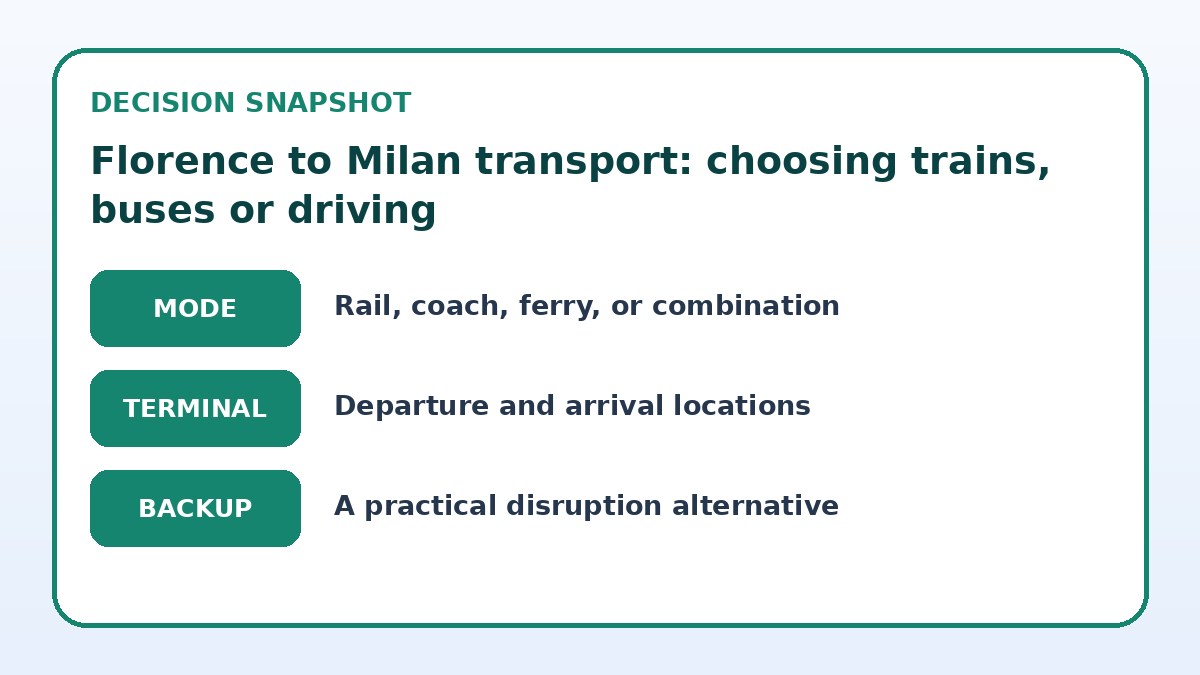
When comparing trains and buses, look past advertised times and compare realistic door-to-door durations: include transfer time to and from stations, security or boarding windows, and any required waiting time. For trains, check whether the service is direct or requires a connection; a marginally faster total journey that requires a tight connection may be riskier. For buses, read the luggage rules and boarding procedures closely — some carriers load luggage into bays and limit carry-on items, which affects convenience if you need quick access during travel.
If you consider driving, map your route and include expected stops, tolls, and parking in city centers, plus the zones where driving is restricted (ZTLs) that can result in fines if ignored. Weigh fuel and toll costs against the value of being able to detour to smaller towns. Remember that driving can add stress in unfamiliar traffic and rare long-distance parking in Milan can be expensive or require reservations. For all modes, verify cancellation, change, and seating policies on the provider’s booking page before you finalize.
| Approach | Best for | Tradeoff to check |
|---|---|---|
| Direct intercity train | Travelers prioritizing fastest, city-center transfers with minimal hassle | Usually higher base cost and less flexibility for scenic detours |
| Long-distance bus | Budget-minded travelers willing to accept longer journey time | Slower travel and stricter luggage rules; some stops outside central stations |
| Driving a rental car | Travelers who want flexibility to stop in smaller towns or carry lots of gear | Adds parking, tolls, and restricted-zone research; city driving can be stressful |
| Mixed approach (train + local day trips) | Visitors wanting a fast intercity transfer while still exploring nearby towns | Requires separate bookings and coordination of schedules for side trips |
Ready to check the option that fits your plan?
Use your exact dates and traveler details so the provider page can show the current total and conditions.
Booking tactics and what to verify before payment
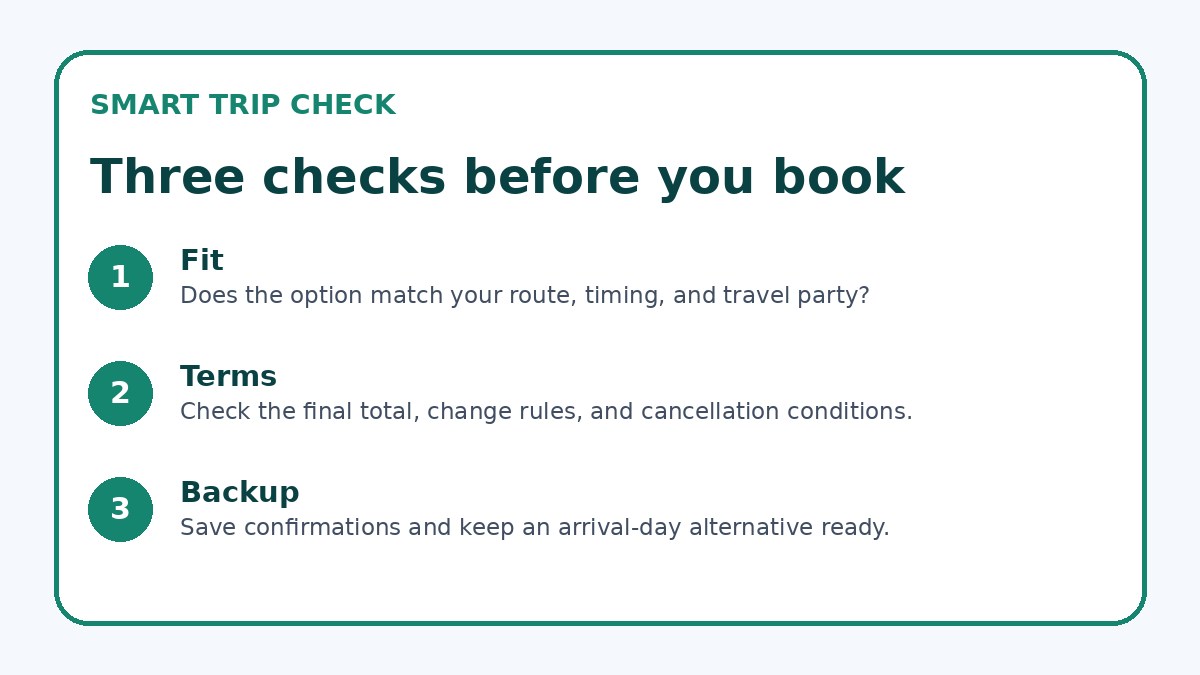
When you select a specific service, check these essentials on the operator’s final booking page: exact station names, whether the booking reserves seats, baggage allowances and fees, refund/change rules, and what ID or travel documents are required at boarding. Many train operators let you choose seat class and carriage type; decide whether the extra legroom or quiet carriage is worth the incremental cost for your party. For bus bookings, confirm departure/arrival points because some city stops are outside the historic center and require additional local transport.
If your journey involves multiple bookings (for example, a local connection to a long-distance train), stagger bookings with buffer time to reduce stress from delays. Consider travel insurance or flexible ticket options if your schedule is uncertain. If you’re using comparison websites, always click through to the operator’s site to confirm the final terms — comparison tools sometimes omit ancillary fees. Use one reputable comparison like Trip.com for an initial check, but finalize details on the carrier’s page and save booking confirmations and contact numbers.
Before you book
- Decide whether travel time, cost, sightseeing, or luggage convenience is your top priority for this leg.
- Check exact departure and arrival station names and how you'll reach your Florence accommodation and Milan hotel from those stations.
- Verify seat reservations, baggage allowances, and refund/change rules on the operator’s final booking page before paying.
- If renting a car, research ZTL zones, parking options near your Milan hotel, and toll routes you may use.
- Allow realistic buffer time for connections, luggage collection, and transfers between platforms or bus bays.
- Save confirmation emails, screenshots of tickets, and emergency contact numbers for your carrier and booking platform.
Practical tips for travel day and transferring between cities
On travel day, arrive at the departure point early enough to deal with queues, ticket validation, or platform changes. If you travel by train, platforms can change close to departure, so monitor departure boards and allow time to move between platforms. For buses, arrive at the appointed bay with your boarding pass and ID; drivers may enforce strict boarding windows. Keep essential items and documents in a carry-on and photograph tickets and IDs in case you lose paper copies.
If your route has connections, build realistic buffer time—long enough to collect luggage, clear any security or checks, and move between terminals or stations. If you have large bags or limited mobility, prioritize direct services or select through-tickets that protect you from missed connections where available. Finally, check local transit options at your arrival station in Milan: some stations have direct metro, tram or airport links, and knowing those in advance shortens the transition from arrival to hotel.
Frequently asked questions
Are trains between Florence and Milan always the fastest option?
Trains are generally the fastest way to travel between central Florence and central Milan because they connect city centers without road traffic. However, total door-to-door time depends on where you start and end, how long it takes to reach stations, and whether you choose a direct service or a route with connections. If your accommodation is far from the station, or if you need many stops en route, a different mix of transport could be more practical. Always compare realistic travel times including access and egress from stations before booking.
What luggage should I expect to bring on trains or buses?
Luggage policies differ by carrier and ticket class. Many trains allow multiple bags and have overhead or carriage storage, while bus companies often load larger suitcases into under-bus bays and limit carry-ons. If you travel with oversized items or many bags, read the carrier’s baggage rules on their booking page and consider reserving space or choosing a higher class with larger allowances. Also plan how you will move bags from station entrances to platforms, particularly if there are stairs or limited elevator access.
Can I combine different modes (train, bus, car) on the same trip?
Yes—combining modes is common and often practical. For example, you might take a fast train to Milan and rent a car for a day trip into Lombardy, or drive from Florence to a smaller town then return to Milan by train. The main drawbacks are coordinating separate bookings, ensuring you allow buffer times for missed connections, and managing luggage if carriers have different baggage rules. When mixing providers, check each operator’s terms and consider refundable or flexible tickets for at least one leg to reduce risk.
Final planning note
Planning Florence to Milan transport for the first time becomes straightforward when you match the mode to your priorities. Choose trains if you value speed and arriving in the city center, buses if budget beats time, and driving if you want flexibility to explore. Whatever you pick, verify station names, seat and baggage rules, and cancellation or change policies on the operator’s final booking page before you pay. Build sensible buffers for connections, keep essential documents handy, and consider the ease of arriving at your Milan hotel from your chosen arrival point. With those checks done, you’ll move between Florence and Milan with far less stress and more time to enjoy both cities.
Continue planning
Check current options and final conditions
Use the provider page to confirm live availability, the final total, cancellation terms, and every condition that matters to your trip.
This evergreen planning guide was created with AI-assisted drafting and a structured quality review. It does not display live prices, schedules, availability, visa guidance, or provider rankings. Verify current details before booking. Some links are affiliate links; we may earn a commission at no additional cost to you.