
For most business travelers needing speed plus predictability, flying is usually the practical default for the Hanoi to Da Nang transport route — but the right choice depends on meeting location, meeting time flexibility, and baggage or equipment needs. This article gives a direct recommendation up front, then walks through the tradeoffs: total door-to-door time, reliability during peak business hours, convenience of city-center arrivals, comfort for working en route, and the risk of delays or transfers. You’ll get concrete decision criteria to compare flights, intercity trains, and private transfers, a simple comparison table of approaches, a checklist of things to confirm on the provider’s final booking page, and answers to common business-traveler questions. Check provider pages for live schedules, seat class options, baggage limits, airport transfer times, and cancellation terms before you book; Trip.com can be used as one place to compare current availability and conditions.
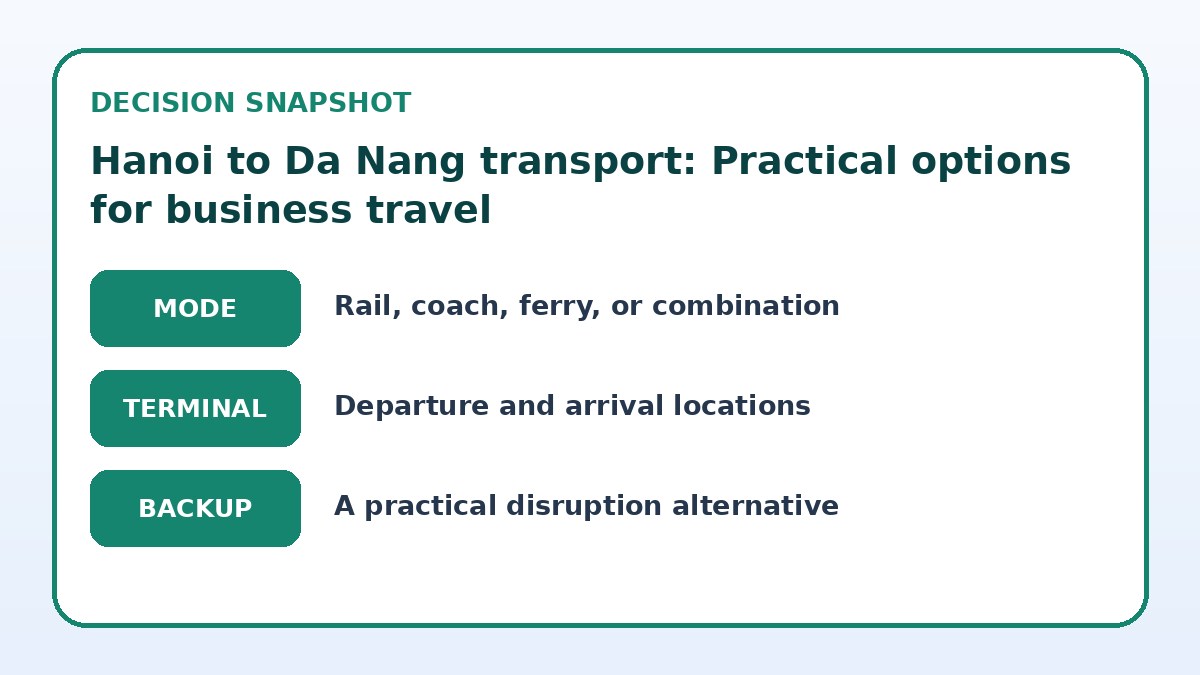
See current options before you compare the details
Availability and final conditions change. Open Trip.com now or keep reading for the practical comparison.
Practical recommendation: pick flights for speed, train for predictable work time
For a business traveler whose priority is minimizing total travel time and aligning precisely with meeting schedules, a flight between Hanoi and Da Nang is usually the most practical starting point. Flights generally offer the shortest scheduled transit between the two cities when you count airborne time. However, the true time cost includes getting to the airport, security, check-in, and the transfer from the destination airport to your meeting location. Before booking, estimate door-to-door time from your specific departure address in Hanoi to your final meeting address in Da Nang, and compare that against the train or road alternatives.
If your priority is guaranteed onboard time to work with a laptop, spread out documents, or avoid the unpredictability of airport queues, an intercity train can be the practical choice. Trains often provide a steadier onboard environment and more flexible luggage handling that helps with business gear. For mid-day meetings where you can leave a half-day earlier and use the journey productively, verify train seat classes, availability of power outlets, and the reliability of Wi-Fi if you depend on it. Always check final booking pages for exact departure times and on-board amenities.
Comparing door-to-door time and predictability
Total travel time is the single most useful comparison metric for business trips. Calculate door-to-door time for each option: time to the departure point, recommended arrival buffer (for flights or trains), scheduled journey time, and transit from arrival point to your meeting. Flights can have short airborne time but longer pre- and post-flight buffers that erase savings. Trains usually depart from or near central stations, which can reduce ground transfer time. Don’t forget potential traffic delays to and from airports and the extra margin you’ll need on the day of a tight schedule.
Reliability matters as much as nominal duration. For a meeting you cannot miss, pick the option with the lowest operational unpredictability during your travel window. Look for historical information from providers about on-time performance, but always verify current-day advisories on the booking page. If a backup meeting plan is possible, note the nearest alternative departure times and the cancellation/change terms that will let you switch later the same day. Practical travelers reserve the extra time or a later return option to safeguard the business purpose of the trip.
| Approach | Best for | Tradeoff to check |
|---|---|---|
| Direct flight | Fastest scheduled airborne time and short business trips with tight meeting windows. | You must manage airport transfers, security buffers, and potential congestion at either airport. |
| Intercity train | Productive, comfortable work time and easier luggage handling near city centers. | Longer scheduled journey time than flights and potentially fewer departure times per day. |
| Private car or executive transfer | Door-to-door convenience, flexibility for off-center meetings, and group travel with equipment. | Travel time subject to road traffic and usually longer for pure point-to-point transit. |
| Express bus or shared coach | Low-hassle point-to-point travel when cost and direct stops outweigh speed. | Less privacy and variable comfort; scheduling and road delays affect predictability. |
Ready to check the option that fits your plan?
Use your exact dates and traveler details so the provider page can show the current total and conditions.
Comfort, workability, and carrying business equipment
If you need to work en route, evaluate which mode gives the right workspace. Trains typically offer more room to spread documents and a steadier table area for laptops, while flights provide limited space and require electronic devices to be stowed during certain phases. Consider seat classes on trains and the availability of power outlets or reliable mobile reception. For sensitive presentations or equipment, check luggage policies and the ease of transporting cases; trains often let you keep cases near your seat, whereas flights require checked baggage procedures that add time.
Noise, motion, and the ability to have private calls also shape the practical decision. If you depend on uninterrupted conference calls, plan around the mode that best supports that need — private car or train compartments can be quieter and less disruptive than airports and aircraft. For confidential materials, assess whether you can store or lock items during transit and whether the boarding process exposes sensitive documents. Ask providers on their booking pages about seat configuration, available quiet areas, and any business-class amenities that improve productivity.
Before you book
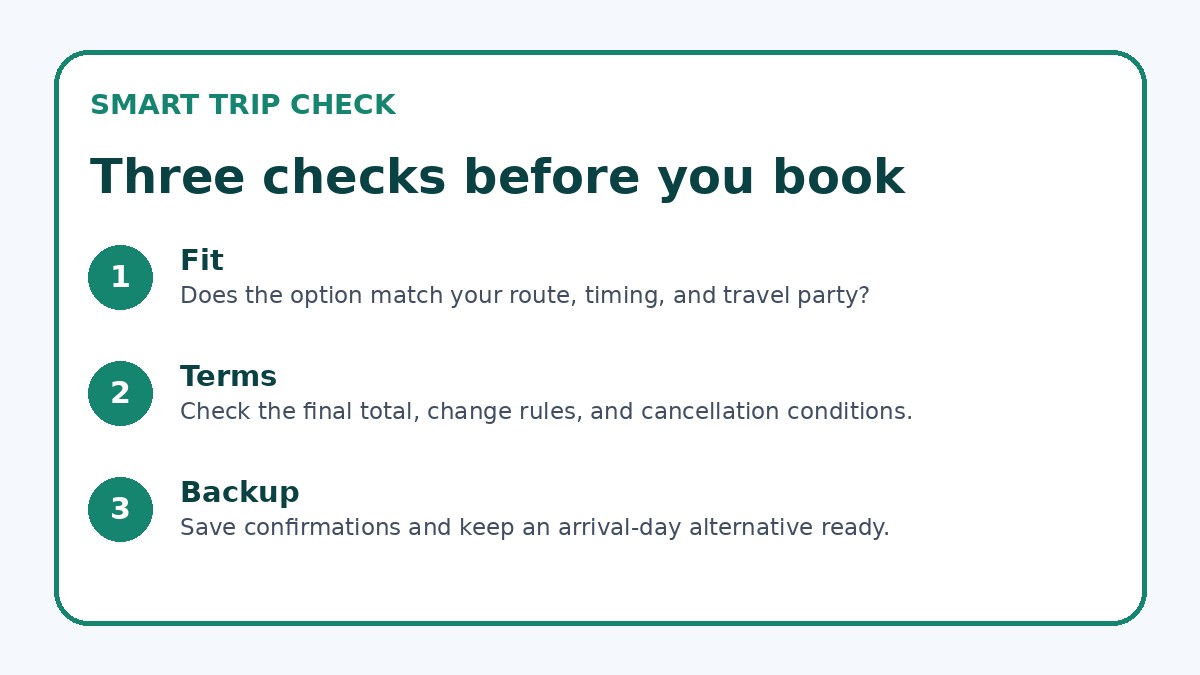
- Calculate door-to-door time for each option including transfers, check-in, and recommended buffers before selecting a mode.
- Check the provider’s final booking page for exact departure and arrival addresses, which determine transfer time to meetings.
- Verify change and cancellation terms and whether a flexible fare is available for your ticket class.
- Confirm luggage allowances and rules for carrying business equipment or oversized items on the chosen service.
- Arrange and time your ground transfer from the arrival point to the meeting venue, factoring in peak traffic windows.
- Compare alternative same-day departures and have a backup plan if your primary travel option is delayed or canceled.
Cost, flexibility, and last-mile logistics to finalize your choice
Cost matters but should be weighed against time and flexibility. For short business trips, a slightly higher fare can be a practical trade for better schedule certainty or a less congested arrival location. When comparing total cost, include transfers, luggage surcharges, and potential hotel check-in timing. Flexible fare classes or change options can be worth the premium if meeting times change; confirm refundable or changeable ticket terms on the provider’s booking page before committing. Trip.com is an optional place to compare availability, but always verify provider terms directly.
Last-mile logistics—the transfer from airport or station to your meeting—often decide which option is superior. A central train station may put you a short cab ride away from downtown offices, while an airport arrival can require a longer transfer. Factor in typical traffic patterns for your travel time and whether your destination has reliable ride services or dedicated hotel shuttles. Confirm pickup options, average transfer times, and any pre-booked car service details before you finalize the booking to avoid surprises on arrival.
Frequently asked questions
Should I book a flexible fare or a specific seat class when traveling for business between Hanoi and Da Nang?
For business travel, a flexible fare often provides practical peace of mind if meeting times change; look for options that allow same-day changes with minimal penalty. Seat class matters for work comfort: a higher-class ticket can give a more stable workspace, power outlets, or quieter areas for calls. Before you book, verify refund and change rules, seat configuration, and onboard amenities on the provider’s final booking page so you understand exactly what flexibility and facilities come with your fare.
How should I compare door-to-door times between flights and trains for a morning meeting in Da Nang?
Start by mapping the exact addresses of your departure point in Hanoi and the meeting location in Da Nang. Add recommended arrival buffers for the mode—longer for flights to account for security and check-in, shorter for trains if you can arrive closer to departure. Include typical transfer times to and from airports or stations during that time of day. Compare the total times, not just scheduled journey times, and select the option that leaves you a comfortable margin before the meeting or allows for a backup departure the same day.
What should I confirm about last-mile transfers after I choose a transport mode?
Confirm the pickup/drop-off locations, typical transfer durations, and whether pre-booked car services or hotel shuttles meet your schedule. If you’re landing at an airport, check whether the arrival terminal is clearly specified and whether a quick immigration or baggage process is likely. For trains, verify the station exit and available taxi or rideshare services. Always check the provider’s booking page for practical instructions and any recommended transfer partners, and consider pre-booking a car when time is tight.
Final planning note
Choosing the most practical Hanoi to Da Nang transport for business travel comes down to three things: total door-to-door time, the need for productive onboard time, and the predictability of transfers. If minimizing travel minutes and syncing tightly with meetings is the priority, start by comparing direct flights and include ground transfer buffers in your calculation. If uninterrupted work time and easier luggage handling matter more, evaluate trains and confirm seat amenities on the booking page. Regardless of mode, verify schedules, fare-change terms, luggage rules, and exact pickup/drop-off details before booking; having a same-day backup and pre-arranged last-mile transfers will keep your trip focused on business, not logistics.
Continue planning
Check current options and final conditions
Use the provider page to confirm live availability, the final total, cancellation terms, and every condition that matters to your trip.
This evergreen planning guide was created with AI-assisted drafting and a structured quality review. It does not display live prices, schedules, availability, visa guidance, or provider rankings. Verify current details before booking. Some links are affiliate links; we may earn a commission at no additional cost to you.