
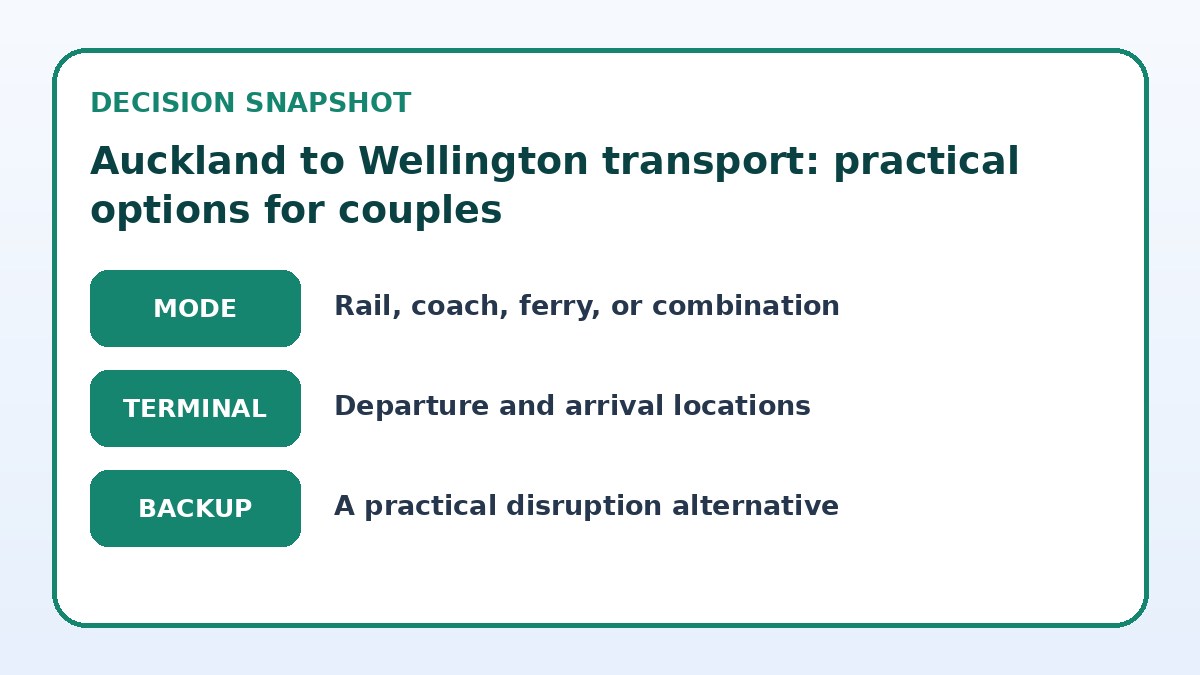
For most couples planning travel between Auckland and Wellington, the practical choice comes down to priorities: speed, scenery, budget, or flexibility. If you value time together and want the trip over quickly, a flight is the practical pick; if you want a shared road adventure with stops and privacy, driving is often better. Ferries plus driving or rail options suit couples who prize scenery and relaxed pacing over speed. This article lays out the strongest practical option for common couple priorities, explains the tradeoffs, and gives clear decision criteria to apply to your itinerary, luggage needs, comfort level with driving, and how much time you have. Use the guidance to compare candidate trips, then verify direct/connecting options, baggage rules, and final schedules on the provider’s booking page before you pay.
See current options before you compare the details
Availability and final conditions change. Open Trip.com now or keep reading for the practical comparison.
Why the practical choice depends on your couple priorities
Couples travel with different shared goals: some want to maximize time exploring their destination, others treat travel itself as part of the holiday. A practical decision balances your top shared priority against realistic constraints like available days, motion sensitivity, luggage, and driving comfort. For example, if one partner dislikes long highway drives, a flight or ferry with minimal road legs could be more practical even if it costs slightly more. Conversely, if both of you enjoy unplanned stops at cafés, beaches, or wineries, a self-drive option wins because it turns travel time into quality time.
Practicality also means matching the trip to how you travel together: do you prefer predictable, scheduled movement, or do you savor spontaneity? Consider health and mobility needs, too—rail or ferry can be easier for those who dislike road vibration, while flights minimize total travel hours. Finally, factor in luggage and gear. If you carry bulky items like bicycles or photography equipment, pick the option whose booking pages and vehicle policies clearly allow them without complicated transfers.
Flights: fastest door-to-door when time is tight
A flight usually minimizes time between cities, which is the main practical advantage for couples with limited days. If you’re on a long weekend or a short business-and-leisure mix, shaving hours off the journey can mean more daylight in Wellington for museums, walks, or dinner. When evaluating flights, compare total door-to-door time, not just airtime—include travel to and from airports, minimum check-in or security time, and transfer times on each end. Also check baggage allowances and whether seats can be chosen together without extra hassle.
Because airline schedules, baggage policies, and change fees can vary, confirm the final details on the carrier’s booking page before you commit. Decide ahead whether you need flexible change options; couples often prefer the peace of mind of refundable or changeable tickets when plans could shift. If airport transfers add stress, look at combined door-to-door itineraries that simplify ground transport or consider nearby domestic airports if they change your total travel time for the better.
| Approach | Best for | Tradeoff to check |
|---|---|---|
| Fly | Couples prioritizing shortest overall travel time | Less scenic; more time spent on airport transfers and procedures |
| Drive | Couples wanting privacy, flexible stops, and control over pace | Longer total travel time and shared driving responsibility |
| Ferry + drive or rail | Couples seeking relaxed, scenic travel without continuous driving | Longer journey and potential transfer logistics to manage |
| Train (where available) | Couples who prefer relaxed, predictable seating and onboard space | May require onward ground travel; schedules may be less frequent |
Ready to check the option that fits your plan?
Use your exact dates and traveler details so the provider page can show the current total and conditions.
Driving: privacy, detours, and packing freedom
Driving between Auckland and Wellington gives couples control over pace, routes, and stops. It’s practical for those who enjoy private time together, want to visit multiple spots en route, or need to transport larger luggage or gear that would complicate air or rail transfers. When planning a drive, map realistic daily distances for the two of you—include leisurely breaks, meal stops, and any must-see detours. Decide whether one partner will drive most of the time or whether you’ll split driving to keep the trip sociable and low-stress.
Renting a car or using your own vehicle demands attention to booking details: verify transmission type, fuel policy, kilometre limits, and pick-up/drop-off logistics on the provider’s final page. If you plan on overnight stops, choose towns with couple-friendly accommodation and secure parking. Remember that longer drives can be tiring; plan for rest and alternate drivers if possible. Driving’s flexibility is its biggest tradeoff: it adds responsibility but can create private, memorable shared experiences.
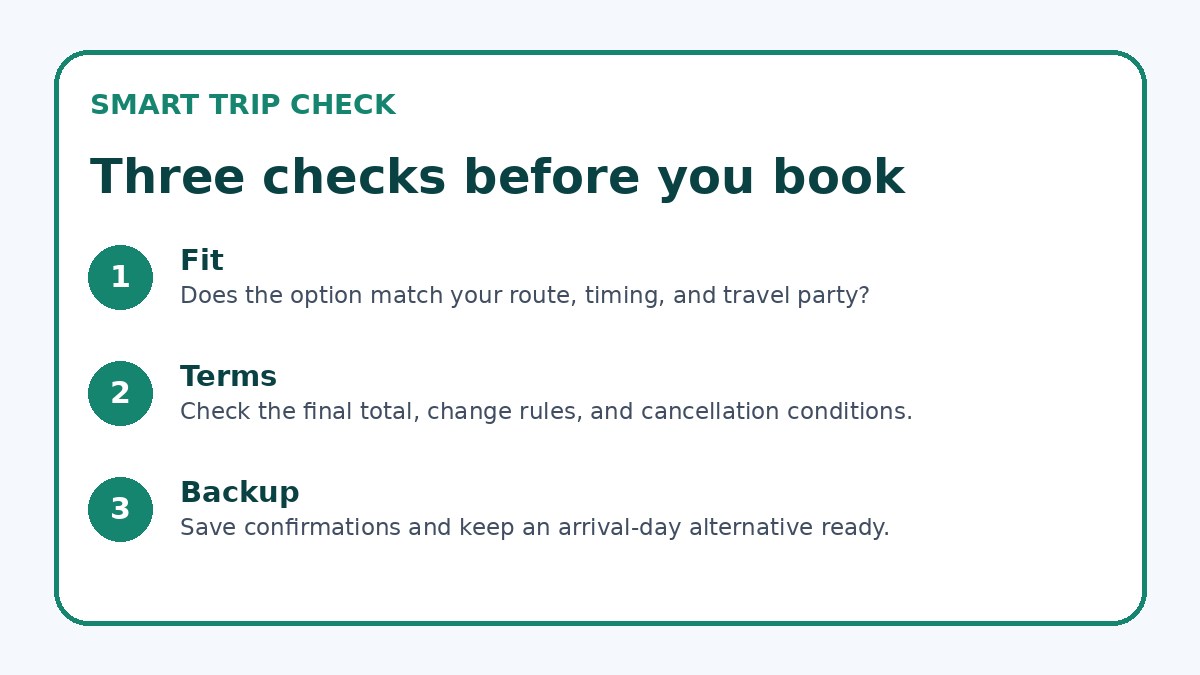
Before you book
- Decide your top two shared priorities (speed, scenery, privacy, or flexibility) and rank them before comparing options.
- Estimate true door-to-door time for each option including transfers, check-in windows, and local ground travel.
- Check luggage, sports gear, and pet policies on the provider’s final booking page to avoid surprises at pick-up or check-in.
- Confirm whether the option requires driving on unfamiliar roads and whether both partners are comfortable sharing driving duties.
- Compare cancellation, change, and seat-assignment rules if you need flexibility—verify these specifics on the carrier’s site.
- Book at least your first night’s accommodation and arrival transfer, or confirm parking arrangements if driving, before you depart.
Ferry plus road/rail and rail options: scenic, relaxed alternatives
Combining a ferry with driving or using rail routes offers a more scenic and relaxed pace for couples who want the journey itself to be part of the trip. Ferries and trains allow you to move together without the constant attention required by driving, and they give time to chat, read, or enjoy the view. When considering a ferry or train segment, check how much final leg driving or transfers are needed at each end, and whether connections are timed tightly or leave buffer for delays. Couples preferring a low-stress trip often choose longer travel that lets them unwind.
Practical planning for these options includes seeing whether the ferry or rail service allows easy luggage access and comfortable seating together. Look at carriage or cabin choices and whether booking together is straightforward. Because schedules and onboard facilities can change, verify final service details on the operator’s site before you buy. Trip.com can be useful to compare current availability and conditions, but always confirm specifics on the provider’s own booking page.
Frequently asked questions
Is it better for couples to fly or drive between Auckland and Wellington?
It depends on what you value together. Flying minimizes total travel hours so you can spend more time at your destination. Driving grants privacy, freedom to stop and explore, and greater packing flexibility. If you have only a weekend, flight may be more practical; if your trip is longer and you enjoy shared roadtime, driving can be more rewarding. Compare door-to-door time, transfer hassle, and how much of the journey you want to spend together before you choose.
How should we compare ticket and booking details across transport options?
Focus on a few comparable factors: total travel time from your start point to final destination, luggage allowances and fees, seat selection or cabin options, and change or cancellation rules. Don’t assume schedules are direct—check for connections and transfer times. When provider-specific facts matter, always verify seat assignments, baggage limits, and change policies on the provider’s own booking page. Use comparison sites like Trip.com to see options quickly, then confirm the details where you’ll actually pay.
What practical tips help keep the journey comfortable as a couple?
Pack a small 'journey kit' with shared items: snacks, a refillable water bottle, a travel blanket, headphones, and chargers. If driving, plan alternating drivers and schedule regular breaks for stretching and coffee stops. For flights or ferries, reserve seats together early and choose times that match your sleep and activity preferences. Finally, agree on how you’ll handle navigation and unexpected changes so both partners feel relaxed and engaged during the trip.
Final planning note
Choosing the most practical Auckland to Wellington transport option for couples comes down to matching your shared priorities to the realities of each mode. Flights are practical for saving time; driving offers intimacy and flexibility; ferries and rail invite relaxed, scenic travel. Use the decision criteria here—door-to-door time, luggage needs, transfer complexity, and how you want to spend travel time—to rule out options quickly. Once you’ve picked an approach, verify direct versus connecting services, baggage rules, seat assignments, and change policies on the provider’s final booking page before you commit. With those checks done, you can book with confidence and focus on enjoying the trip together.
Continue planning
Check current options and final conditions
Use the provider page to confirm live availability, the final total, cancellation terms, and every condition that matters to your trip.
This evergreen planning guide was created with AI-assisted drafting and a structured quality review. It does not display live prices, schedules, availability, visa guidance, or provider rankings. Verify current details before booking. Some links are affiliate links; we may earn a commission at no additional cost to you.