
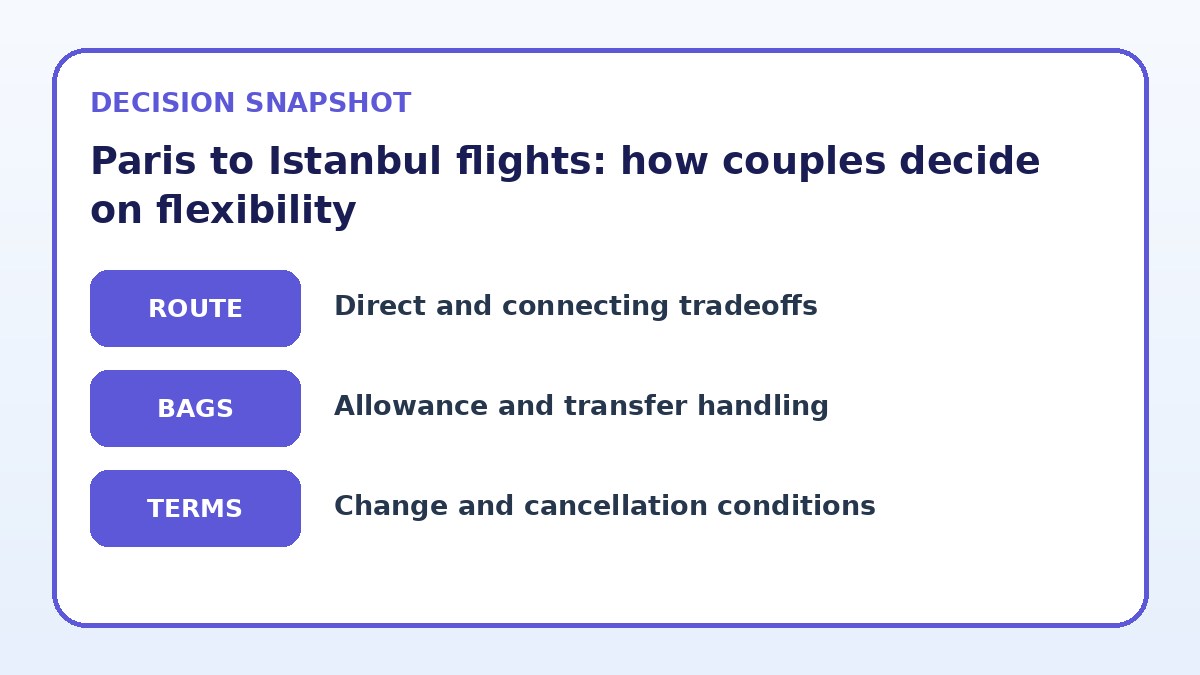
If you and your partner are booking Paris to Istanbul flights, the most practical step is to prioritize the combination of flexibility and cost that matches your comfort with uncertainty. Start by checking the airline’s change and cancellation rules on the final booking page: look for free change windows, the monetary cost to rebook, whether taxes and fees are refundable, and whether fare classes allow name or routing changes. Couples often face special considerations—one partner’s schedule may change, or you may want to adjust arrivals to sync with accommodation plans—so clear flexibility can save stress and money. Below I explain how to compare direct and connecting options, which fees to expect, when travel insurance helps, and how to read the fine print so you can pick the best booking approach for your relationship and risk tolerance.
See current options before you compare the details
Availability and final conditions change. Open Trip.com now or keep reading for the practical comparison.
How to read change and cancellation language
Airline rules use specific terms—change fee, reissue fee, fare difference, refundable, non-refundable, and travel credit—that affect what happens if your plans shift. Start by identifying whether a fare is explicitly labeled refundable; refundable fares usually return all taxes and base fare when cancelled, but sometimes incur administrative fees. For non-refundable fares, check if the airline allows name or date changes and whether it issues a voucher for future travel. Crucially, read the final booking page and the ticketing conditions rather than marketing text: that page lists the exact costs and refund handling that apply to your purchase.
Many carriers now combine a change fee with a fare difference: you may pay both a fixed rebooking cost and any higher fare on the new date. Some cheap fares permit free changes within a short window after booking—often 24 hours—so use that period to confirm plans or buy added flexibility. Also check how taxes and third-party fees are treated: certain taxes are refundable only through the carrier, or not at all if processed by government agencies. When in doubt, take screenshots of the booking terms and confirm them with customer service before completing payment.
Couples’ decision factors: risk tolerance and coordination
Couples should assess how certain both travelers’ dates and commitments are. If both calendars are locked, a lower, non-refundable fare may be appropriate. If one partner’s schedule is tentative—work meetings, medical appointments, or family responsibilities—choose a fare with low change fees or add a flexible fare option. Think about whether you need identical flexibility for both tickets: sometimes buying one flexible ticket and one lower-cost seat is a cost-effective compromise if only one person may need to change.
Consider coordination needs beyond dates: arrival times, airport choice in Istanbul, and baggage requirements can affect transfer ease and hotel check-in. If your plan requires synchronized arrival times, prioritize itineraries with minimal connection risk or add buffer time. For emotionally sensitive travel—honeymoons, reunions, or anniversaries—you might value peace of mind over cost, making refundable or flexible fares an appealing choice. Discuss worst-case scenarios together (one person changes, both postpone) so you pick a policy that covers the most likely outcomes.
| Approach | Best for | Tradeoff to check |
|---|---|---|
| Buy refundable or fully flexible fares | Couples who value maximum certainty and may need full refunds without dispute. | Higher upfront cost compared with restricted tickets; may overpay if plans stay fixed. |
| Purchase non-refundable fares plus travel insurance | Couples wanting lower ticket prices but protection for covered cancellation reasons. | Insurance has exclusions and claim processes; it may not reimburse all change fees or voluntary changes. |
| Take a basic fare and add the airline’s flexible change add-on | Couples wanting mid-range flexibility without paying fully refundable prices. | Add-ons vary by carrier in value; read whether the add-on covers fare differences as well as fees. |
| Mix one flexible and one cheaper ticket | Pairs where only one person’s schedule is uncertain and the other’s plans are fixed. | If both need changes, you may pay more later; separate tickets can complicate joint rebooking. |
Ready to check the option that fits your plan?
Use your exact dates and traveler details so the provider page can show the current total and conditions.

Comparing direct and connecting options
Direct flights typically reduce points of failure—fewer takeoffs and landings means fewer missed connections and a simpler experience for couples traveling together. If you find a direct option with flexible change terms that both of you can afford, it often minimizes logistical stress. However, direct flights sometimes come in fare classes that are either non-refundable or have higher change fees, so compare the fare rule sets closely rather than assuming direct equals better flexibility.
Connecting itineraries can offer cheaper flexible fares or greater schedule choice and may let you rebook one segment without affecting the other, depending on how the tickets are issued. If you consider a connection, check the minimum connection times the carrier requires and the policy for rebooking only one passenger: some airlines will reissue both tickets together, which can complicate changes for one traveler. Also verify whether connections are through the same airline alliance; single-ticket itineraries usually protect you if a delay causes a missed connection, while separate tickets do not.
Before you book
- On the airline’s final booking page, confirm the exact change fee, whether a fare difference applies, and whether taxes are refundable.
- Decide together how much you’ll spend to avoid rebooking stress, and compare that to the cost of refundable fares or add-ons.
- If considering connecting flights, verify minimum connection times, whether the itinerary is on one ticket, and protection for missed connections.
- Read the travel insurance policy exclusions and required documentation before buying, especially concerning work-related cancellations or medical reasons.
- Keep screenshots or PDF copies of the fare rules and booking confirmation that show change and cancellation terms for future claims.
- Compare the total outlay (ticket cost plus add-ons or insurance) against the perceived benefit of flexibility for your trip scenario.
When to buy travel protection and other add-ons
Travel insurance and airline add-ons serve different needs. Trip protection plans from insurers typically cover cancellations for covered reasons, trip interruption, and sometimes medical emergency costs—read the policy exclusions carefully to confirm coverage for schedule changes or work disruptions. Airline add-ons often include flexible rebooking options or premium support lines; these can be worthwhile if they noticeably lower change fees or provide same-day change benefits that insurers don’t cover.
Before purchasing protection, compare the cost of a flexible fare versus the fare plus an add-on or insurance policy. Some flexible fares already include free changes or low fees, making redundant add-ons unnecessary. If you opt for a third-party insurer, confirm when coverage starts (at booking or at trip start), what documentation you’ll need to submit a claim, and whether the policy reimburses only non-refundable fares or also covers associated non-refundable bookings like hotels and tours.
Frequently asked questions
Can one partner change their ticket without affecting the other on the same booking?
Whether one traveler can change independently depends on how the tickets were issued. If you bought two separate tickets, each can usually be changed on its own subject to that ticket’s rules. If both passengers are on the same reservation (a single PNR), airlines often reissue both tickets together for operational reasons; some carriers will allow a single-name change but may require reissuing the itinerary, which can affect both passengers. Verify the carrier’s policy on single-passenger changes on the final booking page and ask the agent how they handle partial changes before purchasing.
Is travel insurance better than buying a flexible fare for a couple?
Travel insurance and flexible fares serve different risks. Flexible fares typically remove or lower change fees and may offer refunds, while insurance reimburses covered cancellations, often for reasons like serious illness or certain emergencies. Insurance policies commonly exclude voluntary schedule changes or work-related cancellations unless you buy a policy with optional cancel-for-any-reason coverage. For couples, contrast the cost of flexible fares against insurance premiums plus any policy exclusions; if flexibility for everyday schedule tweaks matters more than coverage for emergencies, a flexible fare could be the simpler option.
What else should couples verify on the airline’s final booking page?
Look for the precise refundability statement, detailed change fee amounts, whether taxes or airport fees are refundable, and if fare differences apply on rebooking. Also confirm baggage allowances, seat assignment rules, and whether any add-on (like priority rebooking) is refundable. Check the cancellation time windows—some carriers permit free changes within 24 hours of purchase—and whether third-party booking channels impose extra fees. If you used a travel agent or aggregator, ensure the ticketing carrier’s terms appear on the final page and capture screenshots for reference.
Final planning note
For couples traveling from Paris to Istanbul, the best booking choice balances how certain your dates are, your tolerance for paying extra now to avoid rebooking pain later, and whether you prefer single-ticket simplicity or the flexibility of separate arrangements. Start by reviewing the airline’s final booking terms: change fees, refund policies, and how taxes are treated. Compare direct and connecting flights not just on price but on how their fare rules manage changes. If one partner’s plans are uncertain, consider a mix of flexible and lower-cost tickets or an add-on that reduces change fees. Finally, document the terms and keep proof of purchase: clear information is the most reliable safety net when plans shift.
Continue planning
Check current options and final conditions
Use the provider page to confirm live availability, the final total, cancellation terms, and every condition that matters to your trip.
This evergreen planning guide was created with AI-assisted drafting and a structured quality review. It does not display live prices, schedules, availability, visa guidance, or provider rankings. Verify current details before booking. Some links are affiliate links; we may earn a commission at no additional cost to you.