
If you’re visiting Vancouver for the first time and searching travel deals, the practical question is simple: how much cancellation flexibility do you need? The answer depends on how fixed your dates are, how much risk you tolerate, and whether you can rebook easily if plans change. Start by deciding whether you value lower upfront cost over refundable options, or whether peace of mind matters more than potential savings. That decision informs whether to prioritize refundable room rates, flexible airline fares, or tour bookings with lenient cancellation windows. Below I break down the common cancellation types you’ll encounter, show the tradeoffs, and list the exact provider details to verify on the final booking page so you don’t get surprised later.
Types of cancellation policies you’ll see
When comparing Vancouver travel deals you’ll typically encounter at least three policy categories: refundable, semi-flexible (or changeable), and nonrefundable. Refundable bookings return money to your original payment method if you cancel inside the stated window; that window varies widely and often shrinks as the travel date approaches. Semi-flexible options may offer free changes up to a certain number of days before arrival, or they may issue travel credits rather than cash refunds. Nonrefundable rates are commonly offered for hotels and discount flights; they reduce upfront cost but usually disqualify you from any monetary refund.
Beyond those simple labels, there are important nuances: some refundable rates refund taxes but not fees, while some semi-flexible options waive change fees but require you to pay any fare difference. Cancellation windows—48 hours, 7 days, 14 days, 24 hours—are standard phrases to learn, but each provider defines exactly when the clock starts and ends. For packaged deals (flight + hotel or tours), cancellation terms may differ for each component; always read the component-level rules and check whether cancelling one part affects the rest.
How to match flexibility to your travel risk
Decide how firm your travel dates are. If your trip to Vancouver is tied to fixed events (a conference, wedding, or seasonal activity), lean toward refundable or very flexible bookings even if they cost more. If your schedule is tentative or you may take advantage of last-minute opportunities, semi-flexible options strike a balance: you accept some change fees but keep the ability to shift dates. For travelers who can travel any time in a season and have low cancellation risk tolerance, nonrefundable deals can be an economical choice—provided you’re prepared for the potential loss if plans change.
Also consider external risk factors: health issues, weather-related disruptions, or job changes. If any of these could realistically force a cancellation, the extra cost of refundable options may be worth it. Alternatively, buying a well-specified travel insurance policy that covers your specific cancellation reasons can make a nonrefundable booking sensible; verify exactly which cancellation causes the insurance covers before relying on that strategy. Factor in your willingness to manage paperwork and claim timelines when choosing between refundable and insured-but-nonrefundable routes.
| Approach | Best for | Tradeoff to check |
|---|---|---|
| Fully refundable bookings | Travelers with very uncertain dates or high cancellation risk | Higher upfront cost but simpler refunds and fewer disputes |
| Semi-flexible/changeable bookings | Travelers likely to shift dates by days or weeks | Moderate fees or fare differences may apply on changes |
| Nonrefundable bookings with travel insurance | Budget-conscious travelers willing to manage an insurance claim | Lower price but rely on insurance terms and claims process |
| Nonrefundable bookings without insurance | Travelers whose plans are locked and unlikely to change | Lowest cost but high risk of losing most or all payment |
What to verify on the provider’s booking page
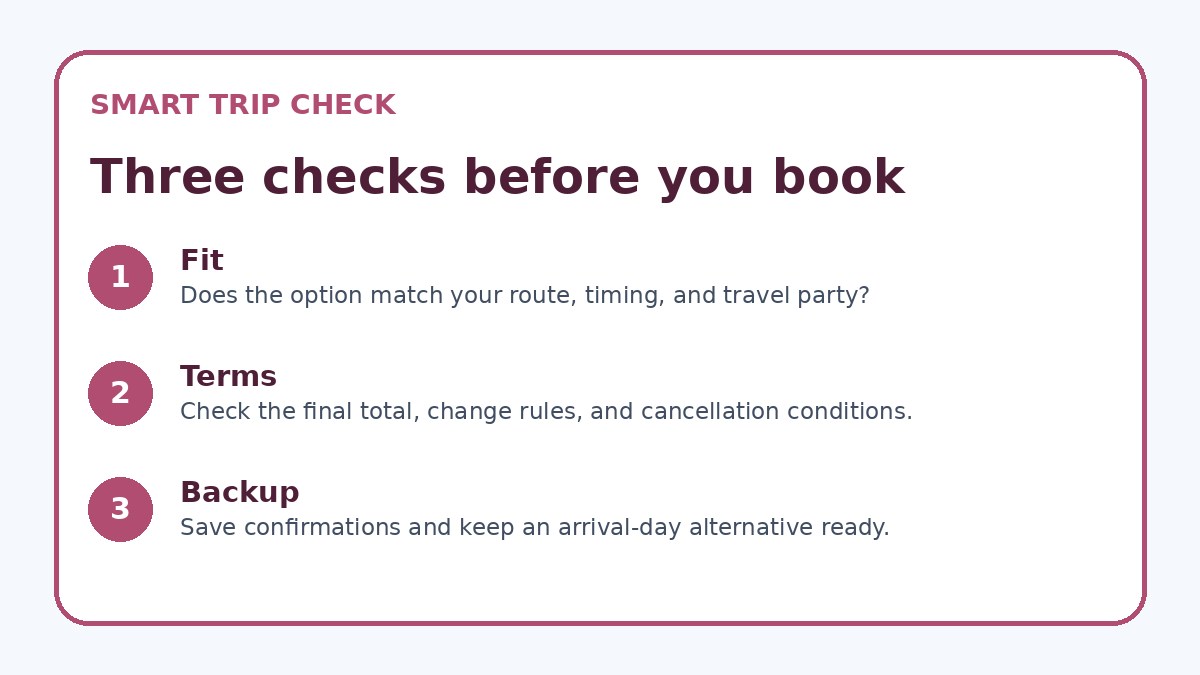
Never assume text from a third-party summary reflects the final terms. On the provider’s booking page check: the precise cancellation window (dates and time zones), whether refunds are full or partial, processing times for refunds, any administrative or service fees, and whether taxes or extras are refundable. For flights, confirm change fees, fare difference rules, and how vouchers are issued; for hotels, check if the rate requires full prepayment or just a credit card guarantee. If the booking is part of a package, expand each component to view its separate terms.
Also look for fine print about non-transferrable vouchers, blackout dates, expiry windows for credits, and rebooking restrictions. For activities and tours in Vancouver, check weather policies, minimum-participant clauses, and whether providers will offer reschedules instead of refunds. If you plan to use a travel agency or aggregator, use them to compare but always click through to the supplier’s page to confirm policy language—this is the contract you will rely on if you need to cancel or change plans.
Before you book
- Decide your cancellation tolerance and write the maximum refundable premium you’ll pay as a percentage of the booking cost.
- On each booking page, expand cancellation policy details and note the exact calendar cutoff (date and time zone) for refunds.
- Screenshot or save the confirmation and the cancellation clause; mark the credit/voucher expiry date in your calendar immediately.
- Verify whether refunds return to your original payment method or as a provider credit, and note processing times and potential service fees.
- If using travel insurance, confirm it covers your stated cancellation reasons and that its claim process aligns with your documentation plan.
- For combined packages, list component-level penalties and confirm whether cancelling one element voids any special package rates or protections.
Comparing approaches: save now or protect later
There are three pragmatic booking approaches: choose refundable for maximum protection, choose semi-flexible for balance, or choose nonrefundable plus insurance for savings with backup. Refundable gives you the broadest safety but at a higher sticker price; semi-flexible reduces cost while keeping limited leeway; nonrefundable is cheapest but risky. When comparing options for Vancouver travel deals, calculate the money you’d lose if you canceled at the last reasonable moment and compare that to the premium for refundable coverage—this simple arithmetic often clarifies which approach is logical.
Keep in mind time sensitivity: cancellation rules often change with proximity to travel dates. If you anticipate date certainty within a set number of days, you can book a locked-in nonrefundable fare now and rebook to a refundable one later if prices or policies change. Conversely, if you expect instability, pay up front for refundable rates. No matter the approach, document the cancellation clause (screenshot or print) and save booking confirmation emails so you can present clear proof if you need to request a refund or change.
Frequently asked questions
Should I always pick refundable hotel rates when visiting Vancouver for the first time?
Not always. Refundable hotel rates deliver the most flexibility, which is useful if your schedule could change or if external risks are present. But they usually cost more. If your dates are firm, a semi-flexible rate or a carefully chosen nonrefundable deal paired with travel insurance can save money. Always compare the refundable premium to the potential loss from canceling. And on the hotel’s booking page, confirm the exact refund window, whether deposits or taxes are refundable, and whether any third-party booking fees apply.
How do I compare flight change fees and refund policies for Vancouver flights?
Start by checking the airline’s published change and cancellation terms on the ticketing page you use to book. Look for whether changes incur a flat fee, whether fare differences apply, and whether refunds are allowed only to the original form of payment or as travel credit. Compare that to travel insurance coverage for cancellations and to semi-flexible fare options that waive change fees. If you book through an aggregator, follow through to the airline’s site to verify terms and note any time cutoffs and time zone references that affect your ability to change.
Can I rely on provider-issued credits instead of refunds for Vancouver tour cancellations?
You can, but treat credits cautiously. Many operators issue travel credits or vouchers instead of cash refunds; these often have expiry dates, blackout periods, or nontransferable terms. Before accepting a credit, verify how long it’s valid, whether it covers future pricing differences, and whether you can transfer it to someone else. If a credit’s expiry is short or inflexible, a cash refund may be preferable. Document the credit’s terms at booking and keep correspondence that proves dates and amounts in case of disputes.
Final planning note
For first-time visitors shopping Vancouver travel deals, cancellation flexibility is a practical decision that balances money and risk. Choose refundable options if your dates or circumstances are uncertain; choose semi-flexible plans if you expect minor shifts; and consider nonrefundable deals only if your plans are firm or you have insurance that covers your risks. Always verify the precise cancellation window, refund type, fees, and voucher expiry on the supplier’s final booking page before you confirm. If you want a quick place to compare current availability and provider policies, Trip.com can be one of the sites you check, but treat the supplier’s terms as the contractual source for refunds and changes.
Continue planning
Check current options and final conditions
Use the provider page to confirm live availability, the final total, cancellation terms, and every condition that matters to your trip.
This evergreen planning guide was created with AI-assisted drafting and a structured quality review. It does not display live prices, schedules, availability, visa guidance, or provider rankings. Verify current details before booking. Some links are affiliate links; we may earn a commission at no additional cost to you.