
Practical answer up front: if you’re traveling to Singapore with kids, aim for the shoulder months between major school-holiday peaks — this usually gives lower crowds, easier restaurant and attraction booking, and more family-friendly hotel availability. For booking, compare mid-week versus weekend stays, check flexible rates, and look at a few different airport routing options if flying from farther away. When choosing a neighborhood, prioritize short transfers to attractions or transit lines to minimize time spent hauling luggage and tired kids. Before you commit to any Singapore travel deals, verify cancellation rules, child rates, room configuration, and attraction reservation policies on the provider’s final booking page; you can use Trip.com as one place to compare current availability but confirm details with the hotel or attraction directly.
When shoulder seasons work best for family trips
Shoulder seasons are the periods between the busiest travel peaks and the slowest low seasons. For families, that timing often means smaller lines at museums, shorter waits for popular family restaurants, and more room choice at hotels that offer family rooms or connecting suites. Those benefits can make daily logistics—naps, mealtimes, and timed attraction entry—much easier. You’ll trade some certainty of perfect weather for lower stress and better on-the-ground flexibility, which tends to matter more with children than saving a small amount on headline price.
Deciding whether to travel in a shoulder period depends on your family’s tolerance for variable weather and how fixed your dates are. If your dates are flexible, searching a few weeks either side of school breaks will show you how much availability improves. If you need to stick to specific dates, prioritize refundable options and confirm that main attractions offer timed-entry tickets you can change or cancel. For families who value routine and predictability, the shoulder season can be a sweet spot—less crowded but still active enough to keep kids engaged without long waits.
How to compare Singapore travel deals for families
Split any packaged deal into its components—flight, hotel, transfers, and tickets—and price each separately before you book. That makes it easier to swap a hotel for a family suite or choose a different flight with a shorter connection if a layover will be hard with young children. Pay attention to room type descriptions: “family room,” “interconnecting rooms,” and explicit sleeping arrangements matter. Verify on the hotel booking page whether cribs, rollaways, and child rates are included or extra. For flights, check baggage rules and seat selection policies so you won’t be surprised at check-in.
When comparing timing, weigh mid-week arrivals and departures for potential savings in fares and easier hotel check-in times. Consider flight schedules that minimize overnight disruptions for children—sometimes a slightly longer daytime connection is a better family option than very early or very late flights. Use comparison sites to assemble options and then confirm specifics on the provider’s final page. Trip.com can be useful for comparing availability and conditions, but always verify room details, cancellation terms, and ticketing rules directly with the supplier before completing payment.
| Approach | Best for | Tradeoff to check |
|---|---|---|
| Travel in shoulder season | Families who want fewer crowds and more hotel choices | Weather can be more changeable and some seasonal events may not run |
| Travel in peak season | Families aiming for full festival schedules and guaranteed sunny conditions | Higher crowds, limited family rooms, and earlier sell-outs |
| Book refundable/flexible rates | Families with uncertain school or work schedules | Flexible fares and rooms often cost more upfront than non-refundable options |
| Assemble trip components separately | Families who want precise control over flights, hotels, and transfers | Requires more time to research and manage separate cancellation rules |
Choosing neighborhoods and accommodation for family ease
Singapore’s compact size makes neighborhood choice more about convenience and vibe than distance. For families, prioritize proximity to an MRT station or reliable bus routes, supermarkets, playgrounds, and medical services rather than novelty locations that add transit time. Look for hotels that advertise family rooms or suites with separate sleeping areas for kids, or book interconnecting rooms if privacy and nap schedules are important. A kitchenette or access to an onsite mini-mart can be invaluable for late-night snacks, medicines, or breakfast when jet-lagged kids wake early.
Assess each property for practical amenities: laundry services, baby gear availability, on-site kid-friendly dining, and play areas. If you expect to spend time at popular attractions, choose a base with straightforward transfer options to those spots to avoid long daily commutes. Confirm on the booking page whether airport transfers include child seats, and whether early check-in or late check-out options are available—these can save a stressful morning when juggling flights and children’s rest times. Always read the small print on room occupancy and extra-bed policies.
Before you book
- Compare flight times and total travel duration to choose connections that minimize night-time disruptions for young children.
- Confirm room type and exact sleeping arrangements on the hotel’s booking page—request interconnecting rooms or a crib in writing if needed.
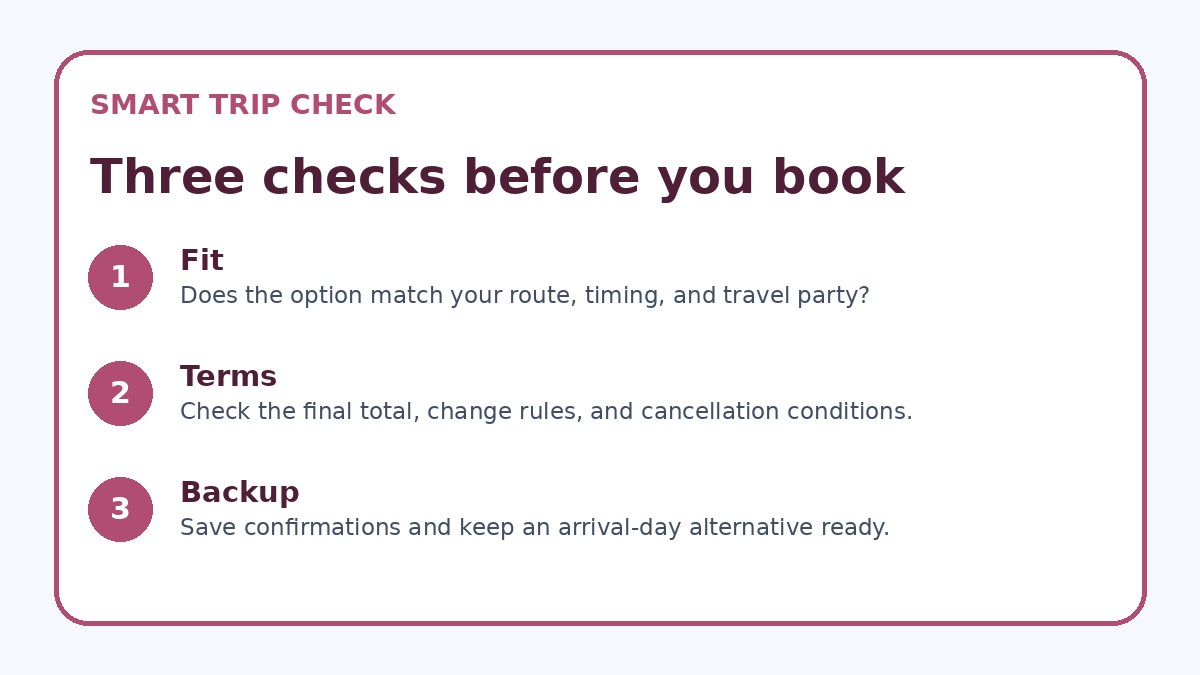
- Check cancellation, change fees, and refund policies for each component before paying, and save confirmation screenshots or emails.
- Verify whether airport transfers include child seats or whether you must prebook them separately with the provider.
- Reserve timed-entry tickets for major attractions that require them, and make sure re-entry or rescheduling terms suit your family.
- Pack a small day bag with snacks, medications, swimwear, and a portable first-aid kit to smooth unexpected delays or weather changes.
Activities, pacing, and what to confirm before booking
Design an itinerary that balances must-see sights with long, low-effort blocks so kids can rest. Reserve popular timed-entry attractions in advance if the venue requires it, but leave a couple of open days for unplanned playtime or pool recovery. Research whether attractions allow re-entry—this can let you return to a hotel for a nap and come back later without buying another ticket. Confirm family-friendly amenities like nursing rooms, stroller-accessible routes, and shaded rest areas when planning outdoor parts of your trip.
Before finalizing any Singapore travel deals, check key details on the supplier’s final booking page: cancellation and change fees, exact room setup, child pricing, and whether attraction tickets are refundable or reschedulable. If you’re booking transfers, verify whether car seats are supplied or must be requested. If a deal bundles multiple components, understand the rules for changing only part of the package. Keeping these verifications in your booking checklist reduces surprises and gives you more options if an itinerary change becomes necessary.
Frequently asked questions
How far in advance should families book Singapore travel deals for shoulder seasons?
For shoulder seasons, a balanced approach works best: book flights and refundable hotel options several months ahead if you have fixed dates, but keep an eye on flexible rates and last-minute availability if your schedule is more open. Families should prioritize securing the correct room configuration—such as interconnecting rooms or family suites—early because those specific room types can still sell out even outside peak periods. Always confirm child pricing, extra-bed availability, and cancellation rules on the supplier’s final booking page before completing payment.
What weather and clothing should families expect during shoulder months in Singapore?
Singapore is equatorial and warm year-round, so light, breathable clothing is appropriate. Shoulder months can bring more frequent short tropical showers, so pack a compact rain jacket, a travel umbrella, and quick-dry clothing. Include swimwear and sun protection for pool and water-play days, plus a light sweater for cool indoor air conditioning. Planning for wet-weather alternatives—museums, indoor play centres, or covered malls—keeps the trip flexible if rain alters outdoor plans.
Are family-friendly attractions easier to book during shoulder seasons?
Yes, many family attractions have fewer visitors during shoulder periods, which can mean shorter lines and more available time slots for popular exhibits. However, some seasonal shows or events might not run outside peak windows, so check attraction calendars before you book. When an attraction offers timed tickets, reserve them in advance if exact timing matters to your schedule; otherwise, arrive earlier in the day when capacities are often less constrained. Always verify whether tickets are refundable or reschedulable on the official booking page.
Final planning note
Planning around Singapore’s shoulder seasons can give families a quieter, more relaxed trip without sacrificing the core experiences that make the island appealing. The main tradeoffs are slightly more variable weather and the possibility that a seasonal event might not be running—tradeoffs many parents accept for easier logistics and shorter attraction lines. The practical steps are straightforward: compare and separate trip components, secure the right room setup, check cancellation and child policies on the final booking pages, and choose transport times that reduce stress for children. With that approach you’ll have flexibility and clarity when assessing Singapore travel deals, and you’ll be better prepared to enjoy your family time in the city.
Continue planning
Check current options and final conditions
Use the provider page to confirm live availability, the final total, cancellation terms, and every condition that matters to your trip.
This evergreen planning guide was created with AI-assisted drafting and a structured quality review. It does not display live prices, schedules, availability, visa guidance, or provider rankings. Verify current details before booking. Some links are affiliate links; we may earn a commission at no additional cost to you.