If you’re planning a family drive around Gyeongju, read the insurance wording before you click book. The practical action is simple: confirm exactly what is included—liability, collision, theft, and passenger protection—and note who counts as an authorized driver. For families that include teens or elderly relatives, check age and license restrictions, plus whether child seats and roadside assistance are covered or optional. When you compare quotes, treat policy wording like a parts list: look for deductibles, exclusions (narrowly worded events that void coverage), and any behavior or condition that voids a claim. Before finalizing, verify these specifics on the rental provider’s final booking page and on any third-party insurer documentation to avoid surprises on the road.
Understand the main coverage types and what they mean
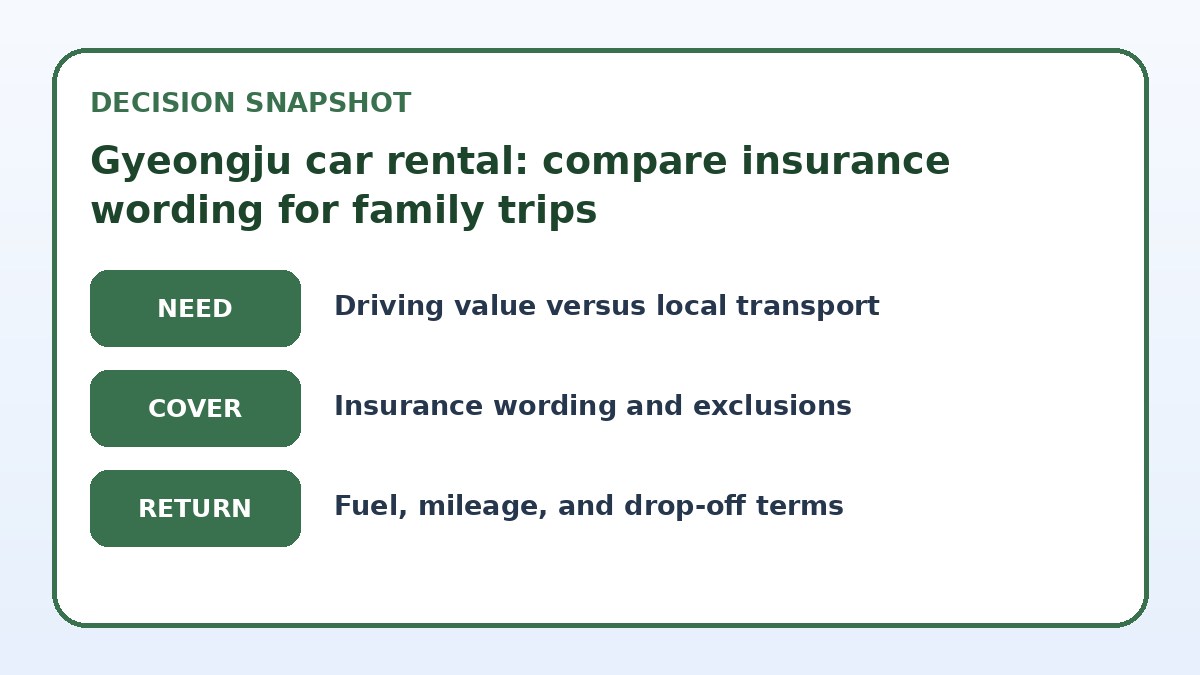
Most rental contracts differentiate liability, collision (CDW/LDW), theft protection, and personal accident coverage. Liability covers damage you cause to other people or property; collision or loss damage waiver often covers repair costs to the rental vehicle but usually comes with a deductible. Theft protection can reduce your responsibility if the car is stolen, but many policies exclude unattended valuables. Personal accident coverage covers medical costs for occupants in a crash; if your family already has travel health insurance, this may duplicate protection. Read the short definitions in the policy—those lines determine whether an item is actually covered.
Pay special attention to deductibles and caps. A low monthly premium or an included coverage line may still leave high out-of-pocket responsibility after the insurer applies the deductible. Some policies reduce your deductible to zero only if you buy an add-on or accept a higher daily rate. Also look for limits on total payouts per incident and whether coverage applies on all roads and terrains that families typically use around Gyeongju, such as rural or mountainous routes. If the wording is vague about locations or types of roads, ask the supplier to confirm in writing.
Who counts as a driver, and how age or license rules affect families
Policy wording about authorized drivers matters for families with teenage or elderly drivers. Many rental contracts allow only named drivers to operate the vehicle; an unnamed person driving can void coverage. Check whether adding an extra driver is free for spouses or costs extra, and whether temporary drivers—like grandparents visiting for a day—must be added. Age minimums and surcharges are also common; wording will specify if drivers under or over certain ages face restrictions, require additional coverage, or are excluded entirely from certain types of protection.
License requirements and endorsements are another trap. Some policies require a full, valid national or international driver’s license and may refuse coverage if a newer license or certain restrictions apply. If a family member holds a non-Korean license, confirm the exact wording on whether an International Driving Permit (IDP) or a certified translation is acceptable. Always verify the provider’s final booking page and request written confirmation for any exception, so you can present it at the rental desk if needed.
| Approach | Best for | Tradeoff to check |
|---|---|---|
| Minimal included coverage (basic liability) | Short city drives with low perceived risk and families prioritizing low upfront cost | Higher potential out-of-pocket costs after an incident and limited protection for occupants or theft |
| Standard CDW plus theft protection | Families planning mixed driving—town and rural—that want balanced protection without full waivers | Still usually has a deductible and exclusions that may leave gaps for child seats or personal effects |
| Zero-excess waiver and full add-ons | Families seeking predictable costs and maximum peace of mind during longer drives or remote trips | Higher daily cost; some waivers duplicate existing travel or health insurance benefits |
| Third-party supplemental cover (separate insurer) | Families wanting lower excess or supplementary protection beyond the rental company’s policy | Claims handling can be slower and may require upfront payment and later reimbursement |
Exclusions families should look for and prepare around
Exclusions are where clear wording saves stress. Common exclusions include driving off-road, using the vehicle in a race or commercial activity, driving under the influence, and allowing unauthorized drivers. For families, pay special attention to coverage exclusions for carrying children in the wrong type of restraint, leaving the car unattended on busy tourist sites, or traveling to restricted areas. If you plan side trips to rural sites or beaches, confirm whether those roads are within the policy’s covered areas or explicitly excluded.
Also watch for small-print behavior clauses: using a phone while driving, towing, or modifying the vehicle can void a claim. Some policies have time-based exclusions—coverage may not apply overnight in certain locations—or require immediate police reports for theft. Create a family plan for incidents: always call local authorities, take photos, and collect witness details. If the policy requires a police report or towing authorization to make a claim, the wording will say so—get that confirmed before pick-up.
Before you book
- Download or print the full insurance policy wording and keep a copy in your phone and glovebox.
- Confirm which family members are named drivers, add necessary drivers, and save written confirmation of additions.
- Verify the deductible amount, conditions for deductible waiver, and what actions trigger a voided claim.
- Ask the supplier to confirm in writing whether child seats, personal effects, and roadside assistance are covered or optional.
- Check license and age requirements for every intended driver and prepare IDP or translations if the wording requires them.
- Note the exact claim process: required documents, local emergency numbers, and whether you must notify police or the provider immediately.
Choosing add-ons and comparing approaches for family needs
Common add-ons include zero-excess waivers, additional driver cover, child seat rentals, roadside assistance, and personal effects cover. Weigh the cost of add-ons against the family’s tolerance for risk. A zero-excess waiver removes most out-of-pocket costs but can be expensive; if your household budget prefers predictability, the waiver is often worth considering. If you bring your own car seats, check whether that affects liability; some providers limit compensation for damage caused by incorrectly installed child restraints.
When comparing offers, request full policy documents, not summaries, and read the exact exclusions and claim procedures. If a third-party insurer is involved, confirm whether claims are handled by the rental company or an outside underwriter and where to file a claim. Trip.com can be one place to compare availability and provider notes, but always confirm final coverage wording on the rental provider’s booking page and the actual insurer documents. Keep a copy of the policy on your phone and a printed summary with emergency contact numbers in the glovebox when you pick up the car.
Frequently asked questions
If I buy extra insurance through my credit card, do I still need the rental company’s waivers?
Credit card coverage varies widely and the wording matters: many cards offer secondary coverage that pays only after the rental company’s insurance or your personal auto policy has paid. Some cards exclude certain vehicles, countries, or drivers under a specified age. Read your card’s benefit guide for exact terms and confirm whether it covers theft, collision, or liability in Korea. Even with card coverage, you may need to accept the rental company’s hold on your card at pick-up, and you should verify required actions for claims on both providers’ final booking pages.
Can leaving a child seat in the car affect a theft claim?
Yes—policy wording can distinguish between theft of the vehicle and theft of unattended personal effects. Many insurers limit or exclude compensation for belongings left in an unattended vehicle. If you plan to leave a child seat in the car while visiting sites, check whether the policy specifically insures permanently fitted child seats or portable equipment. When in doubt, take removable seats with you or secure them out of sight; document their presence and condition in photographs at pick-up and after any incident to support a claim.
What documents do I need to file a claim after an incident in Gyeongju?
Typical claims require the rental agreement, the full insurance policy wording, a police report if theft or collision with another party occurred, photos of damage or scene, and contact details of witnesses. The exact list will be in the policy wording—some insurers also require original receipts for repair or towing. If you use a third-party insurer, keep proof of any upfront payments. Always confirm the provider’s final booking page for specific submission steps and local emergency numbers before you travel.
Final planning note
Families renting a car in Gyeongju can avoid most surprises by treating insurance wording like a pre-trip checklist: read definitions, note exclusions, confirm who is covered to drive, and verify deductibles and claim steps. Decide whether you prefer predictable costs (waivers and add-ons) or lower upfront prices with some risk retained. Bring printed and digital copies of the rental agreement and policy, add named drivers in writing, and document the vehicle at pick-up. If anything in the wording is unclear, ask the rental provider to clarify on the booking page and keep that confirmation; that short step can prevent stress and expense during your family trip.
Continue planning
Check current options and final conditions
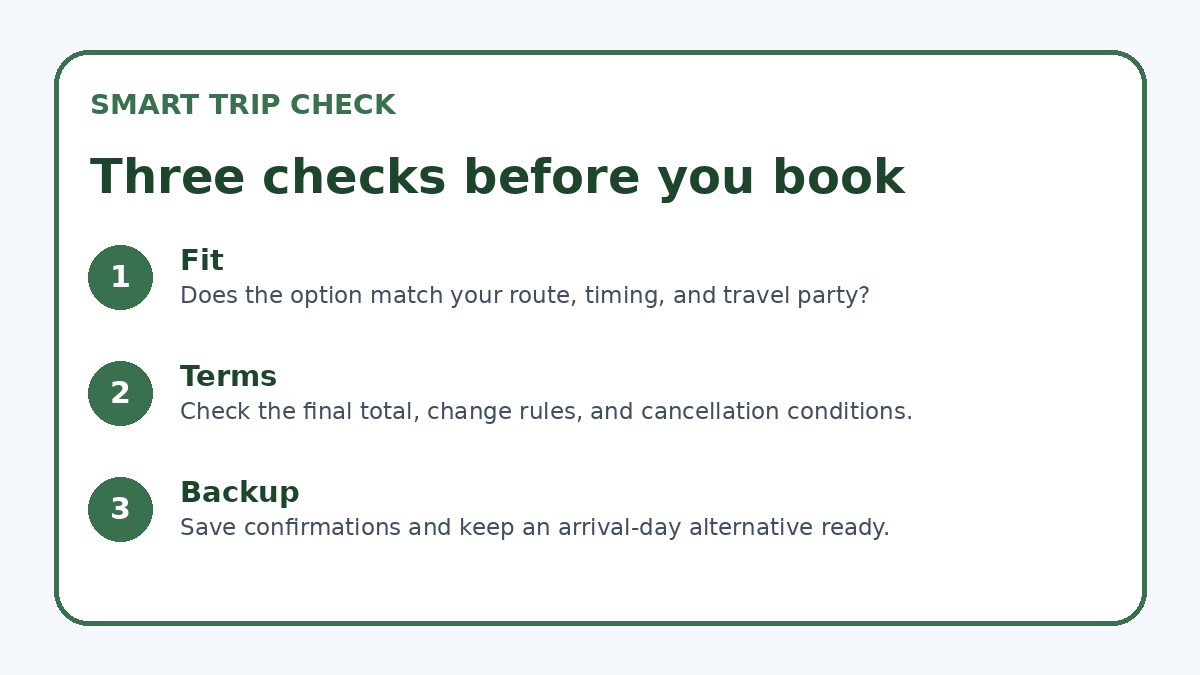
Use the provider page to confirm live availability, the final total, cancellation terms, and every condition that matters to your trip.
This evergreen planning guide was created with AI-assisted drafting and a structured quality review. It does not display live prices, schedules, availability, visa guidance, or provider rankings. Verify current details before booking. Some links are affiliate links; we may earn a commission at no additional cost to you.