If you and your partner want the most practical way to travel between Sydney and Melbourne, focus on three things: door-to-door time, how relaxed you want to feel, and how much time you have for travel. For most couples balancing limited time and a desire for comfort, flying will be the most time-efficient with the fewest moving parts; trains and driving win on scenery, space and flexibility. In this article I lead with the practical recommendation and then walk through trade-offs, decision criteria and the questions you should answer before booking. Wherever you end up, verify schedules, baggage rules and any connection details on the provider’s booking page — and consider checking Trip.com for current availability alongside official carrier sites.
Practical pick first: why flight-focused planning often makes sense
If your trip window is short or you don’t want to spend a day each way in transit, plan like you’ll fly. For most couples the practical priority is minimising transit hours and the number of times you move luggage between vehicles. Flying tends to reduce travel time significantly compared with surface options, freeing you to spend more of your getaway in Melbourne. Book seats that sit together and check boarding and baggage rules so both partners know how hand luggage and hold baggage will be handled.
That said, don’t treat an airline booking as a complete itinerary until you verify connections and airport transfers. If a connecting flight appears necessary, compare total elapsed time and the cost of getting to and from each airport. Check whether the fare class allows easy changes if your plans are flexible. Always confirm check-in timelines, carry-on allowances and the precise location of arrival terminals on the provider’s final booking page so you don’t get surprises at the airport.
Train travel: comfort and a slower, scenic rhythm
Trains offer spacious seats, the ability to move and talk without the constraints of security lines, and more legroom for reading or sharing snacks — all appealing for couples who want a relaxed start to their trip. The train can be a better choice when you value the journey: there’s time to watch the landscape change, have long conversations, and avoid the stress of driving. If either partner is prone to motion discomfort, the steadier motion of a train can be more comfortable than driving on highways.
When considering a train, check whether services are direct or require changes and what onboard facilities (like dining or seat types) are available today by consulting the operator’s booking page. Think about luggage limits and whether you’ll need taxis or public transit at each end to reach your accommodation. If you plan to travel on a specific day, confirm seating arrangements and whether you can reserve two seats together; on busy days, this is an important detail to lock in before you leave.
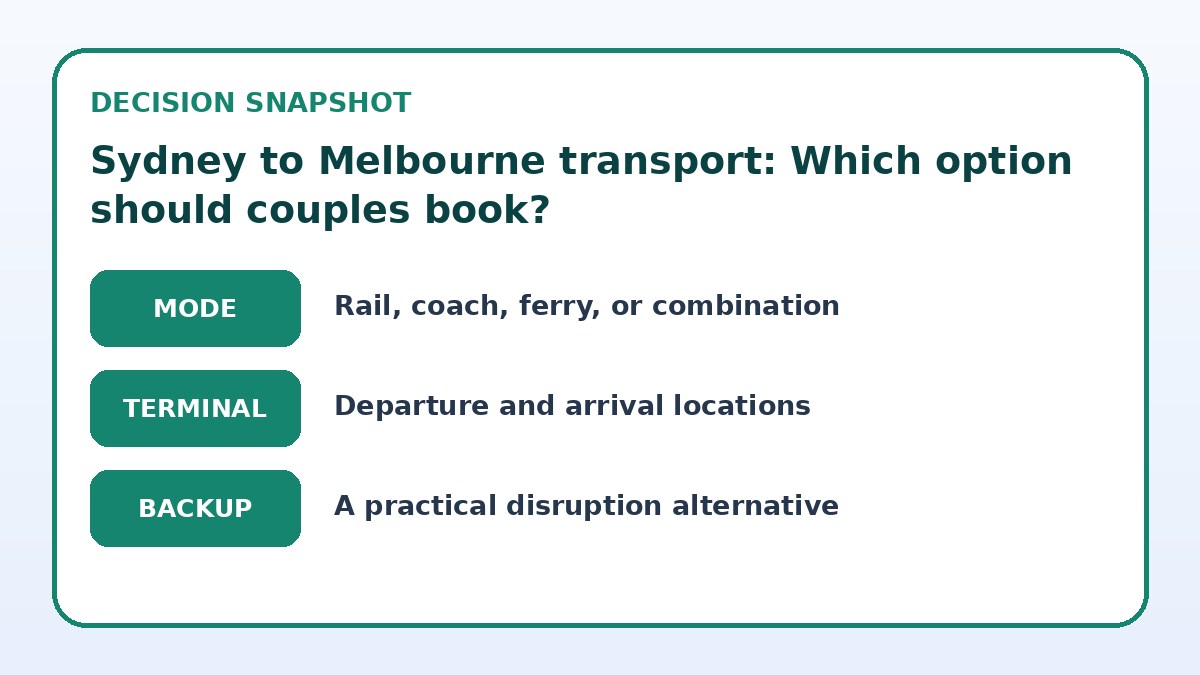
| Approach | Best for | Tradeoff to check |
|---|---|---|
| Fly and arrange transfers | Couples prioritising speed and minimal travel day hassles | More airport procedures and possible transfer logistics at each end |
| Train travel | Couples who want space, comfort, and scenic downtime | Longer transit hours and possible need for local transport on arrival |
| Self-drive or rental car | Couples seeking flexibility and the ability to make on-route stops | More planning, driver fatigue risk and parking considerations |
| Combine modes (drive + ferry or train + hire car) | Couples wanting a tailored mix of speed and exploration | More moving parts; you must verify connections and baggage transfers closely |
Driving: freedom for couples who want to turn transit into part of the trip
Renting a car or driving your own opens the route to side trips, flexible departure times and private stops, which can be especially romantic for couples who want to build experiences into the journey. You control the pace — linger at coastal lookouts, detour to wineries, or schedule pit stops without worrying about timetables. Driving also keeps your belongings with you the whole way, which some couples prefer over juggling luggage with transfers.
On the practical side, driving increases planning work: map out rest stops, estimate how much driving each partner is comfortable handling, and check parking and drop-off points where you’ll stay. Factor in fuel, tolls and potential fatigue for longer legs; split driving duties if possible. If you’re renting, read the rental policy carefully about mileage limits, cross-state rules and insurance options, and confirm those details on the rental company’s booking page before completing reservation.
Before you book
- Agree on the trip priorities: time, comfort, scenery, flexibility and luggage needs before searching options.
- Compute door-to-door travel time for each option, including transfers, check-in buffers and local transit at both ends.
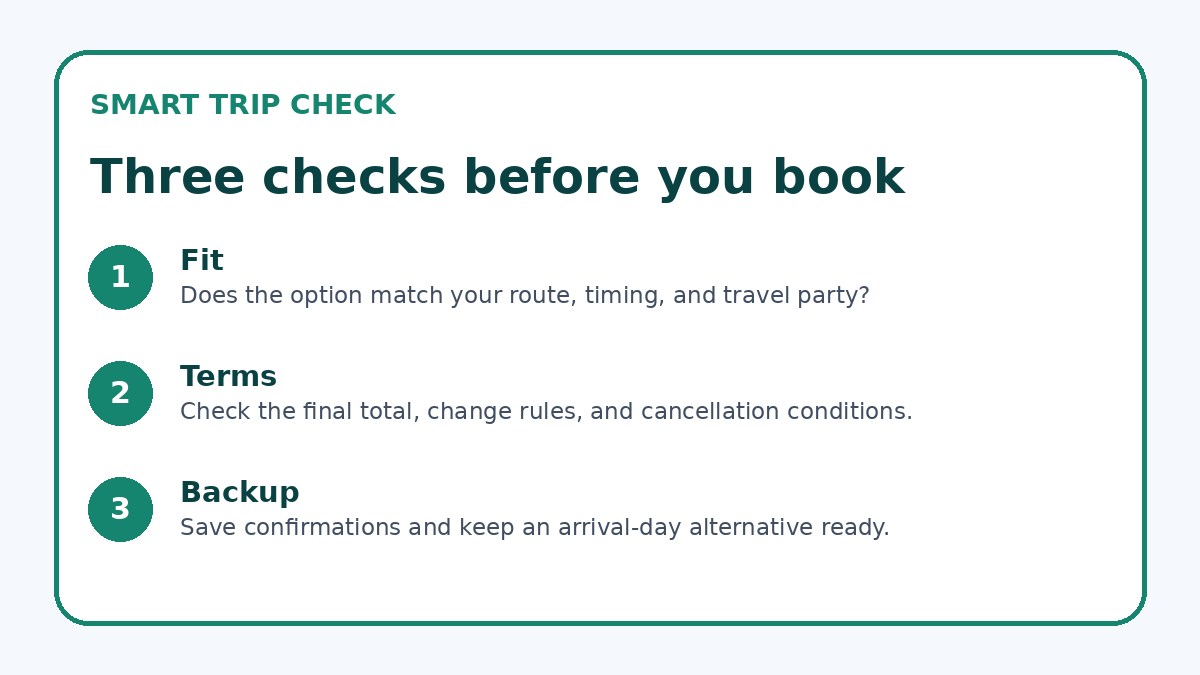
- Verify baggage rules, seat allocations and change/cancellation terms on the provider’s official booking page.
- If driving or renting, confirm fuel policy, mileage limits, cross-state permissions and insurance coverage before pickup.
- Reserve seats together in advance for trains or pick seats when booking flights so you travel side-by-side.
- Pack a small essentials bag with chargers, medications and a fresh change of clothes in case checked items are delayed.
How to choose: decision criteria that make the choice personal
Start by listing what matters most to both of you: speed, comfort, scenery, cost certainty, and flexibility. Convert those priorities into measurable thresholds: maximum acceptable travel time, how much luggage you’ll bring, whether you must avoid overnight travel and whether you need door-to-door ease. For example, if you set a maximum of four hours door-to-door each way, that rules out certain surface travel options; if you must bring bulky gear, that rules out airlines with strict carry-on limits unless you pay for checked bags.
Next, compare total door-to-door time rather than just in-vehicle time — include travel to and from airports or stations, check-in or security buffers, and transfer times. If a route involves connections, compare the number and length of connections and confirm minimum connection times on provider pages. Finally, weigh intangible factors: do you enjoy driving together or do you prefer a relaxed train car where one of you can nap while the other reads? Use those answers to pick the option that matches both partners’ travel style.
Frequently asked questions
Is flying always the fastest choice between Sydney and Melbourne for couples?
Flying is often the quickest way to cover the distance, but total time depends on door-to-door logistics: getting to and from airports, check-in, security and transfer times. For some city-center-to-city-center journeys with efficient rail connections, a train’s total door-to-door time can be competitive if an airport is far from your accommodation. Always calculate total elapsed travel time for both partners and verify airport transfer options on the airline or airport site before booking.
How should couples decide whether to drive instead of taking public transport?
Decide based on the balance of planned stops versus time and comfort. If you want detours, private stops and the ability to control your schedule, driving makes sense. If either partner prefers not to be responsible for long highway driving or if parking and fatigue are concerns, public transport may be the better option. Check rental terms, parking availability at your Melbourne accommodation and possible tolls or restrictions before choosing to drive.
What practical things should couples check on booking pages for trains or flights?
Look for seat selection rules, baggage allowances, change and cancellation conditions, and explicit connection details if your trip isn’t direct. Confirm boarding gates or station platforms close to departure and whether food or restrooms are available onboard. If any leg is operated by a partner carrier, verify who handles delays or missed connections. Use official carrier pages as the primary source of these details, and consider Trip.com as a supplemental place to compare current availability.
Final planning note
For most couples balancing limited time and a desire for comfort, starting with flights makes practical sense because it minimises transit hours and simplifies logistics. If your priorities tilt toward relaxation, scenery or an unhurried pace, the train or a self-drive itinerary can turn transit into part of the holiday itself. Make decisions by comparing total door-to-door time, luggage needs, and how much planning complexity you’re willing to manage. Before you book, confirm seat availability, baggage and connection rules on the provider’s booking page so both partners travel with clear expectations.
Continue planning
Check current options and final conditions
Use the provider page to confirm live availability, the final total, cancellation terms, and every condition that matters to your trip.
This evergreen planning guide was created with AI-assisted drafting and a structured quality review. It does not display live prices, schedules, availability, visa guidance, or provider rankings. Verify current details before booking. Some links are affiliate links; we may earn a commission at no additional cost to you.